Artwork
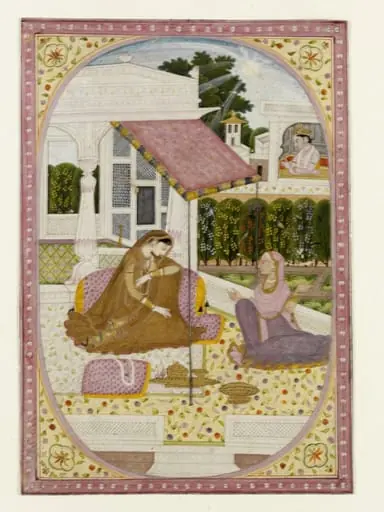
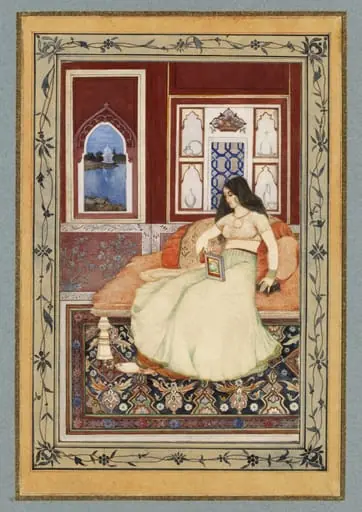
An Indian lady reclining on a couch in the open verandah of a palace.
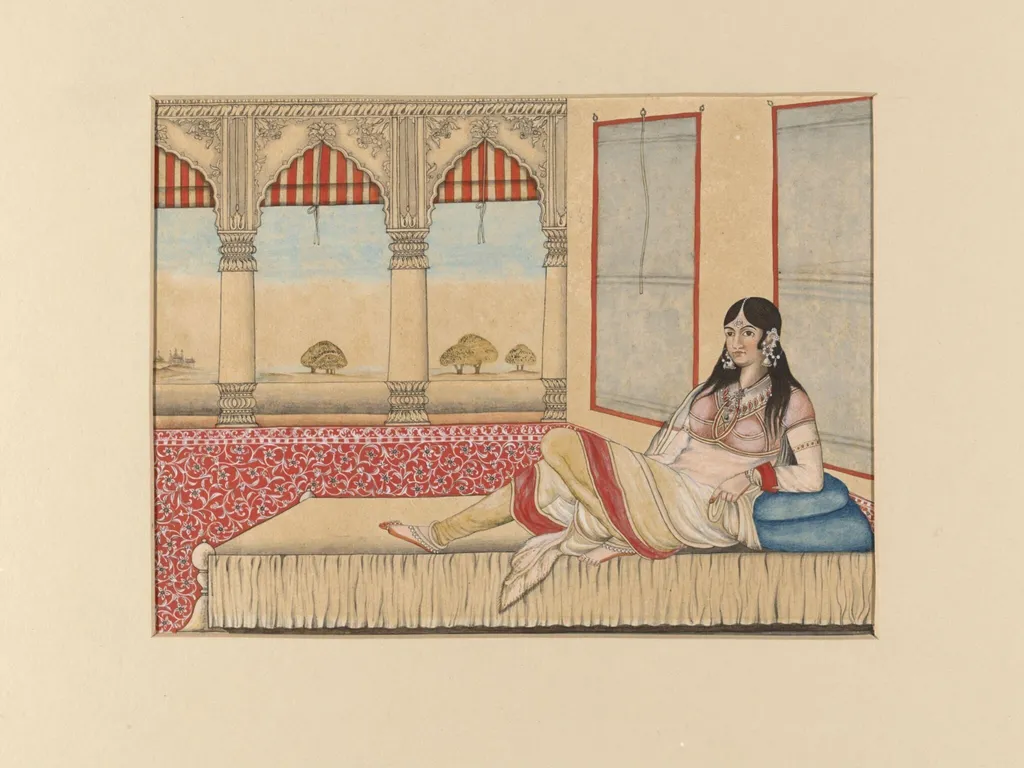
An Indian lady reclining on a couch in the open verandah of a palace. is a paint painting by the Patna School of Painting artist Unknown. It dates from 1840 and is held in the collection of the Victoria and Albert Museum. This painting portrays an Indian woman at rest on a couch within a palace verandah, capturing a moment of quiet domesticity.
About this work
Overview
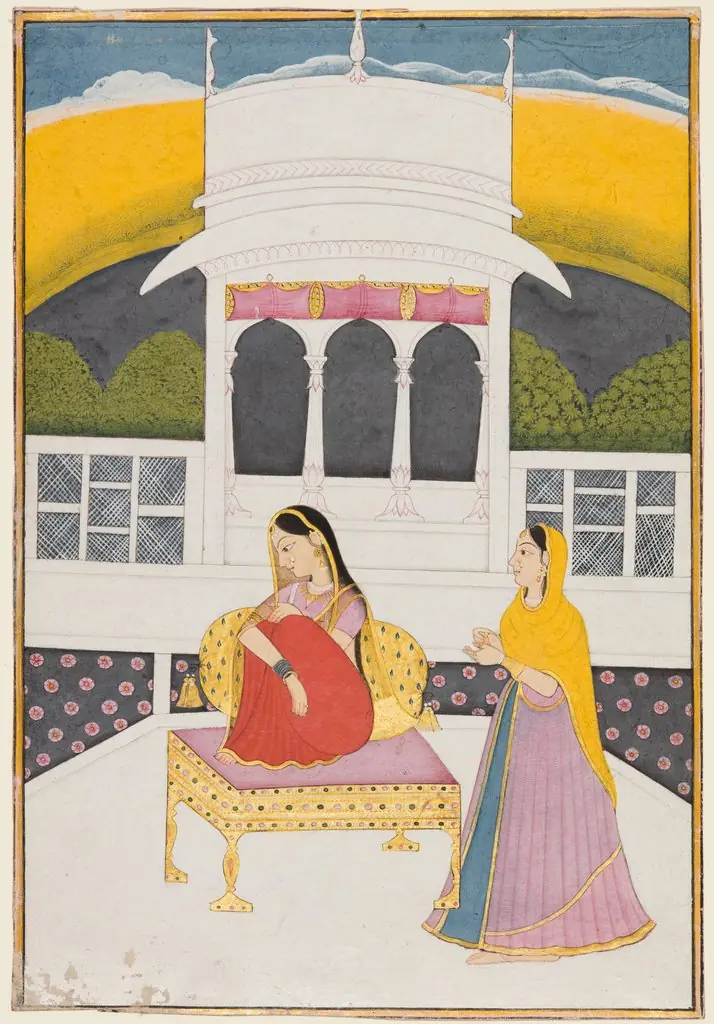
The composition emphasizes decorative detail and spatial depth, with architectural elements framing the figure against a subdued natural backdrop.
This painting portrays an Indian woman at rest on a couch within a palace verandah, capturing a moment of quiet domesticity. Executed in opaque watercolor or gouache, it reflects the stylistic conventions of late 18th- to early 19th-century North Indian court art. The composition emphasizes decorative detail and spatial depth, with architectural elements framing the figure against a subdued natural backdrop.
Subject & Meaning
The woman, adorned in richly patterned garments and gold jewelry, is depicted in a relaxed, reclining posture, suggesting leisure within a private royal setting. Her poised demeanor and elaborate attire imply status, possibly that of a noblewoman or court attendant. The scene evokes an intimate, enclosed world of palace life, where personal tranquility is framed by architectural grandeur and refined aesthetics.
Technique & Style
The artist employs fine brushwork to render intricate textile patterns and delicate jewelry, contrasting with the looser, flatter treatment of the background landscape. Bright pigments highlight the figure and architectural details, while the outdoor elements are rendered with minimal detail, drawing focus inward. This balance between ornate foreground and simplified environment is characteristic of regional court painting traditions.
History & Provenance
The painting entered the institution’s collection in 1954, acquired from Maggs Bros., a London-based dealer specializing in historical artworks. Its earlier provenance remains undocumented, though its style and subject suggest origin in a North Indian princely court, likely from the Punjab or Rajasthan region during the early colonial period.
Context
Created during a period of cultural exchange between Indian court artists and British patrons, this work reflects the persistence of indigenous aesthetic values despite colonial influence. Similar depictions of aristocratic women in palace settings were common in regional studios, serving both as personal mementos and expressions of royal identity amid shifting political landscapes.
Legacy
The painting contributes to the broader understanding of how Indian courtly life was visually recorded during the 18th and 19th centuries. It stands as an example of regional painting traditions that prioritized personal narrative and decorative richness over Western naturalism, preserving a visual record of elite female presence in pre-modern Indian society.
Artist & collection

 Domestic Scene
 Giacomo and Cardinal Marco, investing Andrea, Abbot of San Zeno, with his Benefice
 The Nymph of Fontainebleau
 Portrait of a Woman
 Madonna and Child with Saints in the Enclosed Garden
 Venus and Minerva
 Family Group of Four on Sofa
 Wall painting from Room H of the Villa of P. Fannius Synistor at Boscoreale