Artwork
Prositapatika Nayika
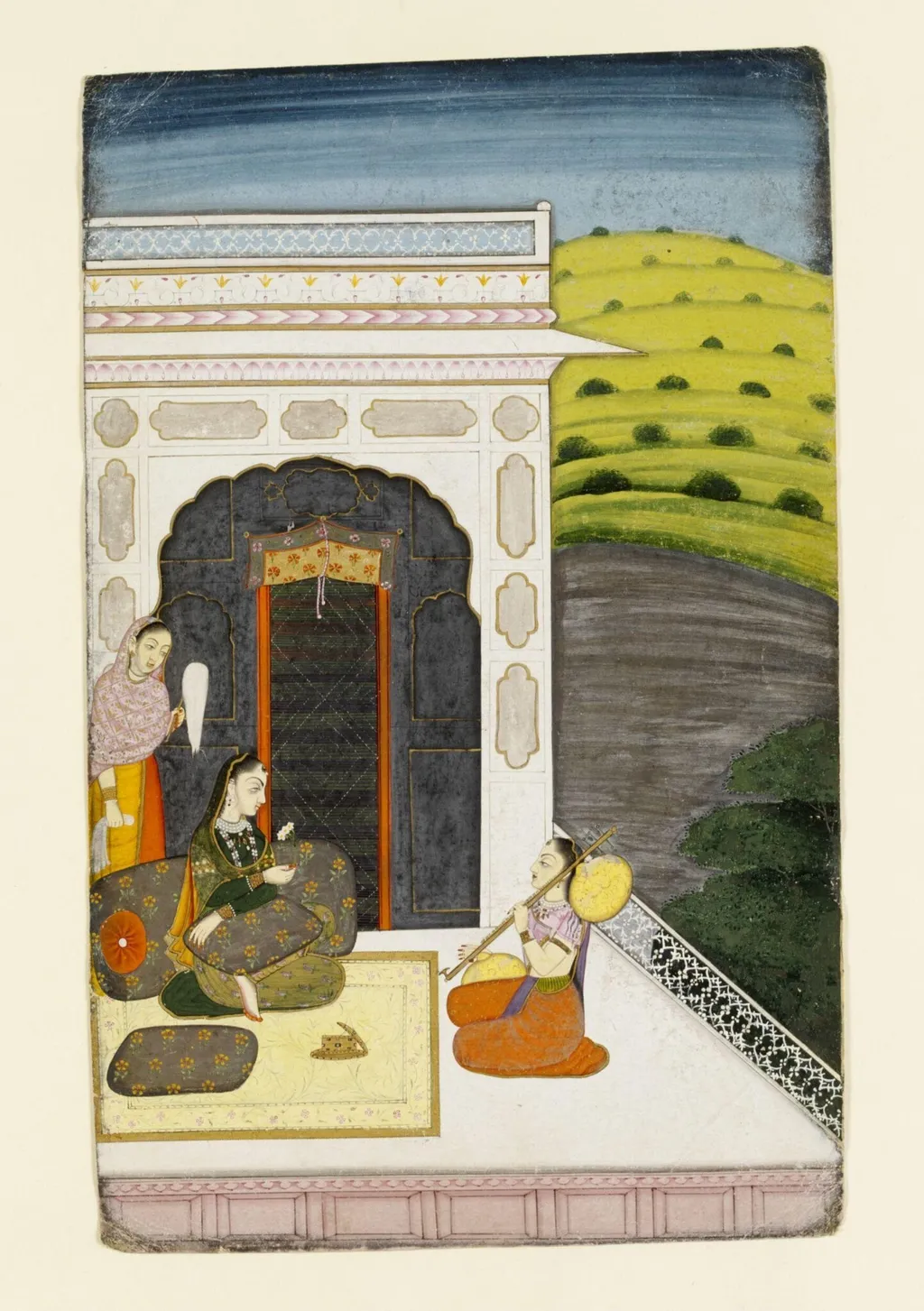
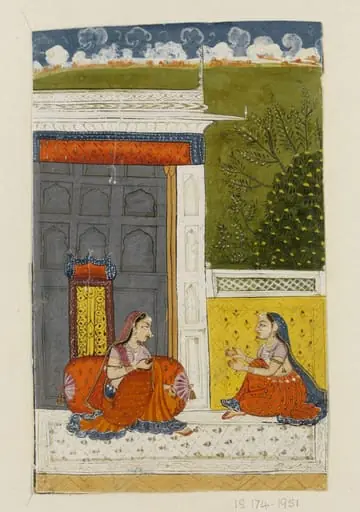
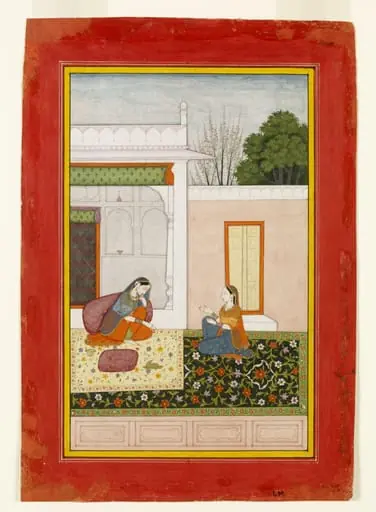
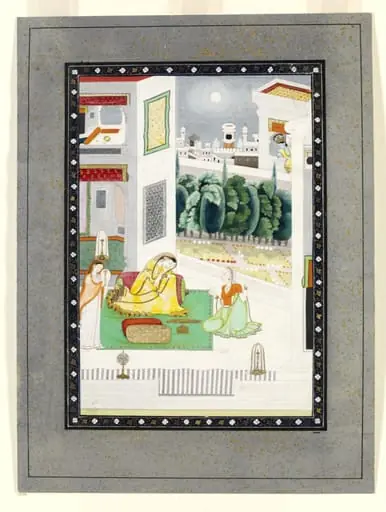
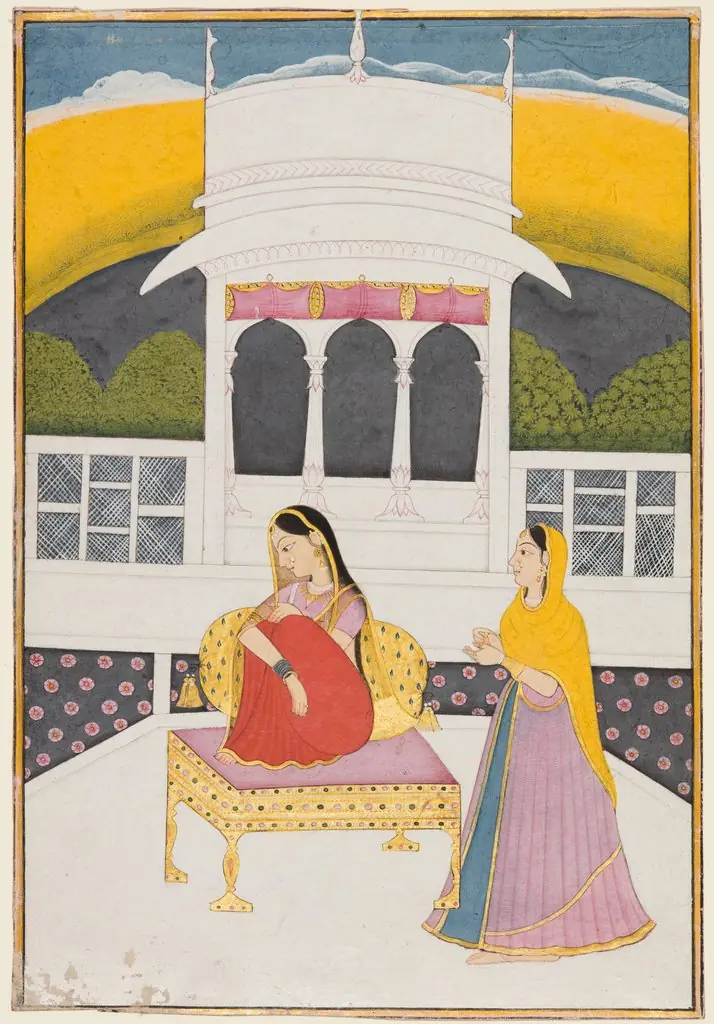
Prositapatika Nayika is a paint painting by the Rococo painting artist Unknown. It dates from 1760 and is held in the collection of the Victoria and Albert Museum.
About this work
Overview
The scene is framed by modestly patterned walls and a stylized landscape beyond, suggesting a quiet, intimate setting charged with unspoken tension.
This painting, titled *Prositapatika Nayika*, portrays a moment of emotional withdrawal within an interior space. A seated woman, visibly unsettled, is accompanied by a standing figure near a doorway. Outside, a musician plays a stringed instrument on a balcony, his legs visible through an open railing. The scene is framed by modestly patterned walls and a stylized landscape beyond, suggesting a quiet, intimate setting charged with unspoken tension.
Subject & Meaning
The central figure embodies the nayika archetype of the 'waiting woman'—a heroine in Indian poetic tradition who rejects comfort due to her lover’s absence. Her grip on a flowering stalk, possibly a jonquil, symbolizes fragile hope or unfulfilled longing. The companion’s presence underscores isolation rather than solace, while the distant musician evokes music as a reminder of what is lost, not restored. The scene resists resolution, emphasizing inner solitude over external consolation.
Technique & Style
The painting employs flat, saturated hues for the landscape and intricate gold embroidery on the central figure’s garment, contrasting with the restrained interior patterns. The balcony’s cutaway view creates a layered spatial device, drawing attention to the musician without integrating him into the emotional core. Facial features and drapery align with works attributed to Punch, suggesting a consistent hand in rendering delicate gestures and ornamental detail within a stylized, non-naturalistic framework.
History & Provenance
Acquired by the Lahore Museum in 1951 for £20-10-0, the painting entered the collection alongside related works from the same artistic circle. Attribution to Punch is based on stylistic parallels with other pieces in the museum’s holdings, particularly in facial modeling and decorative treatment. No earlier provenance is documented, but its inclusion with other nayika-themed paintings suggests it was part of a small, coherent group produced for private or courtly appreciation.
Context
This work belongs to a regional tradition of Pahari painting that adapted literary themes from Sanskrit and vernacular poetry into visual form. The depiction of emotional states, nature, and architecture reflects a broader interest in the inner lives of women, common in 18th-century North Indian courts. Unlike European Romanticism, which idealized nature as a mirror of feeling, here the landscape remains a detached backdrop—emotion resides in posture, gesture, and symbolic objects.
Legacy
As one of several surviving works linked to the artist Punch, this painting contributes to the understanding of a localized artistic lineage that prioritized psychological nuance over grand narrative. Its preservation in the Lahore Museum allows ongoing study of how regional painters interpreted poetic ideals through subtle visual cues. Though not widely exhibited, it remains a key reference for scholars examining the intersection of literature, gender, and visual culture in pre-colonial India.
Artist & collection

 Domestic Scene
 Giacomo and Cardinal Marco, investing Andrea, Abbot of San Zeno, with his Benefice
 The Nymph of Fontainebleau
 Portrait of a Woman
 Madonna and Child with Saints in the Enclosed Garden
 Venus and Minerva
 Family Group of Four on Sofa
 Wall painting from Room H of the Villa of P. Fannius Synistor at Boscoreale