Artwork
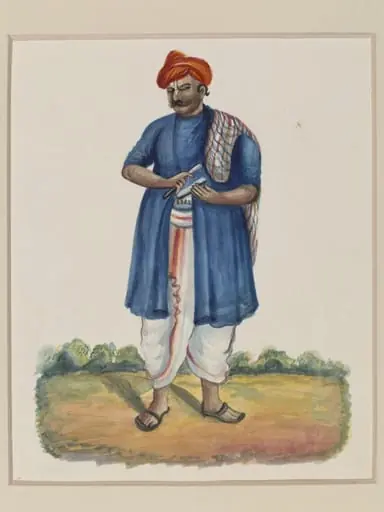
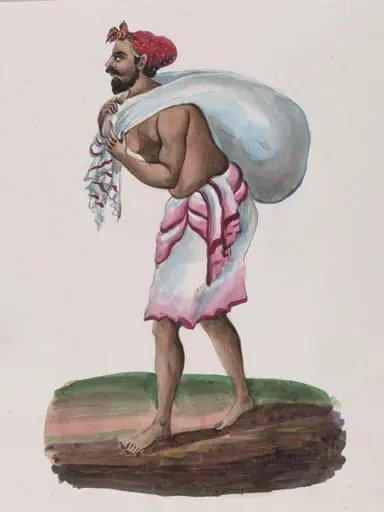
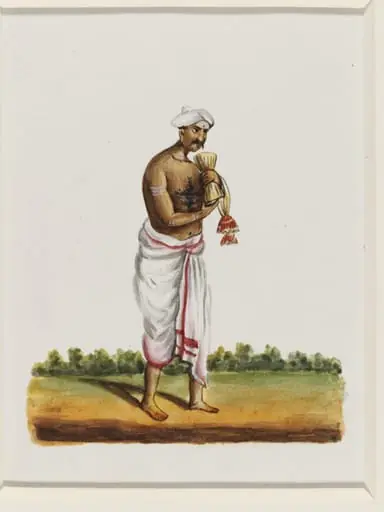
An Indian Man
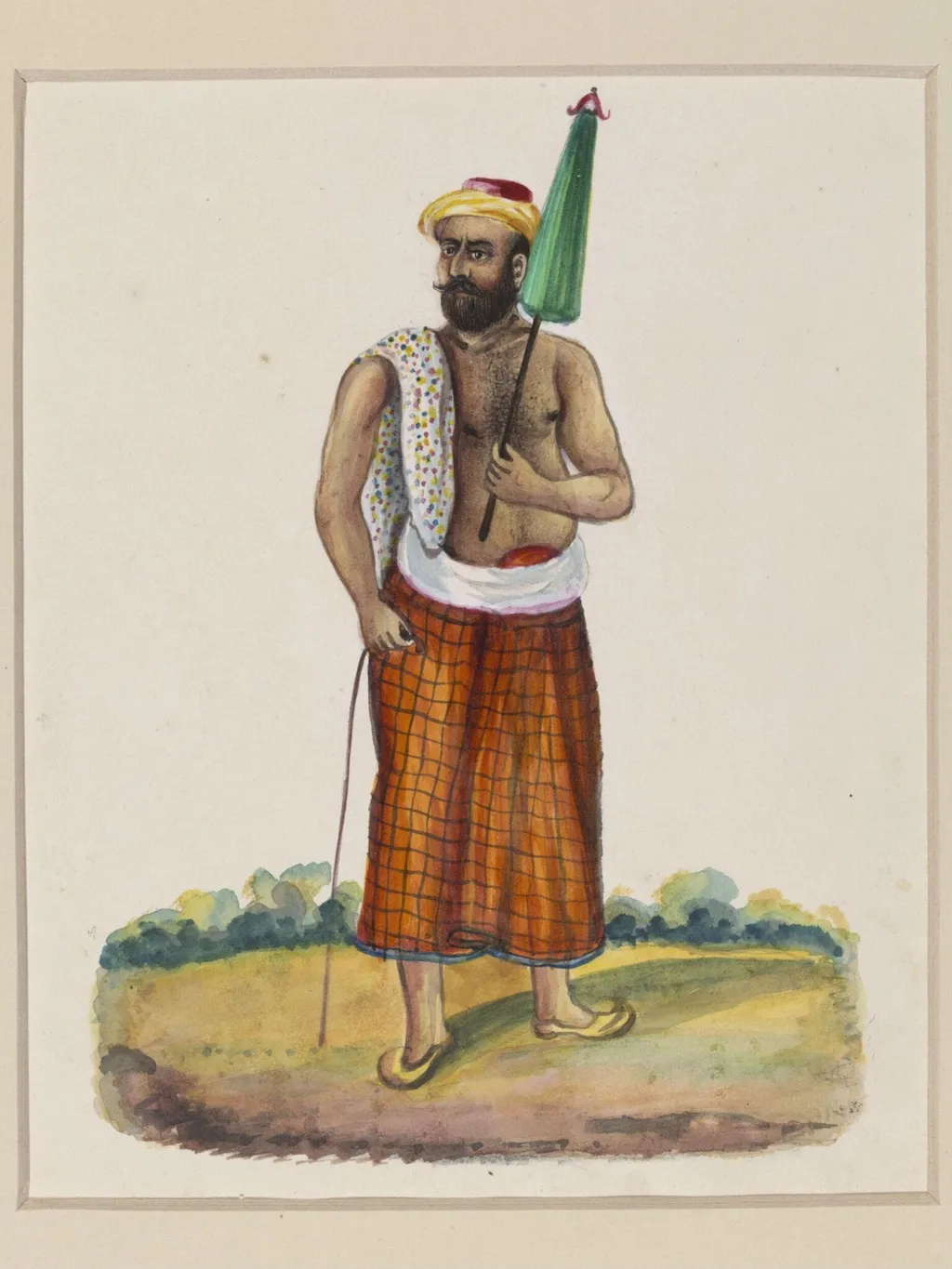
An Indian Man is a paint painting by the Patna School of Painting artist Unknown. It dates from 1860 and is held in the collection of the Victoria and Albert Museum. This painting is one of fifteen works created in Trichinopoly, South India, depicting local figures engaged in everyday roles.
About this work
Overview
This painting is one of fifteen works created in Trichinopoly, South India, depicting local figures engaged in everyday roles.
This painting is one of fifteen works created in Trichinopoly, South India, depicting local figures engaged in everyday roles. Executed in watercolor on paper, it reflects a genre known as Company painting, developed under British colonial influence. The subject is portrayed with attention to regional dress and posture, serving as a visual record for British patrons interested in Indian society during the late 18th to early 19th century.
Subject & Meaning
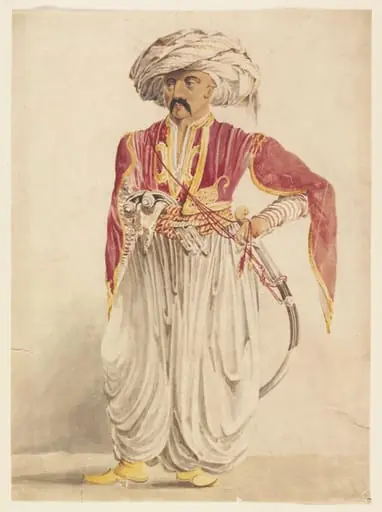
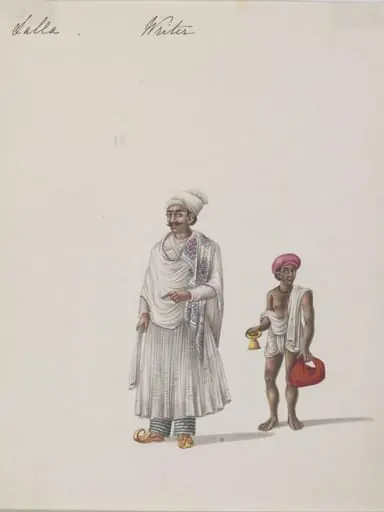
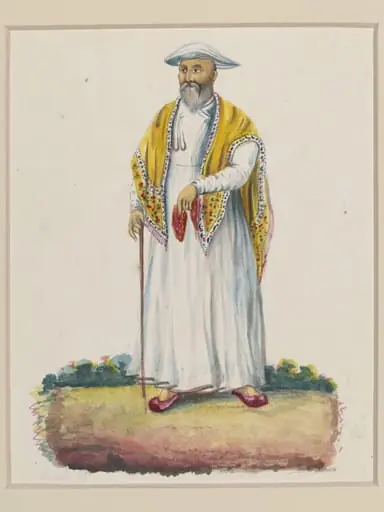
The figure is a man dressed in a plaid lungi and a patterned shoulder cloth, his bare torso and turban suggesting regional identity. He holds a green spear, not as a weapon but as a symbolic attribute, possibly indicating a role such as a watchman or local guard. His relaxed stance and outdoor setting convey a sense of quiet dignity, emphasizing daily life over dramatic narrative, aligning with the documentary intent of Company paintings.
Technique & Style
The artist employs fine brushwork and transparent watercolor to render texture and form with clarity. The figure is rendered with naturalistic proportions, a departure from earlier stylized Indian traditions. The background is minimal—softly modeled trees and sky—allowing the subject’s vibrant clothing and posture to dominate. This contrast highlights the influence of European realism, adapted to local aesthetics and materials.
History & Provenance
Created in the late 18th or early 19th century in Trichinopoly, this work emerged from a studio system catering to British officials of the East India Company. Such paintings were commissioned to document Indian occupations, customs, and landscapes. While the specific artist remains unknown, the style and subject align with other works from the region now held in institutions like the Victoria and Albert Museum.
Context
Company paintings arose as Indian artists adapted their techniques to satisfy British tastes for ethnographic detail and realism. These works bridged Mughal miniature traditions with Western perspective and shading. They were not merely art but tools of colonial documentation, offering European viewers a curated glimpse into Indian life, often stripped of political or spiritual context.
Legacy
These paintings remain valuable for their ethnographic detail and as evidence of cultural exchange under colonialism. Though produced for foreign patrons, they preserve visual records of regional dress, posture, and occupation that might otherwise have been lost. Today, they are studied for their hybrid aesthetics and as artifacts of a complex artistic collaboration between Indian artisans and British patrons.
Artist & collection

 Domestic Scene
 Giacomo and Cardinal Marco, investing Andrea, Abbot of San Zeno, with his Benefice
 The Nymph of Fontainebleau
 Portrait of a Woman
 Madonna and Child with Saints in the Enclosed Garden
 Venus and Minerva
 Family Group of Four on Sofa
 Wall painting from Room H of the Villa of P. Fannius Synistor at Boscoreale