Artwork
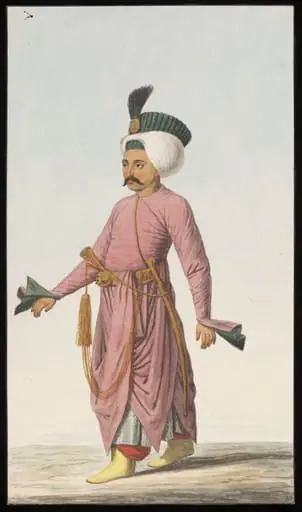
Figure of a Man in Turkish Military Costume
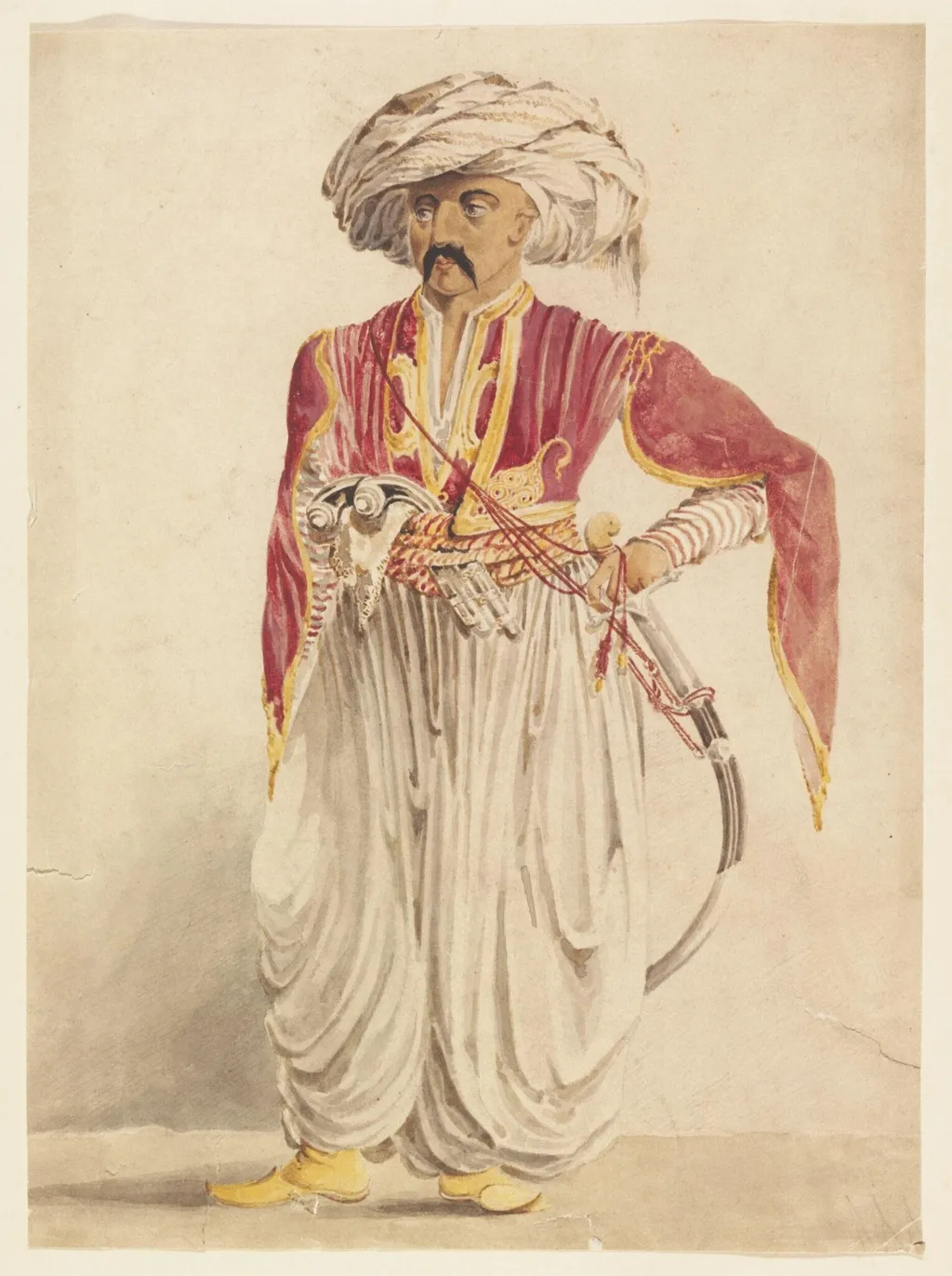
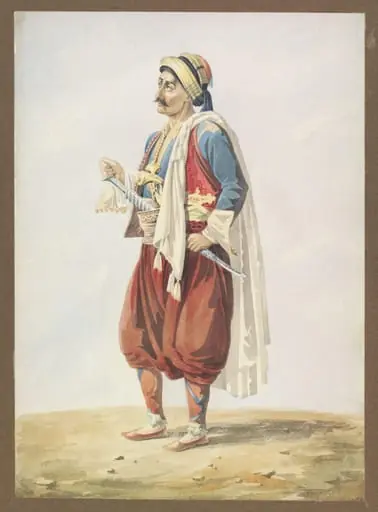
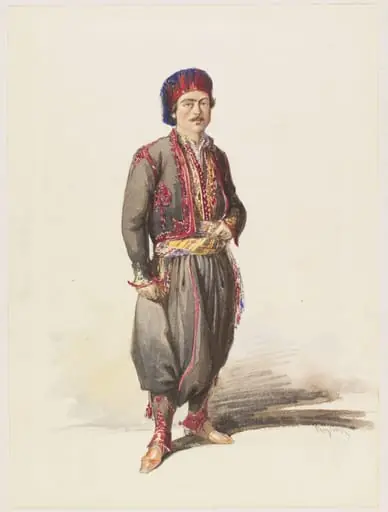
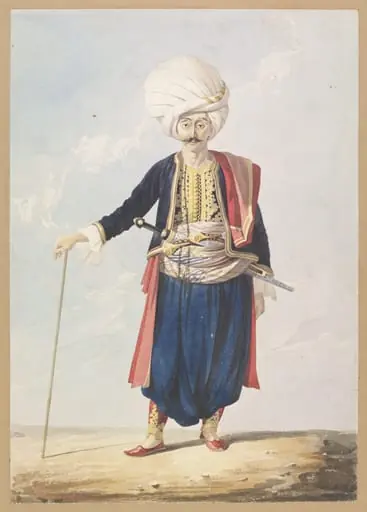
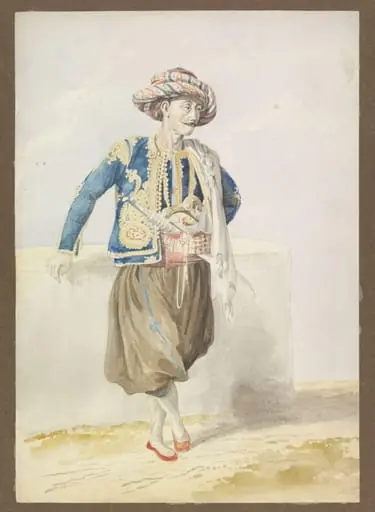
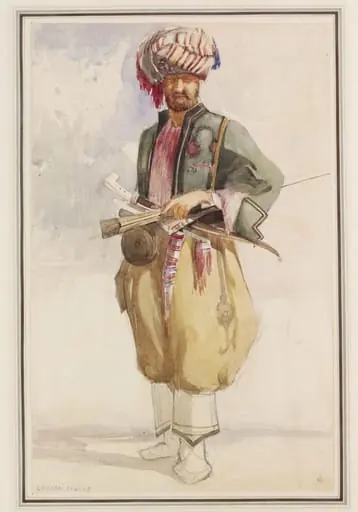
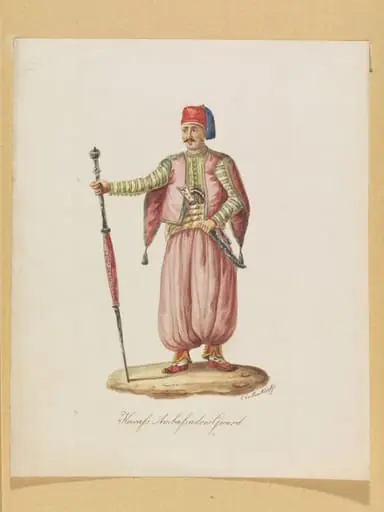
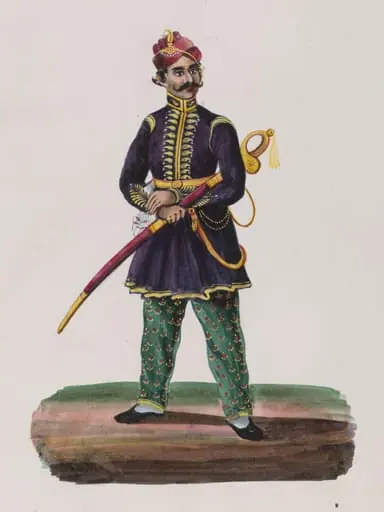
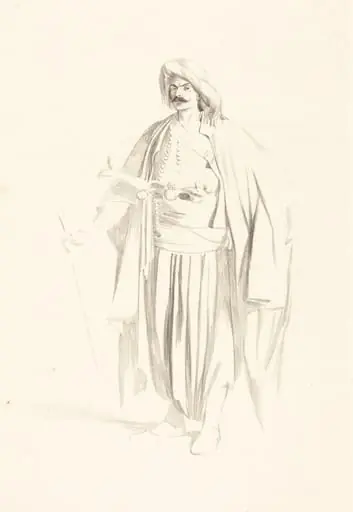
Figure of a Man in Turkish Military Costume is a watercolor work on paper by the Orientalist artist Unknown. It dates from 1820 and is held in the collection of the Victoria and Albert Museum. This watercolour depicts a male figure in Turkish military dress, created around 1820.
About this work
Overview
The figure occupies the center of the composition, set against an undetailed background that emphasizes the costume’s vivid hues.
This watercolour depicts a male figure in Turkish military dress, created around 1820. The work is executed with loose, energetic brushwork and a limited palette focused on strong contrasts. The figure occupies the center of the composition, set against an undetailed background that emphasizes the costume’s vivid hues. The technique suggests a rapid, observational approach rather than a polished finish.
Subject & Meaning
The subject is a Turkish officer, identifiable by his distinctive uniform and weaponry. His confident stance and the presence of a curved sword imply status and readiness, reflecting European fascination with Ottoman military culture during the early 19th century. The small object in his other hand may denote personal equipment or rank insignia, though its exact function remains ambiguous.
Technique & Style
The artist employed watercolour with minimal layering, relying on bold washes of red, white, and gold to define the costume. Shading is simplified, and details like facial hair are rendered with swift strokes. The background is left largely untouched, enhancing the figure’s visual impact. The style prioritizes immediate impression over fine detail, suggesting a sketch-like immediacy.
History & Provenance
The work is documented in the Searight Archive, which notes possible stylistic connections to artists such as W. Page and L. Dupré, known for their orientalist subjects. Its origin is likely tied to European travelers or artists documenting Ottoman figures during a period of heightened cultural exchange. The piece entered institutional collections in the 20th century, though its earlier ownership remains unrecorded.
Context
Created during a time when European interest in Ottoman Turkey was growing, this image reflects a trend of depicting Eastern military figures as exotic yet dignified subjects. Such works were often produced for private collectors or as studies for larger compositions. They reveal more about European perceptions than accurate ethnographic records, blending observation with romanticized stereotypes.
Legacy
This watercolour contributes to a broader corpus of 19th-century orientalist art, illustrating how Western artists interpreted non-European cultures through selective visual language. While not widely exhibited, it remains a representative example of informal, on-the-spot portraiture from a period when direct encounters with Ottoman subjects were increasingly common among travelers and diplomats.
Artist & collection

 Domestic Scene
 Giacomo and Cardinal Marco, investing Andrea, Abbot of San Zeno, with his Benefice
 The Nymph of Fontainebleau
 Portrait of a Woman
 Madonna and Child with Saints in the Enclosed Garden
 Venus and Minerva
 Family Group of Four on Sofa
 Wall painting from Room H of the Villa of P. Fannius Synistor at Boscoreale