Artwork
Anonymous design for fountain
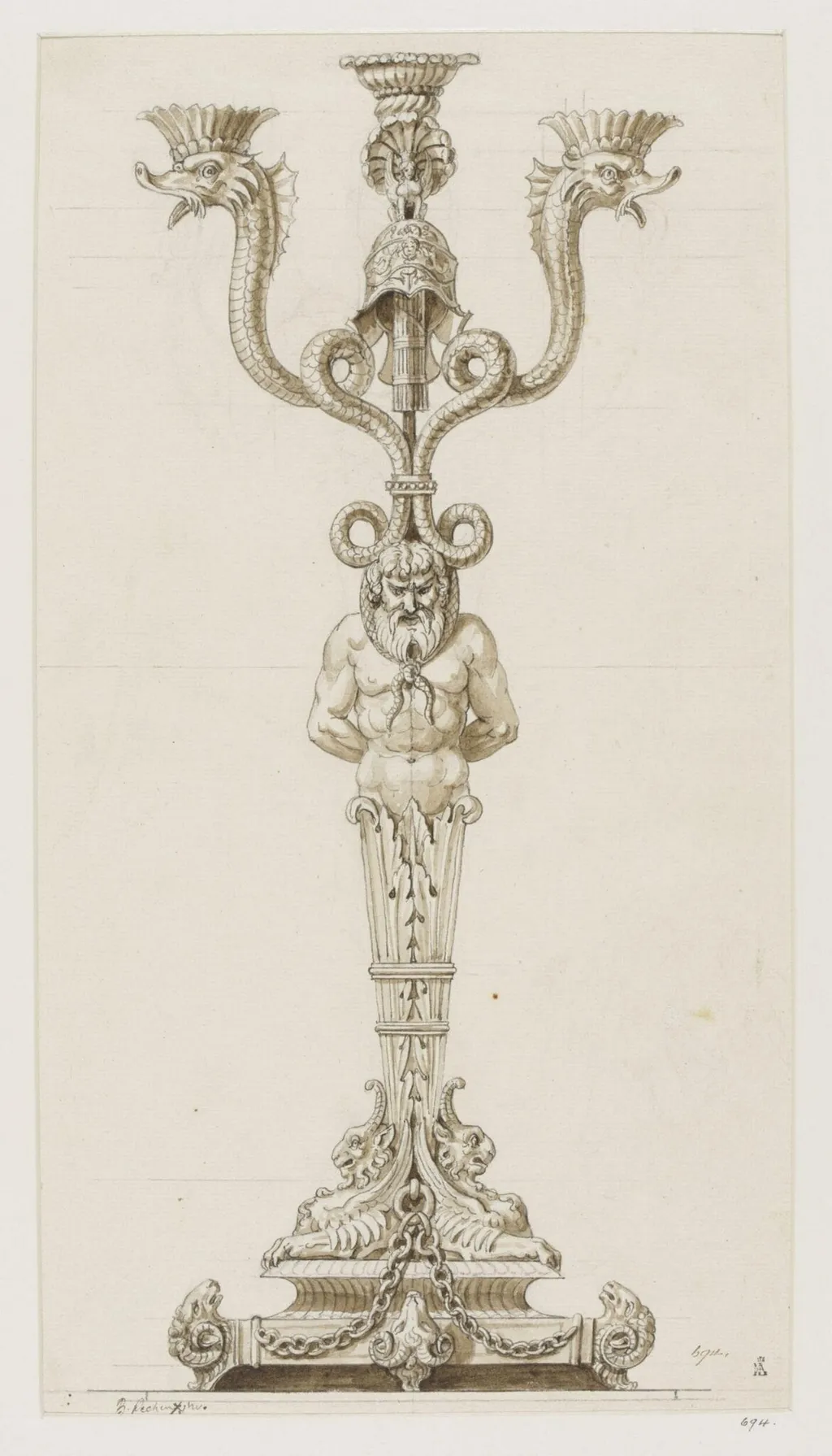
Anonymous design for fountain is a print by Unknown. It dates from 1850 and is held in the collection of the Victoria and Albert Museum. An anonymous draft in pencil, ink, and wash depicts a proposed fountain design on paper.
About this work
Overview
An anonymous draft in pencil, ink, and wash depicts a proposed fountain design on paper. The composition layers technical precision with decorative intent, suggesting it was created as a working plan rather than a finished illustration. Its layered media and subtle underdrawings reveal the iterative nature of architectural proposal in the period.
Subject & Meaning
The arrangement of water spouts and sculpted forms reflects a symbolic hierarchy, with the upper vase acting as both functional outlet and visual climax.
The fountain centers on a vertical axis dominated by mythical creatures—griffins and other fantastical beasts—symbolizing power and guardianship. The arrangement of water spouts and sculpted forms reflects a symbolic hierarchy, with the upper vase acting as both functional outlet and visual climax. Floral motifs on the fence posts hint at natural harmony, reinforcing classical ideals of order and beauty.
Technique & Style
The design employs pencil for preliminary structure, ink for defined outlines, and wash for tonal depth. Faint pencil lines beneath the ink suggest revisions and adjustments, typical of architectural sketches meant for consultation. The balance between measured geometry and organic ornamentation reveals a design sensibility rooted in Renaissance tradition yet open to imaginative elaboration.
History & Provenance
The drawing’s origin and creator remain unidentified, though its craftsmanship aligns with early modern European architectural ateliers. It likely circulated among patrons or craftsmen as a conceptual proposal. Its current location at the Victoria and Albert Museum indicates it was acquired as part of a broader collection of design studies, valued for its insight into pre-construction planning.
Context
In the 16th to 18th centuries, fountain designs were often developed through detailed drawings before execution in stone or metal. This piece reflects a time when artists, engineers, and sculptors collaborated closely. Such sketches served as both artistic expression and technical instruction, bridging the gap between imagination and built form in public spaces.
Legacy
Though never confirmed as built, the drawing preserves a moment in the evolution of public water features. It contributes to the understanding of how decorative elements were integrated with hydraulic function in early modern design. Its survival offers rare evidence of the unseen labor behind monumental fountains that shaped urban landscapes.
Artist & collection

 Domestic Scene
 Giacomo and Cardinal Marco, investing Andrea, Abbot of San Zeno, with his Benefice
 The Nymph of Fontainebleau
 Portrait of a Woman
 Madonna and Child with Saints in the Enclosed Garden
 Venus and Minerva
 Family Group of Four on Sofa
 Wall painting from Room H of the Villa of P. Fannius Synistor at Boscoreale
 Design for a ewer with nude figures and serpents
 Ornament - Large Goblet
 Copy of a design for a ewer
![Dousieme livre des Oeuvres de J. A. Messonnier [<i>sic</i>] Livre de Chandeliers de Sculpture en Argent, by Gabriel Huquier](https://artifactworldgallery.com/img/gabriel-huquier--dousieme-livre-des-oeuvres-de-j-a-messonnier-i-sic-i-livre-d--d48396ff912cb7bf-w320.webp) Dousieme livre des Oeuvres de J. A. Messonnier [<i>sic</i>] Livre de Chandeliers de Sculpture en Argent
Dousieme livre des Oeuvres de J. A. Messonnier [<i>sic</i>] Livre de Chandeliers de Sculpture en Argent Fountain with Statue of Neptune
 Covered Cup with Satyrs
 A Cup with Rams' Heads at the Foot
 A Bishop's Crozier
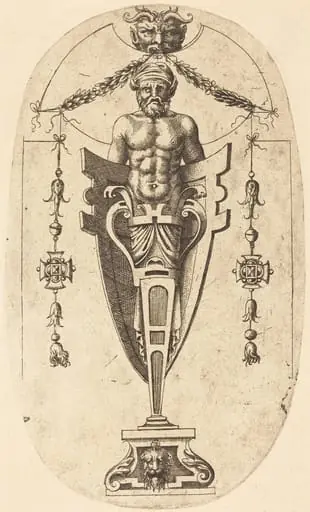 Man in a Niche
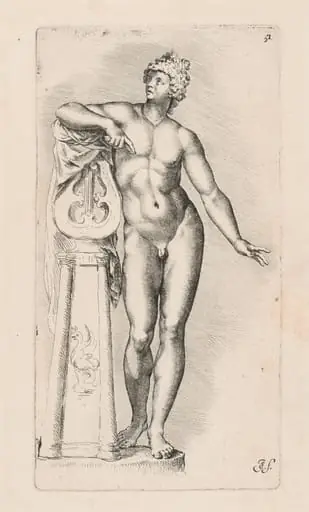 Apollo Sauroctonos