Artwork
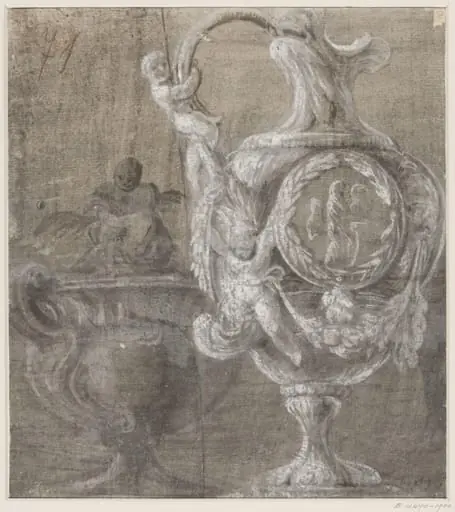
Design for a ewer with nude figures and serpents
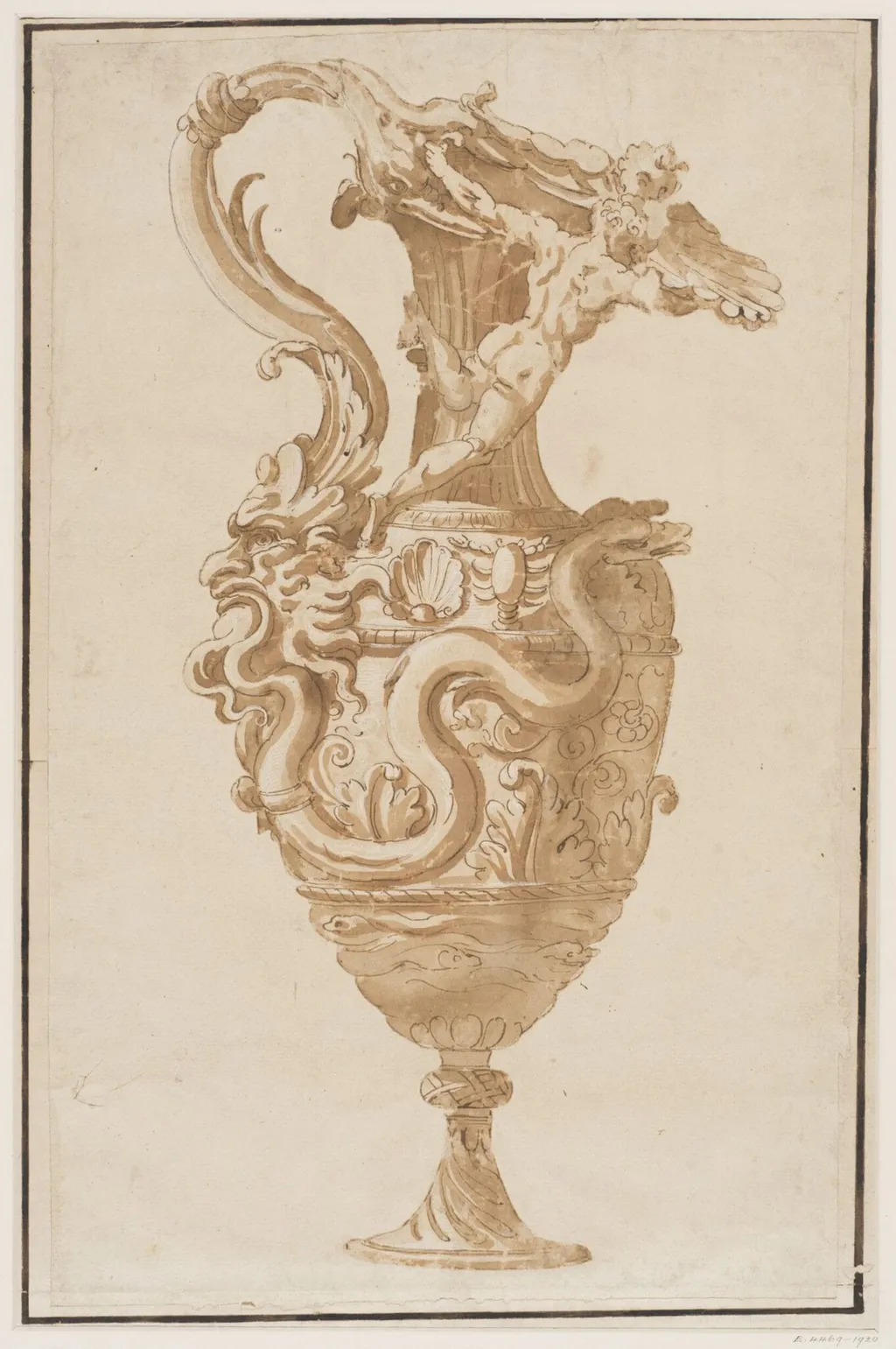
Design for a ewer with nude figures and serpents is a drawing by Caldara. It is held in the collection of the Victoria and Albert Museum.
About this work
Overview
This Florentine School drawing, circa 1550, presents a design for an ornate ewer, integrating nude figures, serpents, and organic motifs within a decorative scheme.
Subject & Meaning
The ewer's design combines symbolic elements: nude figures (potentially alluding to mythological or allegorical themes), serpents (often representing renewal or evil in Renaissance art), and lush vegetation, suggesting a balance between nature, humanity, and possibly moral dichotomies.
Technique & Style
Executed with quick, expressive lines, the drawing implies depth and dynamism. The sketchy approach, reminiscent of preliminary designs, may indicate its status as a conceptual study for a decorative arts piece, such as pottery or metalwork.
History & Provenance
Attributed to the Florentine School, this work reflects the artistic tendencies of Florence around 1550, though specific artist attribution and ownership history are not detailed here.
Context
Within the broader context of Renaissance decorative arts, this design embodies the period's fascination with classical motifs and the interplay between figural and naturalistic elements in applied art forms.
Artist & collection

Artist
Polidoro Caldara, usually known as Polidoro da Caravaggio (c. 1499 – 1543), was an Italian painter of the Mannerist period, "arguably the most gifted and certainly the least conventional of Raphael's pupils", who was…

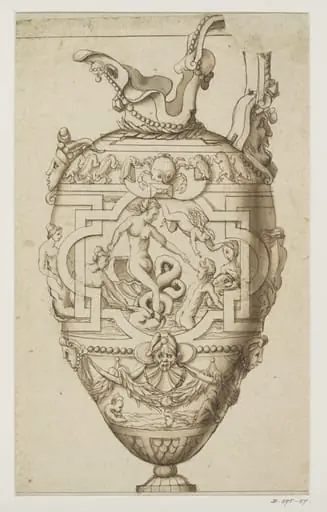 Copy of a design for a ewer
 Design for a Decorative Panel with Two Sirens Holding a Vase Embellished with Dolphins and other Decorative Motifs
 Borghese Vase
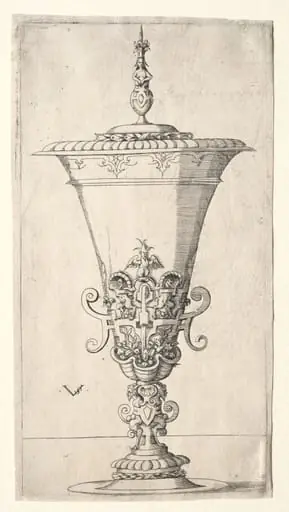 Covered Cup with Satyrs
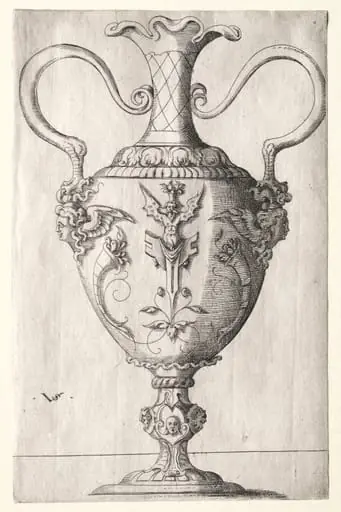 Design for a Vase
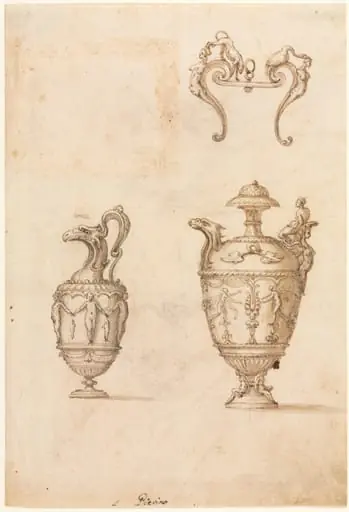 Design for Two Vases and an Ornament (recto)
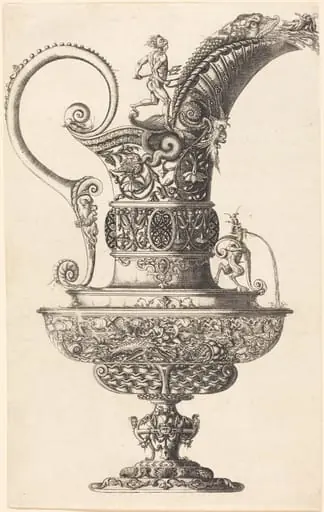 Jar with Neptune
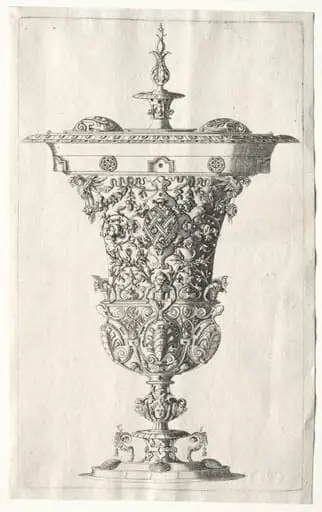 Ornamental Vase
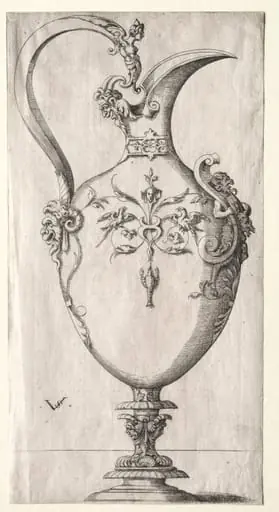 Design for a Ewer
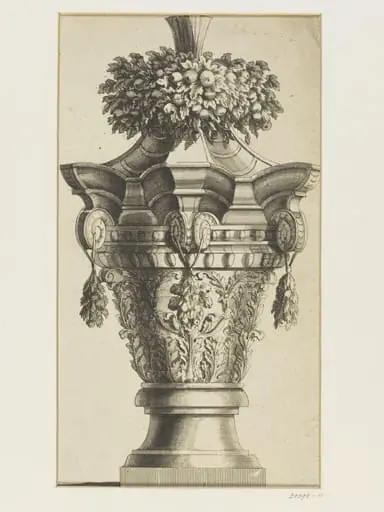 Untitled
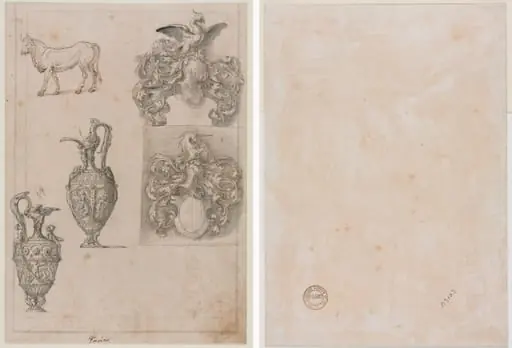 Design for Two Vases, Two Coats of Arms, and a Bull (recto) Several Line Borders (verso)
 Design for a ewer and a vase