Artwork
Arcadian Landscape with Setting Sun
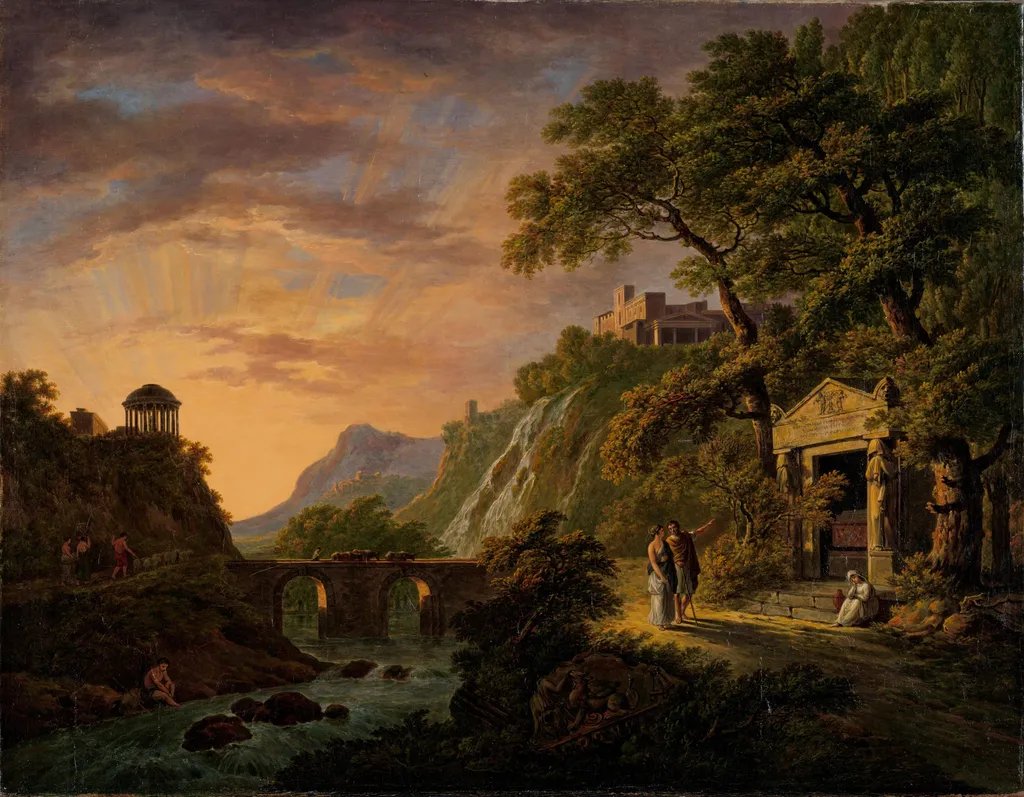
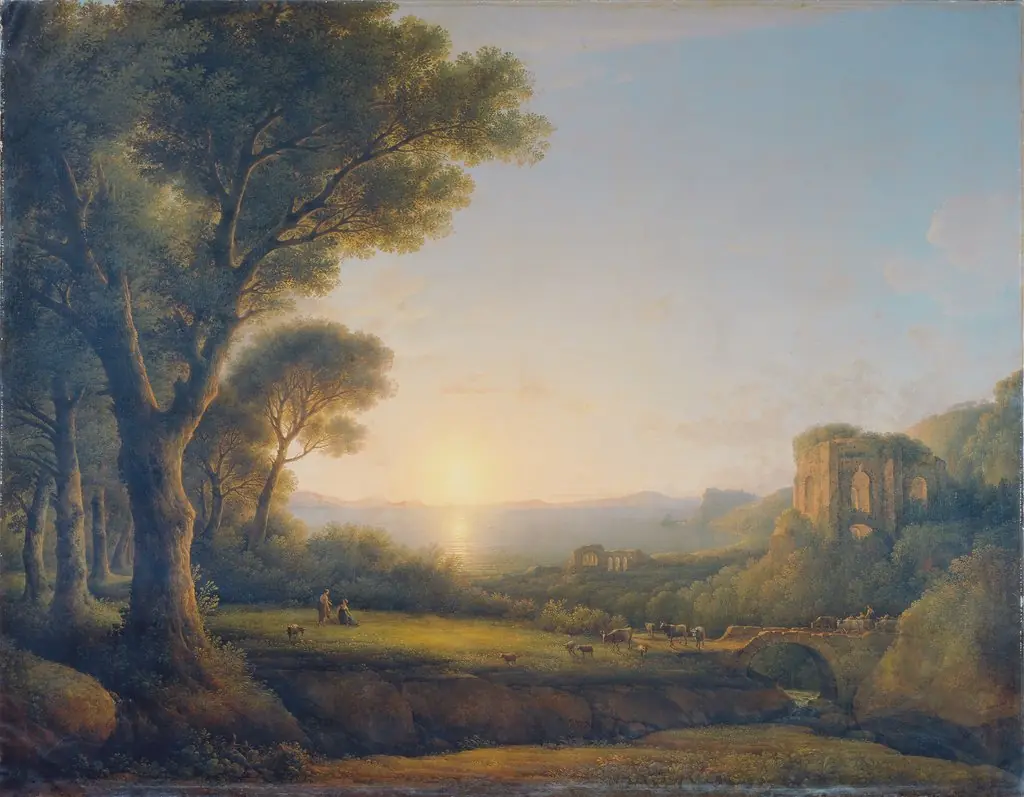
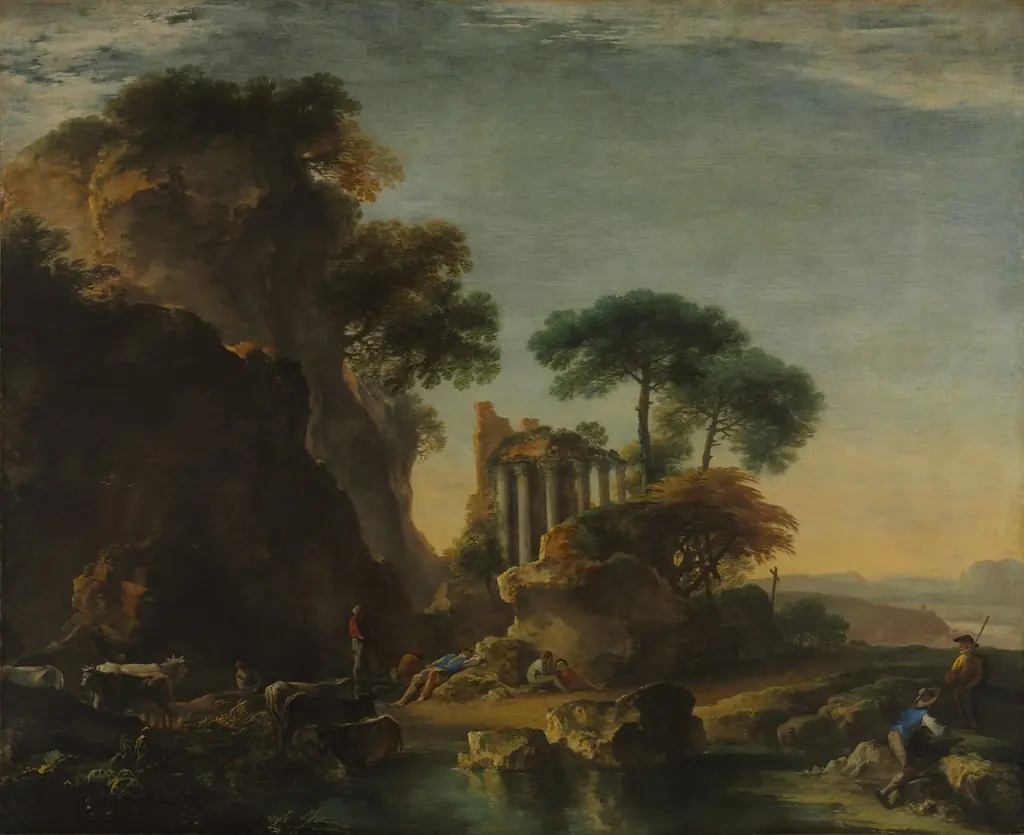
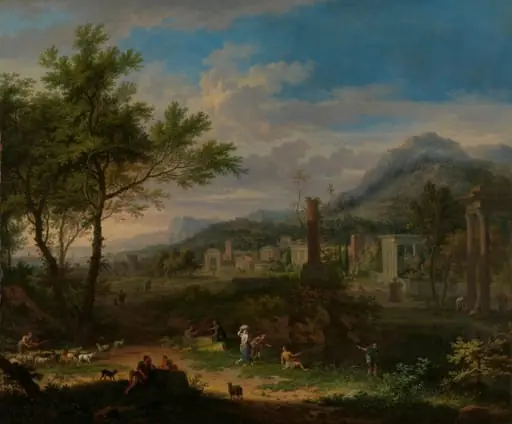
Arcadian Landscape with Setting Sun is an unspecified painting by the Rococo painting artist Unknown. It dates from 1800 and is held in the collection of the Rijksmuseum. This painting forms a paired composition with View of Civita Castellana, created during the artist’s return from Italy.
About this work
Overview
This painting forms a paired composition with View of Civita Castellana, created during the artist’s return from Italy. It captures a tranquil moment at dusk, where the fading light softens the landscape into muted hues of pink and gold. The scene is not a dramatic spectacle but a contemplative stillness, reflecting personal observation rather than idealized grandeur.
Subject & Meaning
Two figures in classical attire stand silently on a hillside, facing the ruins of an ancient temple. Their presence suggests reverence or quiet reflection, evoking a sense of continuity between past and present. The absence of narrative action invites the viewer to share in a private, meditative encounter with history and nature.
Technique & Style
The artist employed delicate brushwork to render the fading light and long shadows cast by trees. Colors are subdued and atmospheric, with soft transitions between sky and land. The composition emphasizes horizontal planes and quiet balance, reinforcing the calm, introspective mood rather than theatrical drama.
History & Provenance
Painted shortly after the artist’s journey through Italy, the work draws directly from firsthand impressions of the Italian countryside and its classical remains. It was intended as a companion piece to another view of Civita Castellana, forming a diptych that together documents the artist’s visual diary of the region.
Context
In the early 19th century, European artists increasingly sought inspiration in the landscapes and ruins of Italy, viewing them as sources of aesthetic and spiritual renewal. This painting reflects that trend, not as a scholarly reconstruction but as a personal, emotional response to light, place, and antiquity.
Legacy
The work contributes to a broader tradition of lyrical landscape painting that values mood over monumentality. Its quiet intimacy influenced later artists who prioritized personal perception in depicting nature and ruins, shifting focus from grand narratives to subtle, remembered moments.
Artist & collection

 Domestic Scene
 Giacomo and Cardinal Marco, investing Andrea, Abbot of San Zeno, with his Benefice
 The Nymph of Fontainebleau
 Portrait of a Woman
 Madonna and Child with Saints in the Enclosed Garden
 Venus and Minerva
 Family Group of Four on Sofa
 Wall painting from Room H of the Villa of P. Fannius Synistor at Boscoreale
 Arcadisch landschap met ondergaande zon
 Arcadian Landscape with Fishermen
 Landscape with the Vocation of St Peter
 Italienische Landschaft
 Der Meerbusen von Baiae bei Sonnenuntergang
 Mountain Landscape with a River
 Untitled
 Ruins in a Rocky Landscape
 Rheinlandschaft mit Reisenden
 Mountainous landscape
 Landscape of Ancient Greece
 Arcadian Landscape with Fishermen