Artwork
Arhat
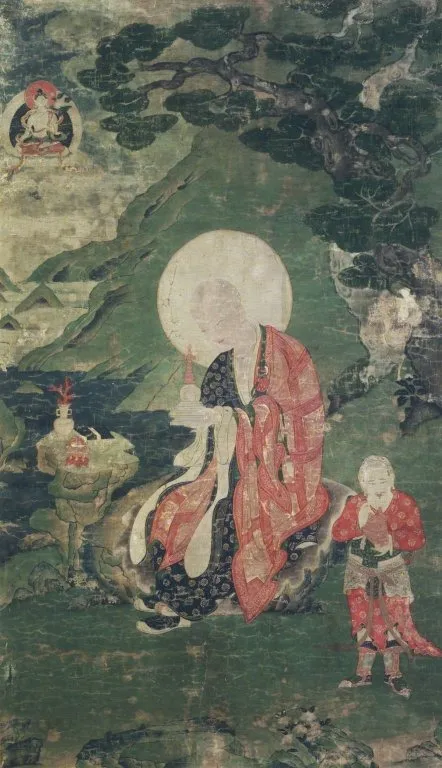
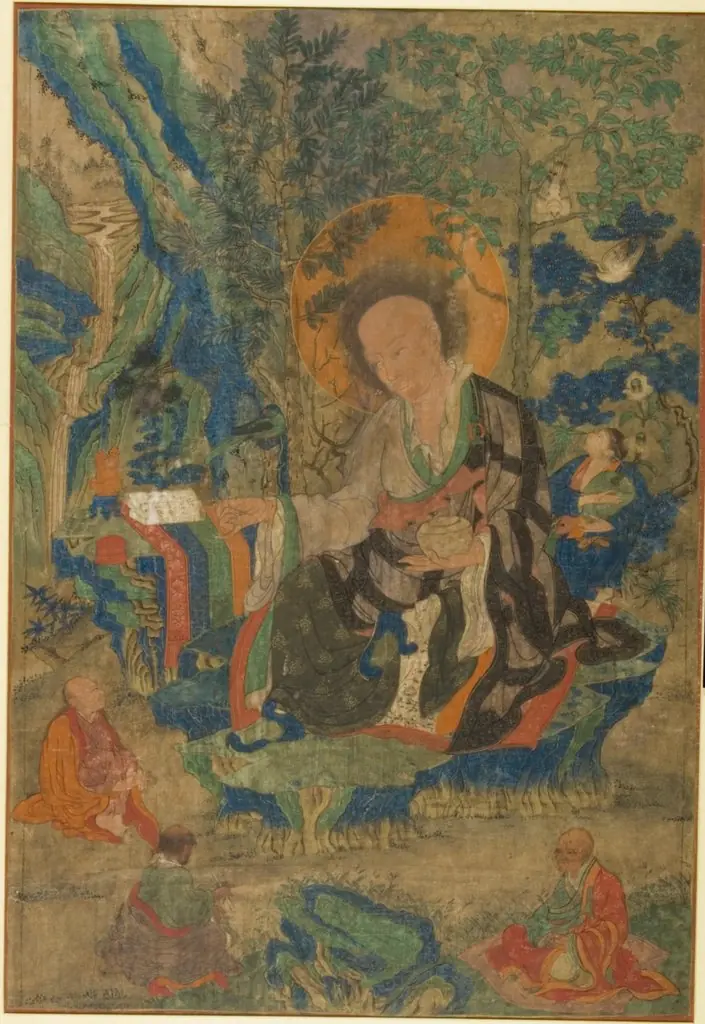
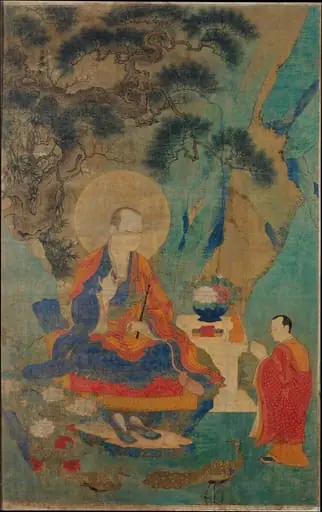
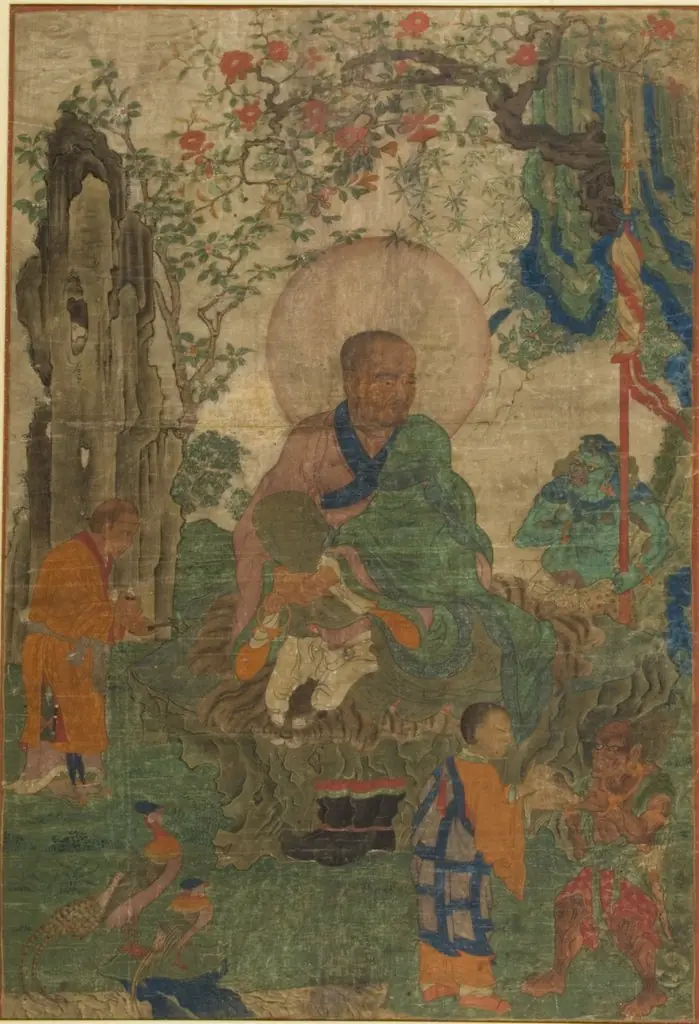
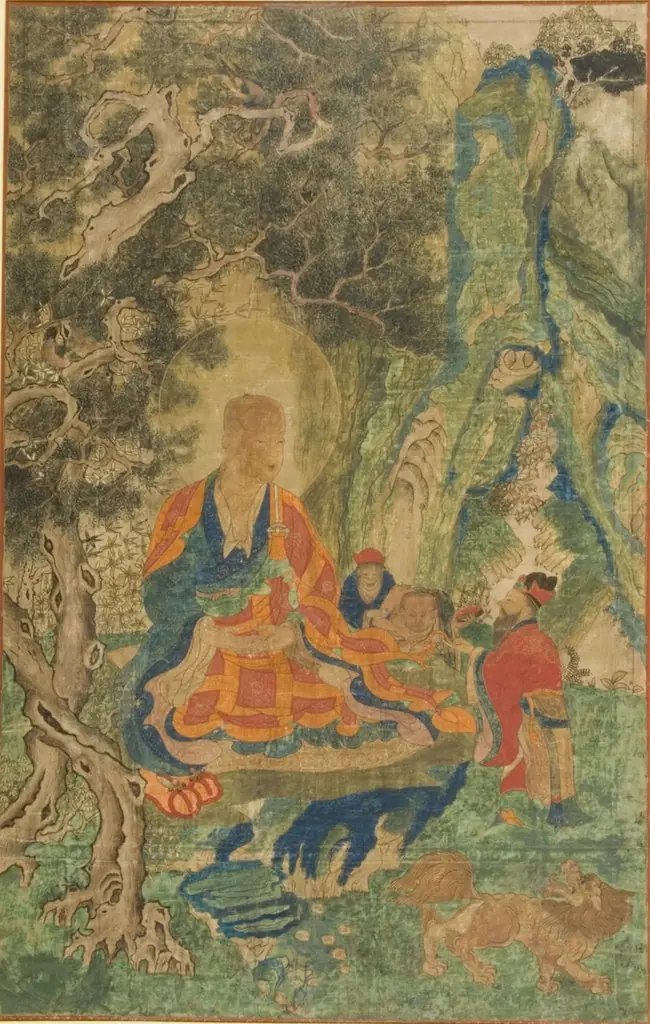
Arhat is an unspecified painting by Unknown. It dates from 1700 and is held in the collection of the Brooklyn Museum. This ink-and-color painting depicts a central religious figure seated on a rock, surrounded by two attendants.
About this work
Overview
The figure is distinguished by a halo and a red robe over a dark undergarment, holding a white object in his right hand.
This ink-and-color painting depicts a central religious figure seated on a rock, surrounded by two attendants. The figure is distinguished by a halo and a red robe over a dark undergarment, holding a white object in his right hand. The background features muted green tones, dark clouds, and a sparse tree branch, framing the scene without distraction. The composition directs attention to the central figure, emphasizing his spiritual presence.
Subject & Meaning
The central figure is likely an arhat, an enlightened disciple of the Buddha, identified by the halo and serene posture. The smaller figures to either side appear to be disciples or guardians, their gestures and positioning suggesting reverence or service. The white object in the arhat’s hand may represent a ritual implement or a symbol of spiritual authority. The scene conveys quiet devotion rather than dramatic narrative, typical of Chan Buddhist iconography.
Technique & Style
The painting employs fine ink lines and layered washes to define form and texture. The red robes are rendered with subtle gradations, contrasting with the dark undergarment and the muted green background. The halo is rendered as a simple circular outline, while the clouds and branch are suggested with minimal strokes. The scale difference between the central figure and attendants reinforces hierarchical spiritual emphasis over naturalistic proportion.
History & Provenance
The painting is held in the collection of the Brooklyn Museum, though its exact origin and date remain undocumented in public records. Its style aligns with Chinese Buddhist paintings from the Yuan or Ming dynasties, when arhat imagery was widely produced for monastic and lay devotion. It likely entered the museum through early 20th-century acquisitions of East Asian art.
Context
Arhat paintings were common in East Asian Buddhist traditions, especially in Chan (Zen) contexts, where they symbolized spiritual attainment through discipline and detachment. Unlike elaborate celestial beings, arhats were depicted as human, often in natural settings, to reflect their earthly path to enlightenment. This work reflects a quiet, contemplative tradition that valued inner realization over ornate ritual.
Legacy
As part of a broader corpus of Buddhist devotional art, this painting contributes to the understanding of how spiritual authority was visually encoded in East Asia. Its restrained composition and symbolic use of color and scale reflect enduring aesthetic principles in Chan Buddhist art. It remains a quiet testament to the visual language of monastic ideals in pre-modern China.
Artist & collection

 Domestic Scene
 Giacomo and Cardinal Marco, investing Andrea, Abbot of San Zeno, with his Benefice
 The Nymph of Fontainebleau
 Portrait of a Woman
 Madonna and Child with Saints in the Enclosed Garden
 Venus and Minerva
 Family Group of Four on Sofa
 Wall painting from Room H of the Villa of P. Fannius Synistor at Boscoreale