Artwork
Rakkan (Arhat)
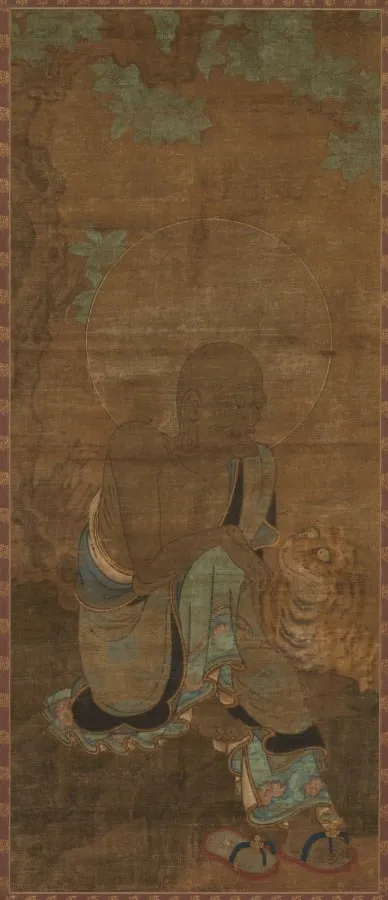
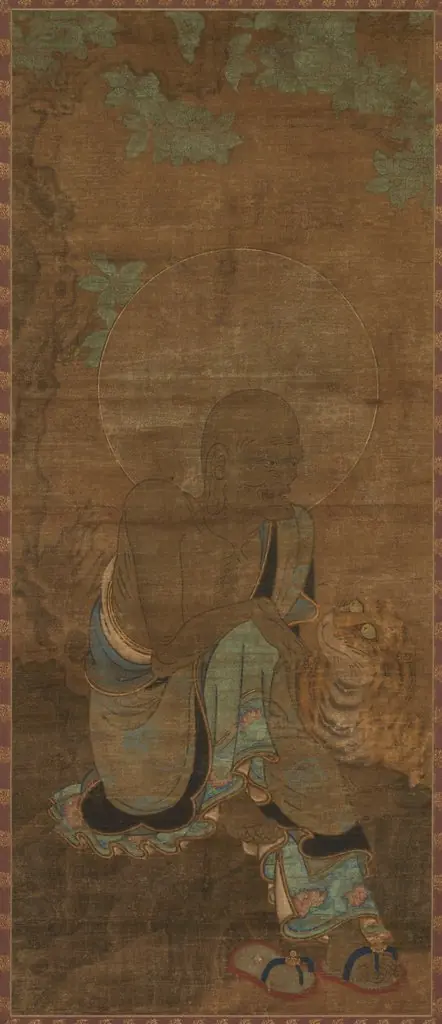
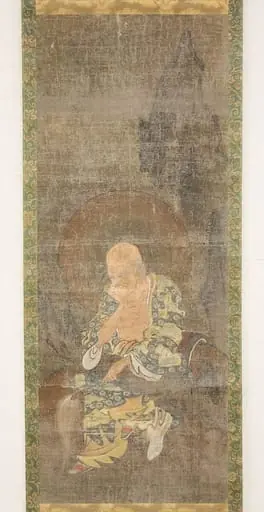
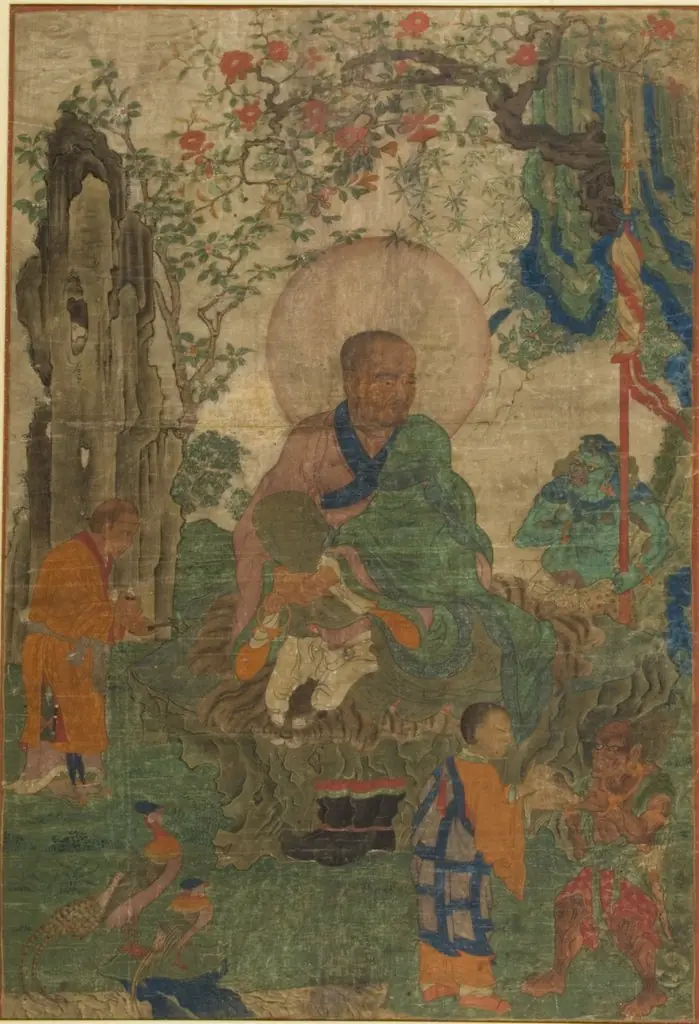
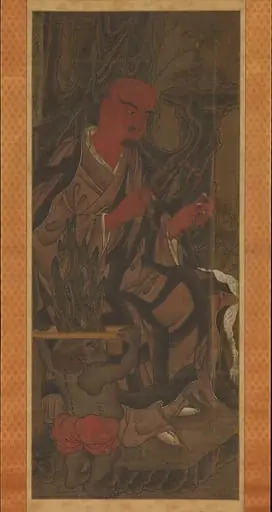
Rakkan (Arhat) is an unspecified painting by Unknown. It dates from 1304 and is held in the collection of the Cleveland Museum of Art. The work portrays a seated monk in a cross‑legged posture, his figure framed by a muted brown backdrop.
About this work
Overview
The work portrays a seated monk in a cross‑legged posture, his figure framed by a muted brown backdrop. He wears a long robe patterned in blue and white, a black waist sash, and matching blue‑white footwear. A prominent halo radiates behind his head, while stylized green foliage crowns the upper portion, lending a tranquil atmosphere to the composition.
Subject & Meaning
The central figure represents an arhat, a enlightened disciple in Buddhist tradition, indicated by the halo and serene expression. The surrounding leaves may symbolize the natural world’s harmony with spiritual attainment, reinforcing the monk’s calm demeanor and the Buddhist ideal of inner peace.
Technique & Style
Executed in a restrained palette, the painting balances earthy browns with cool blues and whites, creating visual contrast between the monk’s garments and the background. Fine brushwork delineates the robe’s pattern and the sash, while broader strokes suggest the foliage, reflecting a stylistic transition between the Kamakura and Nanbokuchō periods in Japanese painting.
Context
The piece belongs to a period of Japanese art marked by the gradual shift from the militaristic Kamakura era to the more courtly Nanbokuchō phase. During this time, Buddhist iconography remained prevalent, and artists often emphasized contemplative subjects, aligning with contemporary religious practices and aesthetic preferences.
Artist & collection

 Domestic Scene
 Giacomo and Cardinal Marco, investing Andrea, Abbot of San Zeno, with his Benefice
 The Nymph of Fontainebleau
 Portrait of a Woman
 Madonna and Child with Saints in the Enclosed Garden
 Venus and Minerva
 Family Group of Four on Sofa
 Wall painting from Room H of the Villa of P. Fannius Synistor at Boscoreale