Artwork
Azam Shah
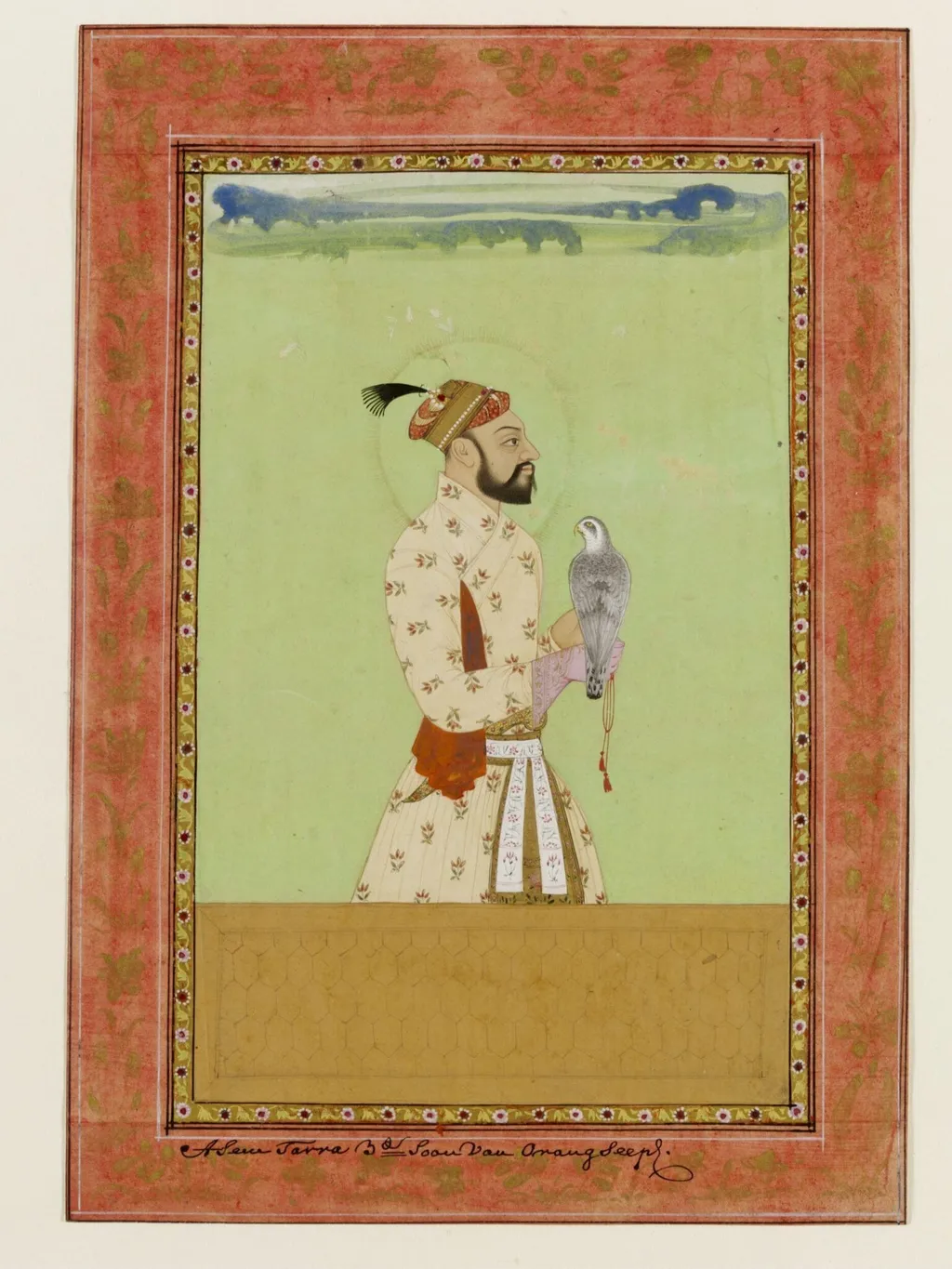
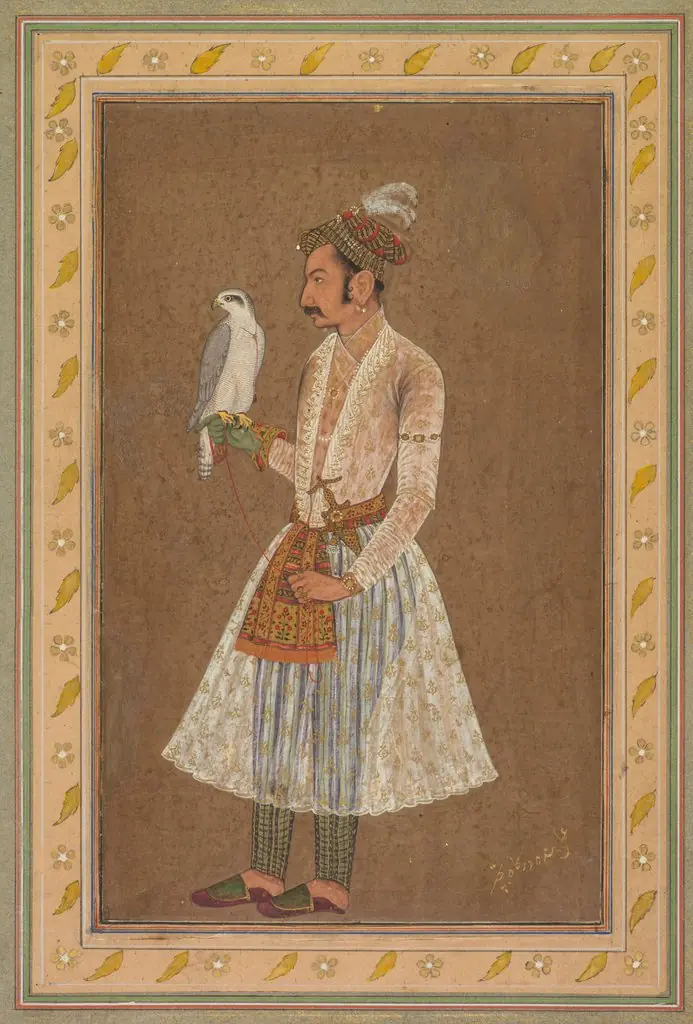
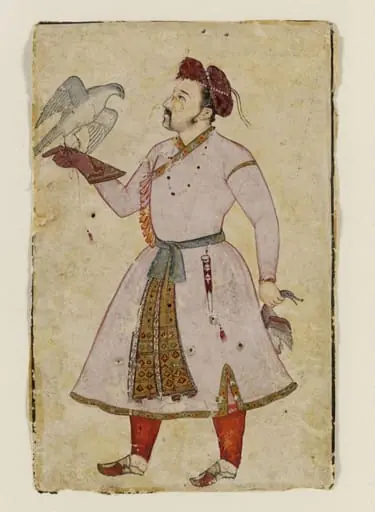
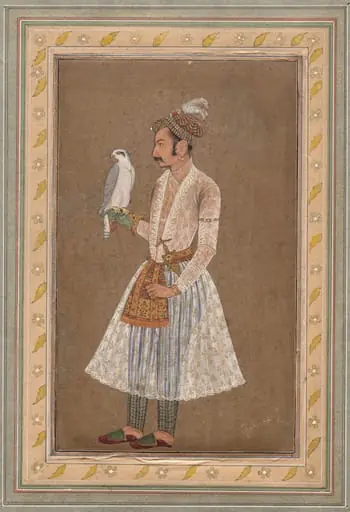
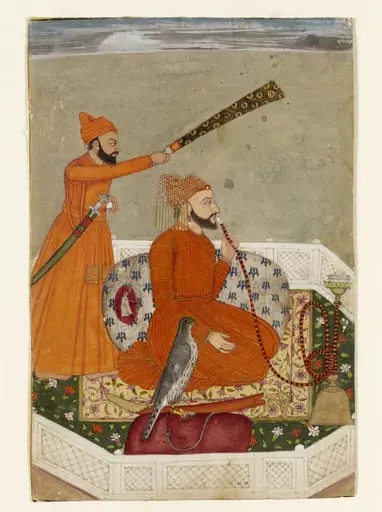
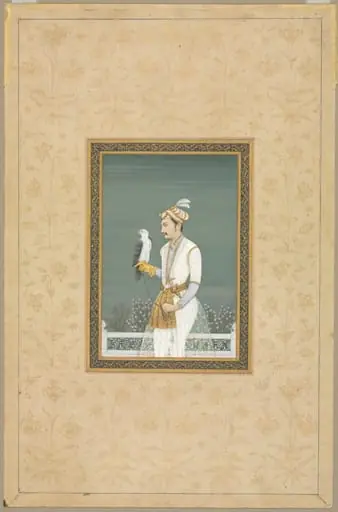
Azam Shah is a paint painting by the Baroque artist Unknown. It dates from 1680 and is held in the collection of the Victoria and Albert Museum.
About this work
Overview
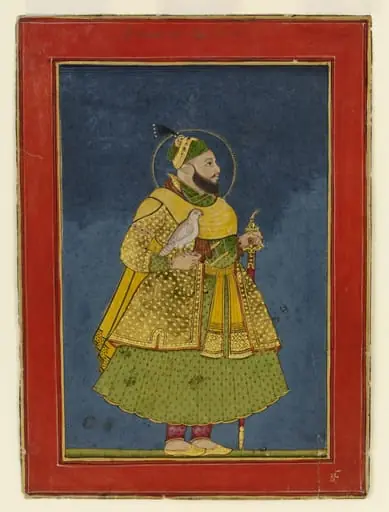
Created in 1680, this opaque watercolor on paper depicts Azam Shah, the third son of Mughal emperor Aurangzeb. A Dutch caption on the work identifies the sitter as “Asem Tarra Bd. Soon van Arangseepe,” confirming the portrait’s historical context within the late seventeenth‑century Mughal court.
Subject & Meaning
The figure is presented with a full beard and a turban, holding a trained falcon—a traditional symbol of aristocratic status and hunting prowess. His white robe, adorned with a subtle floral motif, is cinched by a red sash, reinforcing his noble rank within the imperial family.
Technique & Style
Executed in opaque watercolor, the painting achieves a notable depth through careful modeling of light and shadow. Fine brushwork renders the texture of the falcon’s feathers and the intricate patterns of the garment, while a muted green ground provides a gentle atmospheric backdrop.
History & Provenance
The Dutch inscription suggests the work passed through European hands, likely during the period of Anglo‑Dutch trade with the Mughal Empire. Its survival on paper indicates careful preservation, though the exact chain of ownership before its current location remains undocumented.
Context
The portrait aligns with the Mughal tradition of courtly portraiture that incorporated Persian influences while also reflecting contemporary European artistic conventions, such as the use of chiaroscuro to model form. This cross‑cultural exchange was common in the late Mughal period, when European traders and missionaries were active in India.
Artist & collection

 Domestic Scene
 Giacomo and Cardinal Marco, investing Andrea, Abbot of San Zeno, with his Benefice
 The Nymph of Fontainebleau
 Portrait of a Woman
 Madonna and Child with Saints in the Enclosed Garden
 Venus and Minerva
 Family Group of Four on Sofa
 Wall painting from Room H of the Villa of P. Fannius Synistor at Boscoreale