Artwork
Bhairava Raga
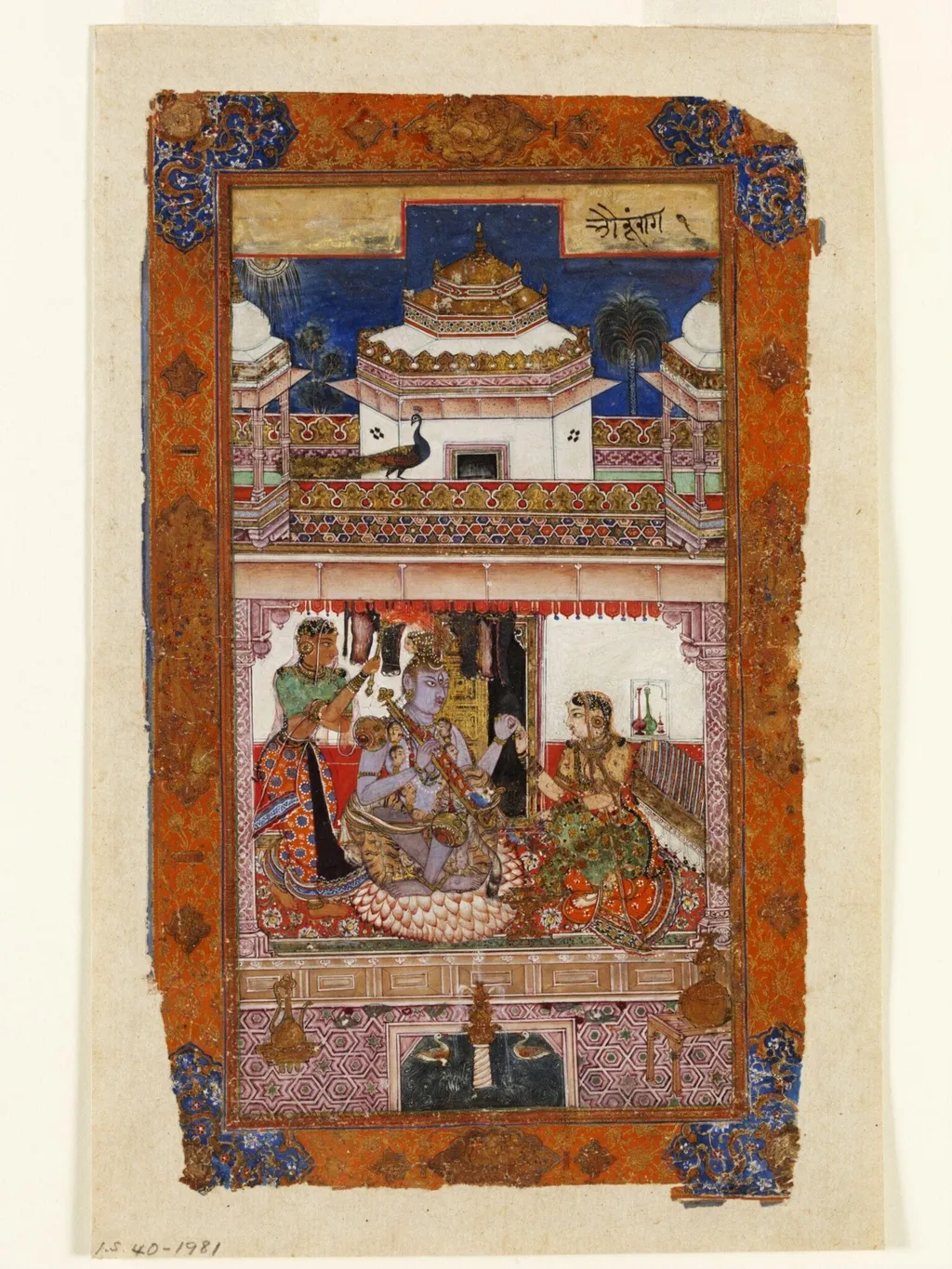
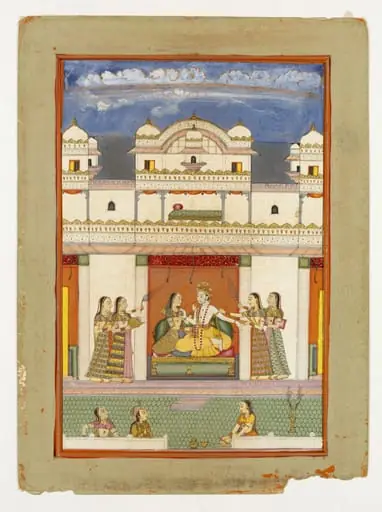
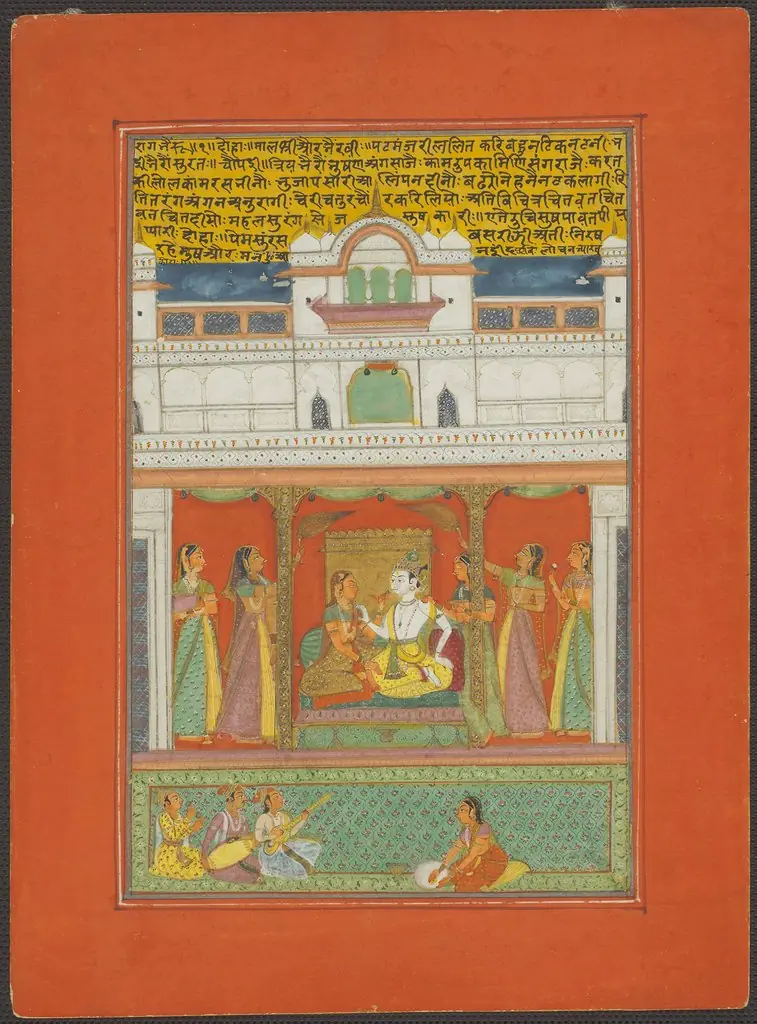
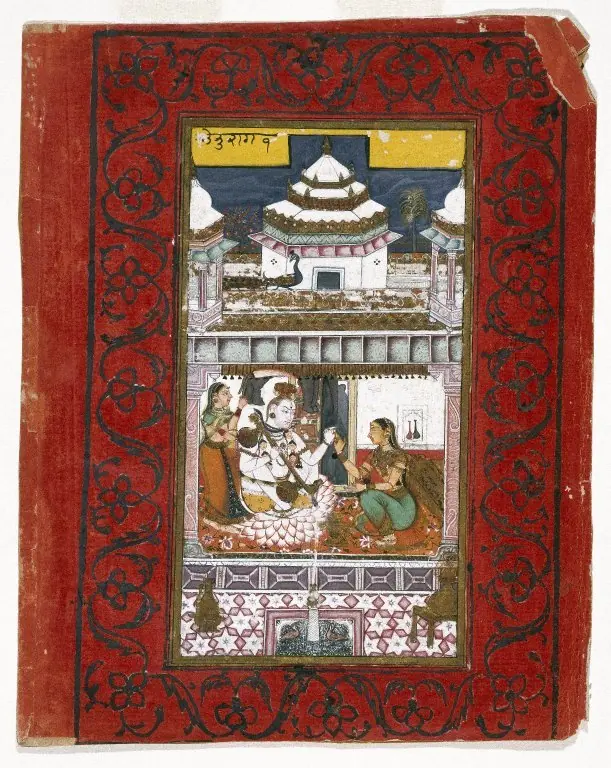
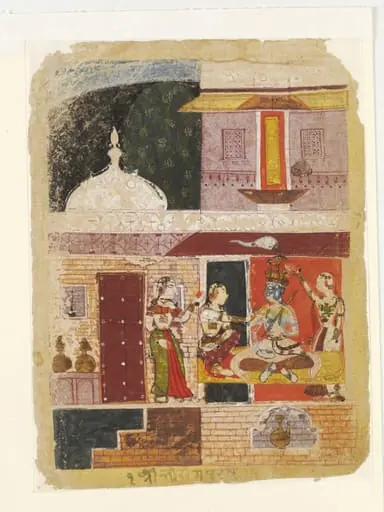
Bhairava Raga is a paint painting by the Mughal Painting artist Unknown. It dates from 1591 and is held in the collection of the Victoria and Albert Museum. This painting is one panel from a ragamala series, a collection that visually interprets Hindu musical modes called ragas.
About this work
Overview
Created around 1591, the work originates from Chunar, near Varanasi, and was produced by artists trained in the Mughal court tradition.
This painting is one panel from a ragamala series, a collection that visually interprets Hindu musical modes called ragas. Each image links a specific raga to a narrative or figure, blending spiritual and aesthetic traditions. The scene depicts Bhairava, a fierce form of Shiva, alongside his consort Parvati in an opulent palace. Created around 1591, the work originates from Chunar, near Varanasi, and was produced by artists trained in the Mughal court tradition.
Subject & Meaning
Bhairava raga is embodied through Shiva in his terrifying aspect, depicted with blue skin and a rigid posture, conveying the raga’s austere and solemn character. Parvati, serene and kneeling beside him, balances his intensity with quiet grace. The pairing reflects the raga’s emotional depth—fear and devotion intertwined. The palace setting elevates the divine couple beyond the earthly, aligning the musical mode with cosmic order and ritualized worship.
Technique & Style
The painting merges Mughal naturalism with Hindu iconography, featuring fine brushwork, rich mineral pigments, and intricate detail in textiles and jewelry. Figures are rendered with precise anatomy and expressive gestures, characteristic of the imperial atelier style pioneered by Mir Sayyid 'Ali and 'Abd us-Samad. Despite its small scale, the composition is densely layered, using color and pattern to convey both luxury and spiritual gravity.
History & Provenance
The painting once belonged to a complete ragamala set whose colophon, now held privately, recorded its completion in 1591 at Chunar and named three artists as pupils of Mir Sayyid 'Ali. The dispersal of the series over time has left most panels in separate collections. The surviving colophon confirms the work’s imperial Mughal origins and the trained lineage of its creators, linking it directly to Akbar’s court workshops.
Context
In late 16th-century India, Mughal rulers patronized hybrid artistic forms that fused Persian, Islamic, and indigenous traditions. The ragamala genre emerged as part of this cultural synthesis, translating musical theory into visual poetry. Chunar, a regional center near Varanasi, became a hub for such works, where local religious themes met the refined techniques of the imperial studio, creating a unique devotional art form.
Legacy
This painting exemplifies how Mughal artistic practices were adapted to express Hindu devotional concepts, influencing later regional styles across northern India. Though the full ragamala set is now fragmented, its surviving panels remain key to understanding the intersection of music, religion, and painting in early modern South Asia. The work’s precision and synthesis continue to inform scholarly study of Indo-Islamic visual culture.
Artist & collection

 Domestic Scene
 Giacomo and Cardinal Marco, investing Andrea, Abbot of San Zeno, with his Benefice
 The Nymph of Fontainebleau
 Portrait of a Woman
 Madonna and Child with Saints in the Enclosed Garden
 Venus and Minerva
 Family Group of Four on Sofa
 Wall painting from Room H of the Villa of P. Fannius Synistor at Boscoreale