Artwork
Bhairava Raga
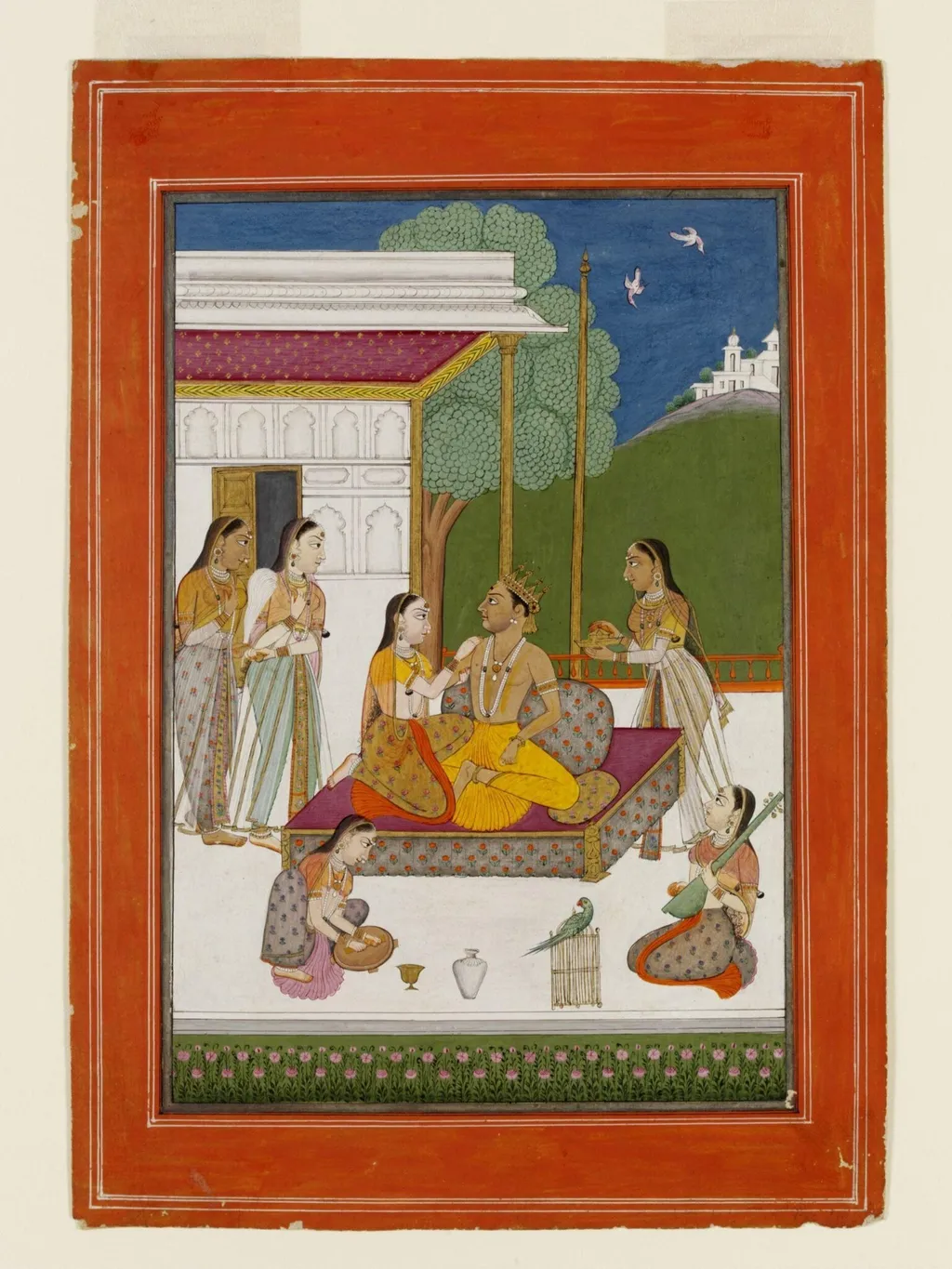
Bhairava Raga is a paint painting by the Baroque artist Unknown. It dates from 1740 and is held in the collection of the Victoria and Albert Museum.
About this work
Overview
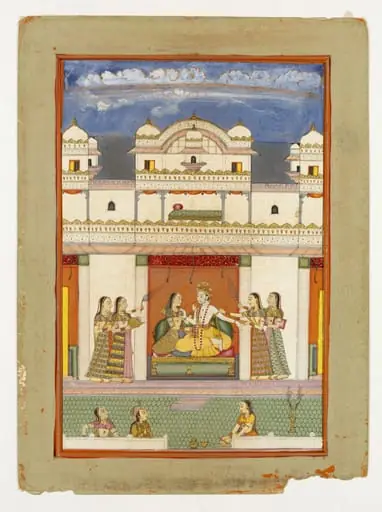
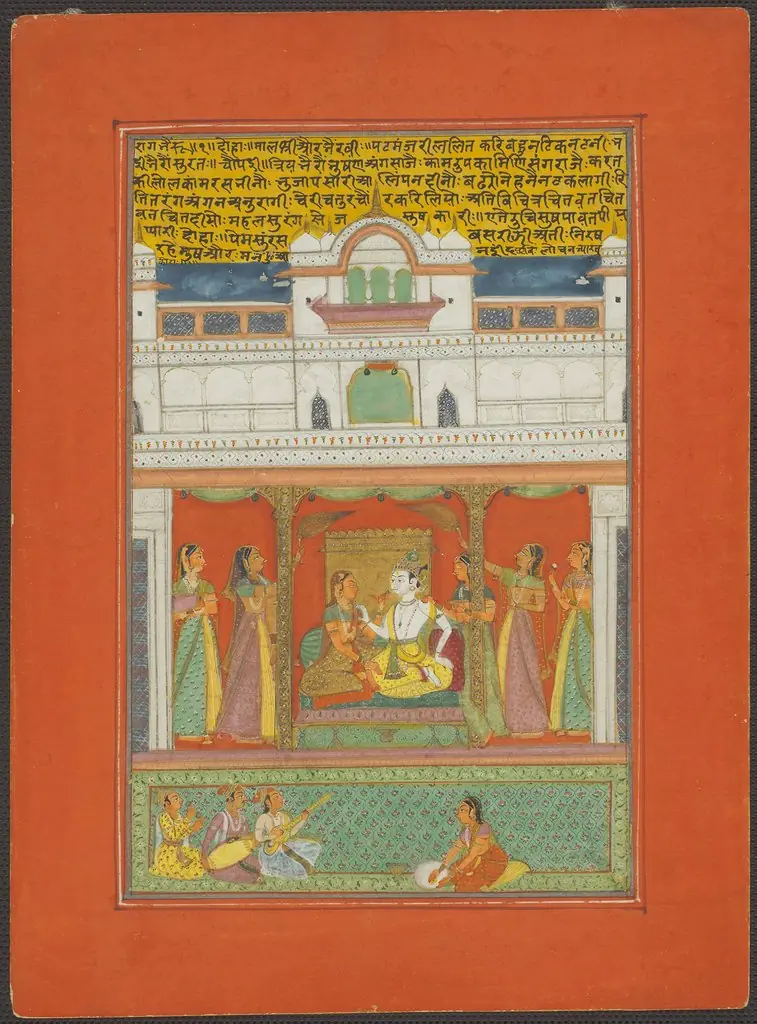
Bhairava Raga is a 1740 opaque watercolor painting on paper, part of a Ragamala series. It depicts a serene courtly scene set on a decorated balcony.
Subject & Meaning
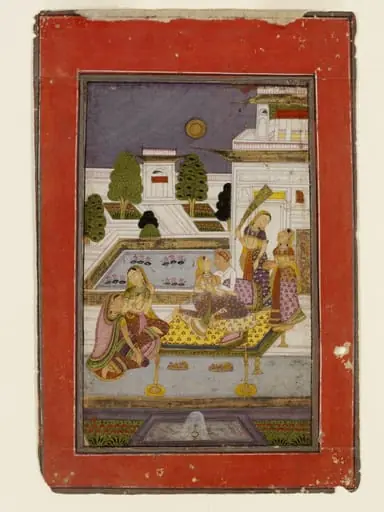
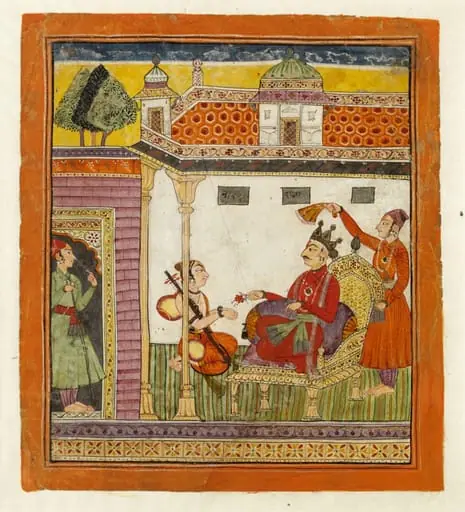
The painting centers on a king, identifiable by his yellow attire and crown, surrounded by attendants. One woman applies sandal paste to his shoulder, while others engage in activities suggesting a performance: one fans him, another plays a stringed instrument. A bird's presence adds to the tranquil, intimate atmosphere.
Technique & Style
Executed in opaque watercolor, the work features vivid, bright colors characteristic of its period. The detailed rendering of textiles, architecture (including arches, trees, and a distant temple in the background), and accessories (like the fan and instrument) showcases the artist's attention to decorative elements.
History & Provenance
Created in 1740 as part of a Ragamala collection, the painting's specific provenance history is not detailed here, though its style suggests origins likely within Indian princely states known for such artworks.
Context
Ragamala paintings, like Bhairava Raga, were commissioned by royal courts to illustrate musical modes (ragas) and their associated emotions and scenes. This piece would have been part of a larger set, each depicting a different raga.
Legacy
Now appreciated for its cultural and artistic significance, Bhairava Raga is comparable to other works housed in renowned institutions such as the Victoria and Albert Museum, which holds similar Indian paintings.
Artist & collection

 Domestic Scene
 Giacomo and Cardinal Marco, investing Andrea, Abbot of San Zeno, with his Benefice
 The Nymph of Fontainebleau
 Portrait of a Woman
 Madonna and Child with Saints in the Enclosed Garden
 Venus and Minerva
 Family Group of Four on Sofa
 Wall painting from Room H of the Villa of P. Fannius Synistor at Boscoreale