Artwork
Blid de formă tronconică cu buza înaltă, smălțuit pe interior. Acesta este ornamentat cu motive florale, avimorfe, liniare și curbilinii, realizate prin pictare cu pensula. Pe buza interioară a vasului se identifică motivul geometric al liniei vălurite succedat de motive curbilinii care încadrează un registru floral-vegetal continuu dispus pe zona mediană a vasului. De asemenea, se identifică un motiv avimorf pictat pe fundul vasului și încadrat de un cerc. Obiectul este smălțuit la exterior doar pe buză, pe exteriorul buzei fiind incizate două linii. Fundul este inelar, prevăzut cu două orificii pentru agățare. Se identifică scurgeri insulare de smalț pe exteriorul buzei. Pe exterior se profilează, în zona diametrului maxim, un brâu continuu obținut prin lucrarea la roată. Cromatică: fond: alb (la interior); cărămiziu (exterior); motive: cărămiziu; verde; maro; albastru.
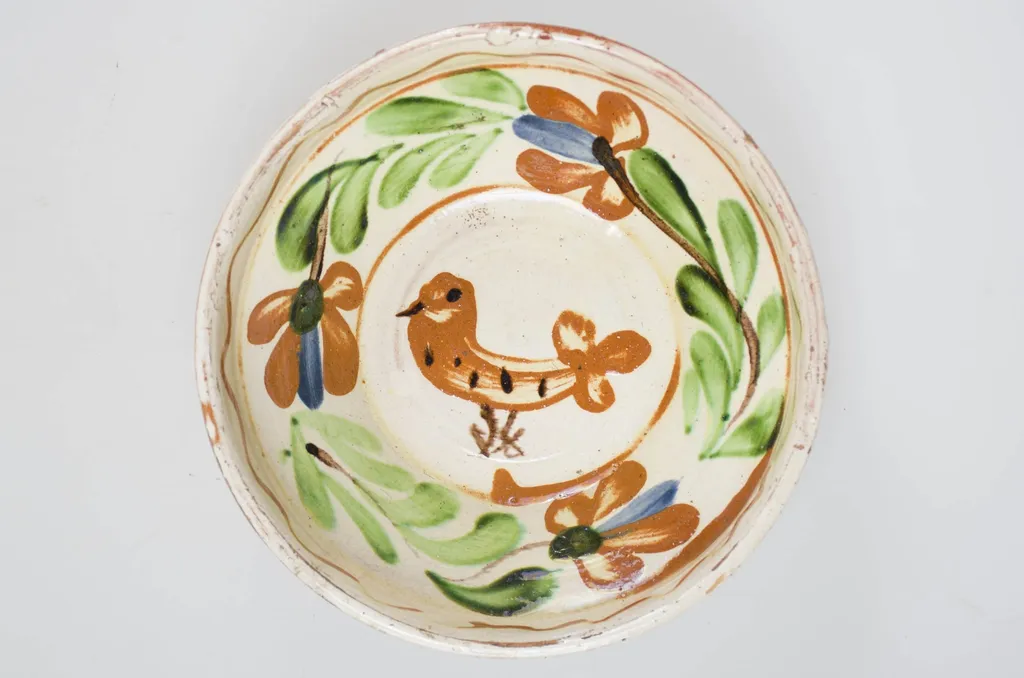
Blid de formă tronconică cu buza înaltă, smălțuit pe interior. Acesta este ornamentat cu motive florale, avimorfe, liniare și curbilinii, realizate prin pictare cu pensula. Pe buza interioară a vasului se identifică motivul geometric al liniei vălurite succedat de motive curbilinii care încadrează un registru floral-vegetal continuu dispus pe zona mediană a vasului. De asemenea, se identifică un motiv avimorf pictat pe fundul vasului și încadrat de un cerc. Obiectul este smălțuit la exterior doar pe buză, pe exteriorul buzei fiind incizate două linii. Fundul este inelar, prevăzut cu două orificii pentru agățare. Se identifică scurgeri insulare de smalț pe exteriorul buzei. Pe exterior se profilează, în zona diametrului maxim, un brâu continuu obținut prin lucrarea la roată. Cromatică: fond: alb (la interior); cărămiziu (exterior); motive: cărămiziu; verde; maro; albastru. is a photography by Unknown. It dates from 1850 and is held in the collection of the ASTRA National Museum Complex. This ceramic bowl features a conical form with a high, flared rim and an interior glazed in white.
About this work
Overview
The vessel’s profile is defined by a continuous band formed during wheel-throwing, emphasizing its functional and handmade origins.
This ceramic bowl features a conical form with a high, flared rim and an interior glazed in white. The exterior is glazed only along the rim, with incised lines marking its edge. The base is ring-shaped and pierced with two holes, likely for suspension. Surface irregularities, including isolated glaze drips, suggest handcrafting. The vessel’s profile is defined by a continuous band formed during wheel-throwing, emphasizing its functional and handmade origins.
Subject & Meaning
The interior decoration centers on a stylized avian motif, enclosed within a circular frame, suggesting symbolic or ritual significance. Surrounding it are continuous floral and vegetal patterns, interwoven with linear and curvilinear elements. These motifs, drawn from natural forms, may reflect a connection to fertility, seasonal cycles, or spiritual protection. The bird, isolated at the base, could represent a messenger or soul, framed as a focal point within a bounded sacred space.
Technique & Style
The decoration was applied with fine brushwork using mineral pigments in earth tones—carmine, green, brown, and blue—over a white slip interior and reddish-brown exterior. The designs are freehand, with fluid contours and layered details, indicating skilled artisan control. The rim’s wavy line and the concentric framing of the bird demonstrate deliberate compositional structure. Glaze application was uneven, revealing the handmade process, while the wheel-thrown band adds rhythmic continuity to the vessel’s silhouette.
History & Provenance
The object’s form, glazing, and decorative motifs align with ceramic traditions of the medieval Balkans or Anatolia, likely dating between the 9th and 12th centuries. Its suspension holes and utilitarian shape suggest domestic or liturgical use. Wear on the rim and glaze inconsistencies point to prolonged handling. No documented excavation or collection history is provided, but its stylistic features place it within regional ceramic workshops that blended local and Byzantine influences.
Context
This bowl belongs to a broader tradition of Islamic and Byzantine-influenced pottery where geometric and organic motifs coexisted in domestic and ceremonial ware. The use of limited pigments and hand-painted designs reflects accessible materials and localized production methods. Similar vessels appear in archaeological contexts across the eastern Mediterranean, often associated with trade routes that facilitated the exchange of techniques and aesthetic preferences among rural and urban centers.
Legacy
The bowl exemplifies a pre-modern ceramic aesthetic that prioritized symbolic clarity and material honesty over ornamental excess. Its enduring appeal lies in the balance between restraint and expressiveness—simple forms animated by deliberate brushwork. While not widely replicated in later periods, its visual language influenced regional folk pottery traditions, preserving a tactile, nature-centered visual vocabulary that contrasts with industrialized ceramic production.
Artist & collection

 Domestic Scene
 Giacomo and Cardinal Marco, investing Andrea, Abbot of San Zeno, with his Benefice
 The Nymph of Fontainebleau
 Portrait of a Woman
 Madonna and Child with Saints in the Enclosed Garden
 Venus and Minerva
 Family Group of Four on Sofa
 Wall painting from Room H of the Villa of P. Fannius Synistor at Boscoreale
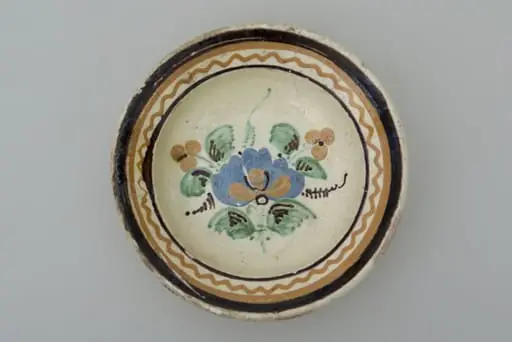 Blid de formă tronconică cu buza evazată. Smălțuit. Decorat cu motive florale: buchet, plasat pe fundul vasului și motive geoemtrice plasate pe gură: alternantă de cercuri și spirale ce se închid îm cerc. Cromatică: fond: alb; motive: maro; crem; verde; albastru.
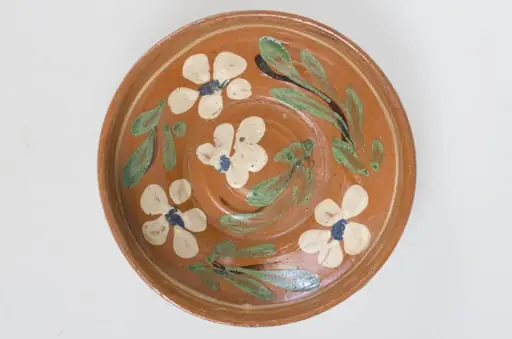 Blidul de formă tronconică adânc, smălțuit (la interior). Acesta este ornamentat cu motive florale, având cu buza înaltă. Blidul este neornamentat la exterior, fiind smălțuit (la exterior) doar pe buză. Pe exteriorul buzei este incizată o linie. Fundul obiectului are formă circulară, fiind prevăzut cu două orificii pentru prindere. Cromatică: fond: cărămiziu (exterior); alb (interior); decor: verde; alb; albastru; maro.
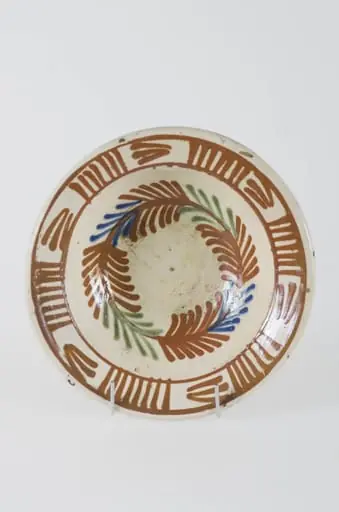 Blid de formă tronconică, lucrat la roată fiind smălțuit la interior cu smalț alb. Prezintă la exterior scurgeri de smalț și de vopsea. Buza este puternic profilată, îngroșată. Motivele decorative sunt vegetale, motivul brăduțului, pe fundul vasului, dispuse într-un registru circular, iar pe buza interioară se identifică un alt registru circular în interiorul căruia sunt pictate linii verticale paralele. Cromatică: fond: alb-gălbui; motive: cărămiziu; albastru; verde.
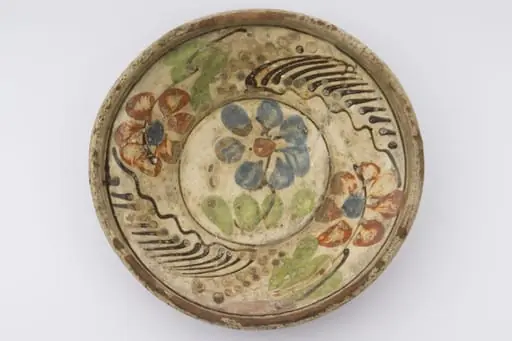 Obiect de uz casnic, realizat din lut, smălțuit la interior, de formă circulară cu profil tronconic și cu buza dreaptă. Decorat prin pictare cu pensula pe întreaga suprafață interioară a vasului cu motive vegetal-florale (flori mari cu frunze) și geometrice (linii circulare, puncte). Central, este pictată o floare albastră. Prezintă urme de uzură funcțională. Rol decorativ. Cromatică: fundal interior alb și exterior cărămiziu; motive: verde, albastru, negru, maro.
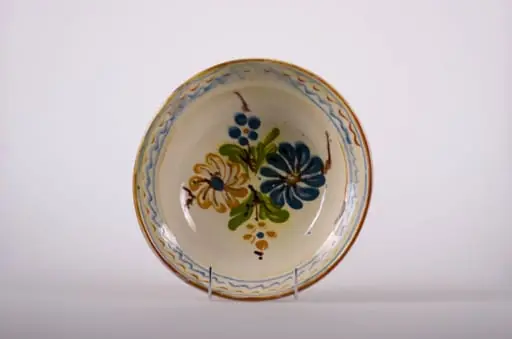 Blid de formă tronconică, adâncit; pe fund are găuri pentru agățare. Este smălțuit în interior și exterior (buza); este decorat cu motive geometrice: linie, linie ondulată; motive fitomorfe: frunze; motive florale. Cromatică: fond: alb; motive: albastru; maro; verde.
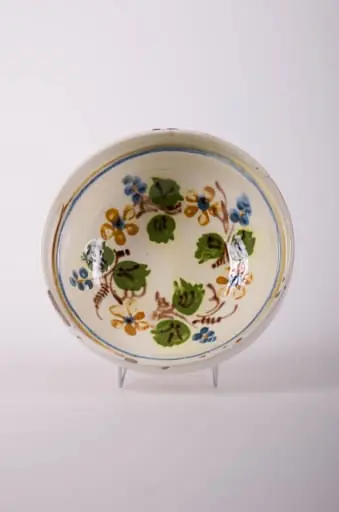 Farfurie de formă tronconică, adâncită, cu buza foarte înaltă; pe fund are găuri pentru agățare. Este smălțuit în interior și exterior (buza). Decorat cu motive geometrice: linie; motive fitomorfe; motive florale. Cromatică: fond: alb; motive: verde; maro; albastru.