Artwork
Bow Gong
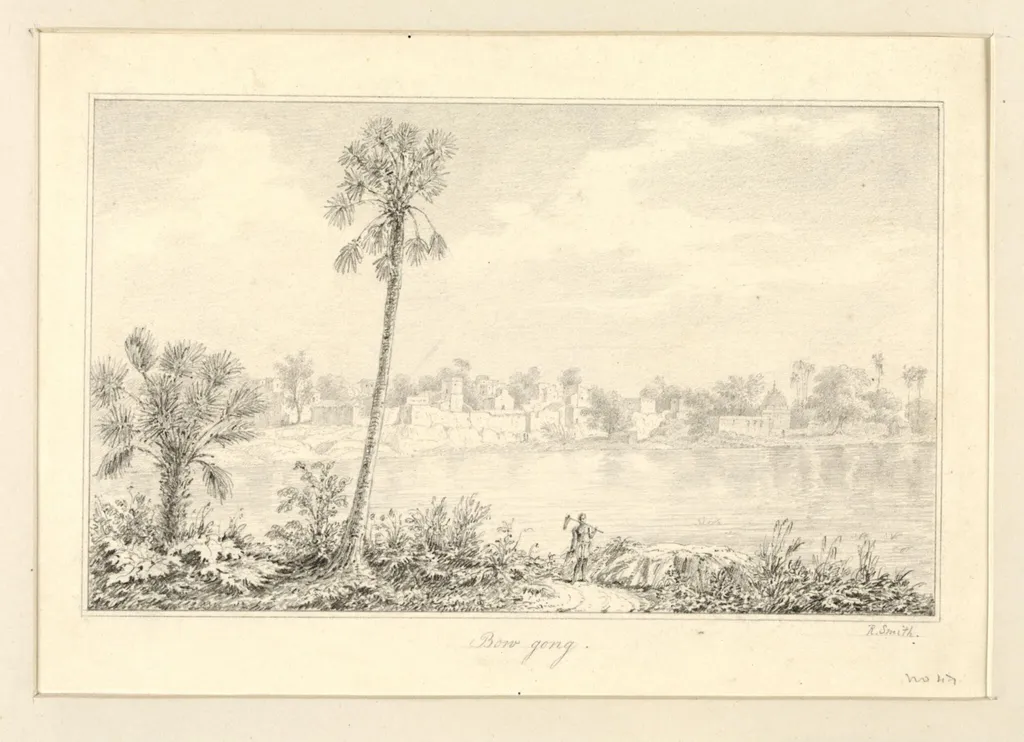
Bow Gong is a drawing by the Romanticist artist Unknown. It dates from 1830 and is held in the collection of the Victoria and Albert Museum.
About this work
Overview
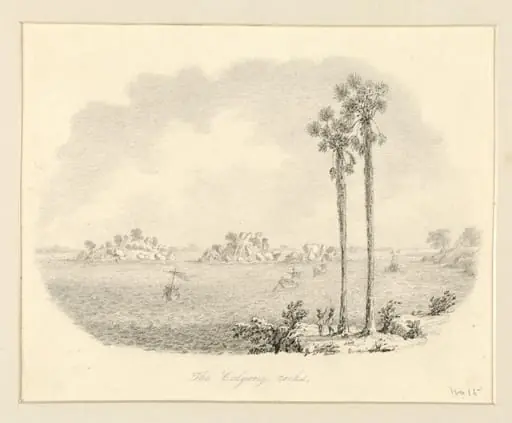
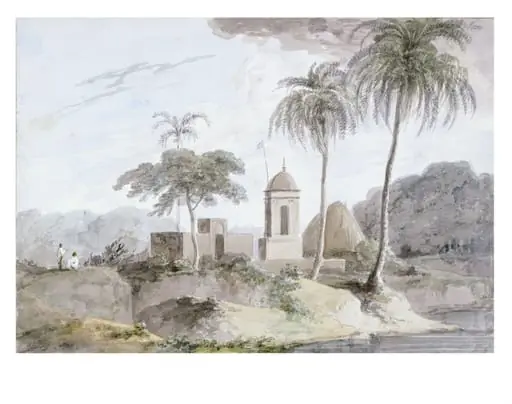
Bow Gong is a pencil drawing that presents a tranquil riverside landscape. A modest village lies across a river, framed by slender palm trees and a solitary figure strolling along the water’s edge. The composition relies on delicate shading to convey depth in foliage and surface, emphasizing the serenity of the natural setting.
Subject & Meaning
The image captures a quiet moment in a riverside settlement, likely identified by the inscription “Bow Gong” at the bottom. The focus on the environment rather than human activity suggests an interest in documenting the locale’s geography and atmosphere rather than narrative storytelling.
Technique & Style
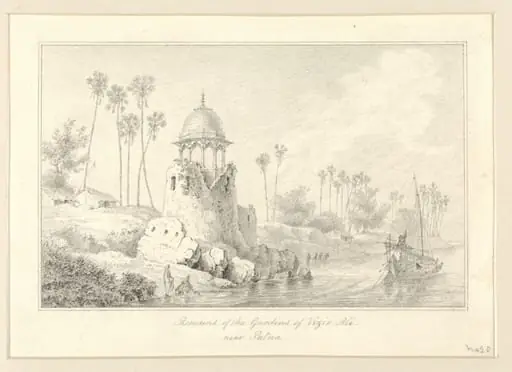
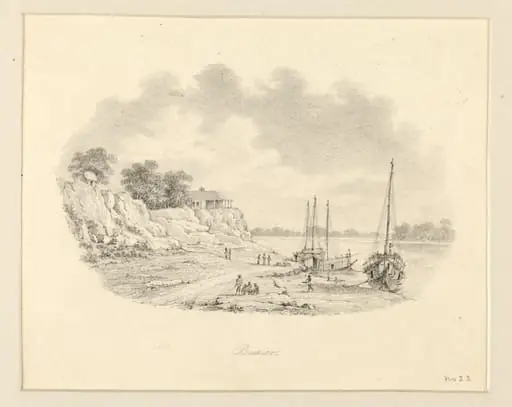
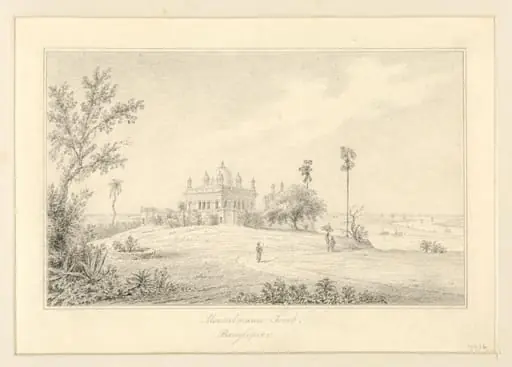
Executed in graphite, the work belongs to a series of 65 detached, mounted pencil illustrations. Light, graduated shading creates texture in the palms, buildings, and water, while the restrained line work conveys a calm, observational quality typical of early 19th‑century travel sketches.
History & Provenance
Bow Gong was produced as part of Captain Robert Smith’s *Pictorial Journal of Travels in Hindustan from 1828 to 1833*, which records his journeys along the Ganges and visits to cities such as Delhi, Agra, and Lucknow. The drawing entered the museum’s collection through a donation by W. M. Biden in 1915.
Context
The illustration forms part of a broader visual record of British officers’ expeditions in northern India during the early 1800s. Smith’s journal combined narrative accounts with visual documentation, offering contemporary audiences a glimpse of the region’s landscape and settlements during a period of expanding colonial interest.
Artist & collection

 Domestic Scene
 Giacomo and Cardinal Marco, investing Andrea, Abbot of San Zeno, with his Benefice
 The Nymph of Fontainebleau
 Portrait of a Woman
 Madonna and Child with Saints in the Enclosed Garden
 Venus and Minerva
 Family Group of Four on Sofa
 Wall painting from Room H of the Villa of P. Fannius Synistor at Boscoreale