Artwork
Buxar
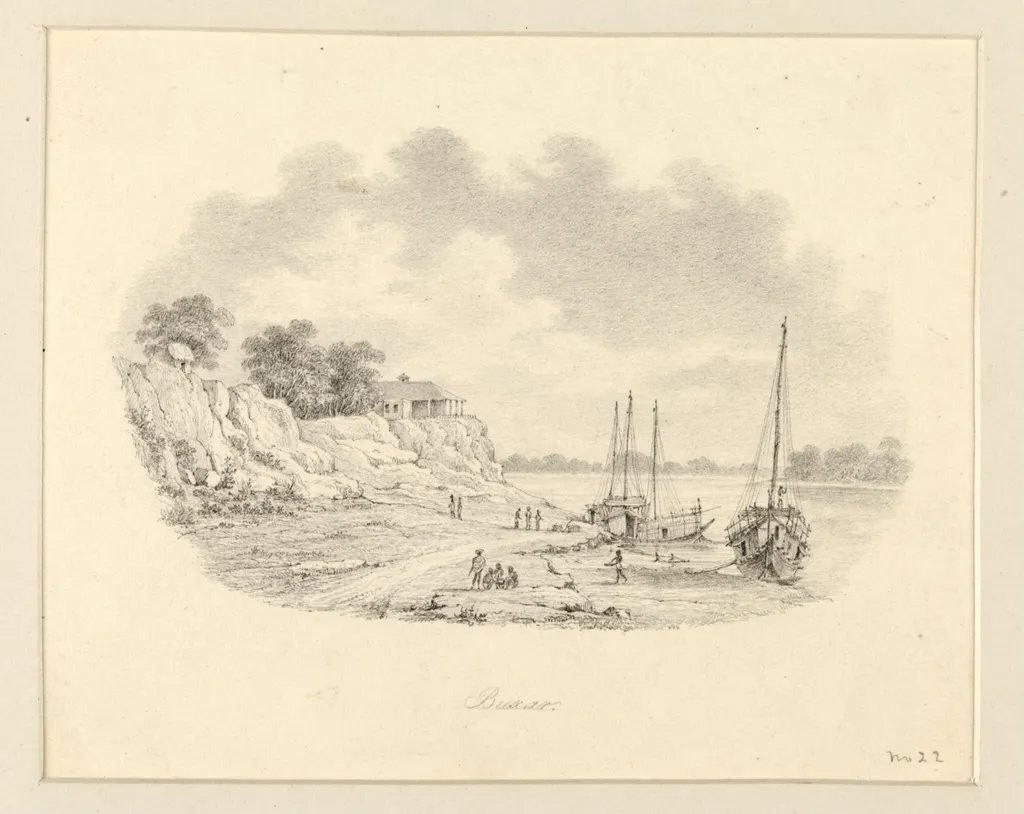
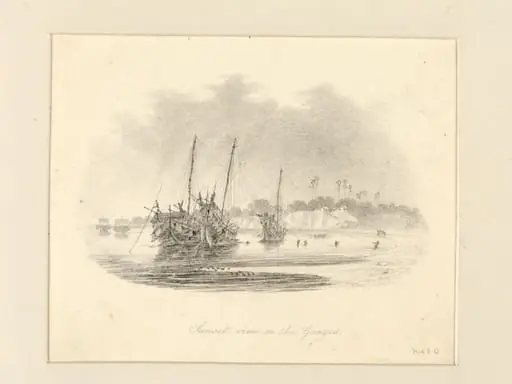
Buxar is a drawing by the Romanticist artist Robert Captain Smith. It dates from 1830 and is held in the collection of the Victoria and Albert Museum.
About this work
Overview
The work is a pencil drawing portraying a tranquil riverside setting, likely along the Ganges, where two small boats are moored on a muddy bank. Figures are shown near the vessels, engaged in conversation or strolling, while a modest dwelling rests on a rocky rise behind them. The composition is filled with trees and a softly rendered sky.
Subject & Meaning
The scene captures everyday river life in early nineteenth‑century northern India, emphasizing the interaction between human activity and the waterway. The grounded boats, tied sails, and nearby dwellings suggest a moment of pause during travel, reflecting the routine of riverine commerce and local habitation along the Ganges corridor.
Technique & Style
Rendered in pencil, the drawing relies on linear hatching and cross‑hatching to model light, shadow, and texture. Simple, precise lines delineate forms, while subtle gradations convey atmospheric effects in the sky and water. The use of mounting indicates the artist’s intent to preserve the image as a standalone illustration.
History & Provenance
The illustration forms part of a series of 65 separate images drawn for Captain Robert Smith’s travel journal, documenting his voyages across Hindustan between 1828 and 1833. Smith continued to refine the manuscript until 1845. The piece entered the museum’s collection after passing through the hands of W. M. Biden of Hampton‑on‑Thames, as recorded in acquisition documents.
Artist & collection

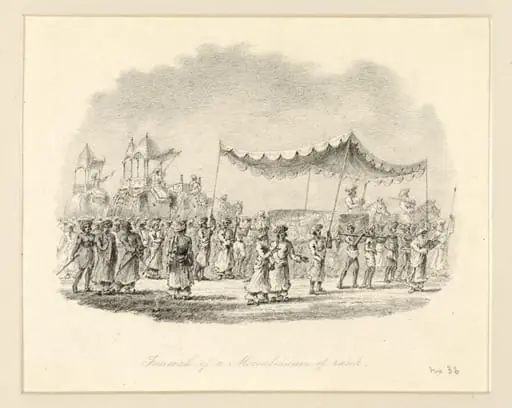
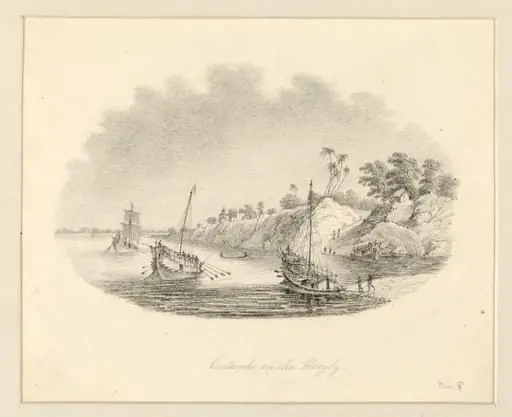 Cutwah on the Hoogly
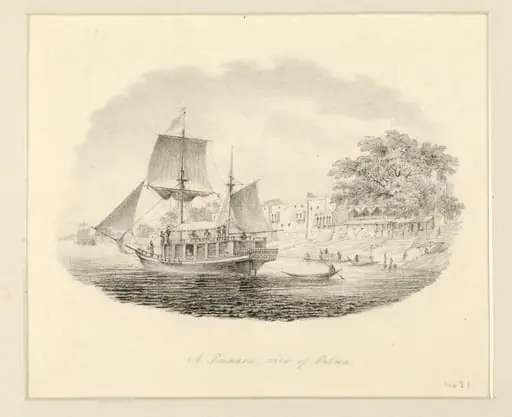 A Pinnace, view of Patna.
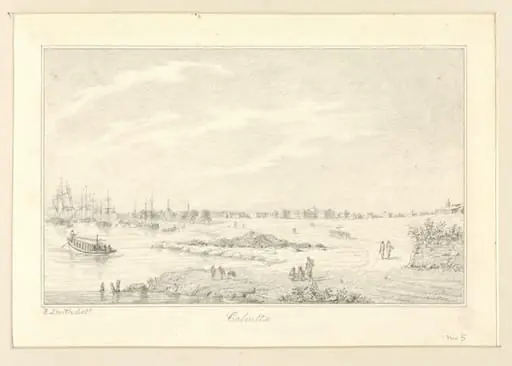 Calcutta
 View from the shore over the Thames or the Medway
 Bow Gong
 Landschaft mit Hirten
 Vue d’Hennebont (Morbihan)
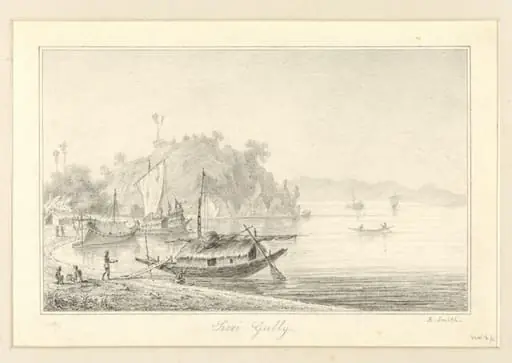 Sicri Gully
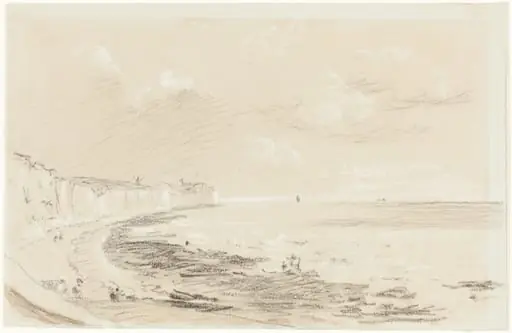 Scene on the South Coast of England
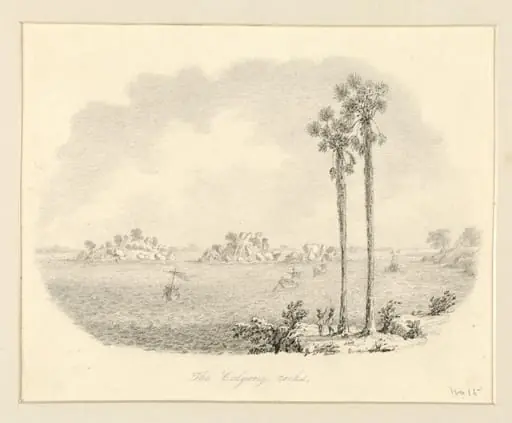 Untitled
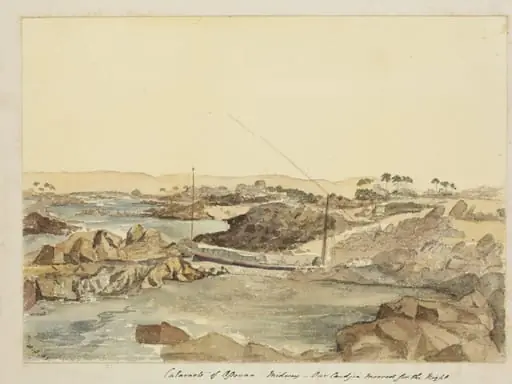 `Cataracts of Assouan. Midway. - Our Candjia Moored for the Night - On the Nile'
 Sunset View on the Ganges