Artwork
Calligraphy (verso)
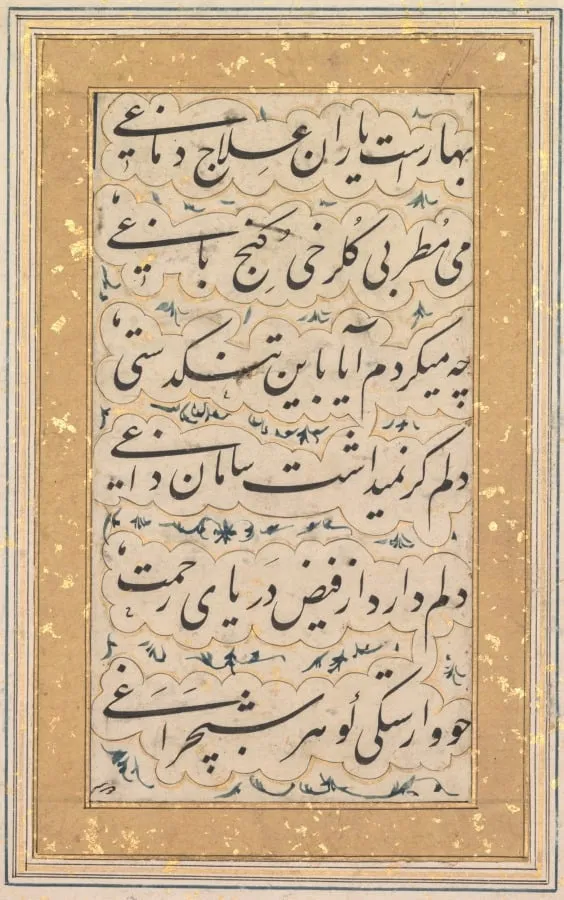
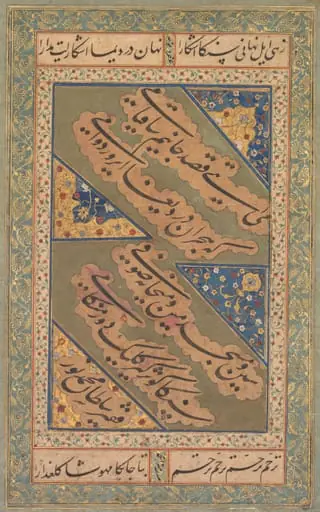
Calligraphy (verso) is an unspecified painting by the Baroque artist Unknown. It dates from 1650 and is held in the collection of the Cleveland Museum of Art. The work consists of Persian verses rendered in black ink on cream‑colored paper.
About this work
This kind of calligraphy, called *nasta‘liq*, was meant to be beautiful to read *and* look at.
You see black ink swirling across cream paper—Persian poetry in looping, elegant script.
The words celebrate spring, wine, and love, but they also hint at something deeper. The poem mixes earthly joy with spiritual longing, like two sides of the same feeling. This kind of calligraphy, called *nasta‘liq*, was meant to be beautiful to read *and* look at.
If you like this, explore more about india, deccan, 17th century.
Overview
The work consists of Persian verses rendered in black ink on cream‑colored paper. The calligraphic composition celebrates the arrival of spring, intertwining images of wine, music, and romantic desire with a subtle spiritual yearning.
Subject & Meaning
The poem invokes the pleasures of the season—wine, a minstrel, a beautiful companion, and a secluded garden nook—while also questioning the limits of material means against an inner longing. It suggests that the heart draws sustenance from a boundless compassion, juxtaposing earthly enjoyment with a transcendent, self‑effacing yearning.
Technique & Style
Written in the nasta‘liq hand, a flowing cursive form of Arabic script traditionally used for Persian poetry, the ink forms elegant, sweeping loops that function as both text and visual ornament. The calligrapher balances legibility with aesthetic rhythm, allowing the script itself to become a decorative surface.
Context
The verses occupy the verso of a diptych that includes an image of an African musician on the opposite side. This pairing reflects a historic trope linking African male figures with music, sensuality, and dance, reinforcing a cultural stereotype prevalent in certain artistic traditions.
Artist & collection

 Domestic Scene
 Giacomo and Cardinal Marco, investing Andrea, Abbot of San Zeno, with his Benefice
 The Nymph of Fontainebleau
 Portrait of a Woman
 Madonna and Child with Saints in the Enclosed Garden
 Venus and Minerva
 Family Group of Four on Sofa
 Wall painting from Room H of the Villa of P. Fannius Synistor at Boscoreale
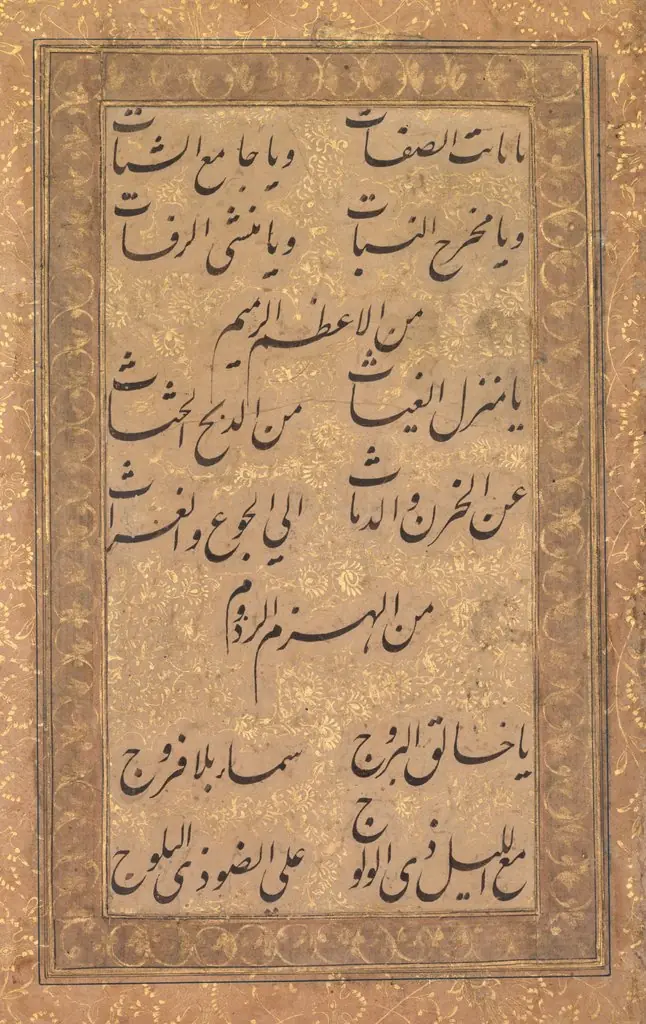 Calligraphy of a Pious Invocation in Rhyme (verso)
 Calligraphy of a Pious Invocation in Rhyme (verso)
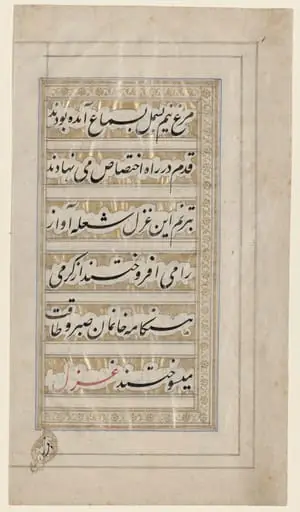 Page from the Poem of Beauty and Love
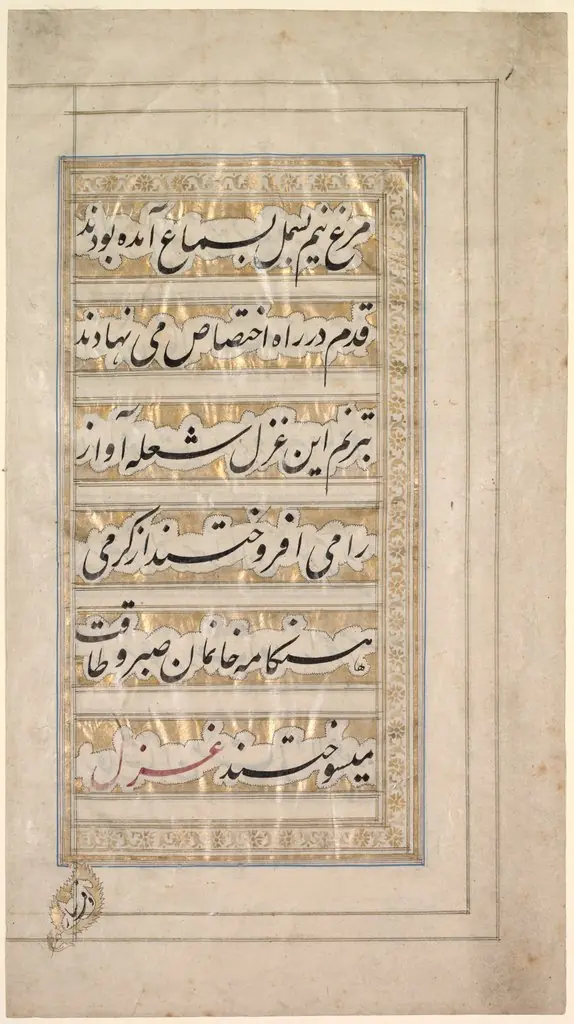 Page from the Poem of Beauty and Love
 Calligraphy of Chaghatai Turkish Poems in Praise of Wine (verso)
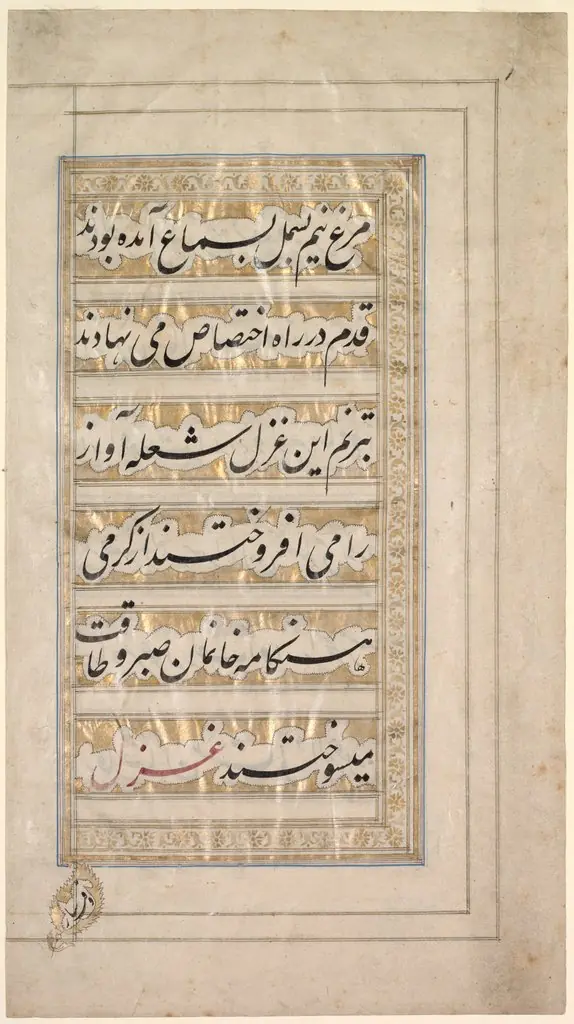 Page from the Poem of Beauty and Love
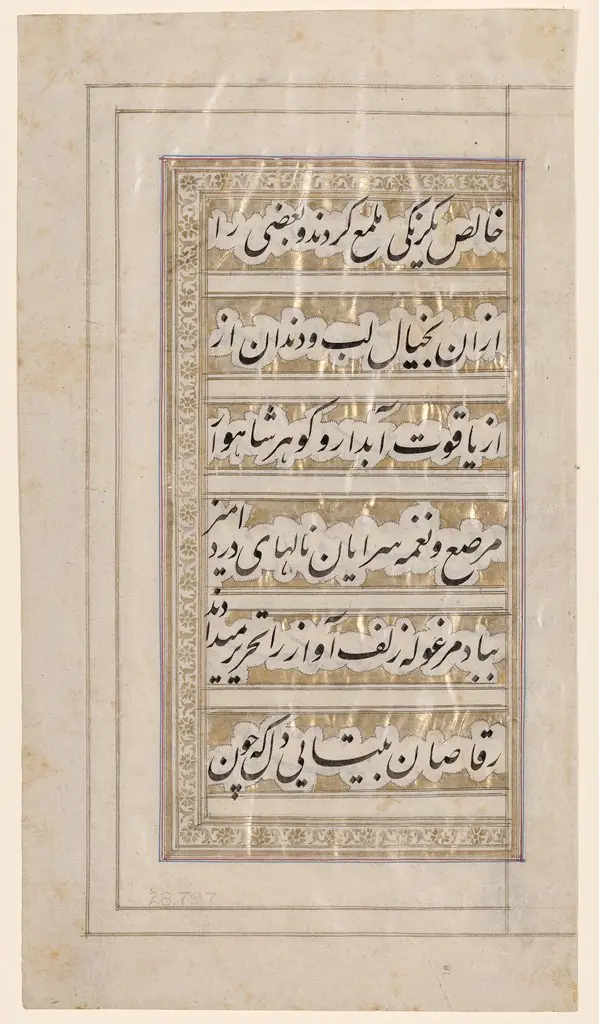 Page from the Poem of Beauty and Love