Artwork
Calligraphy of a Pious Invocation in Rhyme (verso)
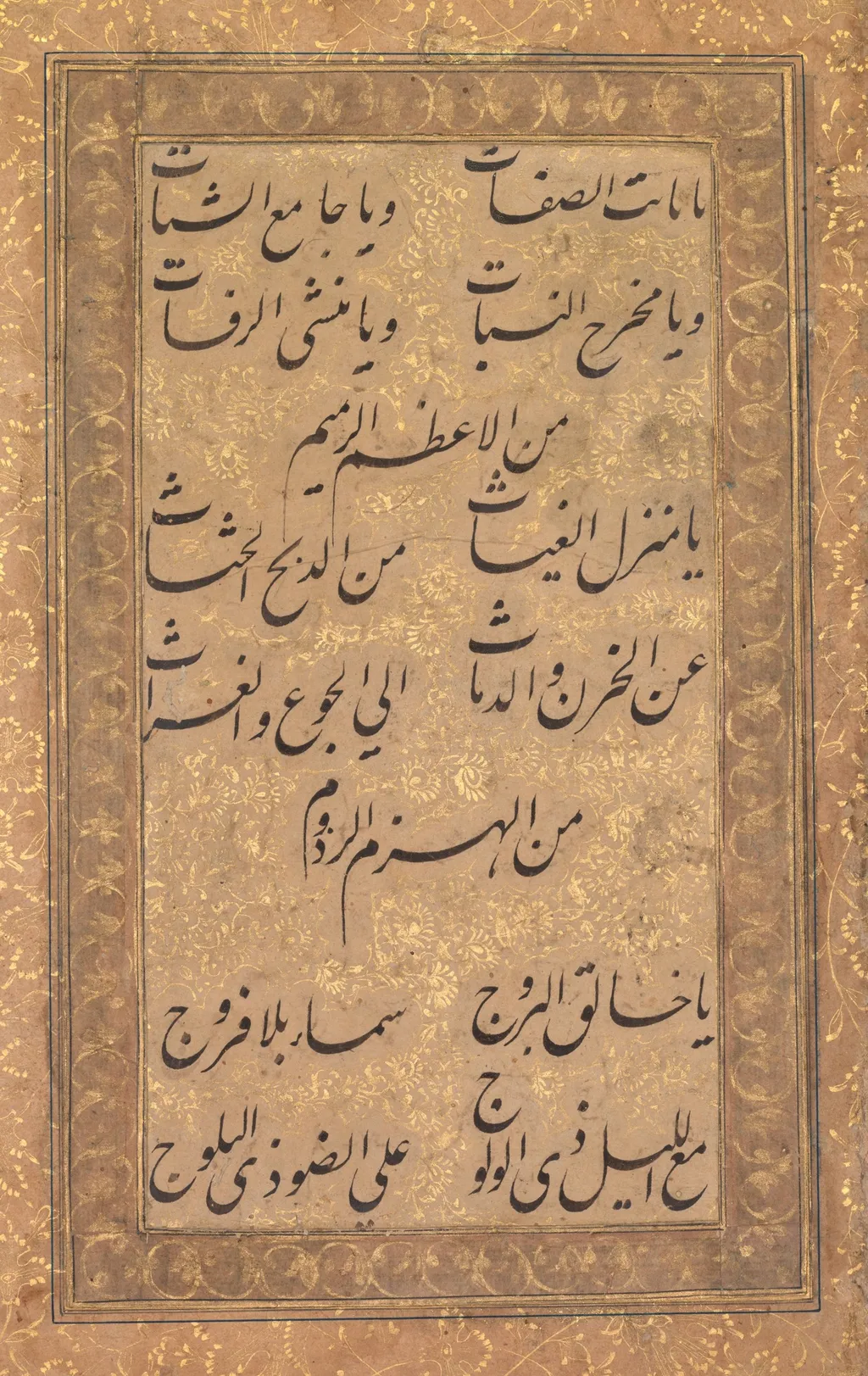
Calligraphy of a Pious Invocation in Rhyme (verso) is an unspecified painting. It dates from 1599 and is held in the collection of the Cleveland Museum of Art. The work is a painted page featuring black calligraphic script set against a beige ground speckled with gold.
About this work
The text is framed by a thin black border, and the letters curve and stretch in rhythmic lines.
This page shows flowing black script on a gold-speckled beige background. The text is framed by a thin black border, and the letters curve and stretch in rhythmic lines. Some words are larger, others smaller, creating a sense of movement.
The words are a religious poem, written in a style that values beauty in writing itself. This piece comes from a book made in 1597.
Next, explore The Cleveland Museum of Art.
Overview
The work is a painted page featuring black calligraphic script set against a beige ground speckled with gold. A narrow black frame encloses the text, whose letters undulate in rhythmic, curving lines, varying in size to suggest movement across the surface.
Subject & Meaning
The inscription consists of a devotional poem composed in rhyme, intended as a pious invocation. The emphasis lies not only in the prayerful content but also in the aesthetic appreciation of the written form itself, reflecting a cultural value placed on the beauty of script.
Technique & Style
Executed in ink on a prepared paper support, the calligraphy employs a fluid hand that stretches and contracts the strokes, creating a dynamic visual rhythm. The gold-speckled background adds a subtle luminous quality, while the thin black border delineates the textual field.
History & Provenance
The page originates from a larger manuscript produced in 1597. It now forms part of the collection at the Cleveland Museum of Art, where it is displayed as an example of late‑sixteenth‑century devotional calligraphy.
Artist & collection

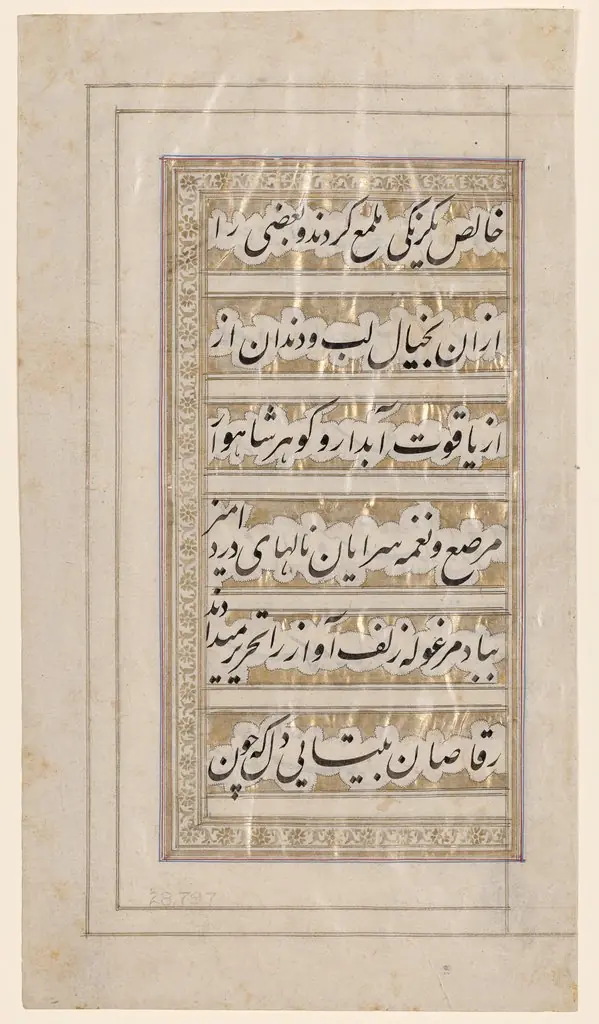 Page from the Poem of Beauty and Love
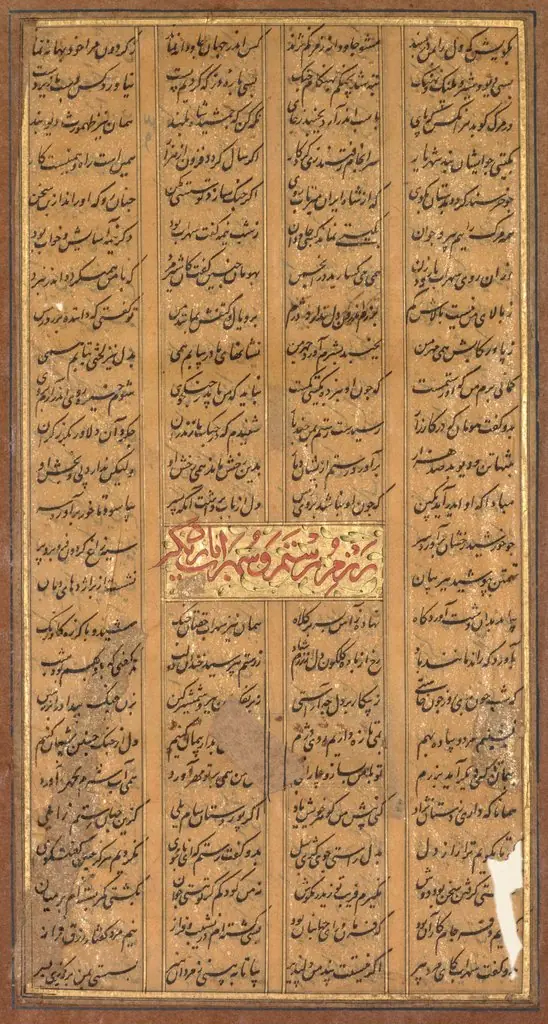 Text of Rustam and Suhrab, from the Shah-nama of Firdausi (Persian, c. 934–1020) (verso)
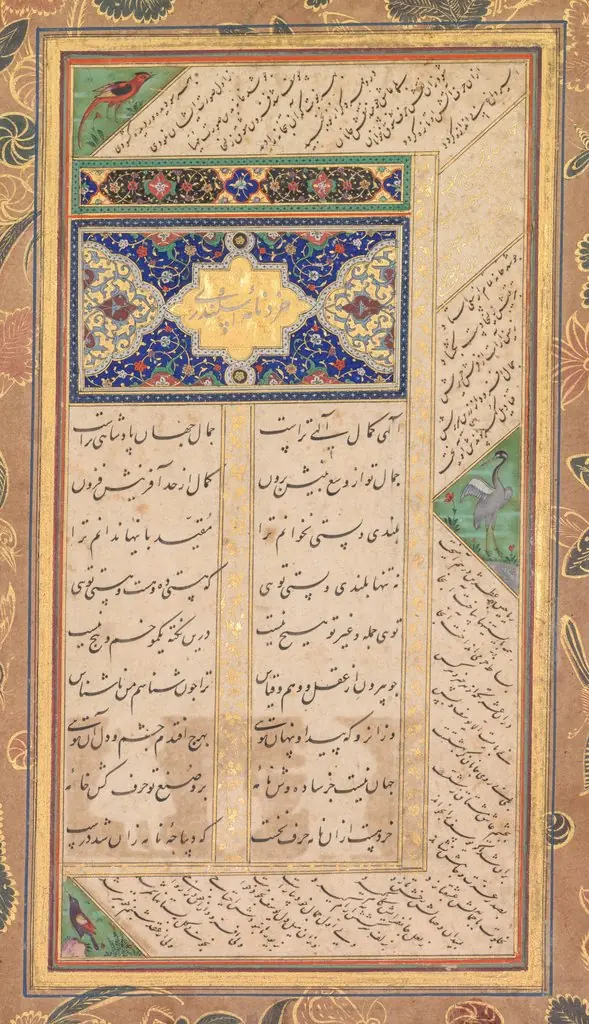 Illuminated page (verso), from a Panj Ganj (Five Treasures) of Abd al- Rahman Jami (Persian, 1414–1492) with two Persian masnavis: Yusuf va Zulaykha (Joseph and Zulaykha) and Khirad-nama-i Iskandari (Alexander’s Book of Wisdom)