Artwork
cană de lapte
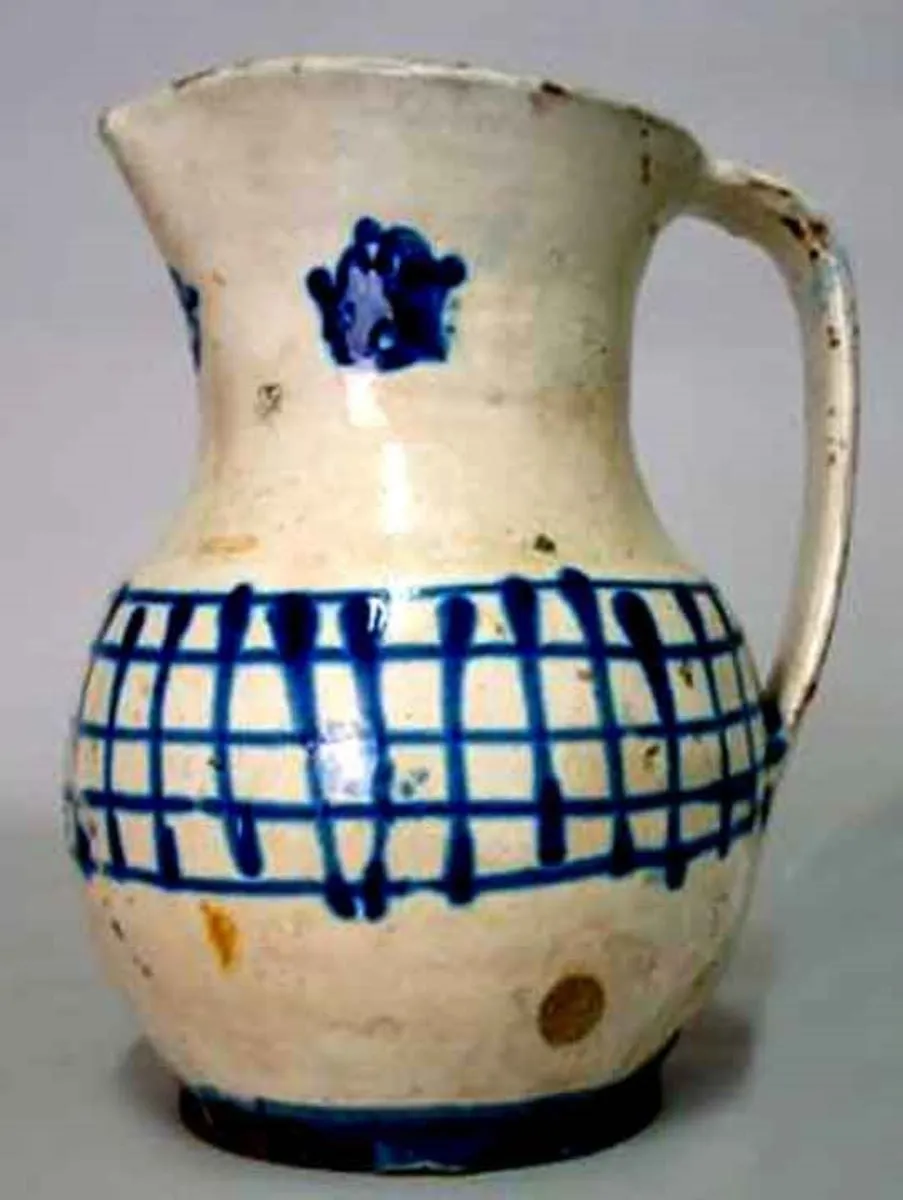
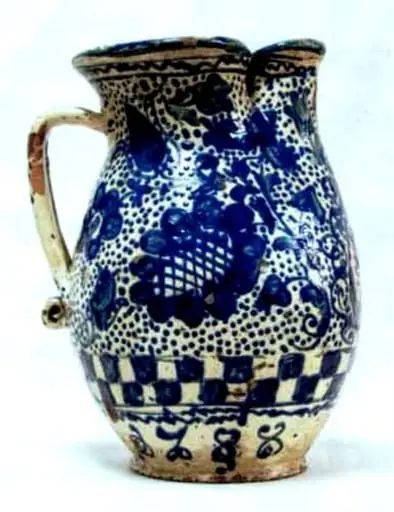
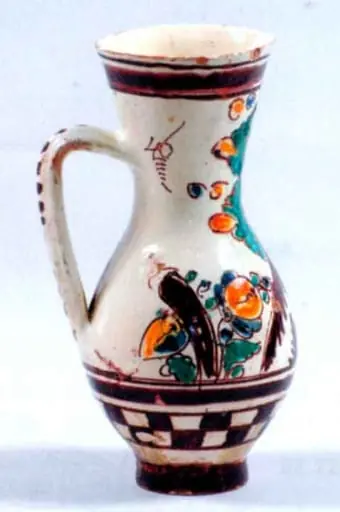
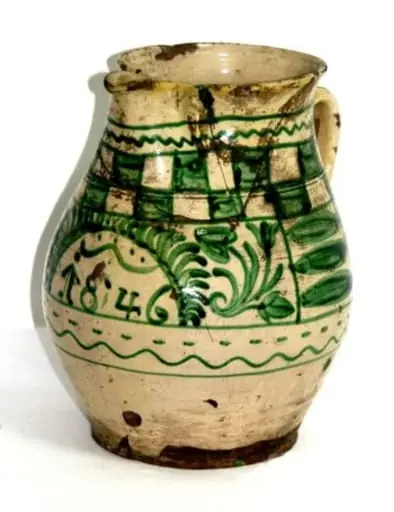
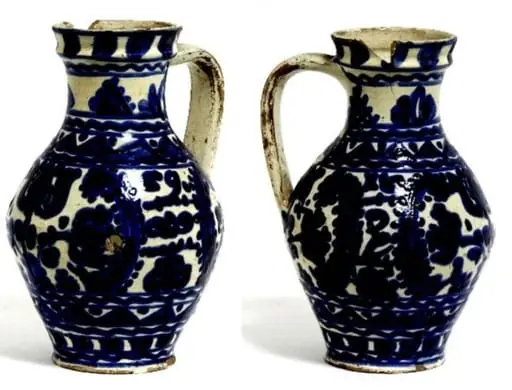
cană de lapte is a photography by Unknown. It dates from 1850 and is held in the collection of the Brașov Ethnographic Museum. This object is a simple ceramic milk jug, photographed against a dark background to emphasize its form and surface details.
About this work
Overview
This object is a simple ceramic milk jug, photographed against a dark background to emphasize its form and surface details.
This object is a simple ceramic milk jug, photographed against a dark background to emphasize its form and surface details. Its unadorned design and signs of wear—a small chip, raised texture near the rim—suggest everyday use. The image was not created as art but preserved as a document, reflecting a shift in how ordinary domestic items came to be valued for their cultural significance rather than aesthetic distinction.
Subject & Meaning
The jug represents a common household item from a time when such objects were made, used, and repaired without concern for permanence. Its preservation signals a change in cultural attitudes—ordinary things once discarded are now seen as carriers of lived experience. The chip and texture are not flaws but evidence of routine, quiet rituals that shaped daily life in ways rarely recorded.
Technique & Style
The photograph uses stark contrast to isolate the jug’s silhouette, drawing attention to its physical presence rather than its decoration. Lighting falls sharply across one side, deepening shadows and highlighting surface irregularities. The composition avoids embellishment, mirroring the jug’s own simplicity. The image’s style is documentary: functional, unembellished, and attentive to material truth.
History & Provenance
The jug was collected by the Museum of Ethnography, likely during a period when institutions began systematically preserving utilitarian objects from domestic life. Its origin is not precisely documented, but its form and wear suggest it was used in a rural or working-class home. It was not chosen for rarity but for its representativeness—a quiet artifact of ordinary existence.
Context
In the late 19th and early 20th centuries, ethnographic museums expanded their collections beyond ceremonial or exotic items to include everyday tools and vessels. This jug reflects that shift: a rejection of elite aesthetics in favor of documenting the material culture of common people. Its preservation aligns with broader efforts to record vanishing ways of life before industrialization transformed them.
Legacy
The jug’s continued presence in the museum’s collection underscores a lasting reevaluation of what deserves to be remembered. It invites viewers to consider the dignity in the mundane, challenging assumptions about value and permanence. As a preserved fragment of domestic history, it quietly resists the notion that only the ornate or intentional holds cultural weight.
Artist & collection
 Domestic Scene
 Giacomo and Cardinal Marco, investing Andrea, Abbot of San Zeno, with his Benefice
 The Nymph of Fontainebleau
 Portrait of a Woman
 Madonna and Child with Saints in the Enclosed Garden
 Venus and Minerva
 Family Group of Four on Sofa
 Wall painting from Room H of the Villa of P. Fannius Synistor at Boscoreale