Artwork
canceu
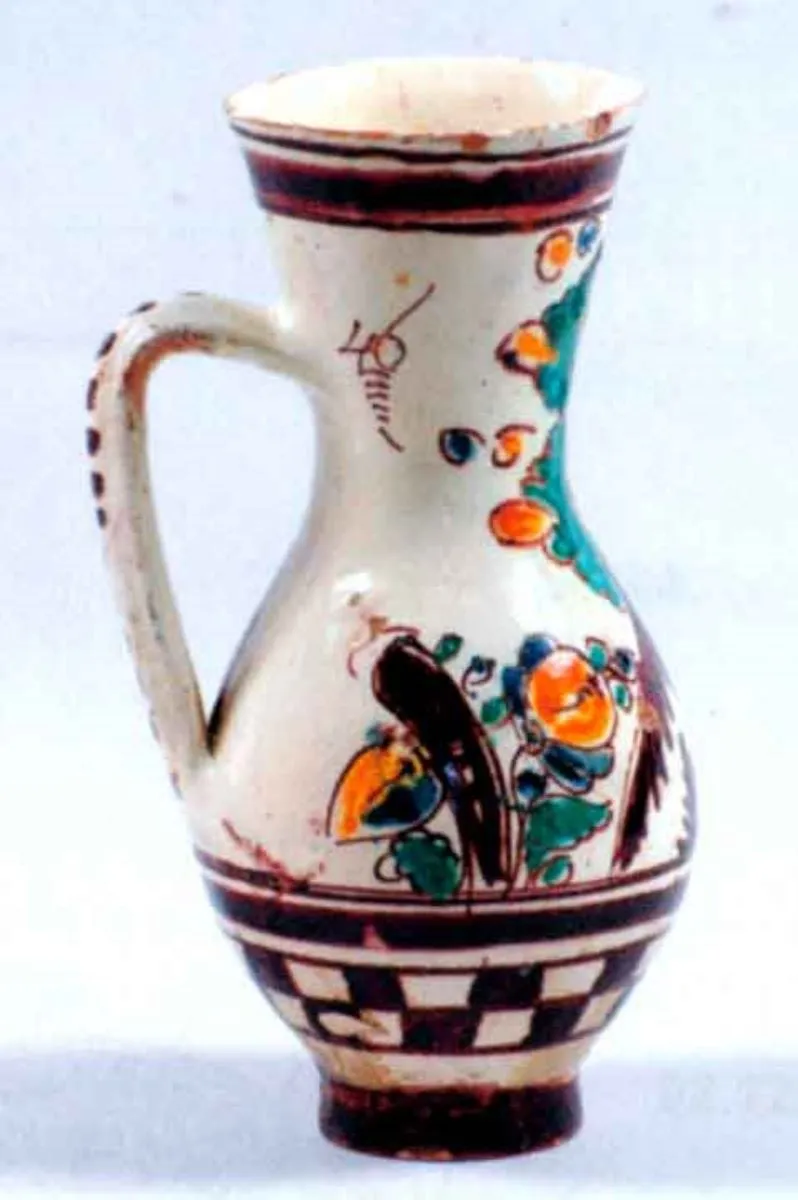
canceu is a photography by the Impressionist artist Unknown. It dates from 1864 and is held in the collection of the Ploiești Museum of History and Archeology.
About this work
Overview
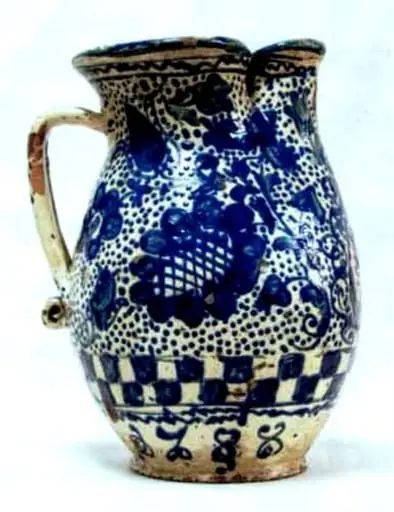
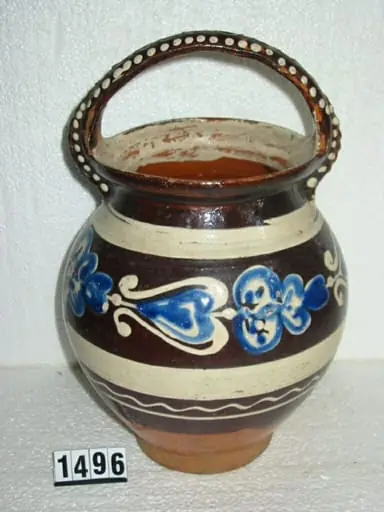
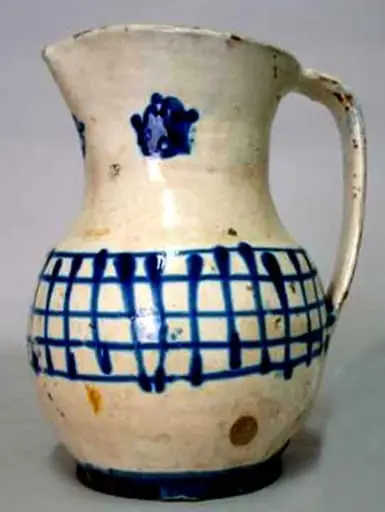
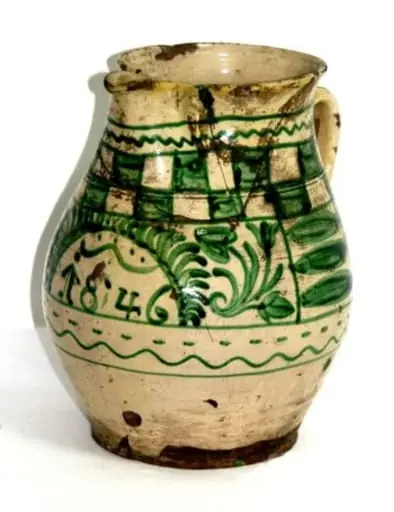
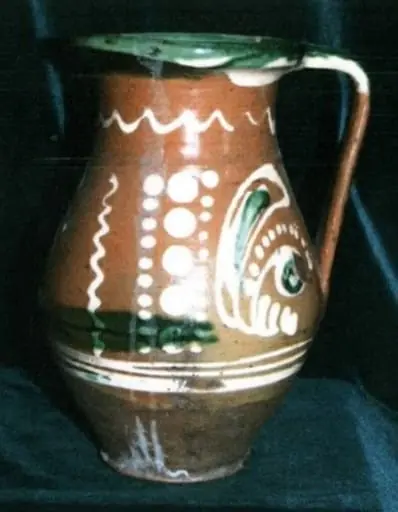
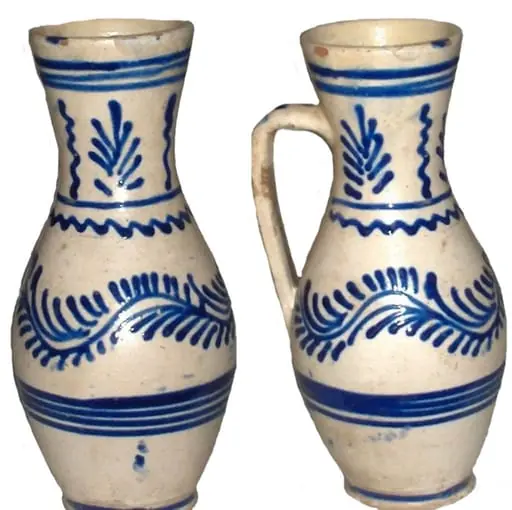
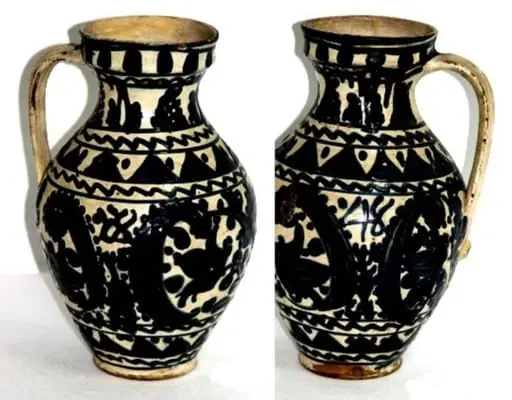
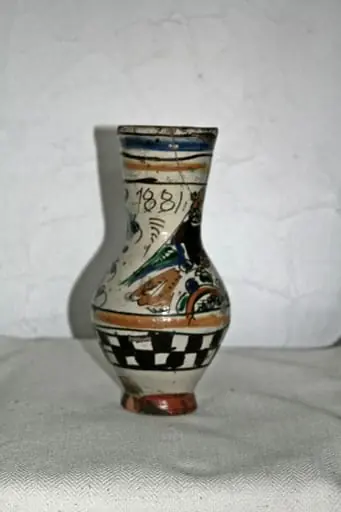
A handcrafted white ceramic pitcher with a broad rim and a single curved handle, this piece features vibrant painted decorations against a neutral ground.
A handcrafted white ceramic pitcher with a broad rim and a single curved handle, this piece features vibrant painted decorations against a neutral ground. Its surface shows signs of use, suggesting practical function alongside artistic care. The design includes green foliage, orange blossoms, and a small avian or insect form, all rendered with bold, unblended hues. A black-and-white checkered band encircles the base, adding rhythmic contrast to the organic motifs.
Subject & Meaning
The painted elements—leaves, flowers, and a bird or insect—suggest a connection to nature, possibly reflecting seasonal cycles or domestic harmony. The absence of narrative or symbolic complexity implies an emphasis on everyday beauty rather than ritual or myth. The inclusion of small creatures may indicate an appreciation for subtle life forms, common in utilitarian crafts where ornamentation honors the natural world.
Technique & Style
The decoration is applied with direct, confident brushwork, using flat areas of saturated color without shading or gradation. The lack of chiaroscuro, despite the visual note’s suggestion, points instead to a folk or regional style prioritizing clarity and pattern over illusionistic depth. The paint adheres to the ceramic surface with visible texture, reinforcing its handmade origin and functional context.
History & Provenance
The pitcher’s wear patterns and simple form indicate it was likely produced for daily use, possibly in a rural or artisanal setting. Its construction and decoration align with regional ceramic traditions where utility and ornament coexisted without formal training. Exact origin remains undocumented, but similar pieces appear in 19th- to early 20th-century domestic collections across Europe and the Americas.
Context
This object belongs to a broader category of folk ceramics where households or local potters decorated functional ware with accessible pigments and familiar motifs. Unlike fine porcelain, such pieces were not signed or mass-produced; their value lay in craftsmanship and personal expression. The checkered base echoes common border designs in textile and pottery traditions, linking it to wider decorative practices.
Legacy
Though not part of a major artistic movement, such pitchers contribute to understanding vernacular artistry and the aesthetic choices of non-elite communities. They preserve techniques and motifs that were passed down informally, offering insight into how ordinary people engaged with beauty in daily life. Contemporary collectors and historians value them for their authenticity and unpretentious craftsmanship.
Artist & collection
Museum
Ploiești Museum of History and Archeology
Continue through works from the same source collection.
 Domestic Scene
 Giacomo and Cardinal Marco, investing Andrea, Abbot of San Zeno, with his Benefice
 The Nymph of Fontainebleau
 Portrait of a Woman
 Madonna and Child with Saints in the Enclosed Garden
 Venus and Minerva
 Family Group of Four on Sofa
 Wall painting from Room H of the Villa of P. Fannius Synistor at Boscoreale