Artwork
Cerb; pandant: Căprioară
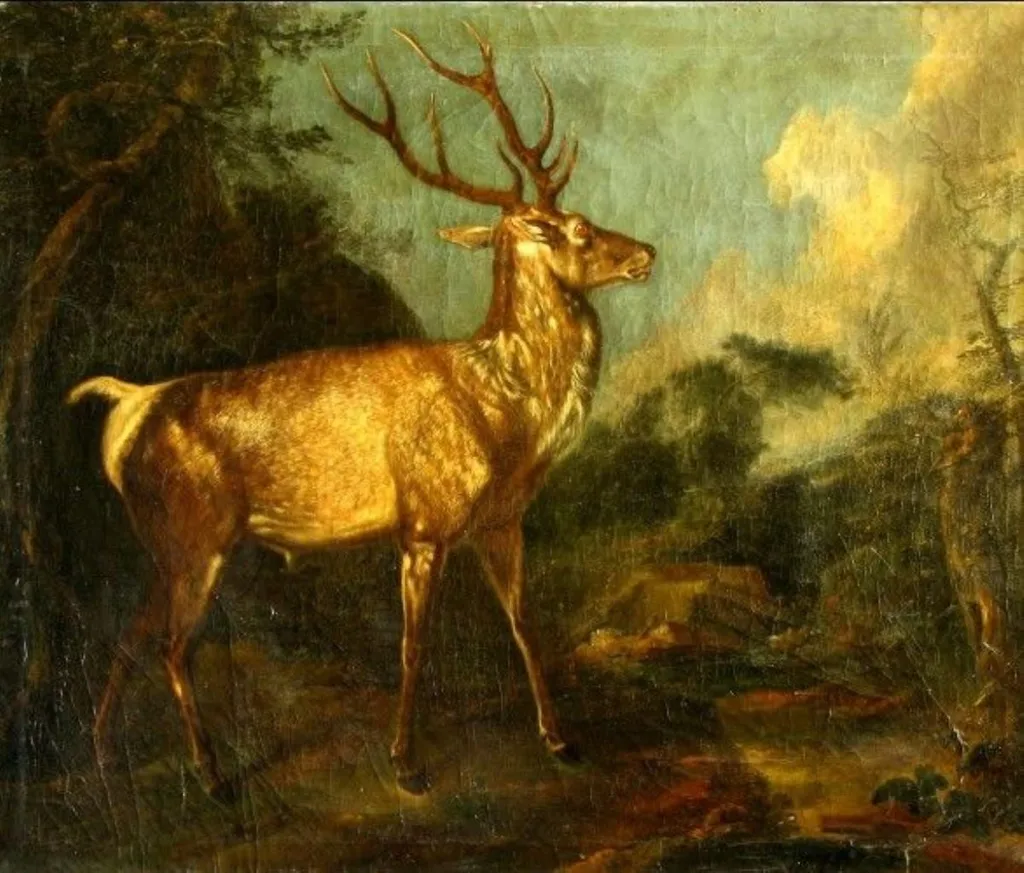
Cerb; pandant: Căprioară is an unspecified painting by the Baroque artist Unknown. It dates from 1750 and is held in the collection of the Brukenthal National Museum. This painted image depicts Cerberus, the three-headed dog from Greek mythology, rendered in deep reds and blacks on a darkened background.
About this work
Overview
This painted image depicts Cerberus, the three-headed dog from Greek mythology, rendered in deep reds and blacks on a darkened background. It is paired with a pendant image of a deer, suggesting a symbolic contrast. Created in a rural Romanian village, the work was likely produced for educational use in a local school, intended to convey moral lessons through familiar mythological imagery.
Subject & Meaning
Cerberus, guardian of the underworld, is shown restrained by a small human figure, symbolizing the taming of primal or evil forces. The accompanying deer, often associated with innocence or nature, may represent goodness or purity. Together, the pair forms a visual allegory for moral duality, designed to help children distinguish between opposing forces in a culturally accessible way.
Technique & Style
The dog’s three heads are rendered with sharp, angular lines, while the background recedes into shadow to heighten its presence.
The painting uses bold, flat areas of pigment with minimal shading, emphasizing form over realism. The dog’s three heads are rendered with sharp, angular lines, while the background recedes into shadow to heighten its presence. The colors appear faded, suggesting repeated handling and exposure, consistent with classroom use over time. The style reflects folk traditions rather than academic training.
History & Provenance
The work originated in a small Romanian village, likely during the mid-20th century, when state-sponsored educational initiatives encouraged the use of local art in schools. Its worn condition indicates prolonged use in a teaching environment. It is now held in the collection of the Museum of Ethnography in Romania, where similar folk pedagogical artworks are preserved.
Context
In rural Romania during the communist era, schools often incorporated regional artistic traditions into civic education. Mythological figures like Cerberus were adapted into moral lessons, blending classical references with local visual language. This piece reflects an effort to make abstract ethical concepts tangible for young students through familiar, handcrafted imagery.
Legacy
The painting stands as an example of how global myths were localized in Eastern European educational settings. Its survival in museum collections highlights the value placed on vernacular art as cultural documentation. It continues to inform studies on the intersection of folklore, pedagogy, and visual symbolism in 20th-century Romania.
Artist & collection

 Domestic Scene
 Giacomo and Cardinal Marco, investing Andrea, Abbot of San Zeno, with his Benefice
 The Nymph of Fontainebleau
 Portrait of a Woman
 Madonna and Child with Saints in the Enclosed Garden
 Venus and Minerva
 Family Group of Four on Sofa
 Wall painting from Room H of the Villa of P. Fannius Synistor at Boscoreale
 Căprior în fața pădurii de brad ; pandant: Căprior la apă
 Căprior la apă; pandant: Căprior în fața pădurii de brad
 Forest with a Buck
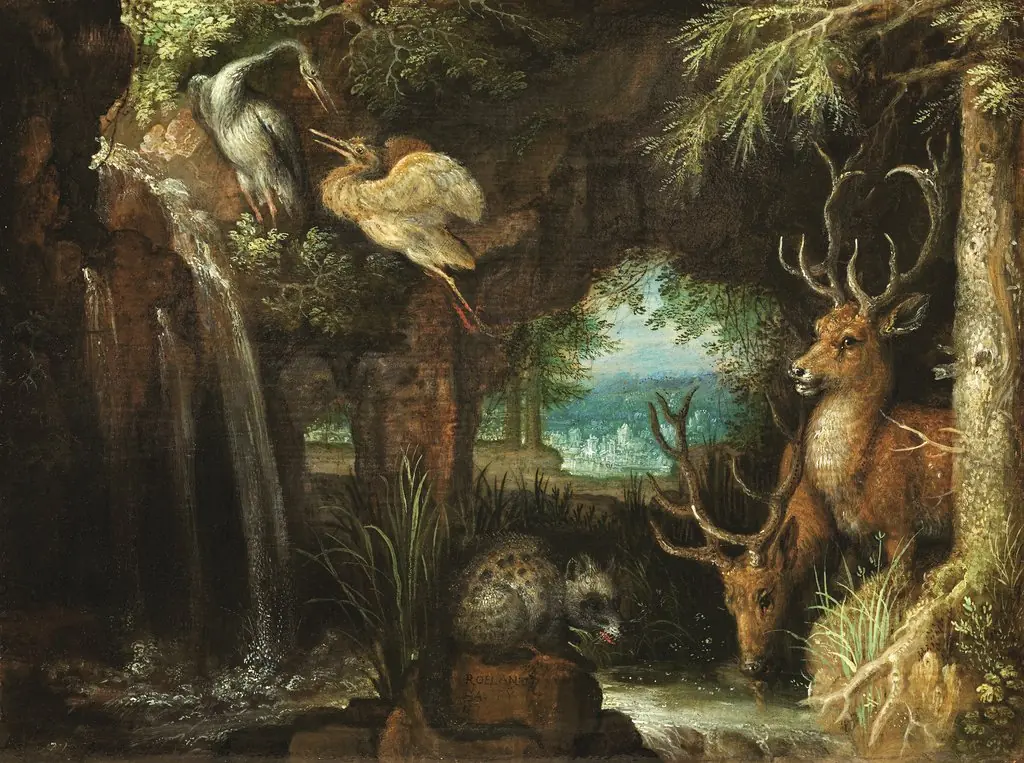 Forest Landscape with Deer and a Civet
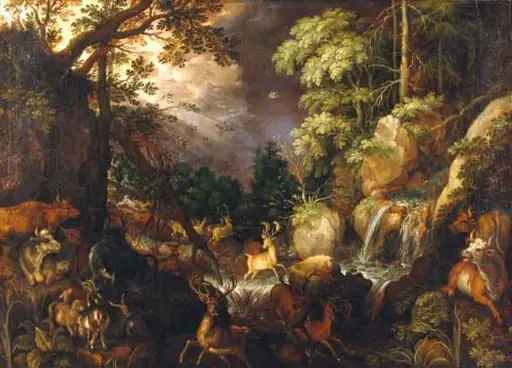 Vânătoare de cerbi
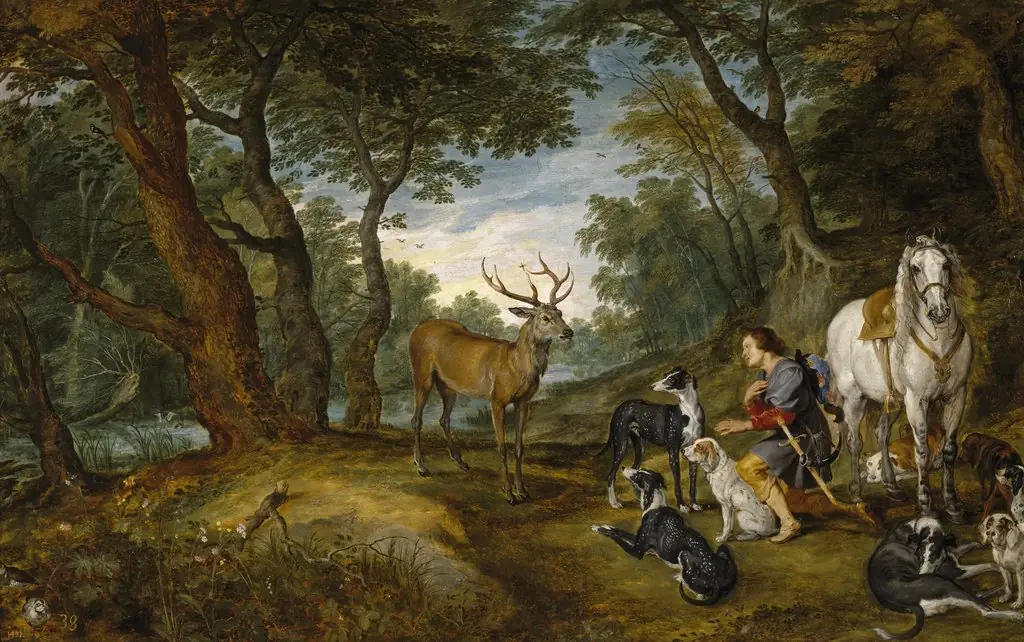 The Vision of St Hubert
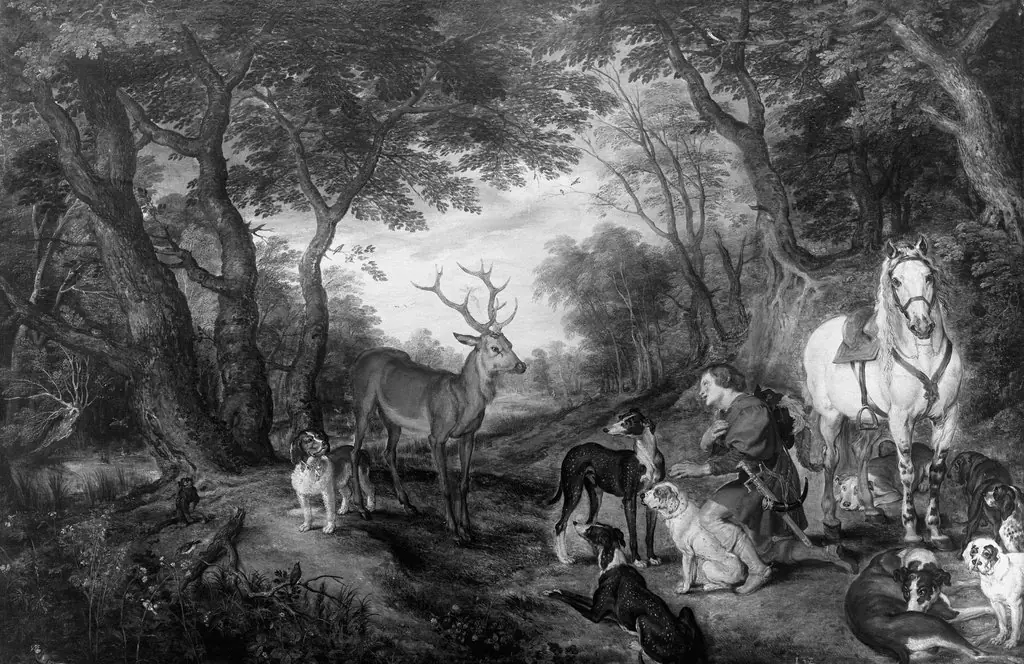 Landscape with Saint Hubert
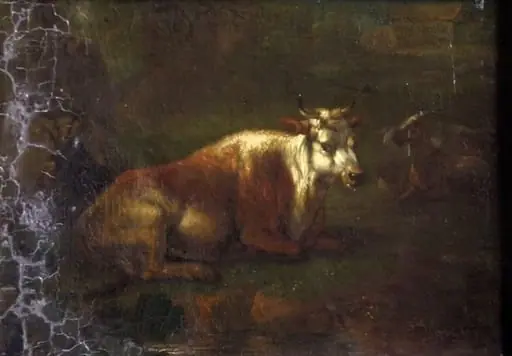 Mică turmă în peisaj păduros ; pandant: Peisaj cu vite
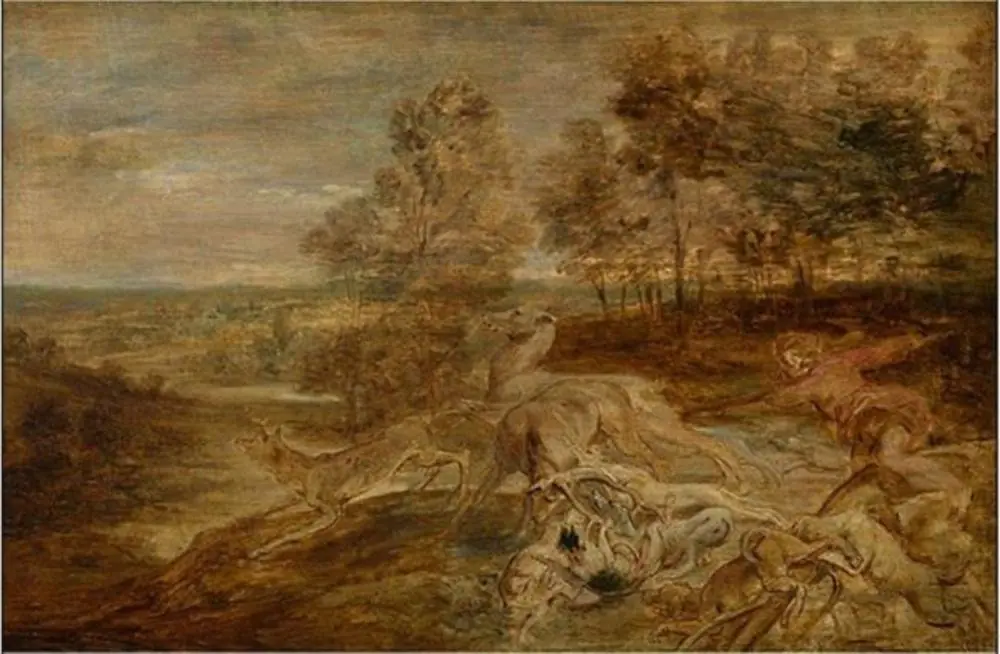 The Hunt
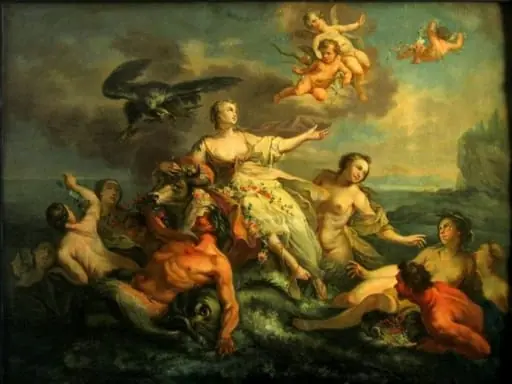 Răpirea Europei. Pandant: Venus și Vulcan