Artwork
Christus und die Ehebrecherin
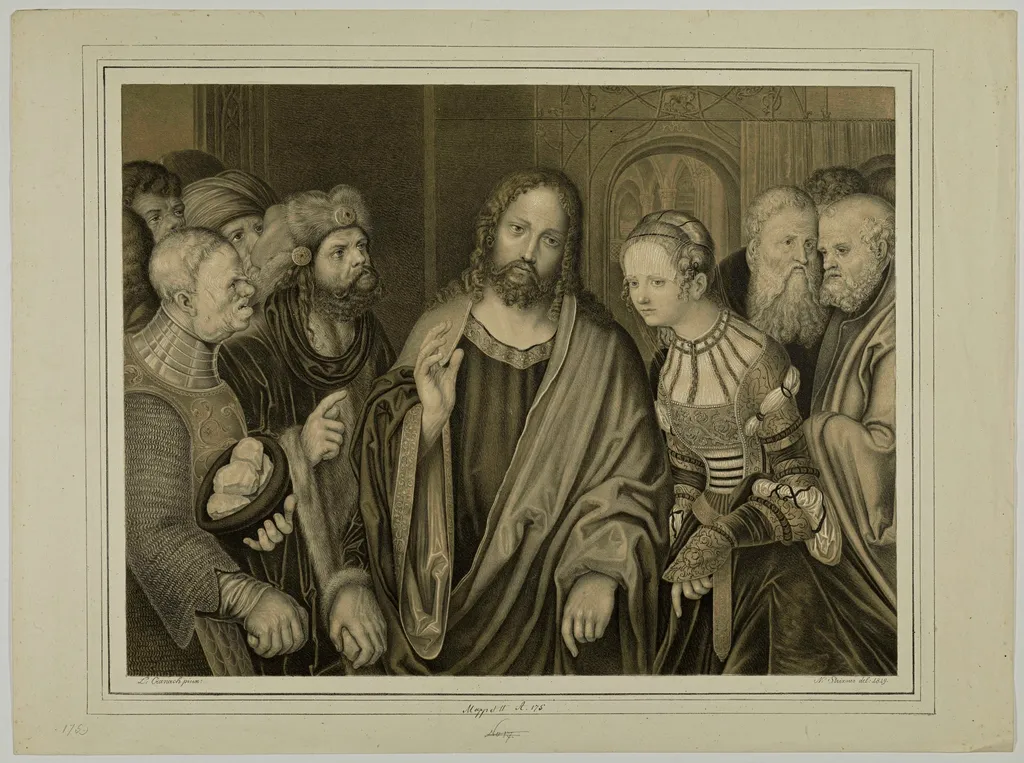
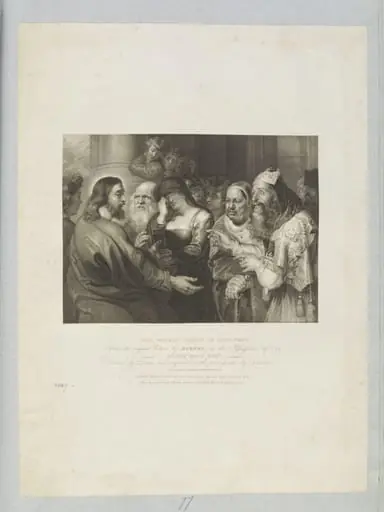
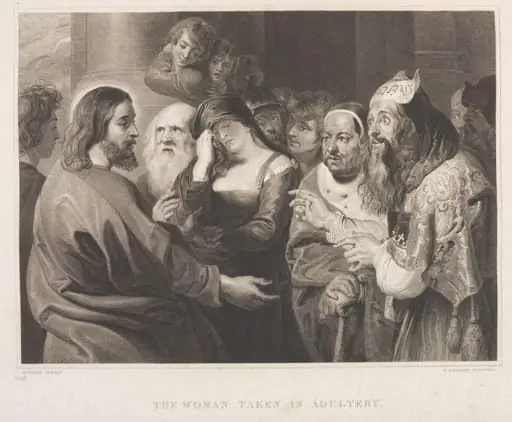
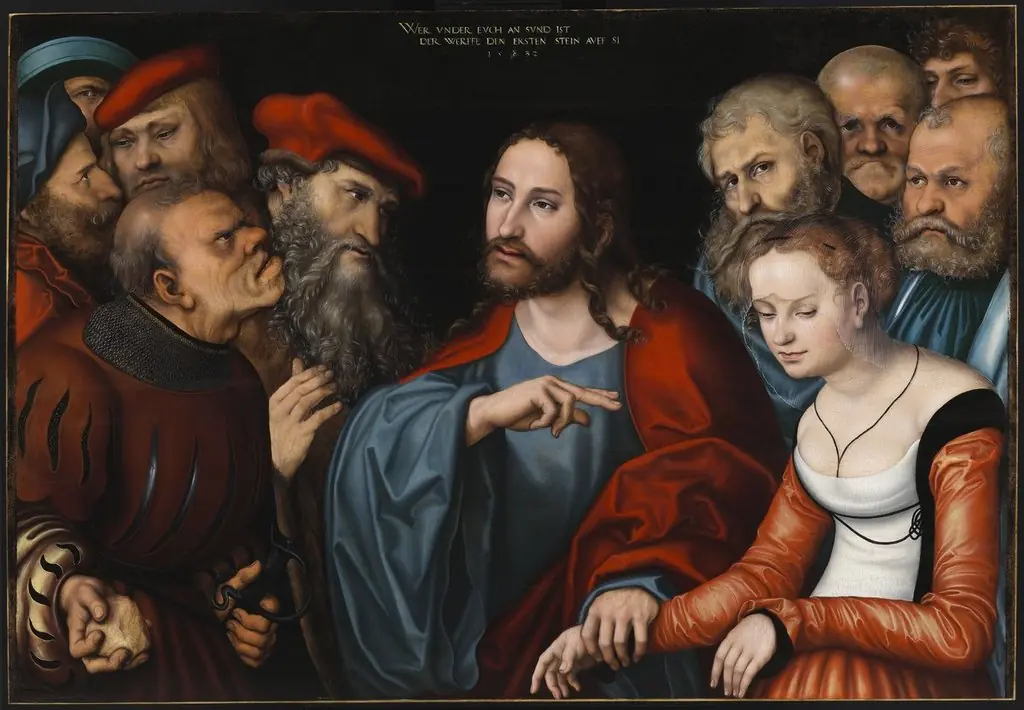
Christus und die Ehebrecherin is a drawing by Unknown. It dates from 1819 and is held in the collection of the Bamberg State Library. This lithography, based on Lucas Cranach's 1520 painting "Christ and the Adulteress", depicts a pivotal biblical scene.
About this work
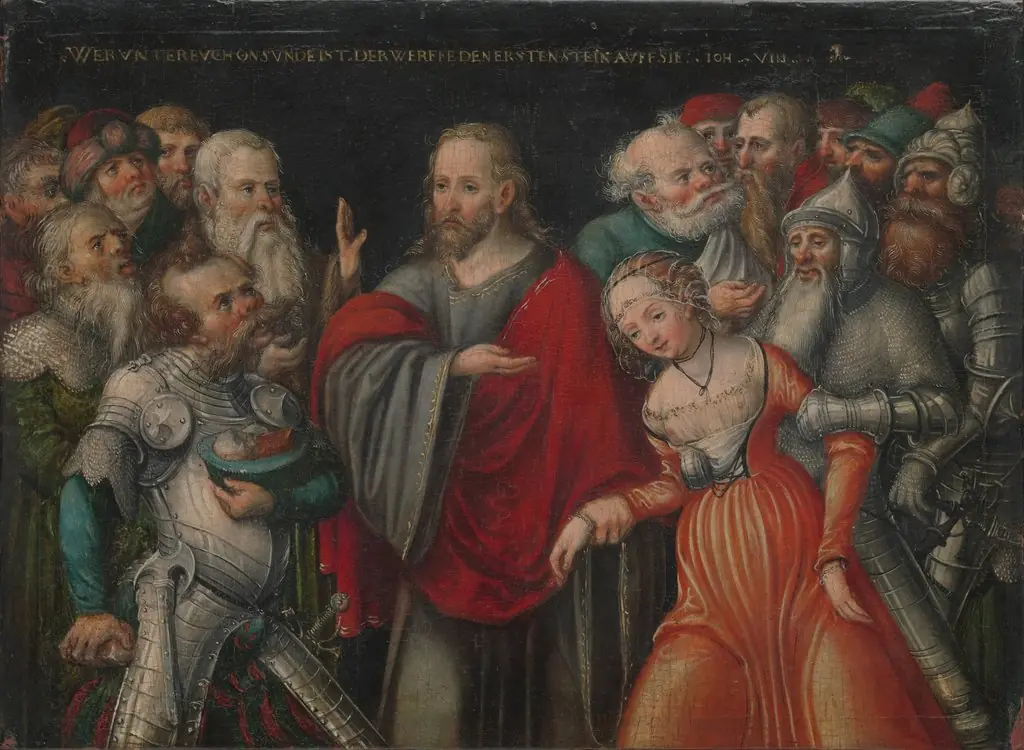
The drawing is based on a painting from around 1520, and that's interesting because it shows how artists copied and inspired each other.
This drawing shows Christ and a woman who cheated on her husband.
The woman wears a fancy dress and looks down.
The drawing is based on a painting from around 1520, and that's interesting because it shows how artists copied and inspired each other.
The drawing is simple, but it tells a story.
It's similar to work by artists who focused on details and textures, like the technique of cross-hatching.
Overview
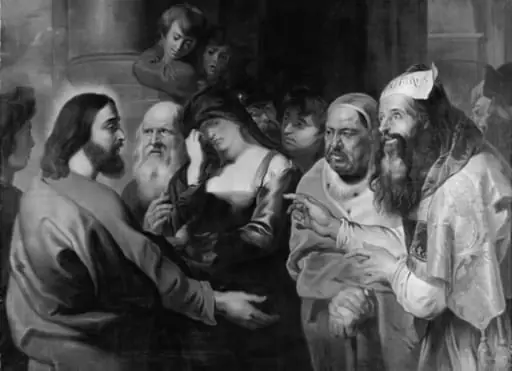
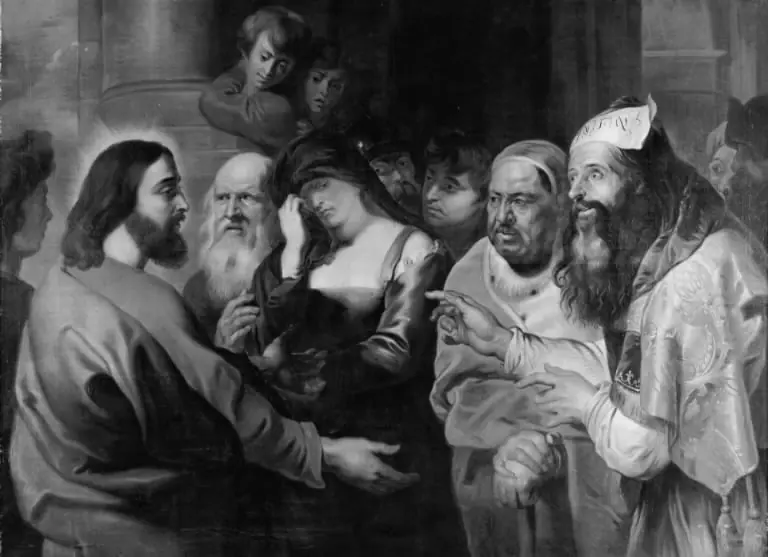
This lithography, based on Lucas Cranach's 1520 painting "Christ and the Adulteress", depicts a pivotal biblical scene. At its center, Christ stands facing the viewer, his right hand raised, while the adulteress, dressed in elaborate attire, stands to his left, her head bowed and gaze inward. Surrounding them, a group of men, some threatening with stones, focuses intently on Christ.
Subject & Meaning
The artwork illustrates the biblical story of Jesus and the adulteress (John 8:1-11), where Christ's response to the woman's accusers emphasizes mercy over judgment. The adulteress's downward gaze and the menacing crowd contrast with Christ's calm, authoritative pose, highlighting themes of moral judgment, forgiveness, and the human condition.
Technique & Style
Executed as a lithography, the work adopts a simple yet expressive approach, potentially incorporating techniques like cross-hatching to achieve depth and texture. The style is derivative of Cranach's original, with attention to detail in the adulteress's ornate dress, though the overall execution is more subdued, reflecting the medium's capabilities and the artist's interpretive hand.
History & Provenance
This lithography was included in a collection attributed to the 22nd issue of Munich and Schleißheim's painting collection, cataloged under "Leaves after Cranach's Paintings and Drawings" in a revised publication by Heller (1844). The original Cranach painting dates to circa 1520, housed in the Franconian Gallery, Kronach, as part of the Bavarian State Painting Collection (Inv. No. 692).
Context
The work reflects the artistic practice of reproducing notable paintings through lithography, common in the 19th century. It demonstrates how artists and publishers like Heller disseminated well-known artworks, facilitating broader access to and appreciation of historical masterpieces.
Legacy
While the artist behind this lithography is now more recognized for reproducing various artworks, this piece contributes to the broader legacy of Cranach's original by extending its reach and ensuring the enduring visibility of the 16th-century painting's themes and aesthetic.
Artist & collection

 Domestic Scene
 Giacomo and Cardinal Marco, investing Andrea, Abbot of San Zeno, with his Benefice
 The Nymph of Fontainebleau
 Portrait of a Woman
 Madonna and Child with Saints in the Enclosed Garden
 Venus and Minerva
 Family Group of Four on Sofa
 Wall painting from Room H of the Villa of P. Fannius Synistor at Boscoreale