Artwork
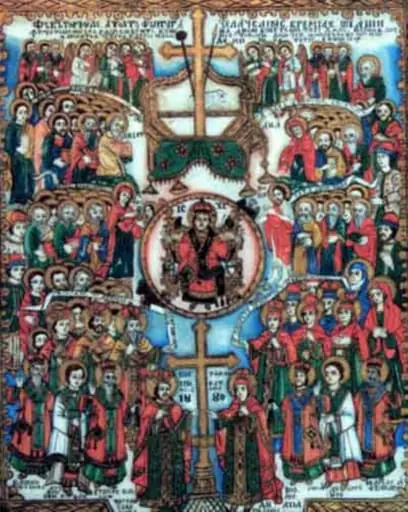
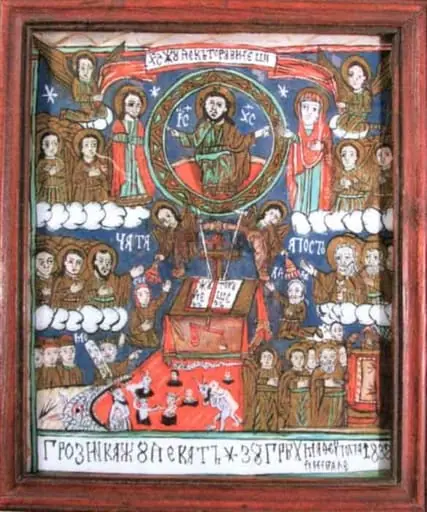
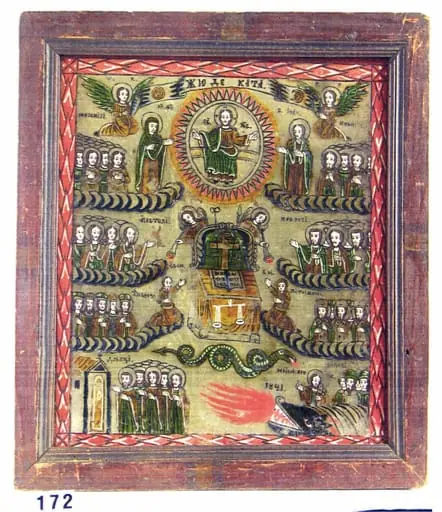
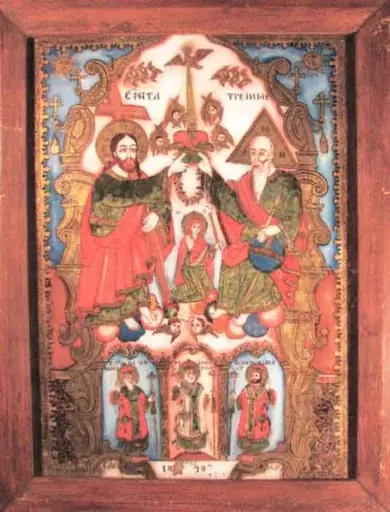
Cina cea de Taină
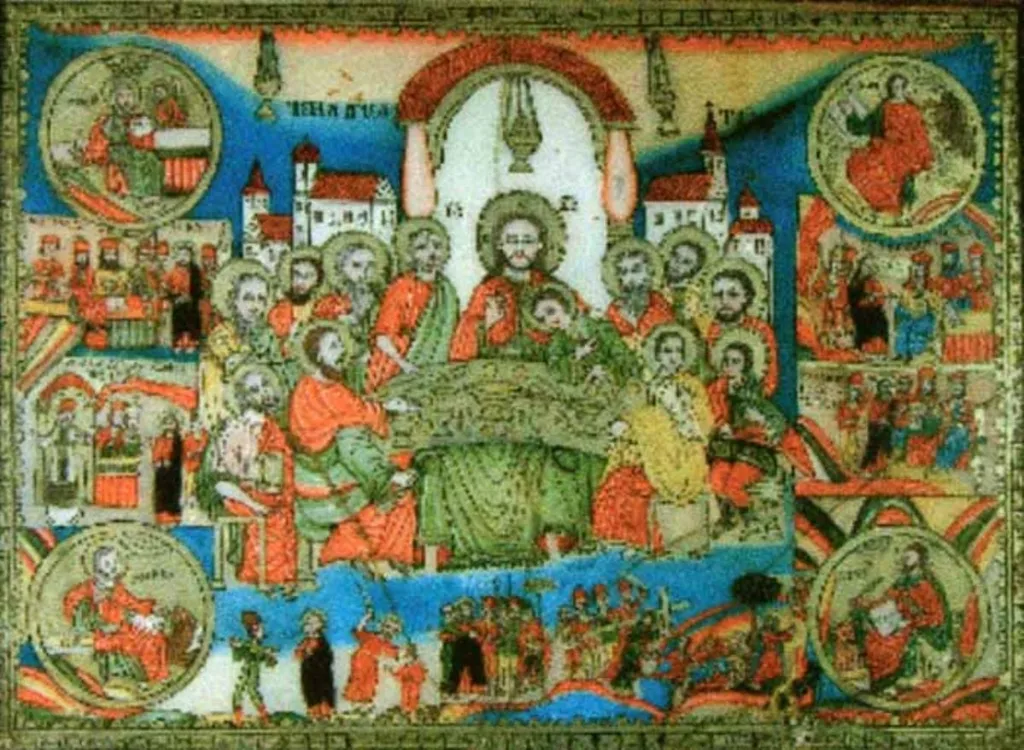
Cina cea de Taină is a drawing by Unknown. It dates from 1900 and is held in the collection of the Romanian Academy in Bucharest.
About this work
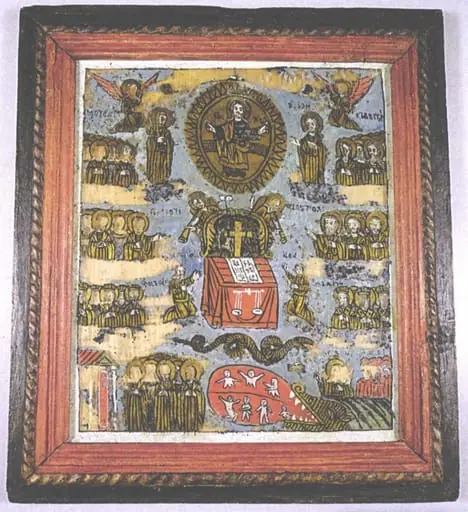
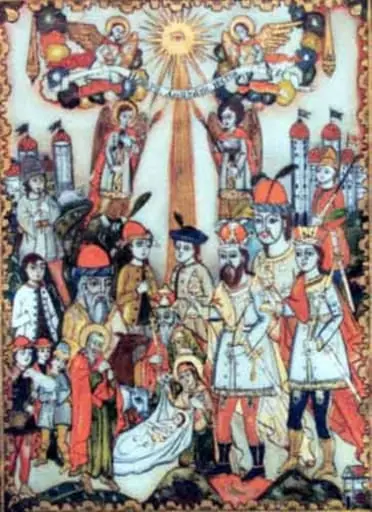
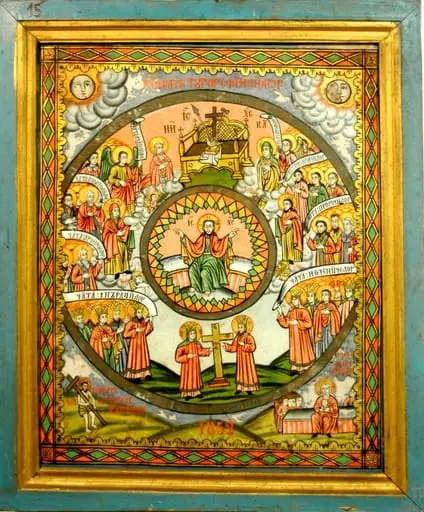
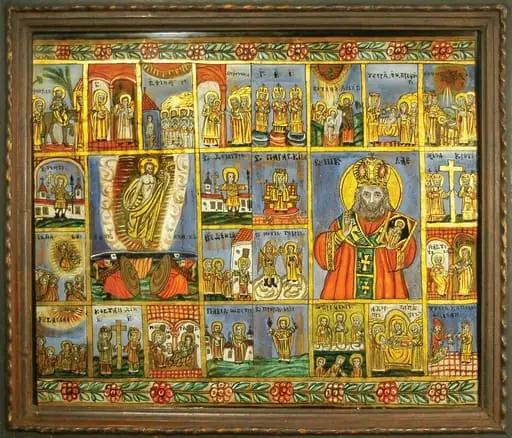
The main picture in the middle shows a group of people in red and green robes.
This painting is called Cina cea de Taină. It's a drawing from 1900, and it's held at the Museum of Ethnography.
The image is full of people and buildings. There are lots of small pictures around the edges. The main picture in the middle shows a group of people in red and green robes. They're standing in front of a big white archway with a red roof. There are buildings in the background.
The drawing technique used here is cross-hatching.
Overview
Created in 1900, this ink drawing titled Cina cea de Taină is held in the collection of the Museum of Ethnography. Executed in fine cross-hatching, the work presents a densely populated scene centered on a group of figures before a monumental archway. Surrounding the main image are numerous smaller vignettes, suggesting a narrative structure that extends beyond the central moment.
Subject & Meaning
The central group, dressed in red and green robes, stands beneath a white arch with a red-tiled roof, possibly representing a ritual or ceremonial gathering. The surrounding miniatures may depict related events or symbolic episodes, hinting at a localized tradition or religious observance. The composition implies a connection between communal action and sacred space, though the exact cultural context remains unconfirmed.
Technique & Style
The drawing employs meticulous cross-hatching to model form and suggest depth, a technique common in detailed illustrative traditions. The figures and architecture are rendered with linear precision, while the background buildings recede through subtle tonal gradations. The use of small surrounding scenes reflects a narrative convention found in certain folk or liturgical visual systems.
History & Provenance
The work has been in the collection of the Museum of Ethnography since at least the early 20th century, though its origin and creator are undocumented. Its presence in an ethnographic rather than fine arts collection suggests it was acquired as a cultural artifact, possibly from a regional or minority community within Eastern Europe.
Context
The drawing’s style and subject align with regional illustrative practices from the late 19th to early 20th century, where religious or communal rituals were visually recorded in manuscript or folk art forms. The emphasis on architectural framing and grouped figures resembles liturgical depictions found in local ecclesiastical traditions, though the specific cultural source has not been identified.
Legacy
As a rare surviving example of its kind, the drawing contributes to the understanding of non-canonical visual narratives in Eastern European folk traditions. Its preservation in an ethnographic museum underscores its value as a document of local visual culture, even as its precise origins remain obscure.
Artist & collection
 Domestic Scene
 Giacomo and Cardinal Marco, investing Andrea, Abbot of San Zeno, with his Benefice
 The Nymph of Fontainebleau
 Portrait of a Woman
 Madonna and Child with Saints in the Enclosed Garden
 Venus and Minerva
 Family Group of Four on Sofa
 Wall painting from Room H of the Villa of P. Fannius Synistor at Boscoreale