Artwork
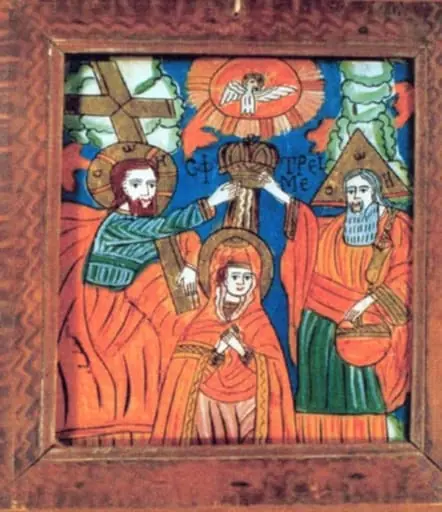
Sfânta Treime
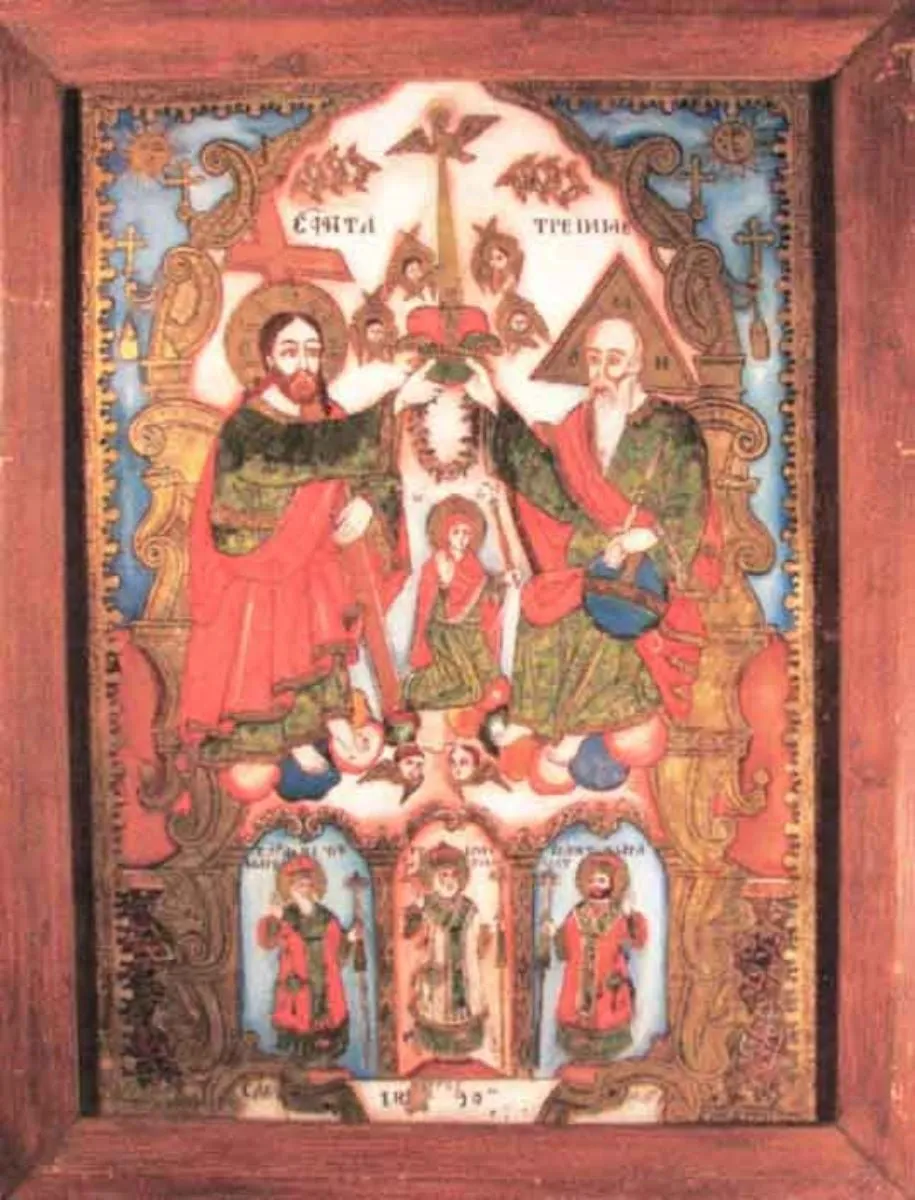
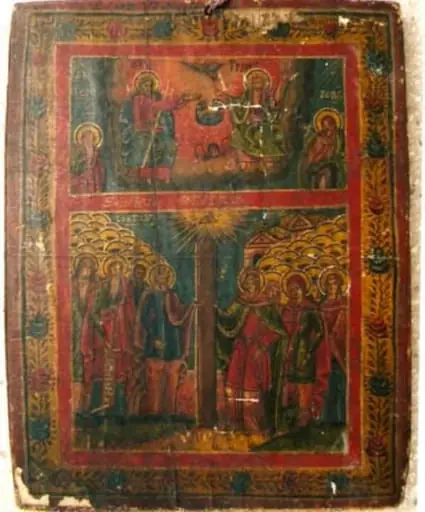
Sfânta Treime is a drawing by the Impressionist artist Unknown. It dates from 1890 and is held in the collection of the Romanian Peasant Museum. This religious panel depicts the Holy Trinity, rendered in a vibrant, hierarchical composition typical of Eastern Orthodox iconography.
About this work
Overview
Central figures—two male and one female—are illuminated beneath a radiant light, surrounded by hovering angels and a celestial figure bearing a cross.
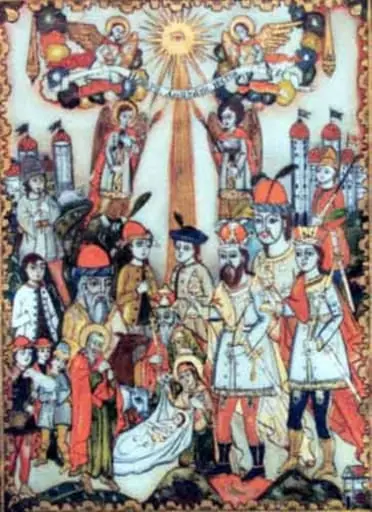
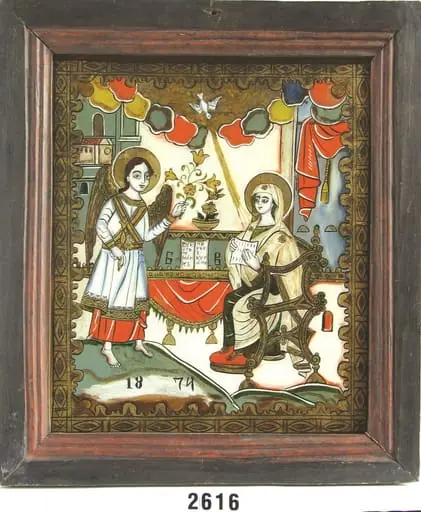
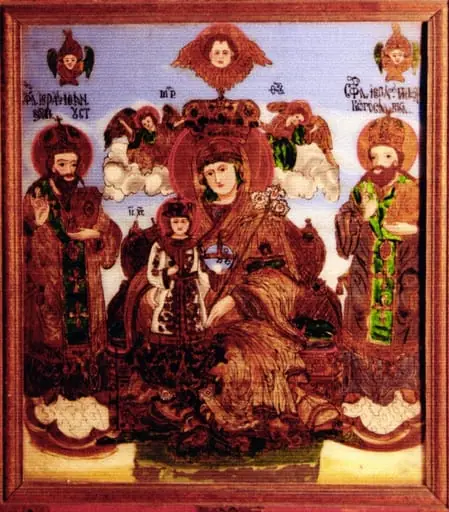
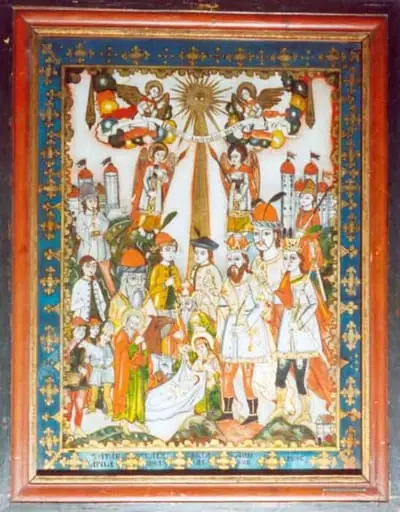
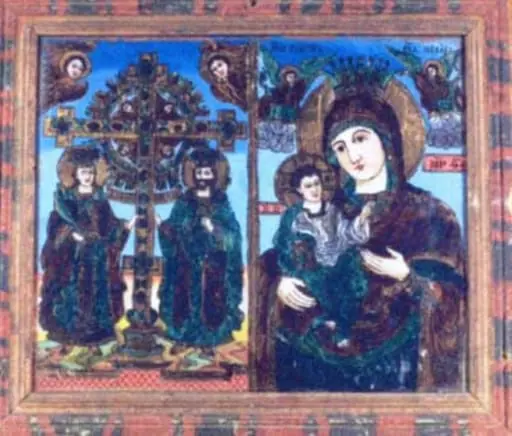
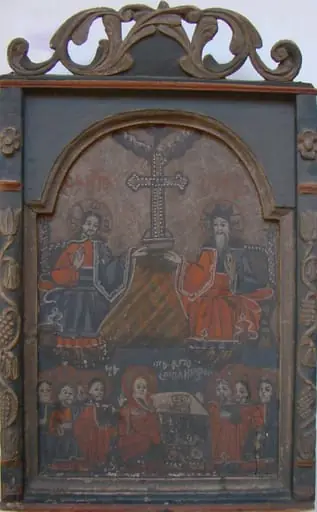
This religious panel depicts the Holy Trinity, rendered in a vibrant, hierarchical composition typical of Eastern Orthodox iconography. Central figures—two male and one female—are illuminated beneath a radiant light, surrounded by hovering angels and a celestial figure bearing a cross. The background is densely adorned with gold, crimson, and ultramarine, framing small narrative scenes along the lower edge.
Subject & Meaning
The central trio represents the Trinity, with the cruciform haloed figure signifying Christ, flanked by God the Father and the Holy Spirit, often symbolized as a dove or feminine presence. The surrounding angels and saints reinforce divine hierarchy. The lower arched scenes likely illustrate biblical events or martyrdoms, serving as devotional aids for contemplation and instruction.
Technique & Style
The painting employs tempera or egg-based pigments on wood, with extensive gold leafing to denote divine presence. Figures are stylized rather than naturalistic, with elongated proportions and frontal gazes characteristic of Byzantine tradition. Color symbolism is deliberate: gold for the sacred, red for sacrifice, blue for divinity, and deep tones for spiritual depth.
History & Provenance
The work originates from a Romanian Orthodox monastery or church, likely created in the 17th or 18th century. Such panels were commonly commissioned for altarpieces or iconostases. Its survival suggests it was preserved through periods of political change, possibly moved from a closed monastery to a museum or private collection in the 20th century.
Context
In Eastern Christian worship, icons function as windows to the divine, not mere decorations. This piece aligns with liturgical practices where visual theology replaced written texts for the largely illiterate faithful. The crowded composition reflects a belief in the communion of saints and the heavenly court’s active presence during worship.
Legacy
As a preserved example of Romanian ecclesiastical art, it contributes to the understanding of regional iconographic traditions within the broader Byzantine sphere. Its continued display in institutional settings underscores its role as a cultural artifact, bridging religious devotion and historical study without altering its original spiritual intent.
Artist & collection

 Domestic Scene
 Giacomo and Cardinal Marco, investing Andrea, Abbot of San Zeno, with his Benefice
 The Nymph of Fontainebleau
 Portrait of a Woman
 Madonna and Child with Saints in the Enclosed Garden
 Venus and Minerva
 Family Group of Four on Sofa
 Wall painting from Room H of the Villa of P. Fannius Synistor at Boscoreale