Artwork
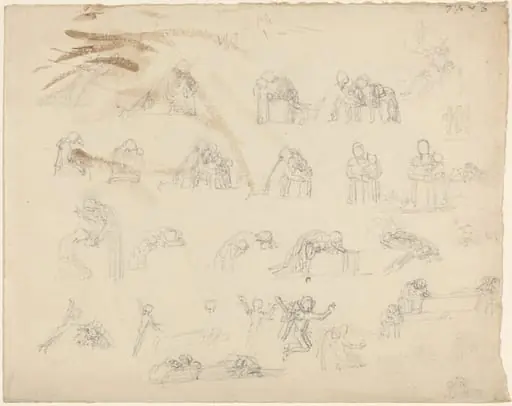
Compositional Sketches after Raphael and other artists
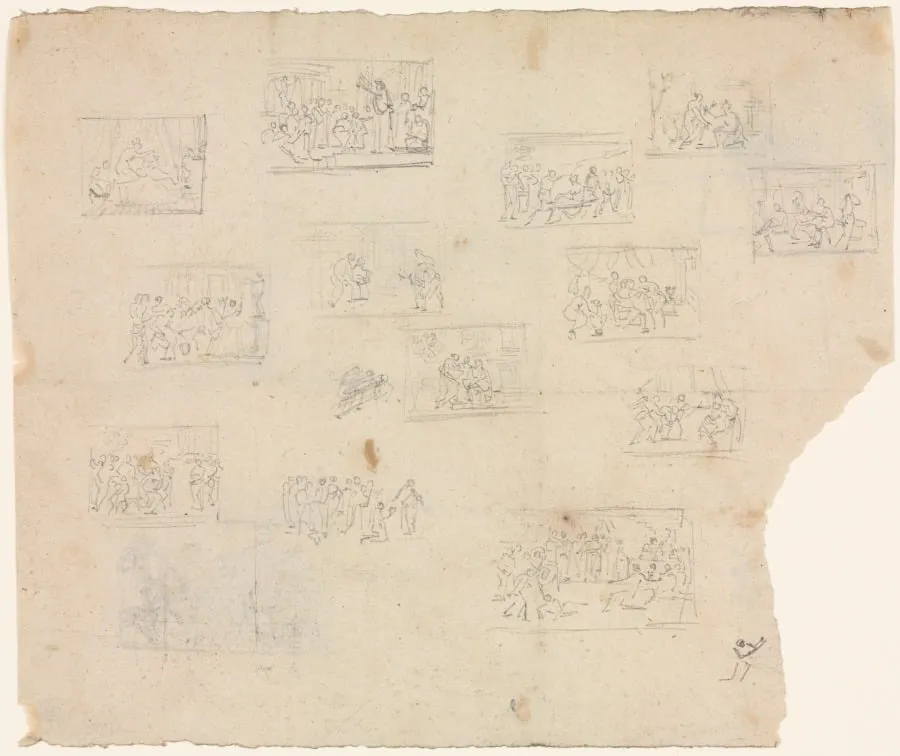
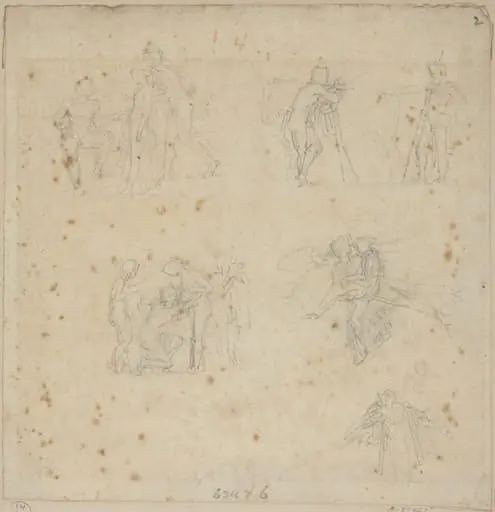
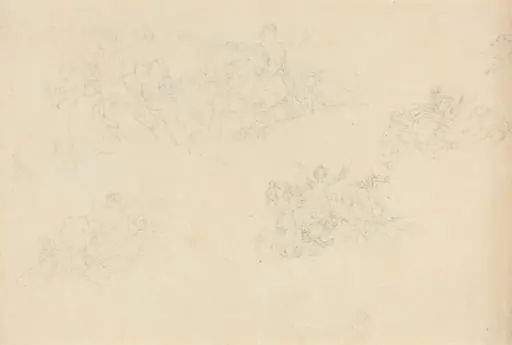
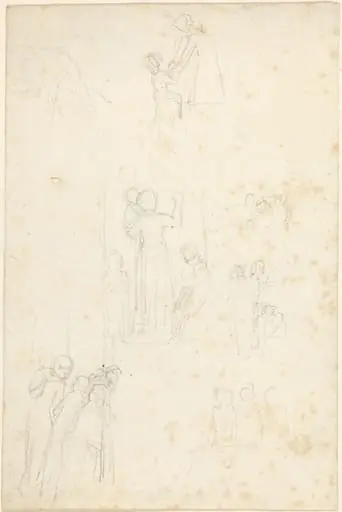
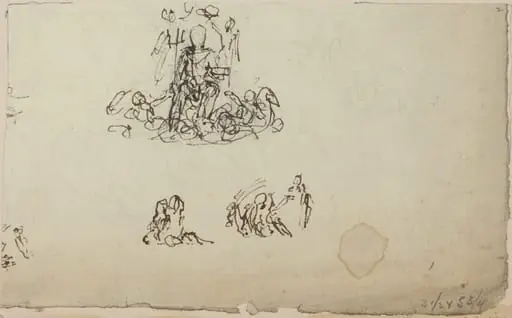
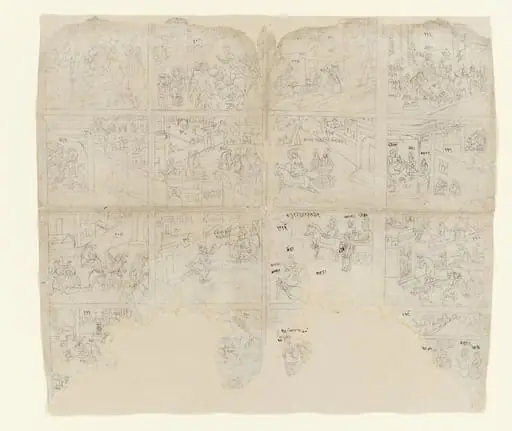
Compositional Sketches after Raphael and other artists is a drawing by the Romanticist artist Unknown. It dates from 1800 and is held in the collection of the Cleveland Museum of Art. This sheet contains a collection of rapid pencil studies, likely compiled as reference material for compositional planning.
About this work
Overview
The drawings are loose and unrefined, capturing fleeting arrangements of figures in varied settings—indoor gatherings, outdoor processions, and solemn scenes.
This sheet contains a collection of rapid pencil studies, likely compiled as reference material for compositional planning. The drawings are loose and unrefined, capturing fleeting arrangements of figures in varied settings—indoor gatherings, outdoor processions, and solemn scenes. The paper shows signs of age: tea stains, creases, and minor tears, suggesting frequent handling and prolonged use over time.
Subject & Meaning
The sketches depict everyday human interactions: celebratory moments, quiet conversations, and mourning rituals. No single narrative dominates; instead, the sheet functions as a visual archive of possible scenes, possibly gathered to explore emotional tone, group dynamics, or spatial arrangement. These are not illustrations but exploratory fragments, meant to stimulate further development.
Technique & Style
Executed in light, fluid pencil strokes, the drawings emphasize movement and gesture over detail. Forms are suggested with minimal lines, and figures are simplified into essential shapes. The absence of shading or finish indicates a focus on structure and rhythm rather than finish. The spontaneity of the marks reflects an artist working quickly, recording observations rather than creating polished images.
History & Provenance
The sheet’s physical condition—worn edges, discoloration, and repairs—points to decades of use, likely in a studio or private collection. Its survival suggests it was valued as a working document, not discarded after use. While its exact origin is unconfirmed, its style aligns with 16th- or 17th-century European drawing practices, particularly those influenced by Renaissance models.
Context
Such sketch sheets were common among artists studying the works of predecessors like Raphael. Rather than copying entire compositions, practitioners isolated elements—groupings, poses, spatial arrangements—to internalize compositional principles. This sheet reflects a tradition of learning through selective observation, adapting forms to one’s own purposes.
Legacy
Though unsigned and undated, the sheet preserves a quiet record of artistic inquiry. It reveals how artists engaged with tradition not through imitation but through reinterpretation. Today, it offers insight into the iterative, often unseen labor behind finished works, reminding viewers that even the most refined art begins with tentative marks.
Artist & collection

 Domestic Scene
 Giacomo and Cardinal Marco, investing Andrea, Abbot of San Zeno, with his Benefice
 The Nymph of Fontainebleau
 Portrait of a Woman
 Madonna and Child with Saints in the Enclosed Garden
 Venus and Minerva
 Family Group of Four on Sofa
 Wall painting from Room H of the Villa of P. Fannius Synistor at Boscoreale
![Sheet of Studies [recto and verso], by John Flaxman](https://artifactworldgallery.com/img/john-flaxman--sheet-of-studies-recto-and-verso--f6a63f702efb4c37-w320.webp)
![Sheet of Studies with the Drunken Pan and Nymphs [verso], by Jacob Jordaens](https://artifactworldgallery.com/img/jacob-jordaens--sheet-of-studies-with-the-drunken-pan-and-nymphs-verso--7da29549b59c490a-w320.webp)