Artwork
Sketches with a Hooded Figure (Virgil and Beatrice?)
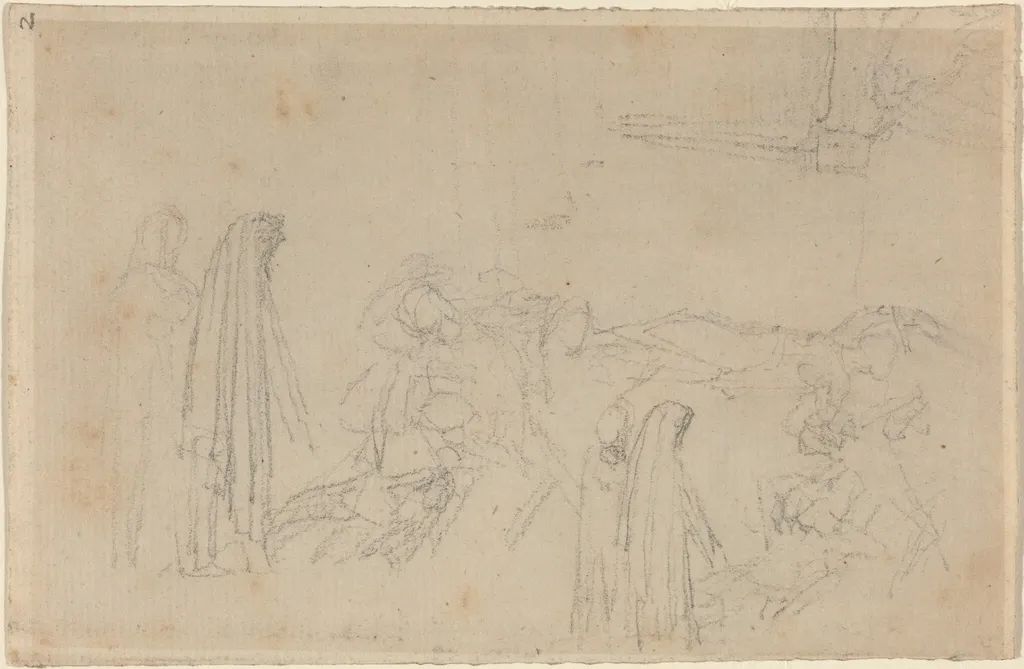
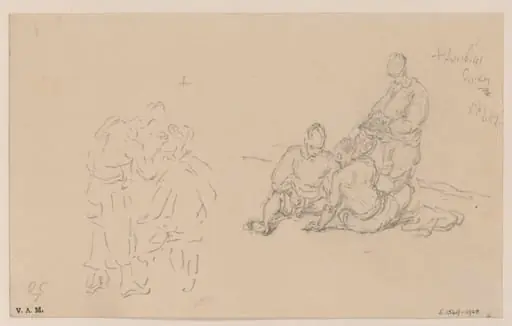
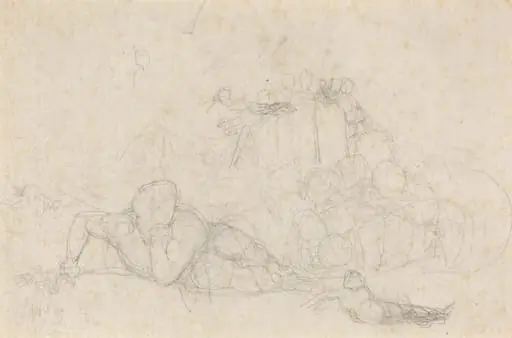
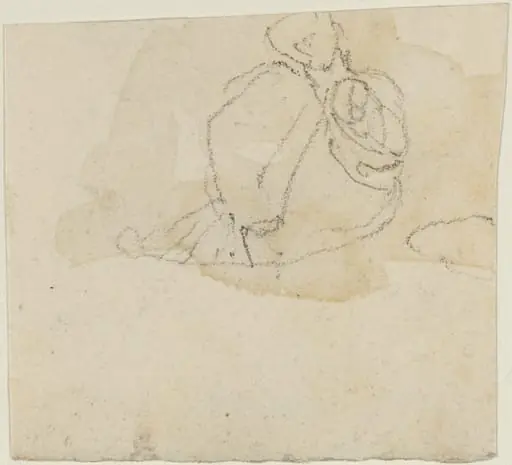
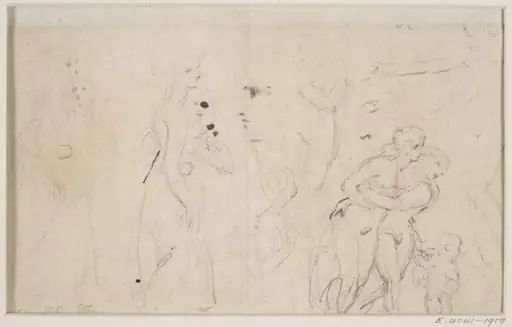
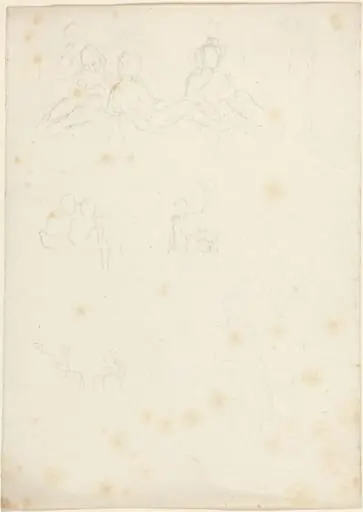
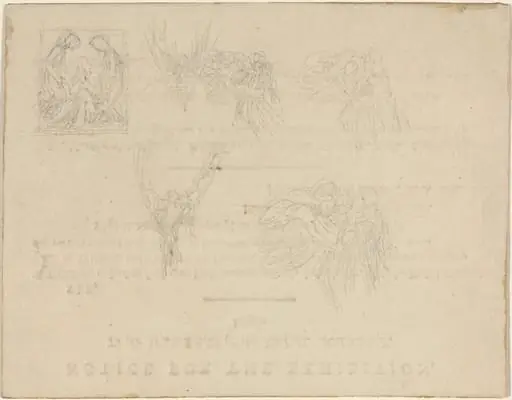
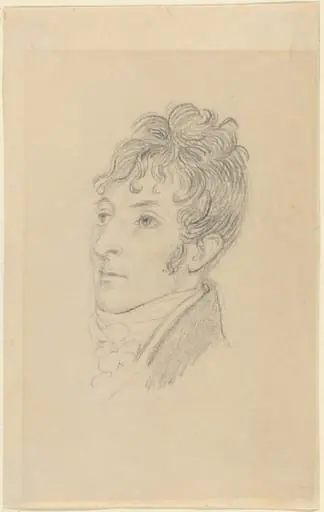
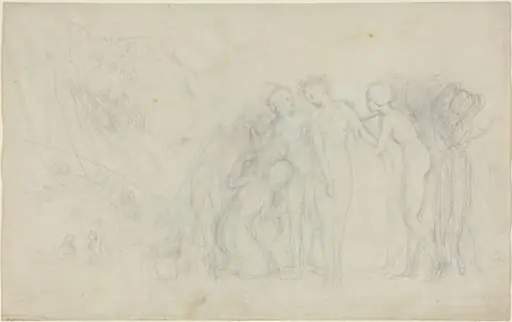
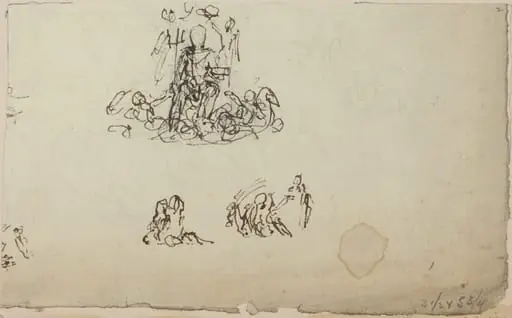
Sketches with a Hooded Figure (Virgil and Beatrice?) is a graphite drawing by the Romanticist artist John Flaxman. It dates from 1790 and is held in the collection of the National Gallery of Art.
About this work
Overview
The piece lacks finish, suggesting it was made in private study rather than for public display.
Created in 1790, this graphite drawing by John Flaxman is a preliminary study on laid paper, reflecting his habit of exploring literary themes through rapid, intimate sketches. As a sculptor and illustrator deeply engaged with classical narratives, Flaxman often used drawing to test compositional ideas before committing to larger works. The piece lacks finish, suggesting it was made in private study rather than for public display.
Subject & Meaning
The drawing features two figures, one cloaked, possibly alluding to Virgil and Beatrice from Dante’s Divine Comedy. Flaxman frequently drew inspiration from literary sources, particularly those rooted in classical and medieval tradition. The hooded form may symbolize guidance or mystery, while the second figure’s presence implies a narrative relationship—though the exact moment or meaning remains ambiguous, consistent with Flaxman’s preference for suggestive rather than literal representation.
Technique & Style
Flaxman employed graphite with restrained, fluid lines, emphasizing form through contour rather than shading. The drawing’s simplicity reflects his Neoclassical ideals—clarity, economy, and emotional restraint. Laid paper’s subtle texture enhances the delicate touch of the medium. Unlike finished illustrations, this sketch prioritizes gesture and spatial arrangement over detail, revealing his process of visual thinking rather than polished execution.
History & Provenance
The work originates from Flaxman’s active period in Rome, where he immersed himself in classical art and literature after early success with Wedgwood’s pottery designs. Though its specific ownership history is undocumented, it aligns with a body of studies he produced between 1785 and 1795, many of which later informed his published illustrations for Homer and Dante. Its survival suggests it was retained by the artist or a close associate.
Context
In late 18th-century Britain, Neoclassicism emphasized moral clarity and ancient sources. Flaxman’s sketches responded to a broader intellectual revival of classical texts, particularly among artists and writers seeking alternatives to Baroque excess. His drawings, often made in solitude, served as bridges between literary imagination and visual form, distinct from the grand historical paintings of his contemporaries.
Legacy
Flaxman’s sketchbooks, including this piece, influenced later generations of illustrators and sculptors by demonstrating how minimal line could convey narrative depth. Though not widely exhibited in his lifetime, these studies became essential to understanding his artistic process. Today, they are valued for their quiet intensity and their role in shaping the visual language of literary illustration in the 19th century.
Artist & collection
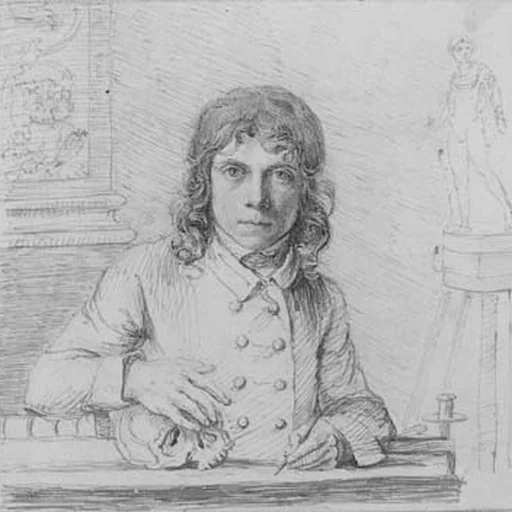
Artist
John Flaxman (6 July 1755 – 7 December 1826) was an English sculptor and draughtsman who was a leading figure in British and European Neoclassicism.

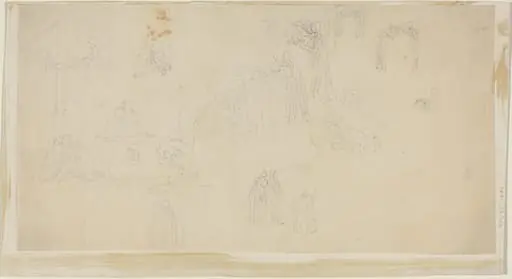
![Sheet of Studies [recto and verso], by John Flaxman](https://artifactworldgallery.com/img/john-flaxman--sheet-of-studies-recto-and-verso--af59e52d5279d768-w320.webp)
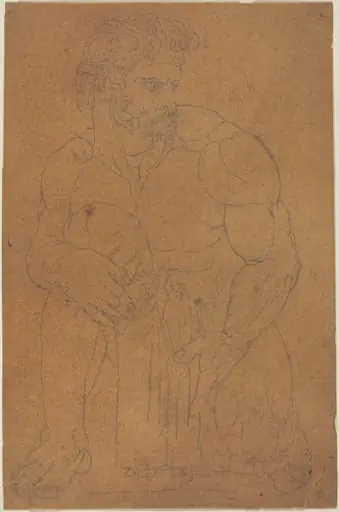
![Sheet of Studies [recto and verso], by John Flaxman](https://artifactworldgallery.com/img/john-flaxman--sheet-of-studies-recto-and-verso--6fd1500085ec614c-w320.webp)
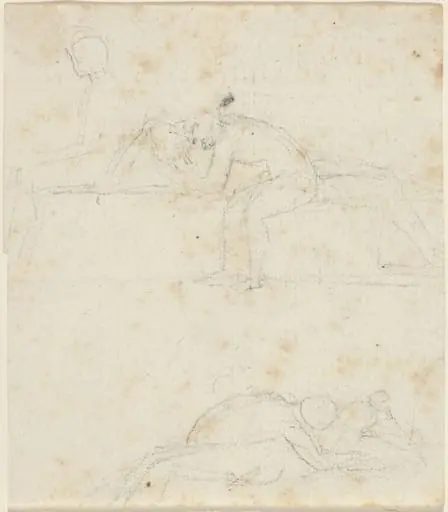
![Sheet of Studies [recto and verso], by John Flaxman](https://artifactworldgallery.com/img/john-flaxman--sheet-of-studies-recto-and-verso--37ffe1e79b52e688-w320.webp)