Artwork
De rijschool
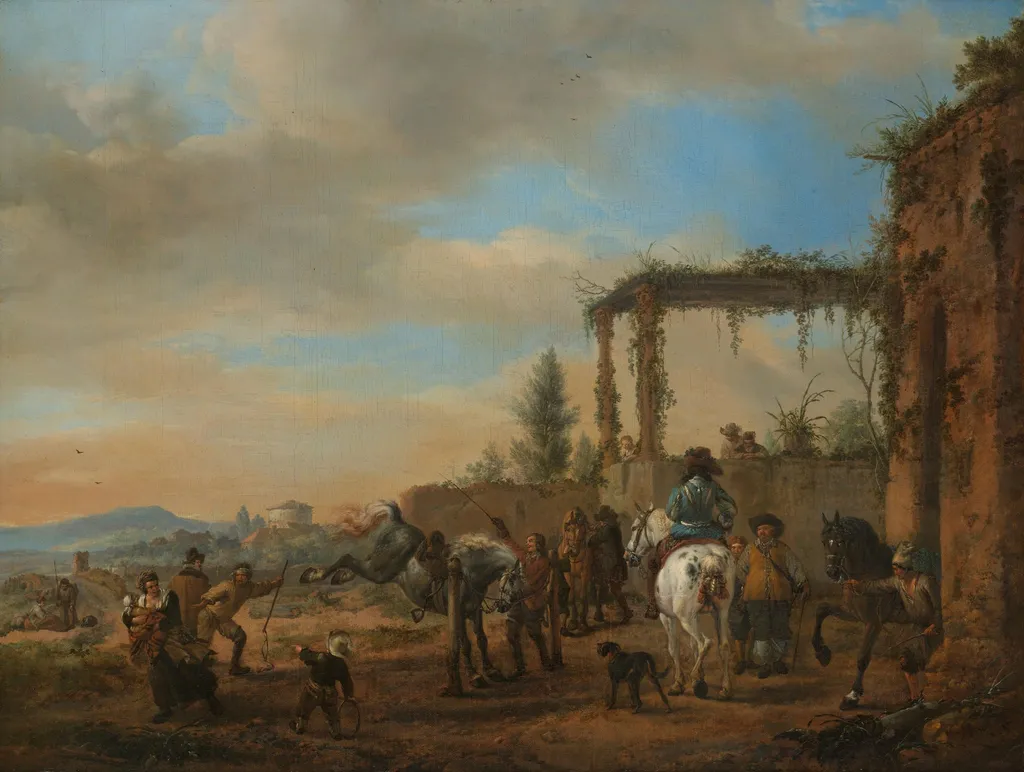
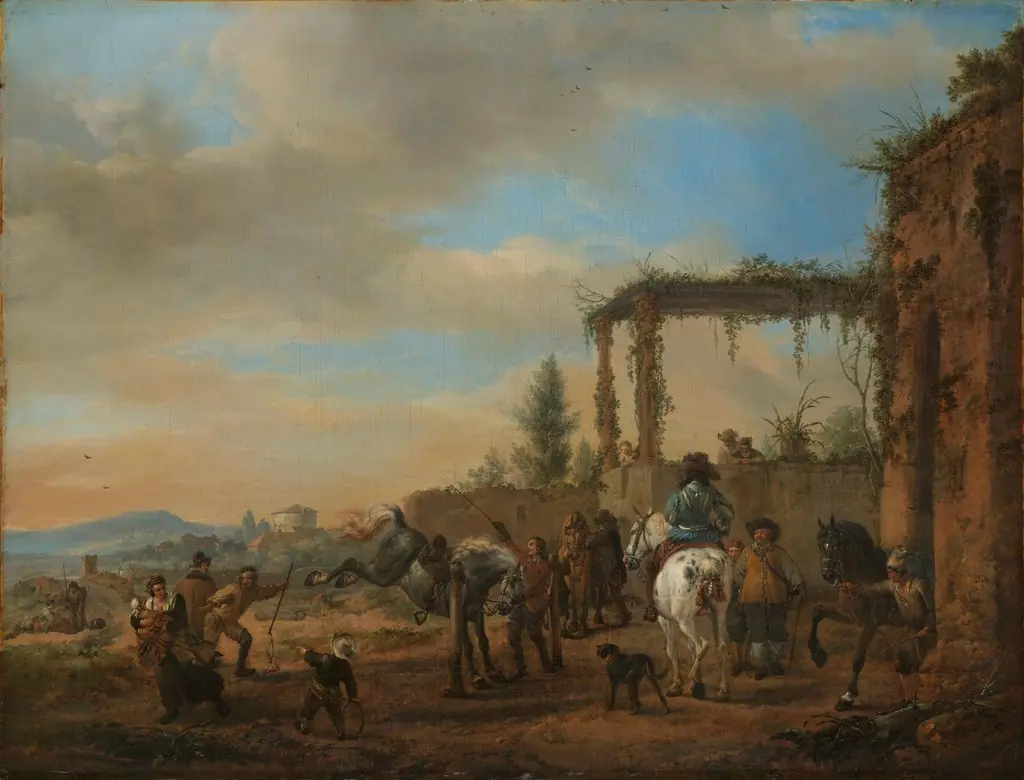
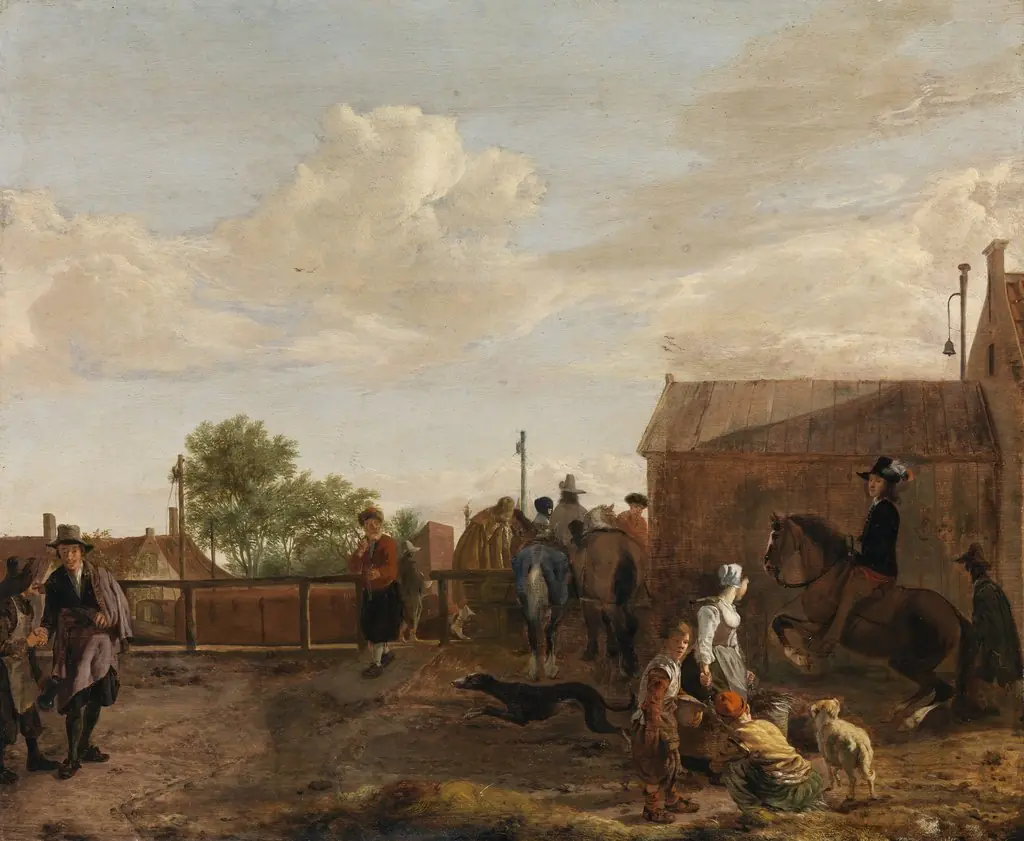
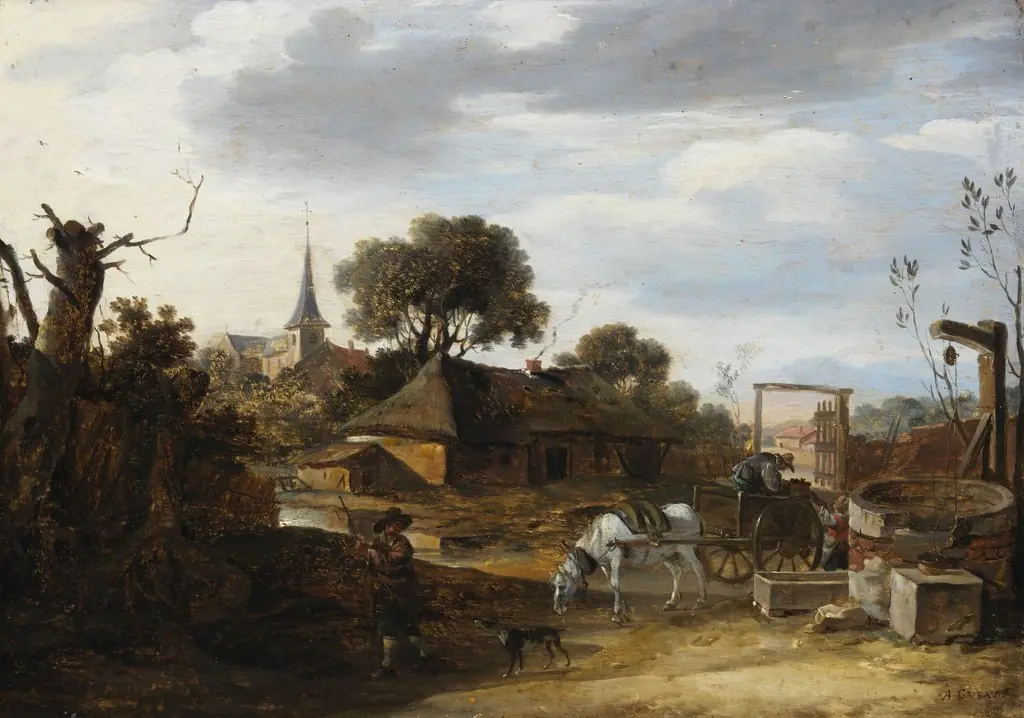
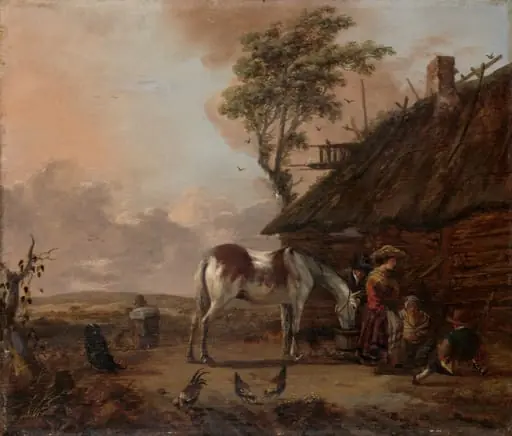
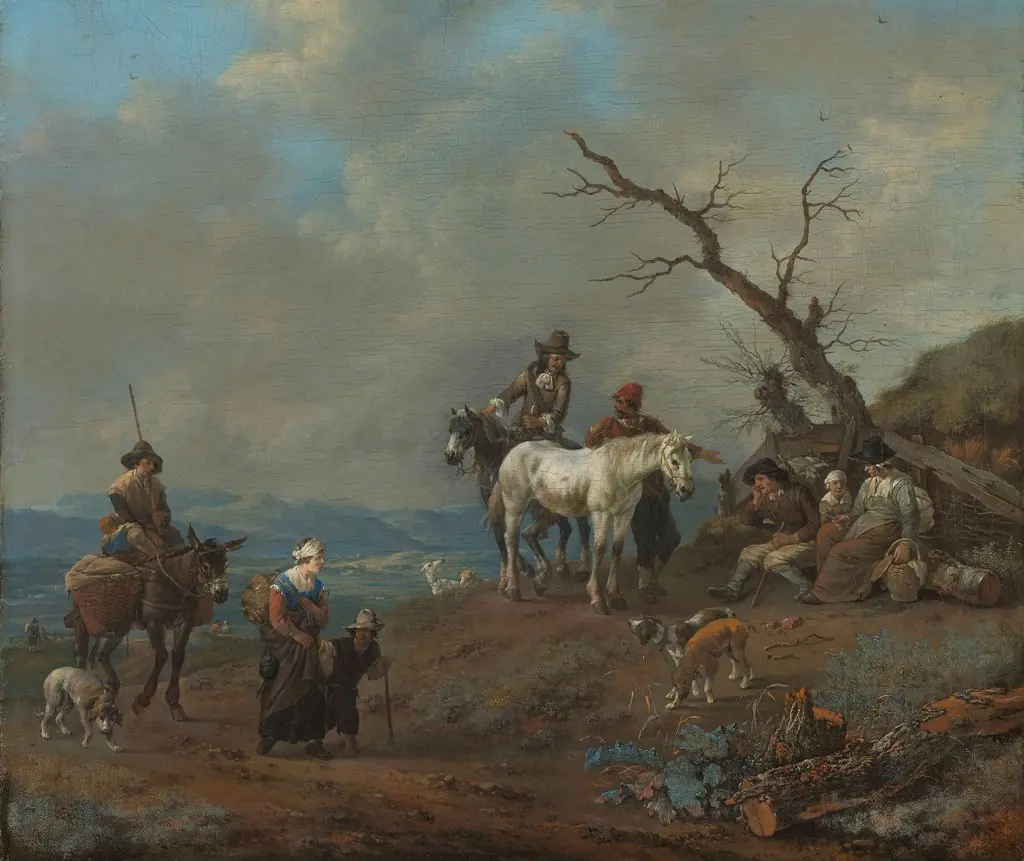
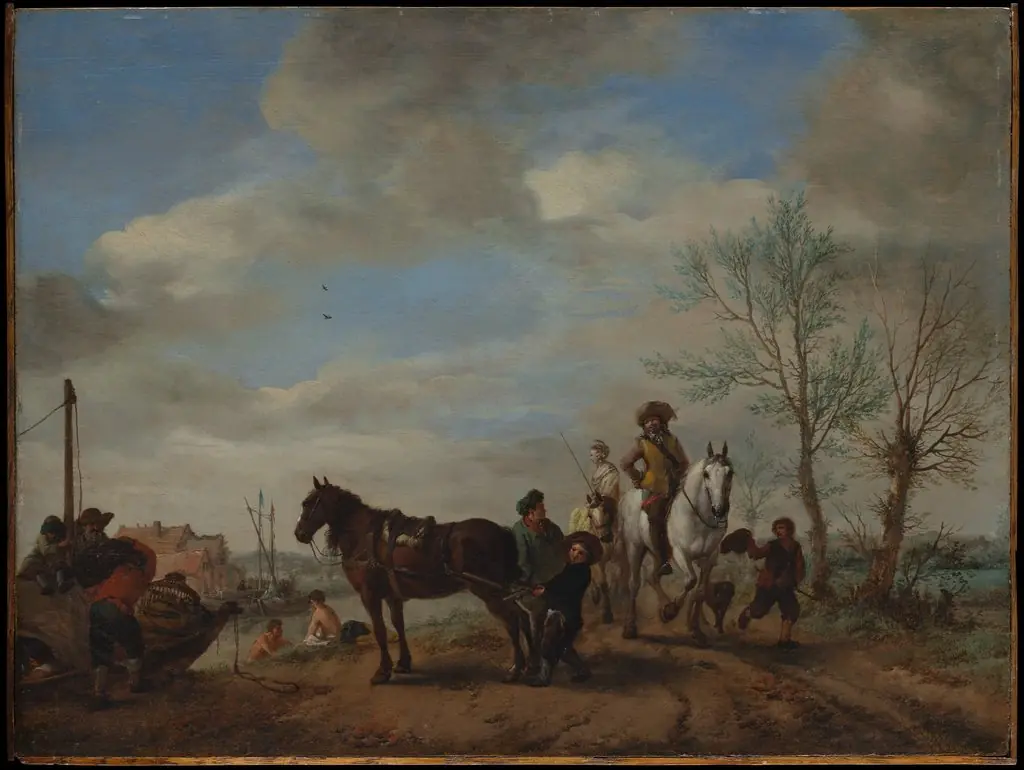
De rijschool is an unspecified painting by the Dutch Golden Age artist Unknown. It dates from 1658 and is held in the collection of the Rijksmuseum. This painting depicts a bustling stable yard at morning light, where daily routines unfold among horses and their attendants.
About this work
Overview
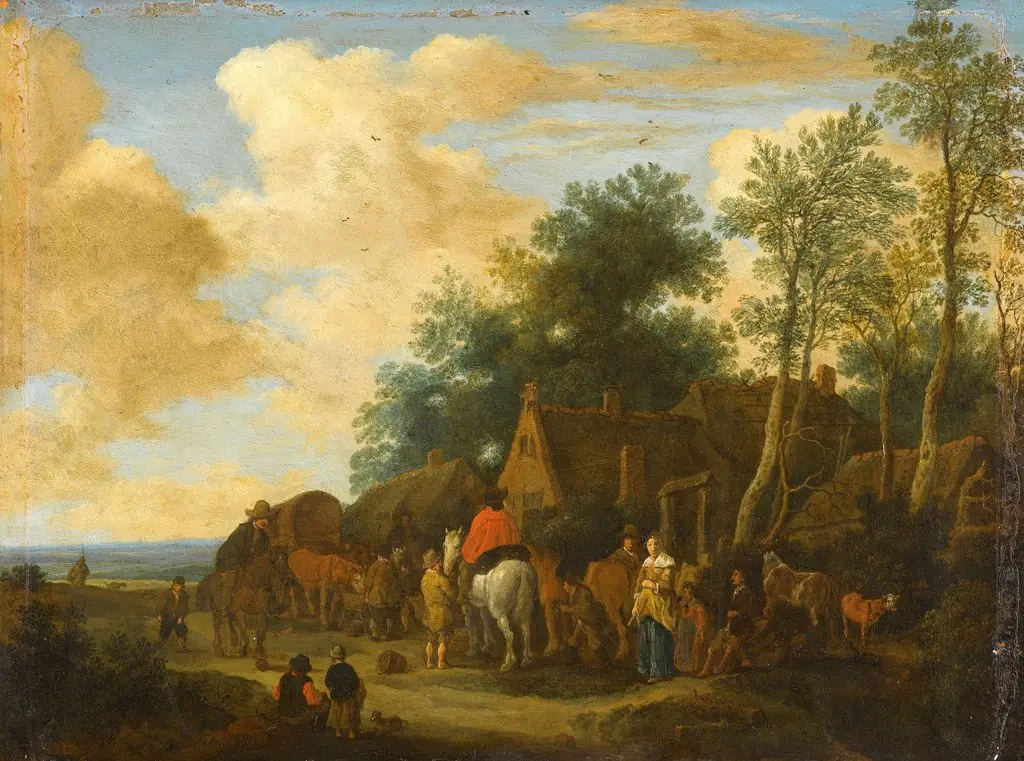
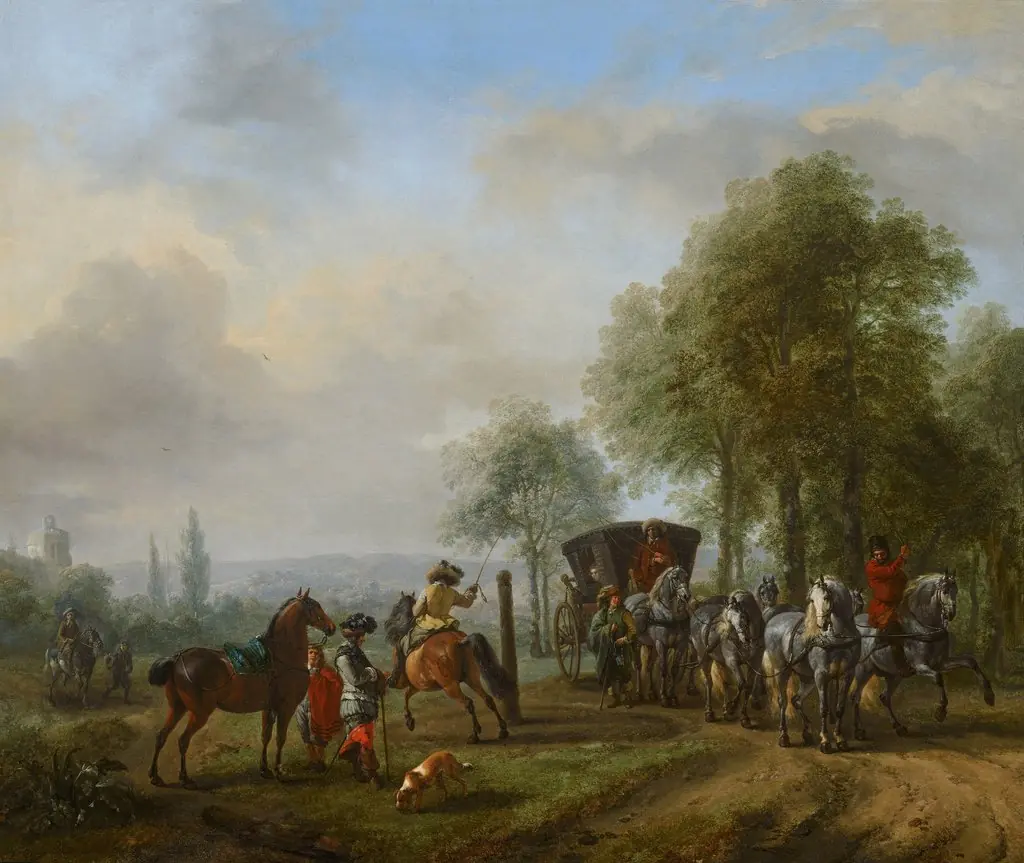
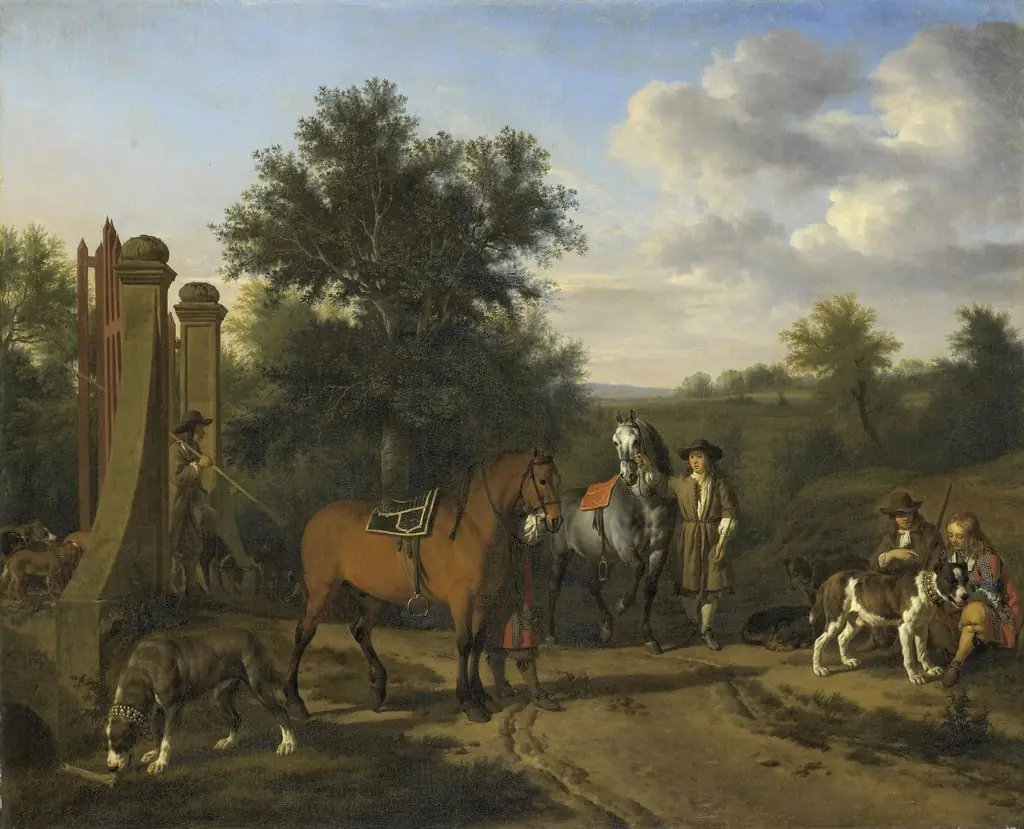
This painting depicts a bustling stable yard at morning light, where daily routines unfold among horses and their attendants. Figures move with quiet urgency—saddling, dodging, observing—while animals shift and react in natural, unposed ways. The scene avoids grandeur, instead focusing on the rhythm of ordinary work, rendered with close attention to movement and interaction.
Subject & Meaning
The scene captures a moment of controlled chaos in a horse stable, where human and animal lives intersect. A woman and child narrowly avoid a kicking hoof, grooms attend to equipment, and a dog watches from the sidelines. These small, unplanned actions suggest a world governed by routine rather than drama, revealing the quiet labor behind equestrian life.
Technique & Style
Brushwork is precise but unobtrusive, allowing details to emerge naturally: sunlight catches metal bits, tails flick with subtle motion, and a groom’s yawn adds a touch of fatigue. The composition is densely populated without feeling cluttered, each figure contributing to a sense of lived-in space. Light and shadow define form without dramatic contrast.
History & Provenance
The painting’s origin remains undocumented, with no signed attribution or early record of ownership. Its style aligns with Dutch genre painting of the mid-17th century, particularly the work of artists who specialized in equestrian scenes. Its survival suggests it was valued by collectors who appreciated its observational depth over heroic themes.
Context
In 17th-century Netherlands, horses were central to transport, military readiness, and social status. Stable yards were common sights in towns and estates, and artists often turned to them for scenes of everyday life. This work reflects a broader trend of valuing quiet, truthful observation over idealized narratives in Dutch art.
Legacy
Though not widely attributed to a major name, the painting endures as an example of keen, empathetic observation. Its quiet humanity and attention to small gestures influenced later genre painters who sought authenticity in ordinary moments. It remains a quiet testament to the dignity of labor and the unnoticed rhythms of daily life.
Artist & collection

 Domestic Scene
 Giacomo and Cardinal Marco, investing Andrea, Abbot of San Zeno, with his Benefice
 The Nymph of Fontainebleau
 Portrait of a Woman
 Madonna and Child with Saints in the Enclosed Garden
 Venus and Minerva
 Family Group of Four on Sofa
 Wall painting from Room H of the Villa of P. Fannius Synistor at Boscoreale