Artwork
Detail of pietra dura work from the Diwan-i Am, Delhi Palace and Fort
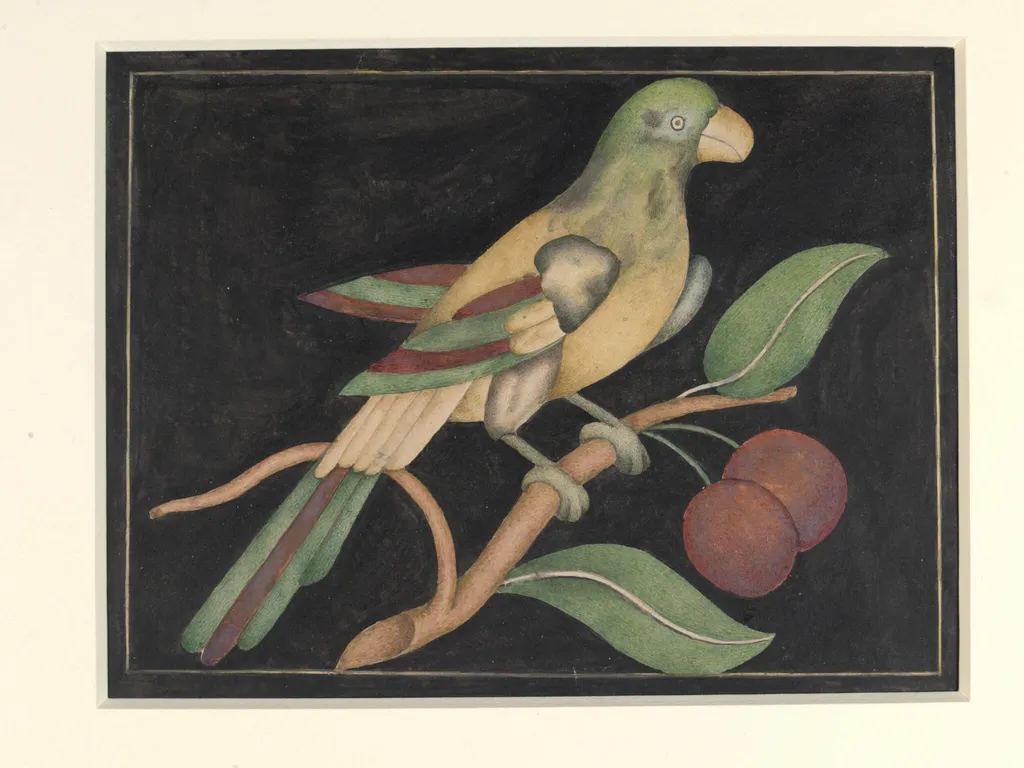
Detail of pietra dura work from the Diwan-i Am, Delhi Palace and Fort is a paint painting by the Patna School of Painting artist Unknown. It dates from 1845 and is held in the collection of the Victoria and Albert Museum.
About this work
Overview
This painting is one of five in a series documenting intricate pietra dura inlays from the Diwan-i Am in Delhi’s Red Fort, created around 1845.
This painting is one of five in a series documenting intricate pietra dura inlays from the Diwan-i Am in Delhi’s Red Fort, created around 1845. Executed by an Indian artist for a European patron, it belongs to the Company painting tradition — a hybrid genre shaped by cross-cultural exchange between South Asian artisans and British residents of the subcontinent. Unlike traditional Mughal miniatures, these works adapted to Western tastes in composition and detail.
Subject & Meaning
The painting depicts a parrot perched on a tree branch, rendered with precise naturalism. This motif serves as a visual anchor to highlight the floral and faunal motifs embedded in the palace’s pietra dura decoration. The choice of a parrot — a symbol of vitality and mimicry in Indian iconography — subtly reinforces the theme of ornamental richness, while also appealing to European collectors’ fascination with exotic wildlife.
Technique & Style
The work combines Indian miniature traditions — fine brushwork, flat planes, and vibrant mineral pigments — with Western conventions such as chiaroscuro and spatial depth. Unlike the symbolic abstraction of earlier Mughal art, this piece emphasizes lifelike detail and botanical accuracy, reflecting the influence of European naturalist illustration. The rendering of the parrot’s feathers and the tree’s bark demonstrates a meticulous attention to texture, aligning with colonial-era scientific documentation.
History & Provenance
Created circa 1845, the painting was likely commissioned by a British official or acquired from a Delhi bazaar, where Company paintings were commercially available. These works were often collected as souvenirs or ethnographic records. The series as a whole now holds historical value as a visual archive: much of the original pietra dura decoration in the Diwan-i Am has since deteriorated or been lost, making these paintings critical records of Mughal-era craftsmanship.
Context
Company paintings emerged as the Mughal court’s patronage declined and British administrative presence grew. Indian artists adapted their skills to meet new demands, producing works that balanced indigenous aesthetics with European expectations of realism and detail. This shift reflects broader socio-political changes: art became a commodity, and cultural expression was increasingly mediated through colonial relationships, even as local techniques endured.
Legacy
These paintings preserve a vanished material culture, offering insight into the decorative arts of late Mughal architecture. They also illustrate the agency of Indian artists who navigated colonial markets without abandoning their craft. Today, they serve as historical documents, not merely as aesthetic objects, revealing how visual culture adapted under imperial influence while retaining distinct regional sensibilities.
Artist & collection

 Domestic Scene
 Giacomo and Cardinal Marco, investing Andrea, Abbot of San Zeno, with his Benefice
 The Nymph of Fontainebleau
 Portrait of a Woman
 Madonna and Child with Saints in the Enclosed Garden
 Venus and Minerva
 Family Group of Four on Sofa
 Wall painting from Room H of the Villa of P. Fannius Synistor at Boscoreale
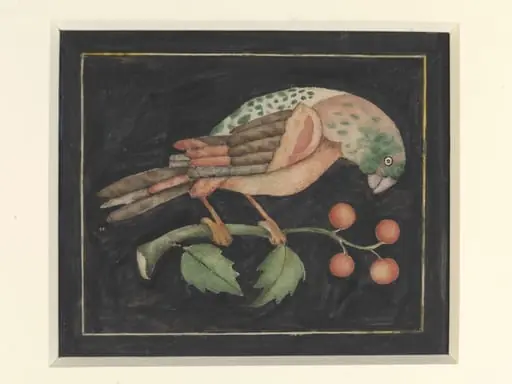 One of seven details of pietra-dura work showing flowers and birds on the walls of the Diwan-i Am, Delhi , Palace and fort
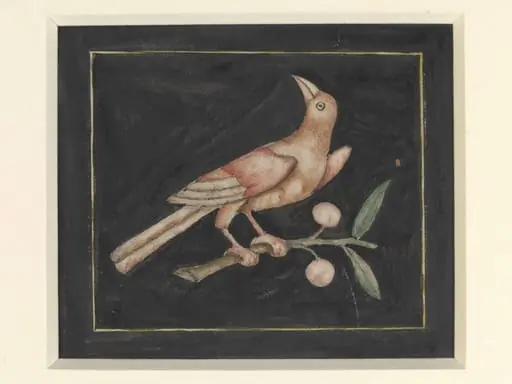 One on seven details of pietra-dura work showing flowers and birds on the walls of the Diwan-i Am, Delhi Palace and Fort
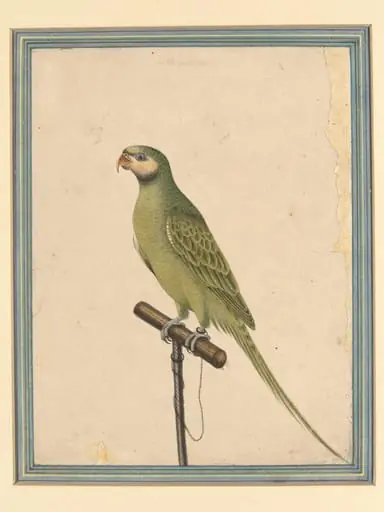 A parrot
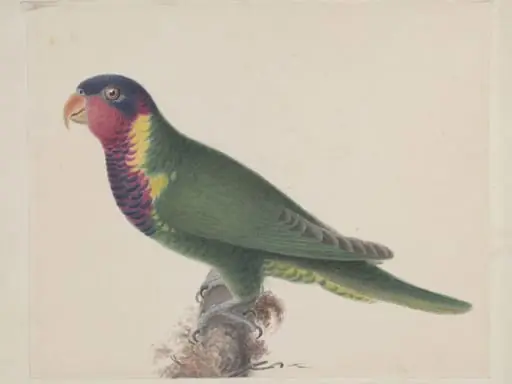 Blossom-headed parakeet
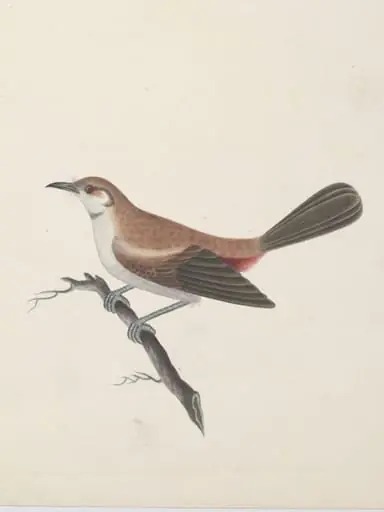 Female Indian robin (?)
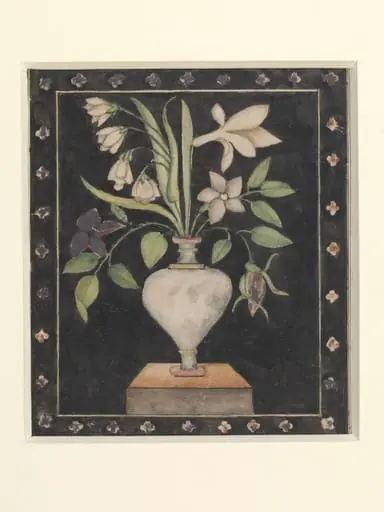 One of Seven details of pietra-dura work showing flowers an birds on the walls of the Diwan-i Am, Delhi Fort.