Artwork
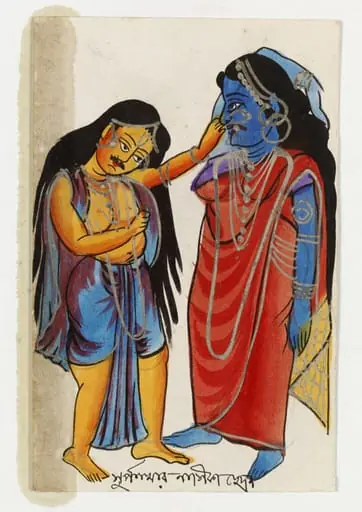
Duhshashana and Draupadi
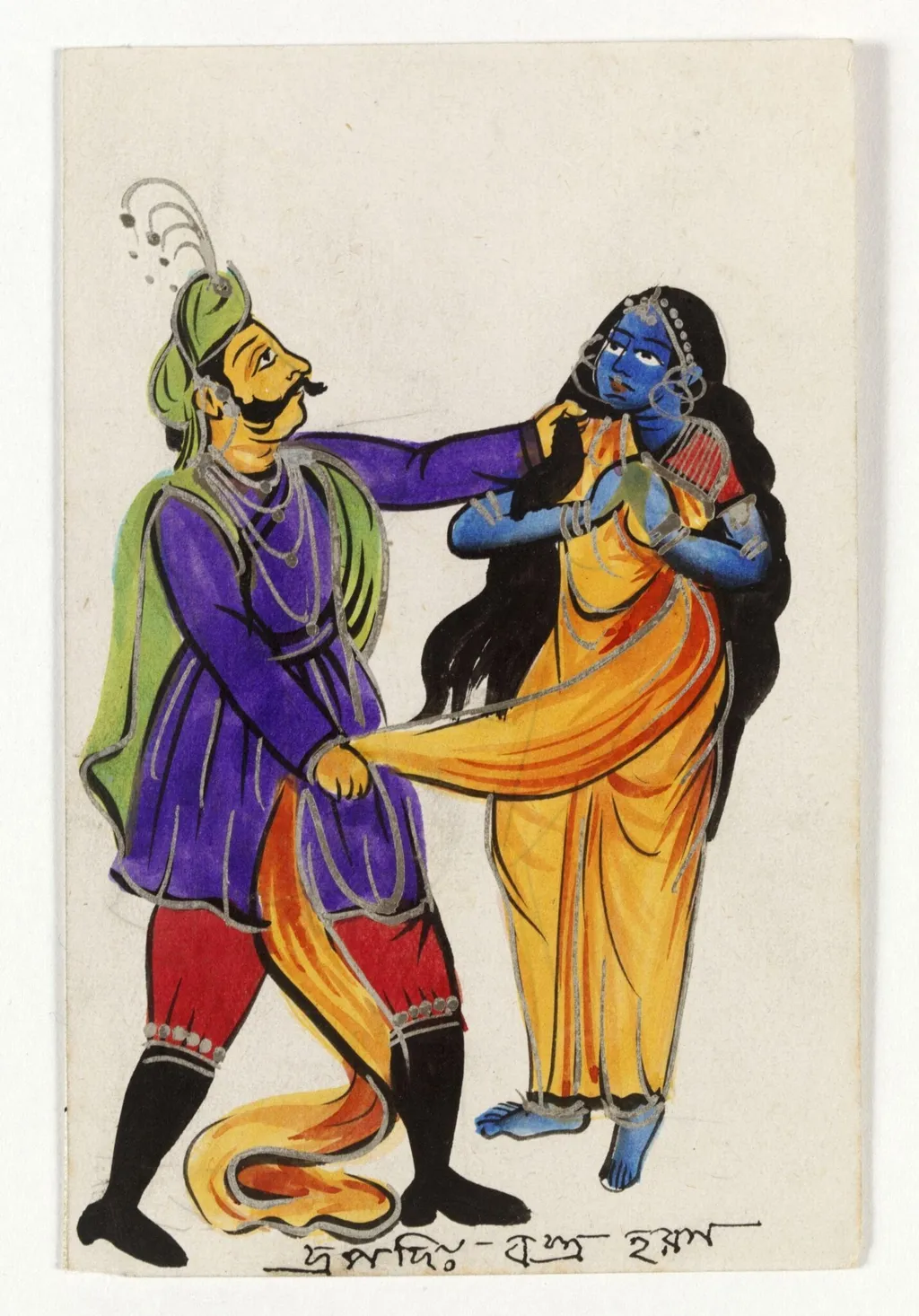
Duhshashana and Draupadi is a paint painting by the Impressionist artist Unknown. It dates from 1890 and is held in the collection of the Victoria and Albert Museum.
About this work
Overview
The scene is compressed into a tight, two-figure composition, emphasizing emotional tension over spatial depth.
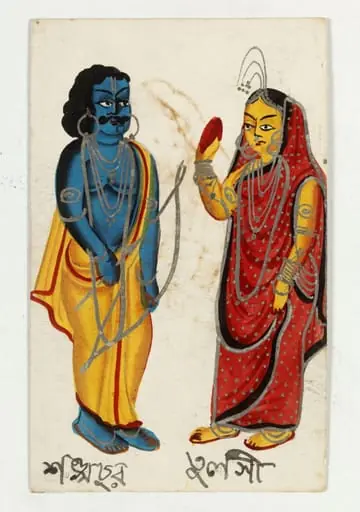
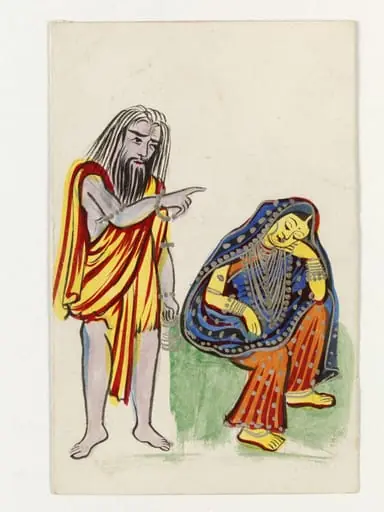
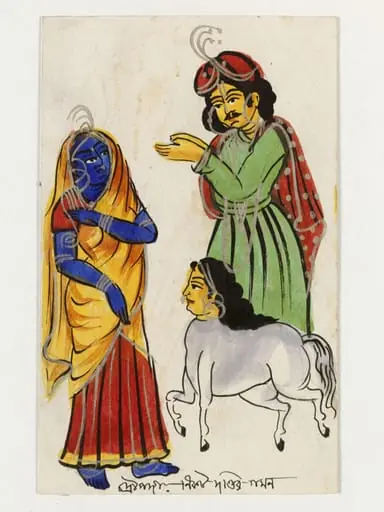
This 1890 watercolor and tin alloy painting on cardboard illustrates a pivotal moment from the Mahabharata, capturing Duhshashana’s attempt to publicly humiliate Draupadi. Rendered in the Kalighat style, the work employs flat, saturated hues and bold outlines, characteristic of 19th-century Bengali folk art produced near the Kalighat temple in Kolkata. The scene is compressed into a tight, two-figure composition, emphasizing emotional tension over spatial depth.
Subject & Meaning
The painting depicts Draupadi’s divine protection during her attempted disrobing by Duhshashana. As he pulls at her sari, her prayers to Krishna cause the fabric to endlessly unroll, symbolizing divine intervention in the face of injustice. Her blue skin, a conventional marker of divine or heroic status in Indian iconography, reinforces her moral and spiritual authority, contrasting with Duhshashana’s aggressive posture and earthly attire.
Technique & Style
Executed in the Kalighat tradition, the painting uses minimal shading and flat areas of color—purple, red, green, yellow, and blue—to define forms. Outlines are crisp and deliberate, with figures rendered in a stylized, almost caricatured manner. The lack of background and the focus on expressive gestures reflect the genre’s origins in affordable, portable devotional art, meant for quick visual storytelling rather than naturalistic detail.
History & Provenance
Created in Calcutta around 1890, the work emerged from a thriving commercial art market catering to pilgrims and urban patrons. Kalighat painters adapted epic narratives into accessible images, often selling them near temple grounds. This piece likely served both devotional and didactic purposes, reinforcing moral lessons from the Mahabharata to a broad, literate and non-literate audience alike.
Context
Kalighat paintings responded to colonial urbanization, blending traditional Hindu themes with new urban sensibilities. While earlier patachitra scrolls were narrative and sequential, Kalighat art favored single, potent moments. This painting reflects a society negotiating tradition and modernity, using familiar religious imagery to affirm cultural values amid rapid social change.
Legacy
As a representative of Kalighat art, this work contributes to the preservation of a vernacular visual language that bridged religious storytelling and popular culture. Though later eclipsed by photography and lithography, such paintings remain vital records of how Indian communities visually interpreted sacred texts, sustaining regional aesthetics through everyday artistic practice.
Artist & collection

 Domestic Scene
 Giacomo and Cardinal Marco, investing Andrea, Abbot of San Zeno, with his Benefice
 The Nymph of Fontainebleau
 Portrait of a Woman
 Madonna and Child with Saints in the Enclosed Garden
 Venus and Minerva
 Family Group of Four on Sofa
 Wall painting from Room H of the Villa of P. Fannius Synistor at Boscoreale