Artwork
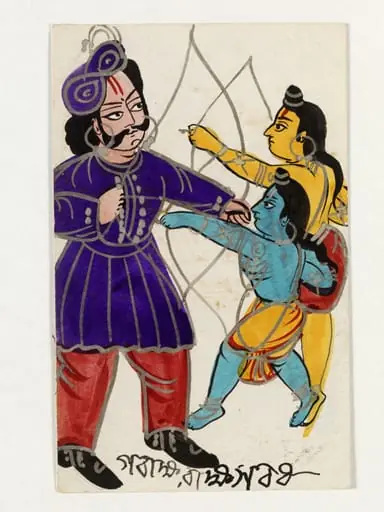
Rama and Surpanakha
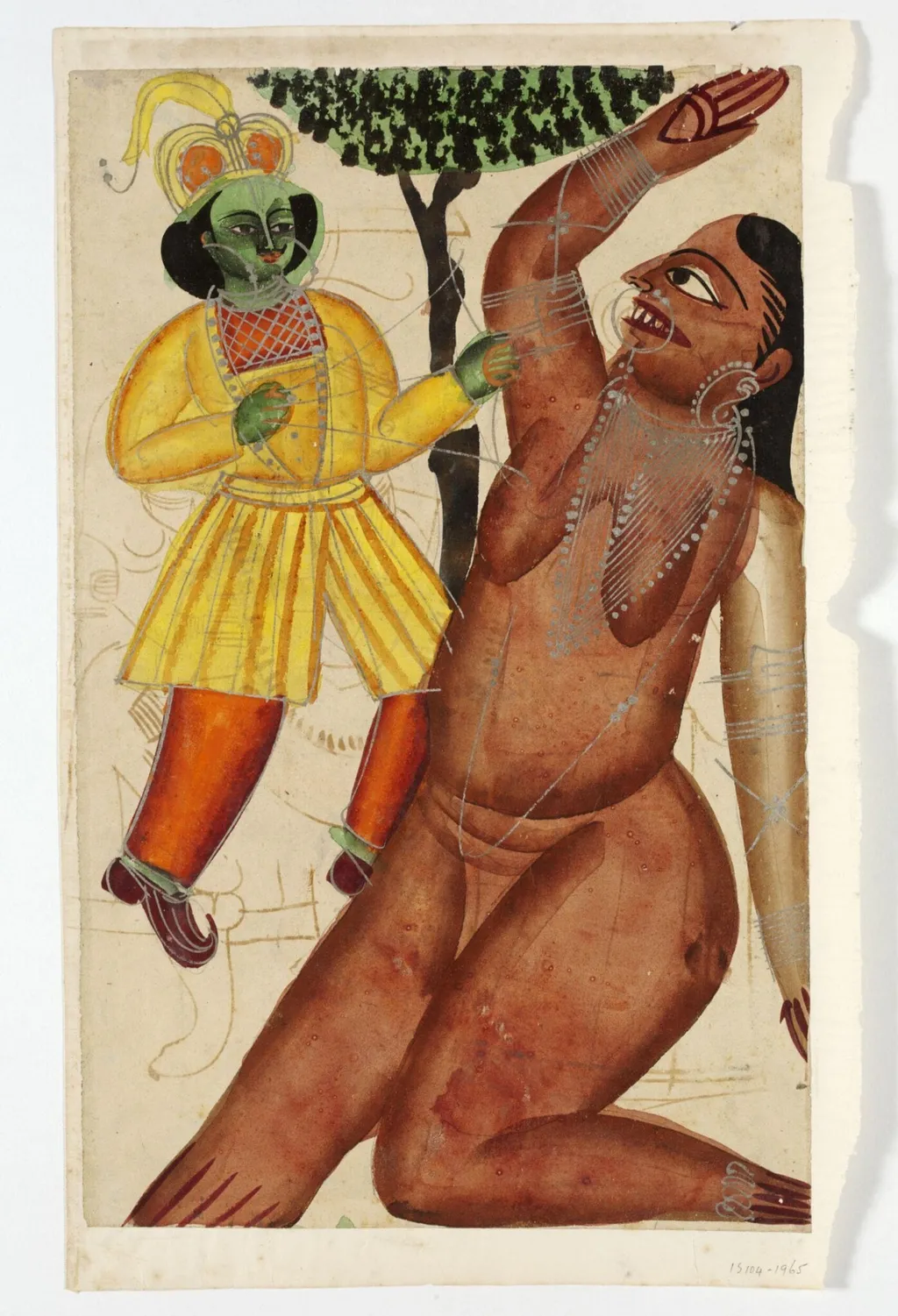
Rama and Surpanakha is a paint painting by the Impressionist artist Unknown. It dates from 1880 and is held in the collection of the Victoria and Albert Museum.
About this work
Overview
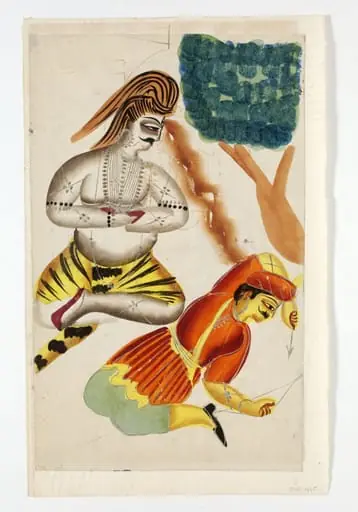
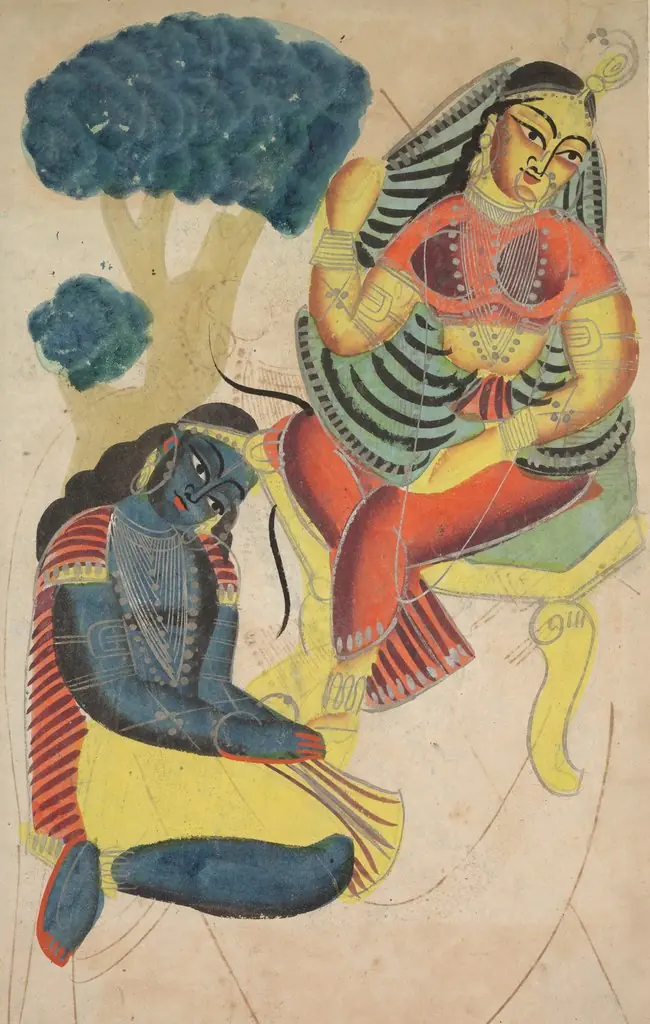
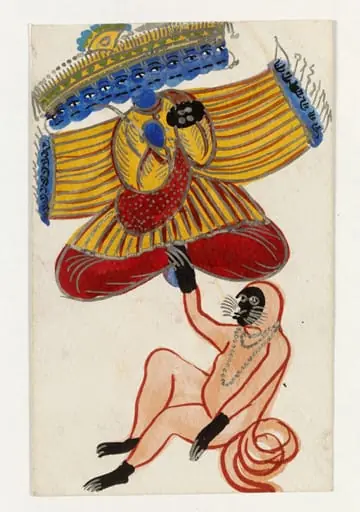
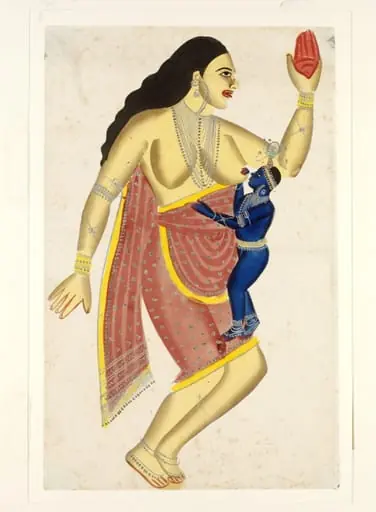
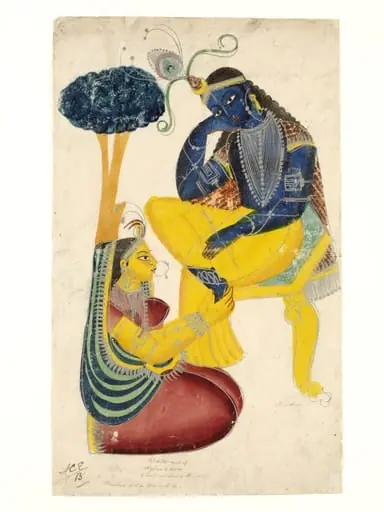
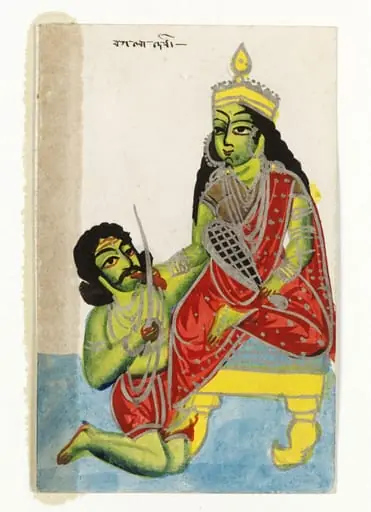
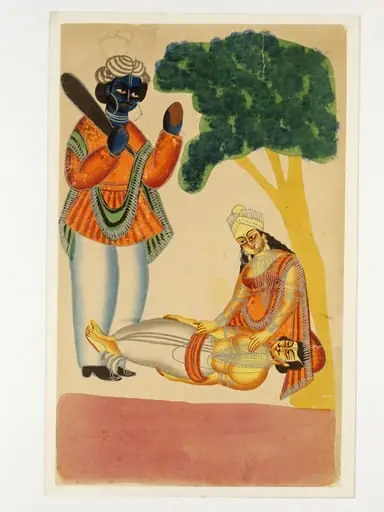
Created in 1880 by an unidentified hand, this double‑sided work presents a scene from the Ramayana in which the hero Rama confronts the demoness Surpanakha. Executed on a single sheet of paper, the composition is rendered in watercolour combined with tin alloy, giving the image a distinctive metallic sheen alongside the translucent pigments.
Subject & Meaning
The narrative captures the moment of confrontation: Rama, poised with a calm demeanor, faces the contorted figure of Surpanakha, whose expressive face and reaching gesture convey desperation and fury. The juxtaposition of the hero’s composed stance against the demoness’s dramatic pose underscores the moral conflict central to the epic, highlighting themes of duty and the defeat of chaos.
Technique & Style
A simple tree and faint outlines form a minimal background, reinforcing the graphic, almost illustrative quality of the piece.
Bold, flat areas of colour dominate the picture, with little gradation between tones. The male figure is dressed in a yellow skirt, red vest and a green crown, clutching a green object, while the female figure is depicted bare‑chested, adorned with heavy jewellery, and rendered in a twisted, upward‑reaching pose. A simple tree and faint outlines form a minimal background, reinforcing the graphic, almost illustrative quality of the piece.
History & Provenance
The work is dated to the late nineteenth century, a period when Indian mythological subjects were frequently reproduced for both devotional and decorative purposes. Its creator remains unknown, and the piece has passed through private collections before entering a public institution, where it is now catalogued as part of the museum’s South Asian holdings.
Context
The scene derives from the Ramayana, an ancient Indian epic that has inspired countless visual interpretations across centuries. In the late 1800s, such depictions were often produced for educational or ornamental use, reflecting a broader interest in Indian religious narratives among both local patrons and colonial audiences.
Artist & collection

 Domestic Scene
 Giacomo and Cardinal Marco, investing Andrea, Abbot of San Zeno, with his Benefice
 The Nymph of Fontainebleau
 Portrait of a Woman
 Madonna and Child with Saints in the Enclosed Garden
 Venus and Minerva
 Family Group of Four on Sofa
 Wall painting from Room H of the Villa of P. Fannius Synistor at Boscoreale