Artwork
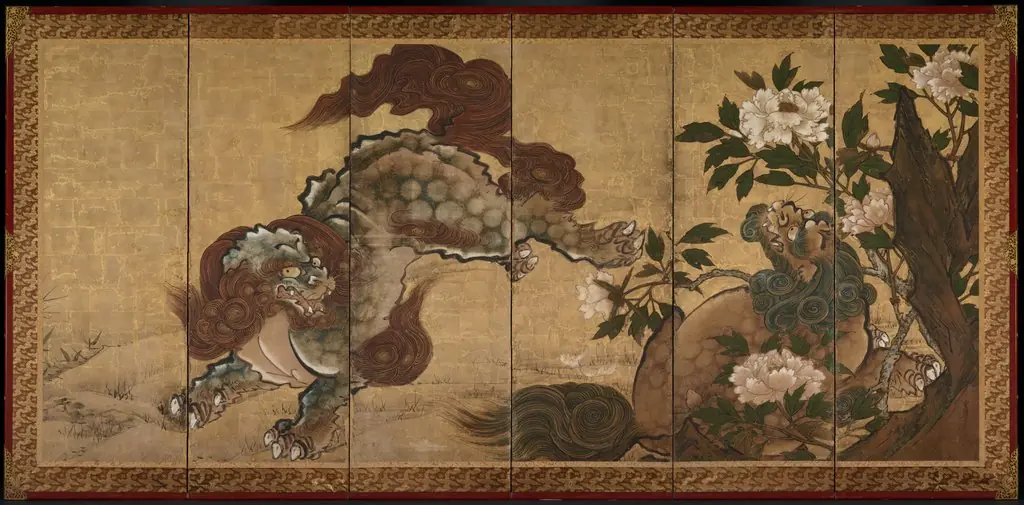
水辺に牡丹と唐獅子図絵馬「寛永八 年末三月廿五日」|Ema (Votive Painting) of a Chinese Lion and Peony Tree by Flowing Water
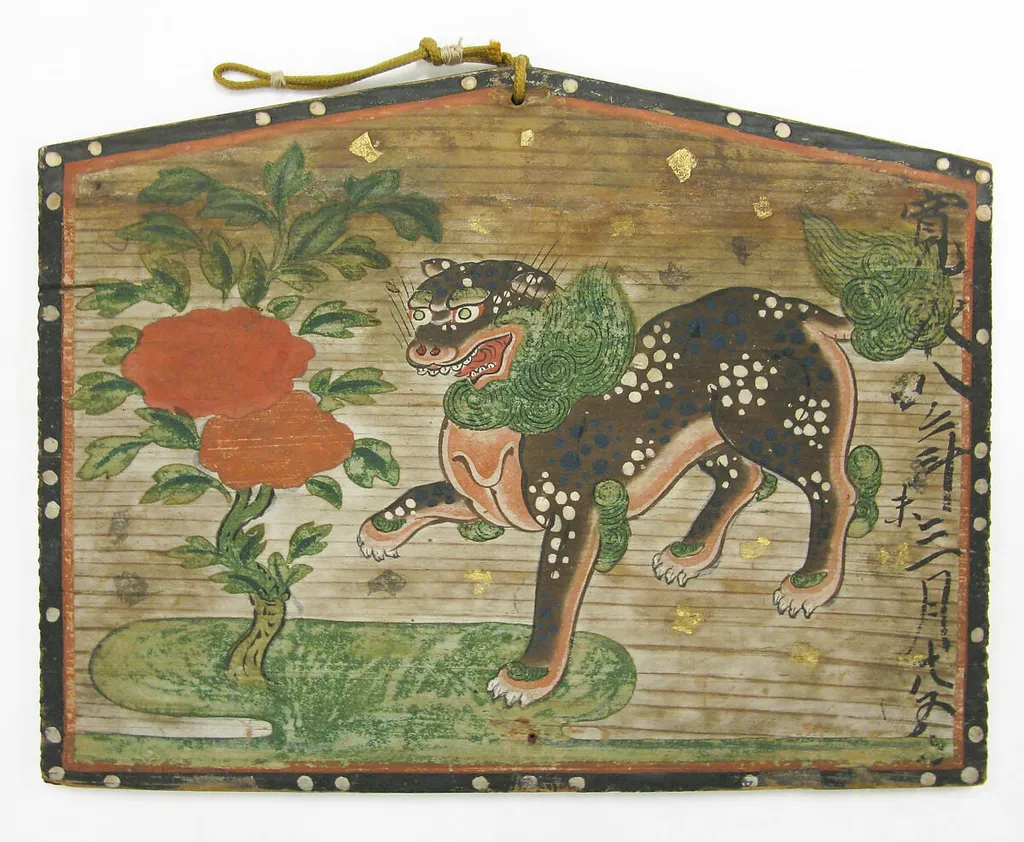
水辺に牡丹と唐獅子図絵馬「寛永八 年末三月廿五日」|Ema (Votive Painting) of a Chinese Lion and Peony Tree by Flowing Water is an ink painting. It dates from 1631 and is held in the collection of the Metropolitan Museum of Art.
About this work
You see a wooden board painted with a gold-leaf lion, peonies, and a stream.
This is an *ema*—a Japanese prayer plaque. People hung it at a shrine in 1631 to ask for help. The lion isn’t a real animal; it’s a Chinese guardian symbol. The gold leaf makes it glow like a wish.
Look up *Japan* for more paintings like this.
Overview
This wooden votive plaque, dated to the twenty‑fifth day of the third month in the eighth year of the Kan’ei era (1631), depicts a stylized Chinese guardian lion, a cluster of peonies, and a flowing stream. Executed in ink, pigments, and gold leaf, the work functions as an ema—an object offered at a Shinto shrine for petitioning divine assistance.
Subject & Meaning
The central figure is a mythic lion, known in Chinese tradition as a guardian against evil, rendered here with gilded highlights that suggest a protective, luminous presence. Surrounding the lion, lush peonies—symbols of wealth and honor—are set against a gently curving watercourse, together conveying wishes for prosperity and safety.
Technique & Style
Artists applied ink outlines and colored washes directly onto a wooden board, then embellished the lion’s mane and other details with thin sheets of gold leaf. The combination of brushwork and metallic surface creates a subtle interplay of matte and reflective textures, characteristic of early‑Edo period devotional paintings.
History & Provenance
The plaque was originally hung at a local shrine in 1631, serving as a personal prayer. Its survival indicates continued reverence for ema as both religious objects and works of folk art, and it now resides in a museum collection that documents early modern Japanese devotional practices.
Context
Ema emerged in the Edo period as a popular means for laypeople to communicate wishes to the kami. Incorporating Chinese iconography, such as the guardian lion, reflects the broader cultural exchange between Japan and China, while the peony motif aligns with contemporary aesthetic preferences for opulent natural imagery.
Artist & collection