Artwork
Farfurioară din porțelan alb, pictată manual cu un decor floral de culoare maro , ceașca este decorată pe margine cu auriu. Farfurioara face parte dintr-un serviciu de porțelan oferit cadou lui Nicolae Ceaușescu cu ocazia vizitei oficiale întreprinse în iunie 1973 în RFG.
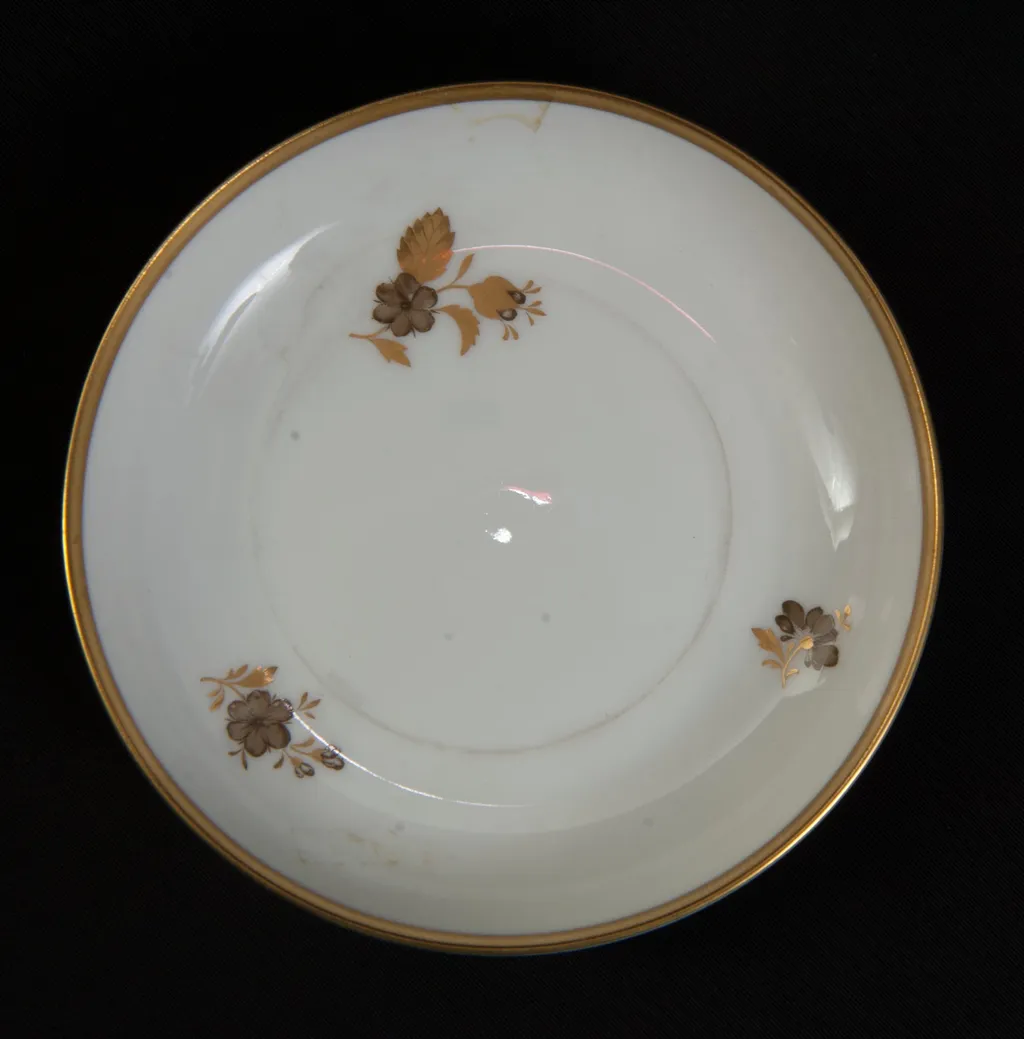
Farfurioară din porțelan alb, pictată manual cu un decor floral de culoare maro , ceașca este decorată pe margine cu auriu. Farfurioara face parte dintr-un serviciu de porțelan oferit cadou lui Nicolae Ceaușescu cu ocazia vizitei oficiale întreprinse în iunie 1973 în RFG. is a print by Unknown. It dates from 1850 and is held in the collection of the National Museum of Romanian History. A round white porcelain plate, edged with a thin gold band, bears a hand‑painted brown floral motif that encircles its surface.
About this work
Overview
A round white porcelain plate, edged with a thin gold band, bears a hand‑painted brown floral motif that encircles its surface. The design consists of diminutive, detailed flowers and curved leaves arranged symmetrically around the centre, creating a modest yet refined decorative effect.
Subject & Meaning
The botanical pattern reflects a traditional decorative language often employed in European tableware, where stylised flora conveys notions of elegance and natural harmony. The restrained colour palette—white, gold and brown—suggests a formal, diplomatic purpose rather than everyday use.
Technique & Style
The plate’s ornamentation was applied by hand using mineral pigments, a common practice for high‑quality porcelain in the 20th century. The fine brushwork and consistent line quality indicate skilled artisanship, while the gold rim was likely applied as a separate gilding process before firing.
History & Provenance
The piece formed part of a porcelain service presented as a gift to Romanian leader Nicolae Ceaușescu during an official state visit in June 1973 to the German Democratic Republic. It entered the museum’s collection as a diplomatic artifact, illustrating the exchange of luxury goods between socialist states.
Context
In the early 1970s, cultural diplomacy often involved the exchange of fine tableware, symbolising mutual respect and shared aesthetic values among allied nations. This plate, with its modest yet polished design, exemplifies the type of ceremonial gift used to reinforce political ties during that period.
Artist & collection

 Domestic Scene
 Giacomo and Cardinal Marco, investing Andrea, Abbot of San Zeno, with his Benefice
 The Nymph of Fontainebleau
 Portrait of a Woman
 Madonna and Child with Saints in the Enclosed Garden
 Venus and Minerva
 Family Group of Four on Sofa
 Wall painting from Room H of the Villa of P. Fannius Synistor at Boscoreale
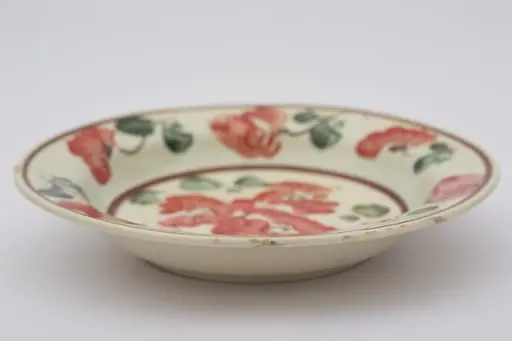 Piesă ceramică smălțuiță de dimensiuni reduse și formă cilindrică, cu baza plată și susținută de un inel circular, pereții ușor ridicați și buza larg evazată. Suprafața interioară a recipientului a fost ornamentată cu două registre decororative cu motive geometrizante și fitomorfe stilizate. Central, pe fundul vasului au fost pictați trei flori roșii cu frunze verzi, cel mai probabil maci. Marginal, pe bordura farfuriei a fost realizat cel de-al doilea registru pictural, format din șase maci cu frunze verzi, dispuși circular. Cel de-al doilea registru este încadrat de două linii circulare drepte, de culoare mov. Farfuria era folosită în gospodărie pentru decorarea interioarelor. Prezintă uzură funcțională. Cromatică: fond: alb; motive: roșu; verde; mov.
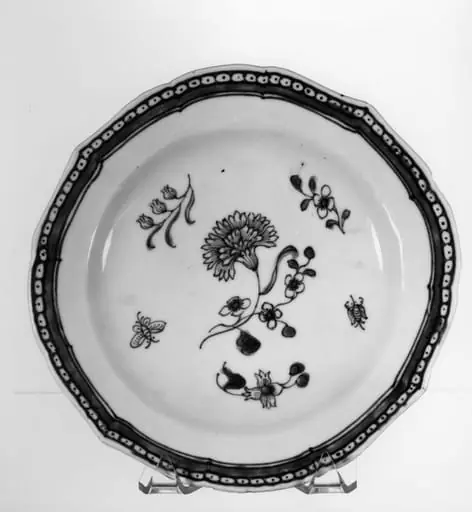 assiette
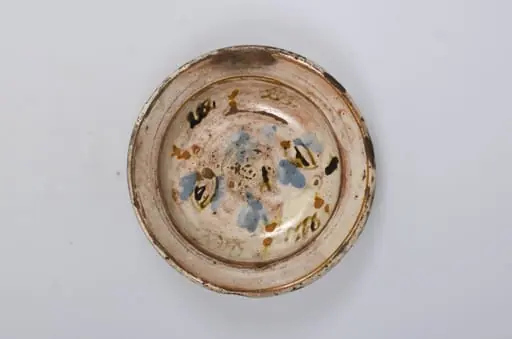 Vas de formă tronconică adâncit, smălțuit în interior. Este decorat pe margine cu motive geometrice: cercuri concentrice, iar în centru cu motive vegetale și florale. Decorul este realziat prin pictare. Cromatică: fond cărămiziu (exterior); fond alb (interior); albastru; maro; portocaliu.
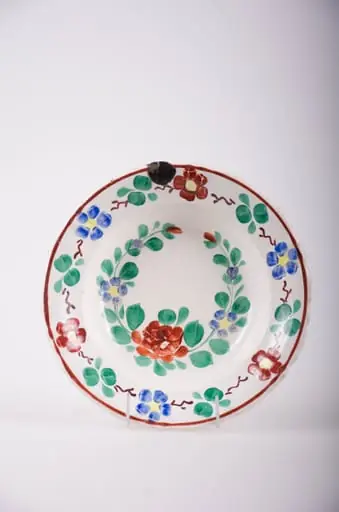 Farfurie de porțelan smălțuită pe fond alb. Decorată cu flori și frunze dispuse sub formă de ghirlande atât în centrul vasului cât și pe buza acestuia. De asemenea sunt prezente și motive geometrice: linia și linii întrerupte. Comatică: fond: alb; motive: verde; albastru; galben; roșu.
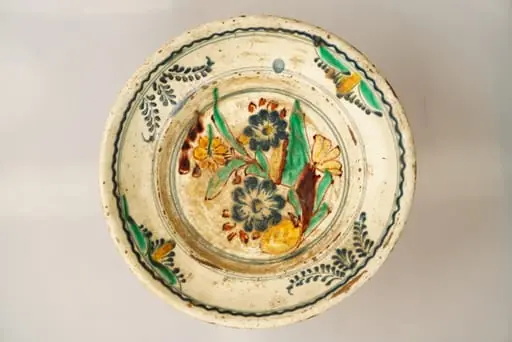 Farfurie adâncă, cu buza dreaptă evazată; suprafața exterioară este acoperită cu un strat de angobă albă peste care este pictat cu cornul și cu pensula decorul format din motive florale și geometrice, dispuse astfel: registrul decorativ de pe fundul farfuriei conține, încadrat într-un cerc dublu albastru, un buchet desenat cu contur subțire maro, format din două flori cu petale ușor alungite albastre, un boboc și două flori galbene și din frunze verzi. Registrul decorativ de pe buza farfuriei, marcat de două linii circulare duble albastre, conține două motive decorative formate din trei frunze realizate din linii mici albastre și două motive formate din două frunze verzi și o floare centrală galbenă, decorată cu linii mici albastre. Marginea buzei este decorată cu o linie circulară albastră. Suprafața ornamentată a farfuriei este acoperită cu un strat de smalț transparent. Cromatica: alb, galben, verde, maro, albastru.
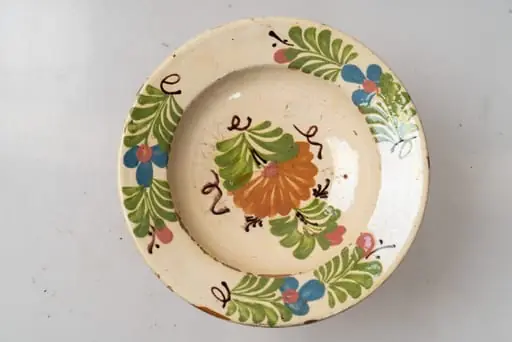 Farfurie adâncă, cu buza lată, răsfrântă; piesa este modelată din lut la roata olarului și este angobată cu humă albă pe fața interioară. Decorul este realizat prin pictare cu pensula și cu cornul și constă în motive florale și fitomorfe (o floare cu frunze și un boboc, pe centrul farfuriei și trei grupuri de flori cu frunze, pe buza farfuriei). Cromatica: alb, albastru, verde, siena naturală, roz-bej, maro. Fața ornamentată a farfuriei este acoperită cu un strat de smalț transparent.
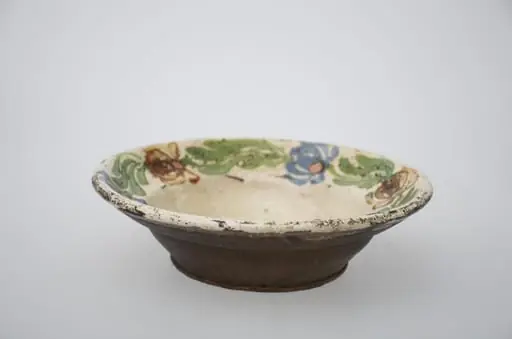 Farfurie de formă tronconică adâncă cu buza largă și decor pe fund, spre margini. Ornamentat cu motive florale. Cromatică: fond: alb; motive: maro; verde; albastru.
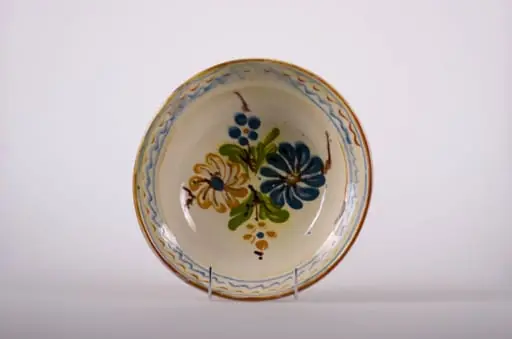 Blid de formă tronconică, adâncit; pe fund are găuri pentru agățare. Este smălțuit în interior și exterior (buza); este decorat cu motive geometrice: linie, linie ondulată; motive fitomorfe: frunze; motive florale. Cromatică: fond: alb; motive: albastru; maro; verde.
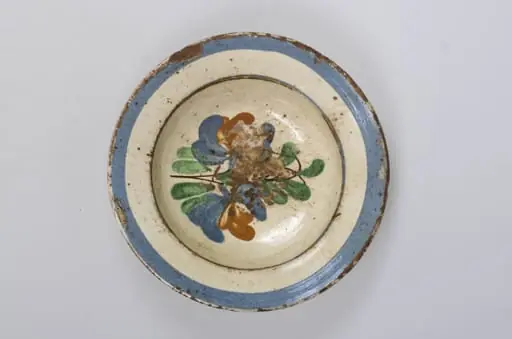 Vasul are formă tronconică, adâncit. Este smălțuit în interior și decorat cu motive floral-vegetale pe fundul vasului și pe margine cu motive geometrice realizate sub forma a trei cercuri concentrice, unul dintre cercuri mai îngroșat și dispus pe buza vasului. Cromatică: fond cărămiziu (exterior); fond alb (interior); albastru; verde; maro.