Artwork
Farfurioară kuty
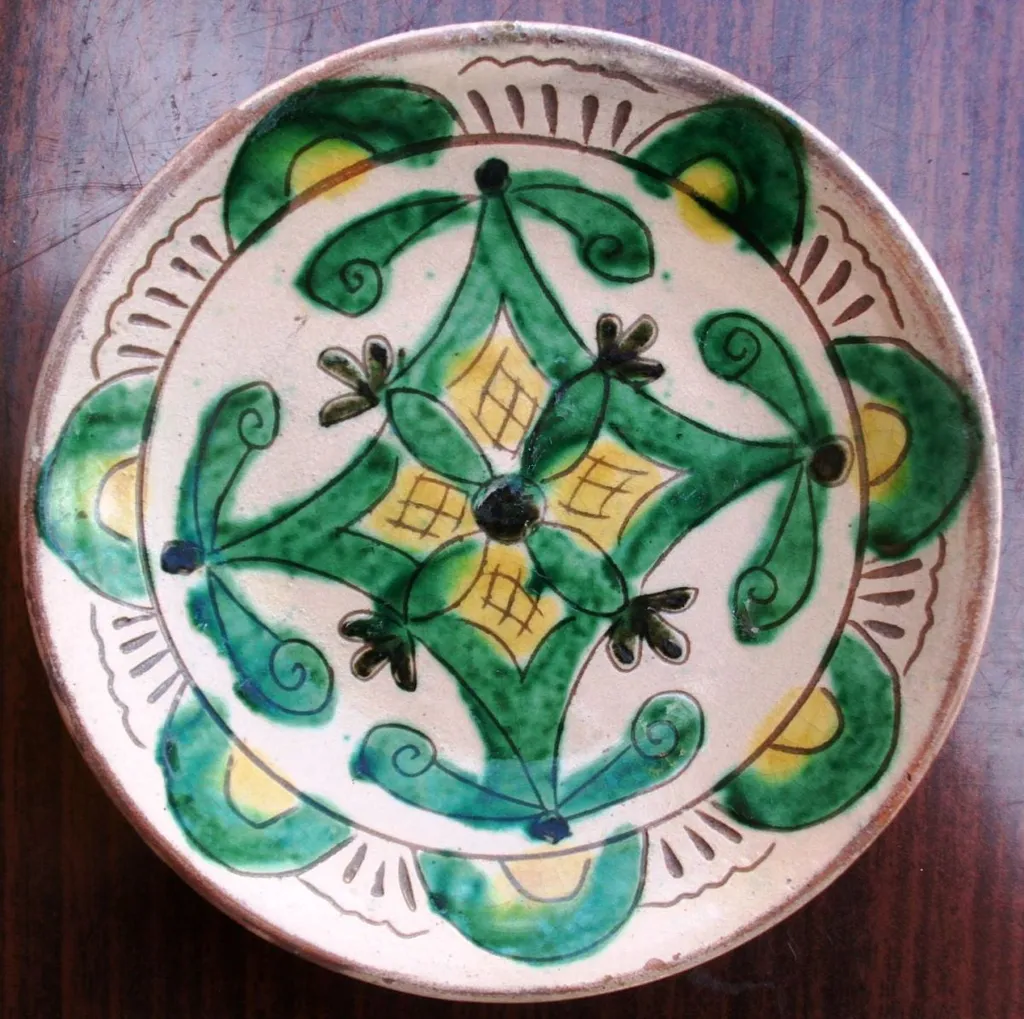
Farfurioară kuty is a print by Unknown. It dates from 1850 and is held in the collection of the Golești Viticulture and Pomiculture Museum. This circular ceramic plate features a decorative scheme dominated by green, yellow, and blue pigments.
About this work
Overview
The central motif is a yellow square with a window-like form, suggesting architectural reference without clear symbolic definition.
This circular ceramic plate features a decorative scheme dominated by green, yellow, and blue pigments. Its surface is adorned with stylized floral and leaf motifs arranged in concentric bands, culminating in a scalloped rim embellished with small sunburst patterns. The central motif is a yellow square with a window-like form, suggesting architectural reference without clear symbolic definition. The overall aesthetic reflects traditional folk craftsmanship, characterized by bold outlines and unmodulated color fields.
Subject & Meaning
The central yellow square, resembling a simplified house or window, does not clearly denote a specific cultural symbol or narrative. Surrounding it, abstracted flora suggests themes of growth or domestic harmony, common in regional decorative traditions. The lack of figural elements and the emphasis on geometric and botanical forms point to a symbolic language rooted in local ornament rather than literal storytelling.
Technique & Style
The plate was painted using flat, opaque colors applied within strong black outlines, typical of folk ceramic traditions in Eastern Europe. The absence of shading or perspective reinforces a two-dimensional, pattern-based approach. The scalloped edge and repetitive sunburst motifs indicate a deliberate use of rhythmic repetition, likely guided by established regional templates passed through generations of artisans.
History & Provenance
Though exact origin and maker are undocumented, the plate’s design aligns with early 20th-century Romanian or Hungarian folk pottery. Similar pieces are held in the Museum of Ethnography, suggesting it was produced for domestic or ceremonial use within rural communities. Its preservation implies it was valued as a household object rather than a commercial export.
Context
This object belongs to a broader tradition of utilitarian ceramics decorated with symbolic motifs in Eastern European peasant households. Such items often served both practical and ritual roles, with patterns believed to offer protection or express seasonal cycles. The use of sunbursts and flora reflects a shared visual vocabulary across rural communities, linking domestic space to natural rhythms.
Legacy
The plate exemplifies a regional ceramic style that persisted into the modern era despite industrialization. Its presence in ethnographic collections underscores its value as a record of vernacular artistry. While no longer produced in the same form, its motifs continue to influence contemporary folk-inspired design in the Carpathian region.
Artist & collection
Museum
Golești Viticulture and Pomiculture Museum
Continue through works from the same source collection.
 Domestic Scene
 Giacomo and Cardinal Marco, investing Andrea, Abbot of San Zeno, with his Benefice
 The Nymph of Fontainebleau
 Portrait of a Woman
 Madonna and Child with Saints in the Enclosed Garden
 Venus and Minerva
 Family Group of Four on Sofa
 Wall painting from Room H of the Villa of P. Fannius Synistor at Boscoreale
 farfurie de ritual
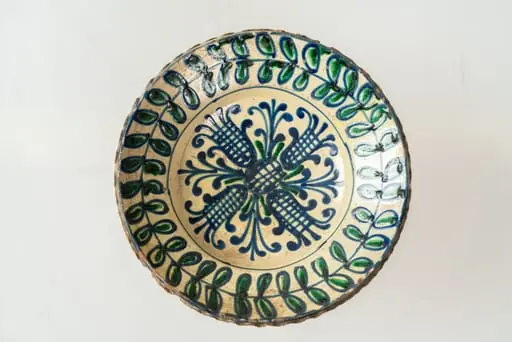 Farfurie semi-adâncă, cu buză răsfrântă și muchia buzei ondulată (mici alveole); piesa este modelată la roata olarului și angobată cu humă albă pe fața interioară. Decorul este realizat prin pictare cu cornul și cu pensula și constă în motive decorative florale și vegetale stilizate, dispuse astfel: un registru central, pe fundul farfuriei, ce conține patru flori de crin, de culoare albastră, cu frunze, iar buza farfuriei este decorată cu un șir continuu de frunze verzi cu contur albastru, înșirate pe o linie albastră sub formă de cerc. Bordura interioară a farfuriei și muchia buzei sunt marcate cu câte o linie de culoare albastră. Cromatica: alb, verde, albastru. Farfuria este acoperită pe fața decorată cu un strat de smalț transparent.
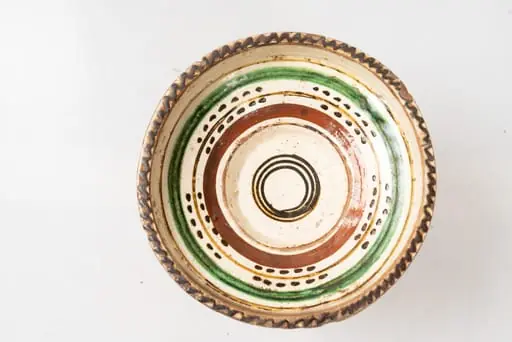 Farfurie adâncă, de tip castron, cu corp îngust tronconic și buză dreaptă. Piesa este modelată din lut la roata olarului și angobată cu humă albă pe fața interioară. Decorul este realizat prin pictare cu cornul și cu pensula și constă în motive decorative geometrice (linie spiralată, două linii groase și trei linii mai subțiri dispuse sub formă de cerc, șiruri de puncte). Muchia buzei este decorată cu o linie ondulată mărunt, de culoare maro. Cromatica: alb, maro, verde, brun roșcat. Farfuria este acoperită cu un strat de smalț transparent pe fața ornamentată.
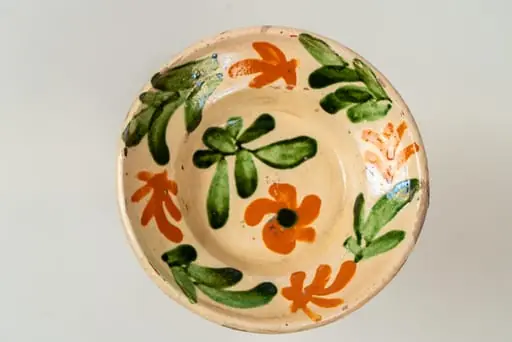 Farfurie mică, adâncă, cu buză răsfrântă. Piesa este modelată la roata olarului, angobată. Decorul este realizat prin pictare cu pensula și constă în motive decorative florale și vegetale (flori și frunze), dispuse central, pe fundul farfuriei și pe toată buza acesteia, sub formă de ghirlandă. Cromatica: alb, verde, siena naturală. Farfuria este smălțuită pe interior, cu smalț transparent.
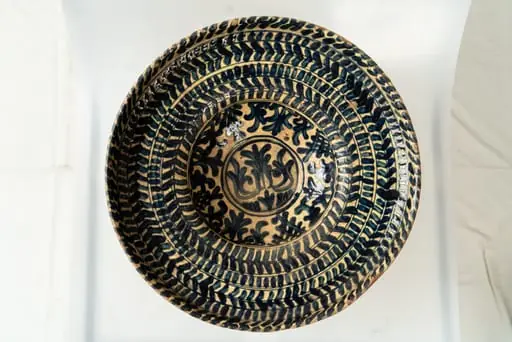 Farfurie mare, adâncă, cu corp tronconic și buză foarte lată, răsfrântă și cu muchia buzei dreaptă. Piesa este modelată la roata olarului, angobată cu humă albă pe fața interioară a acesteia. Decorul este unul foarte bogat, acoperă întreaga suprafață a piesei și este realizat prin pictare cu pensula, cu linii groase. Motivele decorative sunt florale și vegetale stilizate (flori și frunze, dispuse în zona centrală a farfuriei) și geometrice (șiruri de linii paralele și oblice, înscrise în cercuri concentrice, pe buza și muchia farfuriei). Cromatica decorului: alb, albastru. Farfuria este smălțuită pe interior, cu smalț transparent.
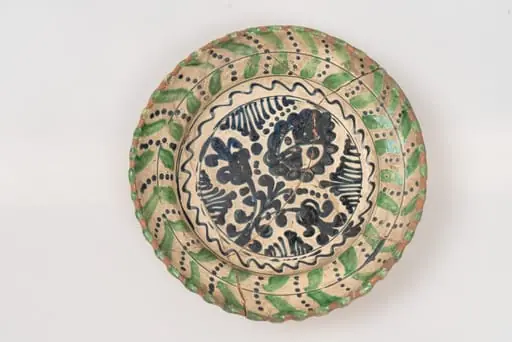 Farfurie de formă semi-adâncă, cu buză evazată și muchia buzei ondulată. Farfuria este angobată pe fața interioară cu un strat de humă albă, peste care este pictat cu cornul și cu pensula decorul format din motive florale și fitomorfe stilizate și din motive geometrice: în registrul central de pe fundul farfuriei este pictată o tulpină cu trei flori și frunze mici de culoare albastră, înscrisă într-un cerc dublu ce are la mijloc o linie ondulată circulară, de culoare albastră. Acest registru este completat cu motive formate din linii albastre crescătoare și descrescătoare dispuse în formă de triunghi. Buza farfuriei este decorată cu un șir continuu de frunze duble verzi între linii punctate de culoare albastră. Buza farfuriei este marcată cu o dungă de culoare verde. Cromatica: alb, albastru, verde. Farfuria este acoperită pe fața decorată cu un strat de smalț transparent.
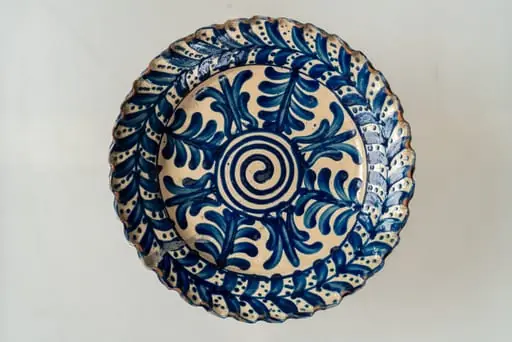 Farfurie de formă plată, cu buză răsfrântă și muchia buzei ondulată; piesa este modelată la roata olarului și este angobată cu humă albă pe fața interioară. Decorul monocromatic este pictat cu pensula și cu cornul și se compune din motive decorative vegetale stilizate și geometrice, dispuse astfel: registrul central, pe fundul farfuriei, se compune dintr-o linie spiralată pe exteriorul căreia sunt pictate motive vegetale (floare de crin, motivul brăduțului), iar buza farfuriei este decorată cu un șir continuu de frunze, intercalate de puncte, înșirate pe o linie albastră sub formă de cerc. Bordura interioară a farfuriei și muchia buzei sunt marcate de câte o linie albastră. Cromatica: alb, albastru. Fața decorată a farfuriei este acoperită cu un strat de smalț transparent.
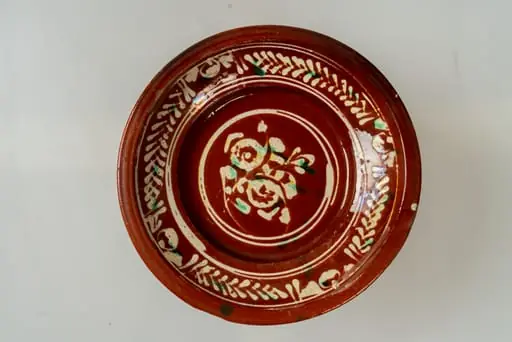 Farfurie adâncă, modelată la roata olarului, cu suprafața interioară neangobată. Decorul este pictat cu cornul și cu pensula și constă în motive decorative florale (un buchet de flori central) și vegetale stilizate, pe buza farfuriei. Pe fața interioară a farfuriei este aplicat un strat de smalț transparent. Cromatica decorului: alb, pe fondul roșu al lutului ars.
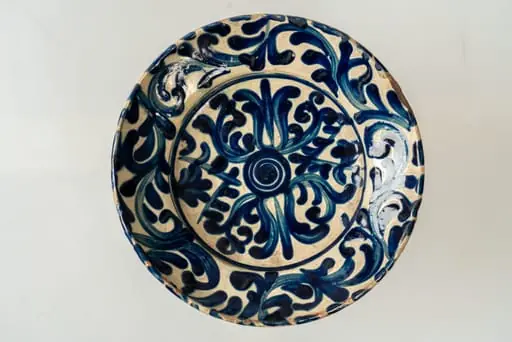 Farfurie semi-adâncă, cu corp scund și buză lată, răsfrântă. Piesa este modelată la roata olarului, angobată cu humă albă pe fața interioară a acesteia. Decorul este unul bogat, realizat prin pictare cu pensula, cu linii groase, și constă în motive decorative florale și vegetale stilizate (flori și frunze), dispuse pe toată suprafața farfuriei. Cromatica decorului: alb, albastru. Farfuria este smălțuită pe interior, cu smalț transparent.