Artwork
Formă tronconică; fond alb; culori: albastru. În centru este amplasată o floare stilizată albastră înscrisă într-un vrej circular. Sub buza vasului este amplasat un alt vrej de culoare albastră. Vasul este prevăzut cu două toarte pentru a fi atîrnat pe perete. Folosită la decorarea interiorului țărănesc în așa numita - cameră bună.
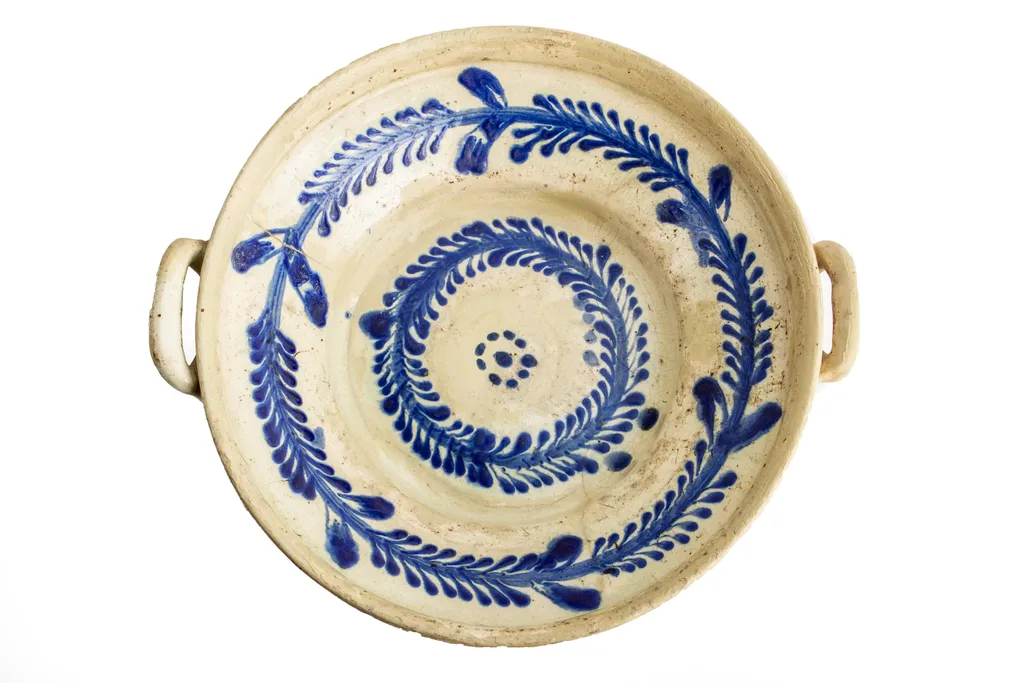
Formă tronconică; fond alb; culori: albastru. În centru este amplasată o floare stilizată albastră înscrisă într-un vrej circular. Sub buza vasului este amplasat un alt vrej de culoare albastră. Vasul este prevăzut cu două toarte pentru a fi atîrnat pe perete. Folosită la decorarea interiorului țărănesc în așa numita - cameră bună. is a print by Unknown. It dates from 1850 and is held in the collection of the Romanian Peasant Museum. The object is a round ceramic dish, finished with a light cream exterior and a vivid blue interior.
About this work
Overview
The object is a round ceramic dish, finished with a light cream exterior and a vivid blue interior. Two modest handles project from opposite sides of the rim, allowing the piece to be hung on a wall. Its decorative scheme consists of a central stylized flower encircled by a blue band, with an additional blue band positioned just below the rim.
Subject & Meaning
The central motif—a stylized flower enclosed within a circular loop—reflects traditional folk symbolism, where floral forms often represent fertility, growth, or protective charm. The repeated blue bands reinforce the visual focus and may have served as a visual marker of the dish’s ceremonial or decorative purpose within the household.
Technique & Style
The dish is hand‑formed from earthenware and coated with a slip that creates the pale background. Blue pigments, likely derived from mineral or plant sources, were applied in a contrasting glaze that accentuates the geometric and organic patterns. The overall style aligns with vernacular decorative traditions that favor bold, simplified motifs against a neutral field.
History & Provenance
Such wall‑hung dishes were commonly employed in rural Romanian interiors, particularly in the so‑called “cameră bună,” a room designated for receiving guests or for special occasions. The piece exemplifies the everyday objects that were both functional and ornamental in peasant households.
Context
Within the broader spectrum of Eastern European folk pottery, this dish illustrates the interplay between utilitarian craft and aesthetic expression. The use of blue on a light ground mirrors a regional palette, while the hanging format indicates a decorative role rather than a purely culinary one.
Artist & collection

 Domestic Scene
 Giacomo and Cardinal Marco, investing Andrea, Abbot of San Zeno, with his Benefice
 The Nymph of Fontainebleau
 Portrait of a Woman
 Madonna and Child with Saints in the Enclosed Garden
 Venus and Minerva
 Family Group of Four on Sofa
 Wall painting from Room H of the Villa of P. Fannius Synistor at Boscoreale
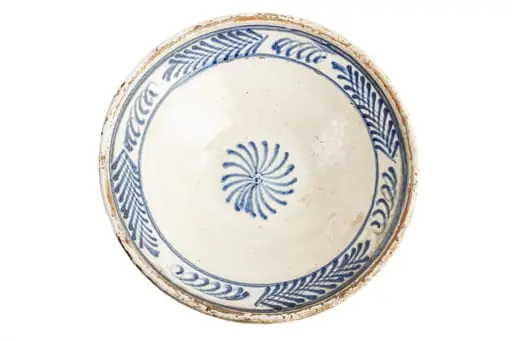 Formă tronconică; fond alb; culori: albastru. Decorul constă într- o floare stilizată de culoare albastră amplasată în centru farfuriei. Sub buza vasului într-o bandă delimitată de două cercuri albastre sînt amplasate ramuri de brad și frunze stilizate în alternanță decorativă. Folosită la decorarea interiorului țărănesc în așa numita - cameră bună.
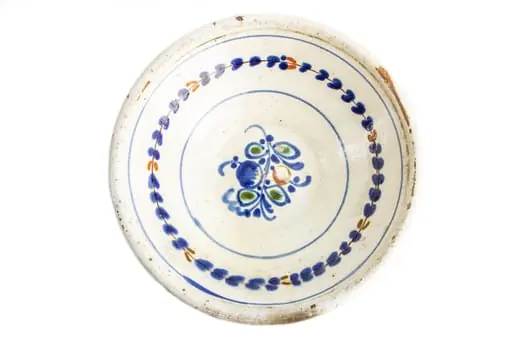 Formă tronconică; fond alb; culori: albastru, verde, cărămiziu; în centrul farfuriei este amplasat un buchet din flori albastre și una de culoare cărămizie, cu frunze verzi, înscris într-un cerc de culoare albastră. Pe perete este amplasat un vrej circular cu frunze albastre și cîteva de culoare cărămizie. Sub buză este dispus un cerc albastru.
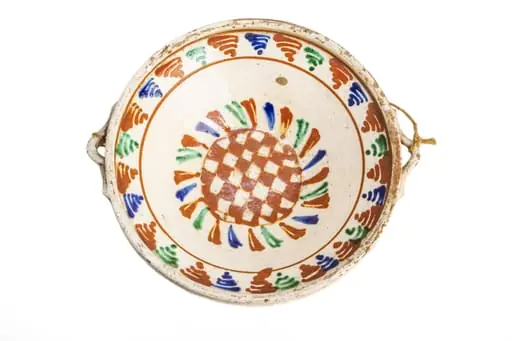 Formă tronconică; fond alb; culori: cărămiziu, albastru, verde. În centru vasului este amplasată o floare stilizată cu o corolă sub forma unei rețele de romburi de culoare albă și cărămizie, cu petale albastre, verzi și cărămizii alternînd cromatic. Sub buza vasului este dispusă o bandă circulară decorată cu triunghiuri cu vîrful orientat spre centru formate dintr-o serie de semicercuri paralele, colorate în cărămiziu, verde și albastru alternînd cromatic. Prevăzută cu două toarte pentru prinderea pe perete, în vederea unei expuneri mai ușoare. Folosită la decorarea interiorului țărănesc în așa numita - cameră bună.
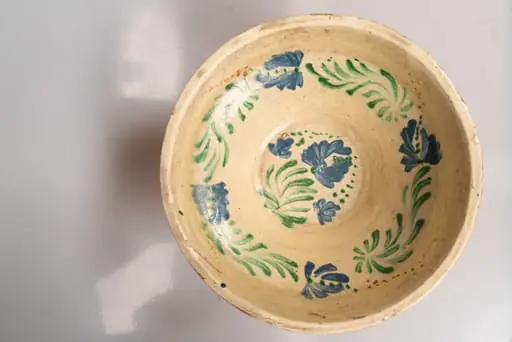 Vas de tip castron, cu corp de formă tronconică și buză lată, dreaptă. Piesa este modelată la roata olarului și angobată cu humă albă pe fața interioară. Decorul este realizat prin pictare cu pensula și constă în motive decorative florale stilizate (central, pe fundul farfuriei este pictată o tulpină cu frunze verzi și trei flori albastre, cea centrală mai mare, celelalte două, laterale, mai mici; pe peretele vasului sunt pictate patru flori albastre cu elemente fitomorfe între ele, formând o ghirlandă continuă). Cromatica: alb, verde, albastru, galben-ocru. Fața ornamentată a piesei este acoperită cu un strat de smalț transparent. Pe exteriorul farfuriei, în zona buzei, este realizat prin sgrafitare un decor dintr-o linie ondulată între două linii sub formă de cerc.
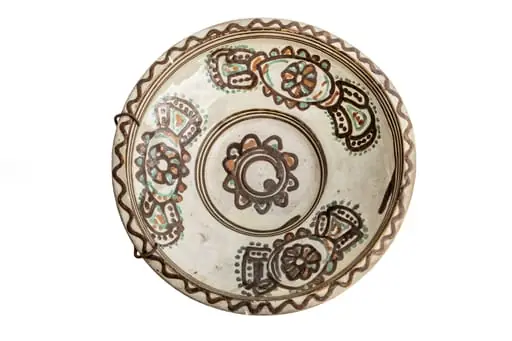 Formă tronconică; fond alb fildeșiu; pe fundul vasului este amplasată o floare stilizată cu petale cărămizii și verzi înscrisă într-o spirală de culoare maro. Pe pereții vasului sînt amplasate trei compoziții florale compuse dintr-o floare circulară cu petale cărămizii și verzi încadrată de doi boboci de floare stilizați. Buza este decorată cu un val circular de culoare maro închis. Piesa reprezintă una dintre primele achiziții ale lui Alexandru Tzigara Samurcaș. Folosită la decorarea interiorului țărănesc în așa numita - cameră bună.
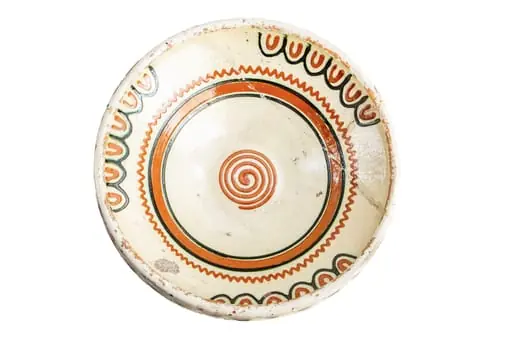 Formă tronconică; fond alb. În centru vasului este amplasată o spirală de culoare cărămizie încadrată de o bandă și un val circular de aceeași culoare. Sub buza vasului sînt amplasate trei grupuri de semicercuri de culoare verde închis, fiecare semicerc are în interior un altul, mai mic de culoare cărămizie. Sub buza vasului, la exterior este amplasat un val circular de culoare verde decorat cu cercuri de culoare cărămizie. Folosită la decorarea interiorului țărănesc în așa numita - cameră bună.
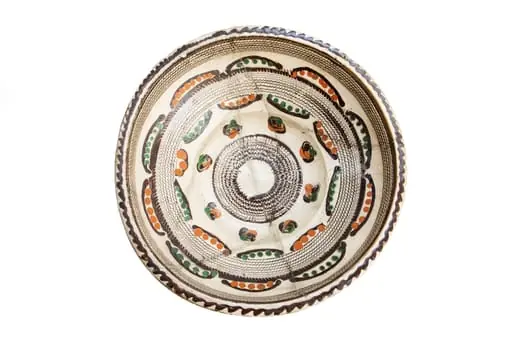 Formă tronconică; fond alb fildeșiu; pe fundul vasului este dispusă o bandă circulară lată decorată cu motivul specific centrului: pînza de păianjen - realizată prin tehnică jirăvirii cu gaița, încadrată de boboci de floare stilizați, colorați în verde și cărămiziu și linii ușor curbate care au interior puncte de culoare cărămizie, respectiv: verde. Pe umărul vasului este dispusă o altă bandă circulară jirăvită cu motivului pînzei de păianjen care prezintă în exterior linii curbe similare cu cele descrise mai sus. Întreaga compoziție sugerează un soare stilizat. Buza este decorată cu un val circular de culoare brună. Piesa reprezintă una dintre primele achiziții ale lui Alexandru Tzigara Samurcaș. Folosită la decorarea interiorului țărănesc în așa numita - cameră bună