Artwork
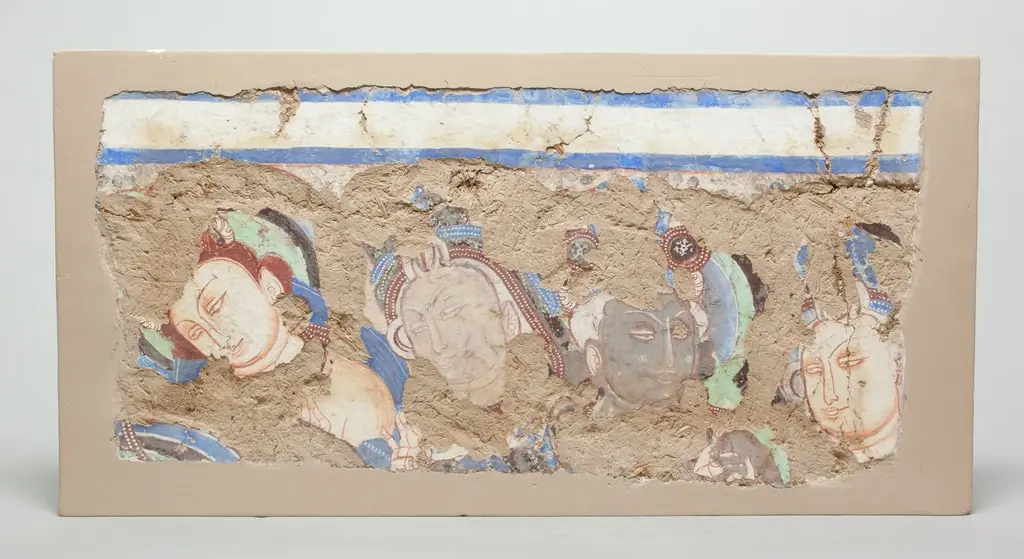
Fragment with a Head of Bodhisattva
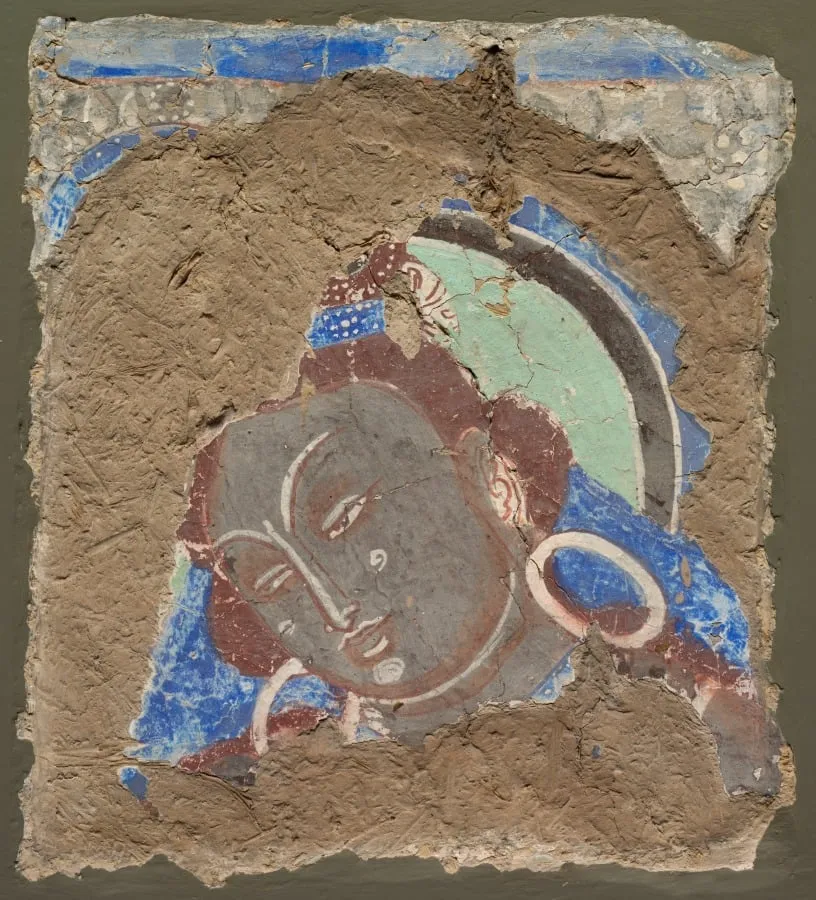
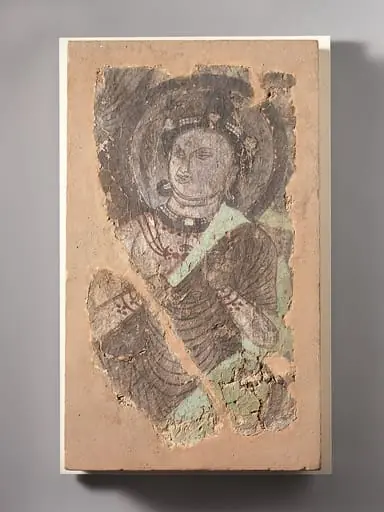
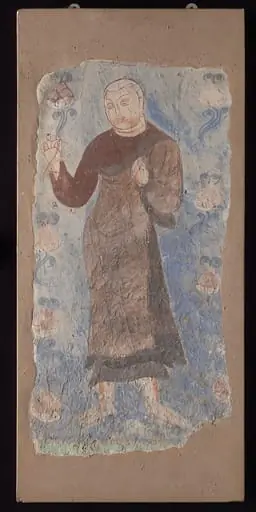
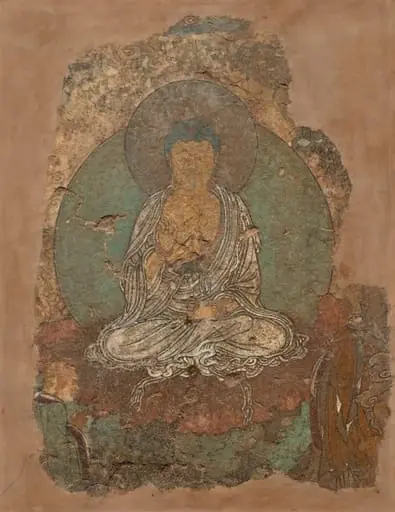
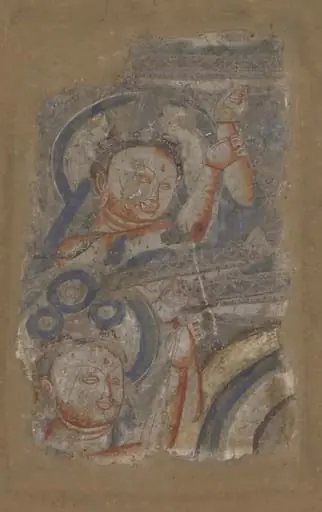
Fragment with a Head of Bodhisattva is an unspecified painting by the Byzantine icon painting artist Unknown. It dates from 625 and is held in the collection of the Cleveland Museum of Art. The fragment is a fragmentary painted wall panel, heavily weathered and cracked, revealing a central portrait of a serene figure.
About this work
Overview
The fragment is a fragmentary painted wall panel, heavily weathered and cracked, revealing a central portrait of a serene figure. The composition is dominated by a large, round headdress surrounding the face, rendered in muted reds and blues with remnants of green and white along the margins. The underlying plaster is brown and rough where the pigment has flaked away.
Subject & Meaning
The figure appears to be a bodhisattva, a compassionate being in Buddhist tradition, depicted with a calm expression, minimalistic eyes and a slight smile. The simplified facial features and the prominent headgear emphasize spiritual serenity and the ideal of enlightened compassion.
Technique & Style
The painting employs flat, unmodulated color fields applied in broad strokes, with little shading or blending. Pigment layers have cracked and peeled, exposing the plaster substrate. The edges of the painted areas are irregular, reflecting the wall’s deterioration rather than intentional brushwork.
Context
The work originates from the Kizil region, renowned for its early Buddhist cave murals dating to the first millennium CE. Such wall paintings served both decorative and didactic purposes within monastic settings, illustrating doctrinal figures for meditation and instruction.
History & Provenance
The fragment was recovered from a deteriorating section of a painted wall in the Kizil caves. Its current condition reflects centuries of exposure to the arid climate and human activity, which have contributed to the loss of pigment and the cracking of the plaster base.
Artist & collection

 Domestic Scene
 Giacomo and Cardinal Marco, investing Andrea, Abbot of San Zeno, with his Benefice
 The Nymph of Fontainebleau
 Portrait of a Woman
 Madonna and Child with Saints in the Enclosed Garden
 Venus and Minerva
 Family Group of Four on Sofa
 Wall painting from Room H of the Villa of P. Fannius Synistor at Boscoreale