Artwork
Friends of Krishna, folio 163 from a Bhakti Ratnavali of Vishnu Puri
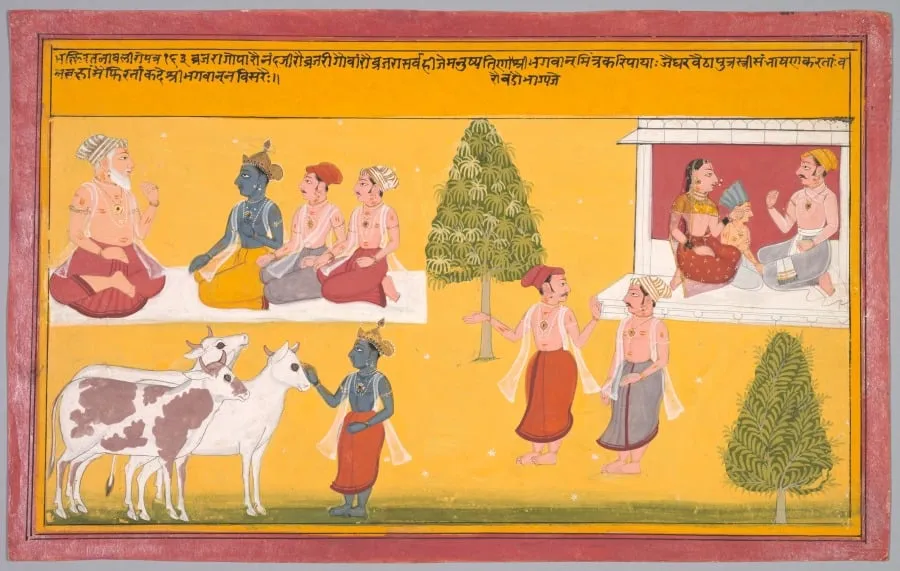
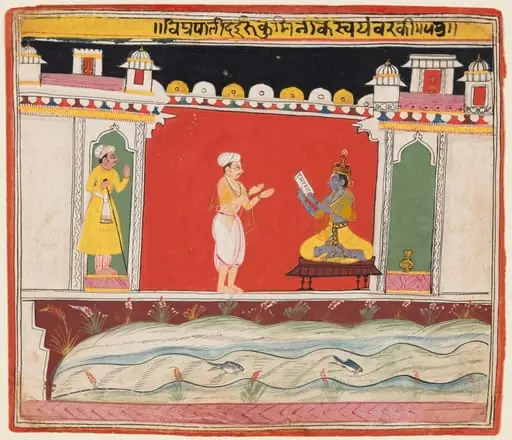
Friends of Krishna, folio 163 from a Bhakti Ratnavali of Vishnu Puri is an unspecified painting by the Baroque artist Unknown. It dates from 1738 and is held in the collection of the Cleveland Museum of Art. The folio illustrates a scene from the Bhakti Ratnavali, a devotional manuscript compiled by the medieval commentator Vishnu Puri.
About this work
Overview
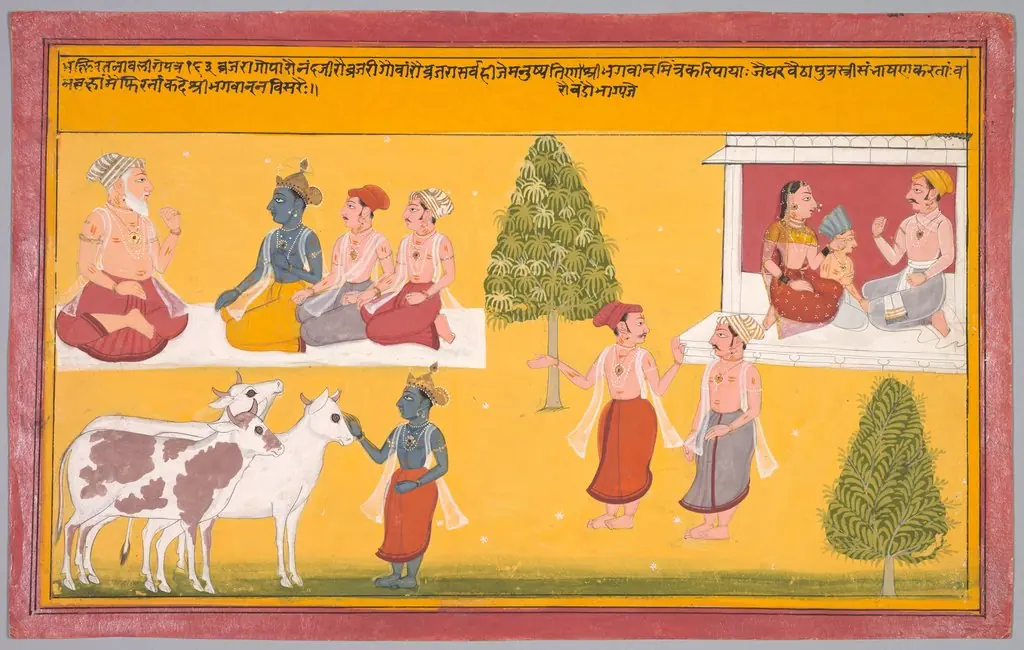
The folio illustrates a scene from the Bhakti Ratnavali, a devotional manuscript compiled by the medieval commentator Vishnu Puri. In the upper left vignette, a blue‑skinned Krishna is seated with two companions before his foster father Nanda, the leader of the cowherd community in Braj. Beneath them, three cows gently approach the deity, emphasizing his intimate bond with the pastoral world.
Subject & Meaning
The composition pairs two narrative moments: Krishna’s respectful visit to Nanda and the poetic promise that those who speak of him at home will never be forsaken. The accompanying verse, placed at the top of the page, reinforces the theme of devotional intimacy and the protective presence of the divine in everyday family life.
Technique & Style
Rendered in miniature format, the painting employs delicate brushwork and a limited palette dominated by blues for Krishna’s skin and earthy tones for the surrounding figures. The figures are stylized with graceful outlines, characteristic of Rajput courtly art, while the spatial arrangement compresses multiple actions within a single page.
History & Provenance
The work originates from a Bhakti Ratnavali manuscript produced in the Mewar region, a Rajput kingdom known for its patronage of devotional art. The manuscript was likely created for private devotional use, reflecting the 17th‑century practice of integrating illustrated verses into personal religious books.
Context
Set in the legendary Braj countryside, the scene draws on narratives from the Bhagavata Purana, where Krishna’s youthful exploits among cowherds are celebrated. The inclusion of the verse underscores the text’s function as a devotional guide, encouraging recitation of Krishna’s deeds within the household.
Artist & collection

 Domestic Scene
 Giacomo and Cardinal Marco, investing Andrea, Abbot of San Zeno, with his Benefice
 The Nymph of Fontainebleau
 Portrait of a Woman
 Madonna and Child with Saints in the Enclosed Garden
 Venus and Minerva
 Family Group of Four on Sofa
 Wall painting from Room H of the Villa of P. Fannius Synistor at Boscoreale
 Friends of Krishna, folio 163 from a Bhakti Ratnavali of Vishnu Puri
 Bhaavata Purana (3 of 4 illustrations)
 Bhaavata Purana (1 of 4 illustrations)
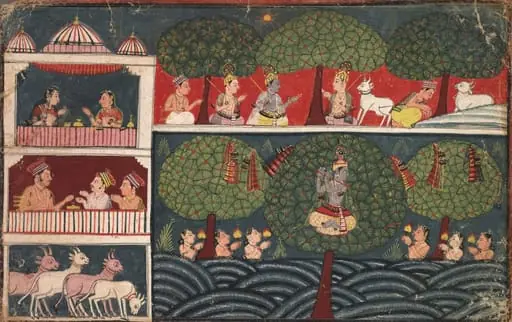 Krishna Steals the Clothes of the Milkmaids and Expounds on the Virtue of Trees, from a Braj Bhagavata Purana
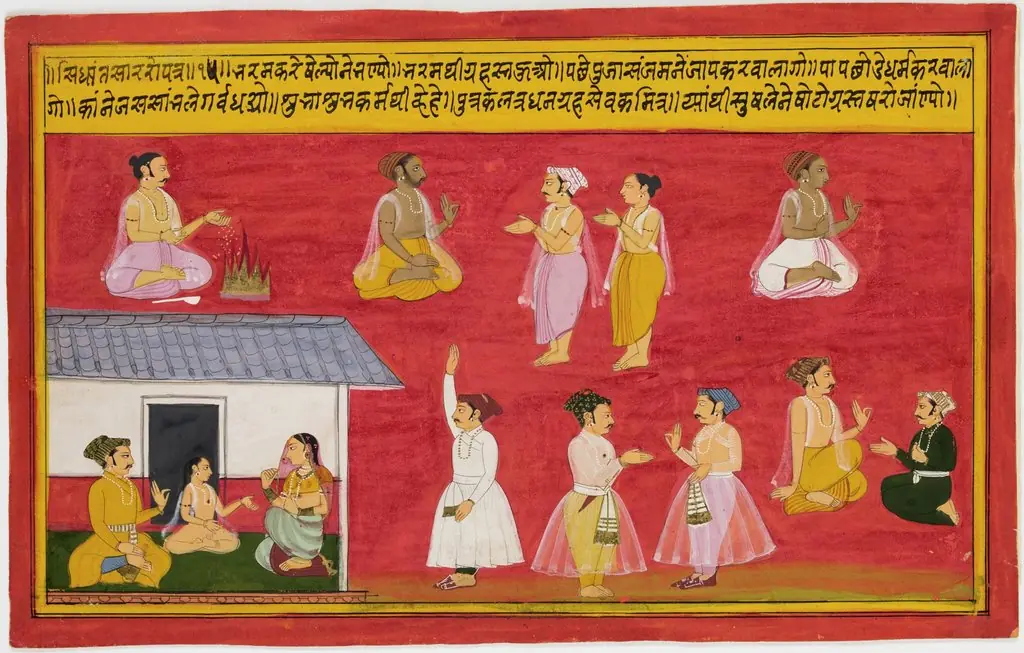 Bhaavata Purana (2 of 4 illustrations)
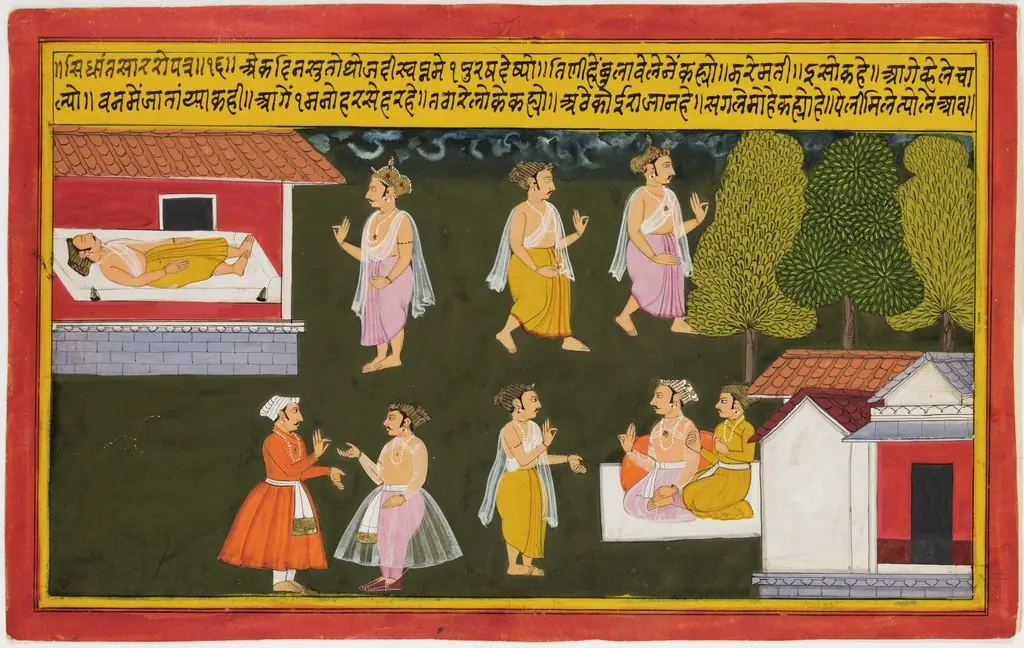 Bhaavata Purana (4 of 4 illustrations)
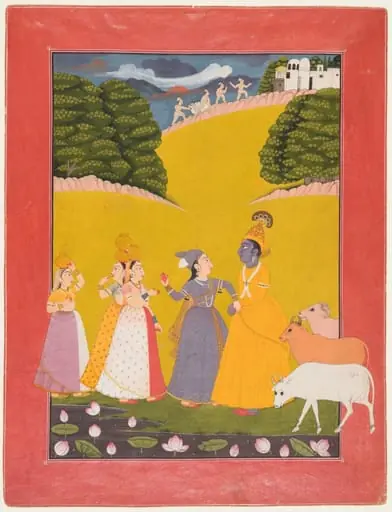 Taking of the toll, Dana-Lila
 A Brahmin gives Krishna the Message or Invitation for the Competition to Rukmini’s Svayamvara, from a Bhagavata Purana