Artwork
Krishna Steals the Clothes of the Milkmaids and Expounds on the Virtue of Trees, from a Braj Bhagavata Purana
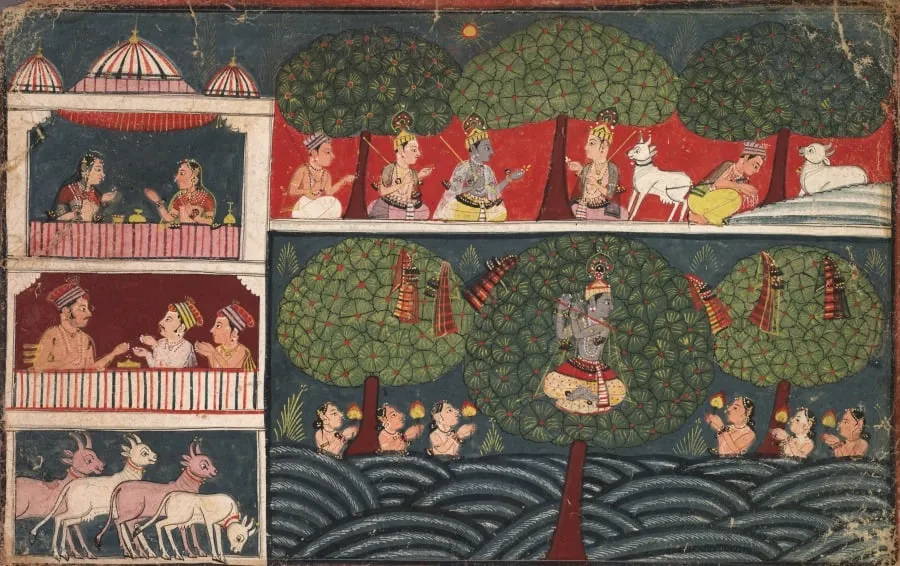
Krishna Steals the Clothes of the Milkmaids and Expounds on the Virtue of Trees, from a Braj Bhagavata Purana is an unspecified painting by the Baroque artist Unknown. It dates from 1650 and is held in the collection of the Cleveland Museum of Art. The painting depicts the Hindu deity Krishna, rendered in his characteristic blue hue, perched in a tree beside the Yamuna River.
About this work
Overview
The painting depicts the Hindu deity Krishna, rendered in his characteristic blue hue, perched in a tree beside the Yamuna River. He holds a flute and watches a group of milkmaids below, who stand with folded hands, having had their garments hidden by the god. The scene captures a moment from a Braj Bhagavata Purana episode in which Krishna tests the devotion of his followers.
Subject & Meaning
In the narrative, Krishna secretly removes the milkmaids’ clothing and conceals it among the branches, then invites them to approach him without any covering. The episode illustrates a theological principle that true devotion requires surrender of all worldly modesty and ego, allowing the devotee to present themselves wholly before the divine.
Technique & Style
Krishna’s skin is painted in a luminous blue, while the surrounding foliage is rendered in fine, overlapping strokes that suggest depth.
Executed in the illustrated manuscript tradition of central India, the work combines vivid coloration with delicate line work. Krishna’s skin is painted in a luminous blue, while the surrounding foliage is rendered in fine, overlapping strokes that suggest depth. The composition is organized in a narrow upper register for the dialogue and a broader lower register for the figures, reflecting conventional narrative framing in medieval Indian painting.
History & Provenance
The image originates from a manuscript of the Braj Bhagavata Purana, a vernacular retelling of Krishna’s life popular in the Braj region. The text accompanying the illustration is inscribed on the reverse side in the local Braj language, effectively providing a literal subtitle to the visual narrative. The work is associated with the Malwa region of Madhya Pradesh, a historic centre for manuscript production.
Context
The scene belongs to a long lineage of Hindu illustrated manuscripts that visualized devotional stories for both elite patrons and lay audiences. By embedding the exact scriptural verses on the verso, the artist ensured that viewers could read the sacred words while contemplating the image, reinforcing the didactic purpose of the episode within devotional practice.
Artist & collection

 Domestic Scene
 Giacomo and Cardinal Marco, investing Andrea, Abbot of San Zeno, with his Benefice
 The Nymph of Fontainebleau
 Portrait of a Woman
 Madonna and Child with Saints in the Enclosed Garden
 Venus and Minerva
 Family Group of Four on Sofa
 Wall painting from Room H of the Villa of P. Fannius Synistor at Boscoreale
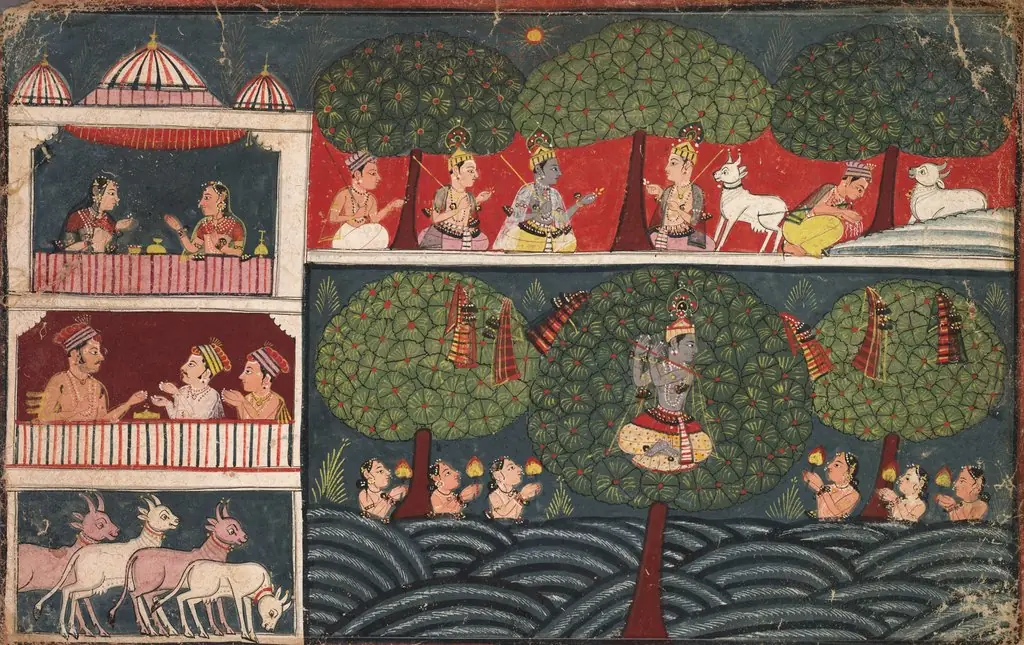 Krishna Steals the Clothes of the Milkmaids and Expounds on the Virtue of Trees, from a Braj Bhagavata Purana
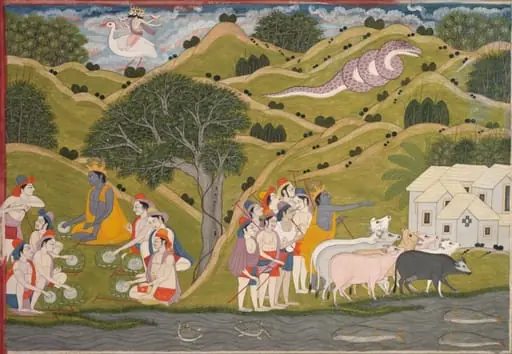 Krishna returns with the cowherds to Braj, from a Bhagavata Purana
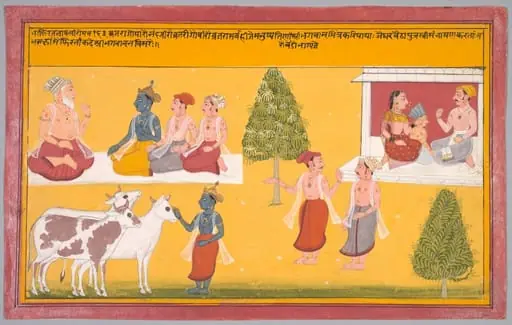 Friends of Krishna, folio 163 from a Bhakti Ratnavali of Vishnu Puri
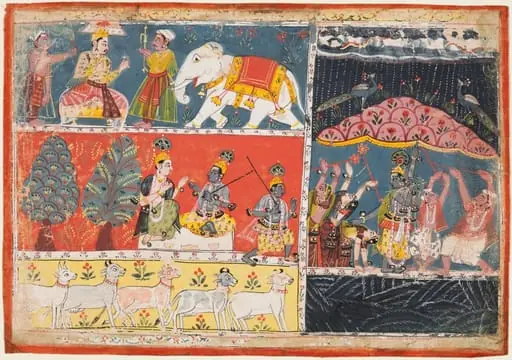 Krishna Lifts Mount Govardhan, from a Bhagavata Purana
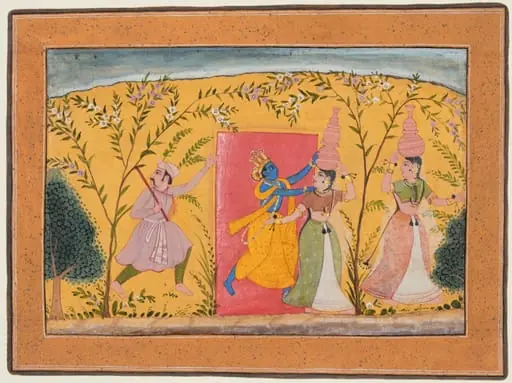 Krishna Exacts a Toll from the Milkmaids: Dana-Lila, from a Bhagavata Purana
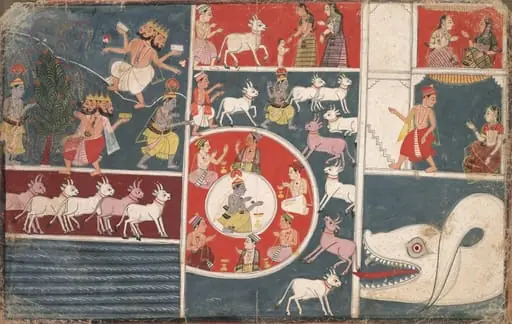 Krishna Playing the Flute and other Episodes from the Bhagavata Purana
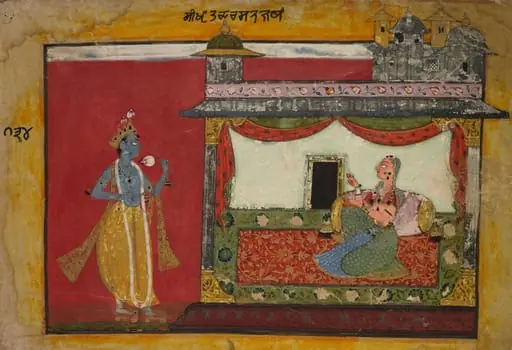 The Approach of Krishna. Page from a Rasamanjari