Artwork
Gang cao chuan
Gang cao chuan is a paint painting by the Romanticist artist Unknown. It dates from 1810 and is held in the collection of the Victoria and Albert Museum.
About this work
Overview
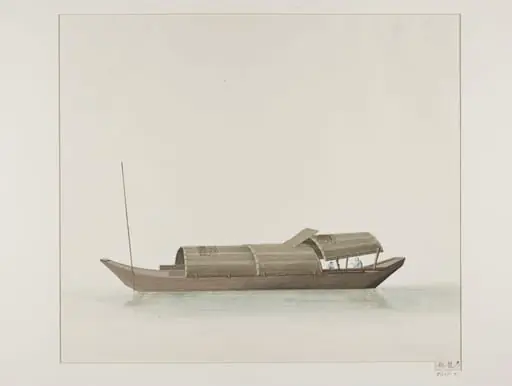
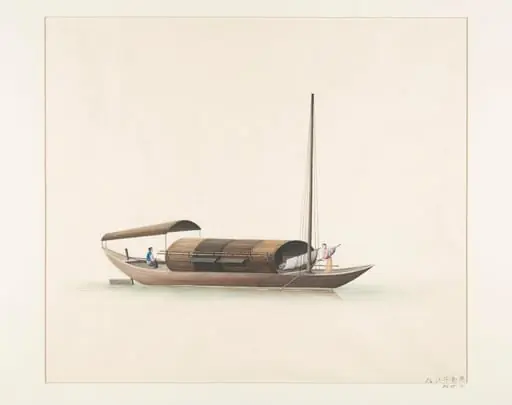
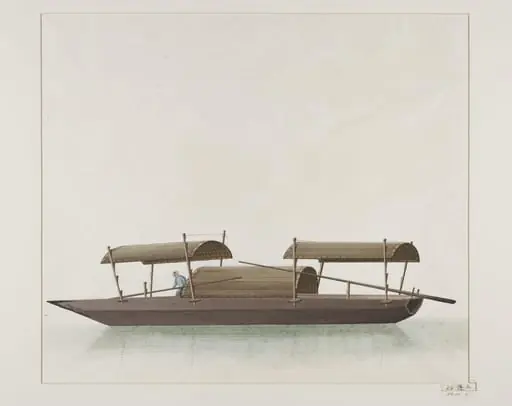
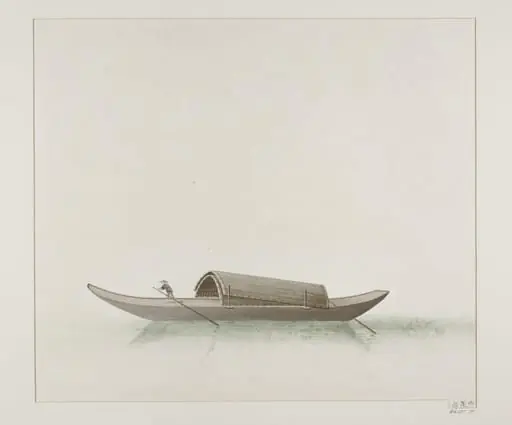
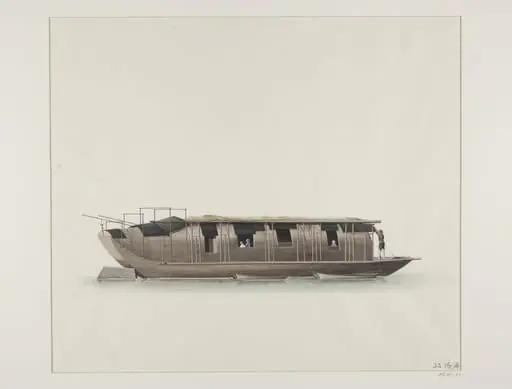
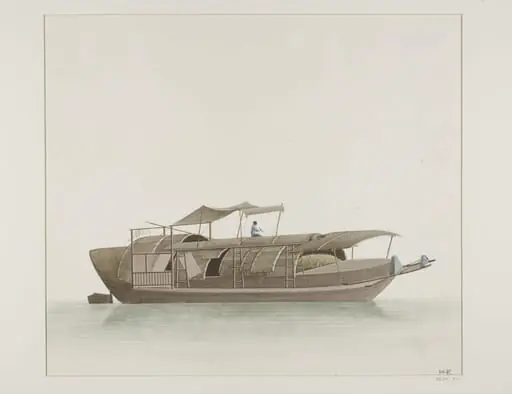
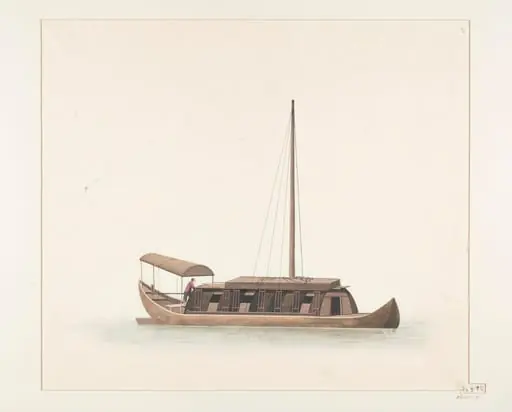
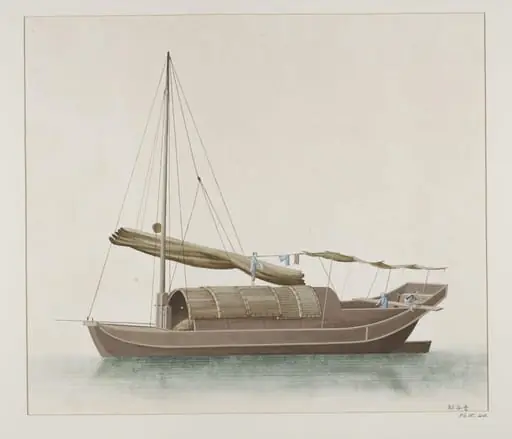
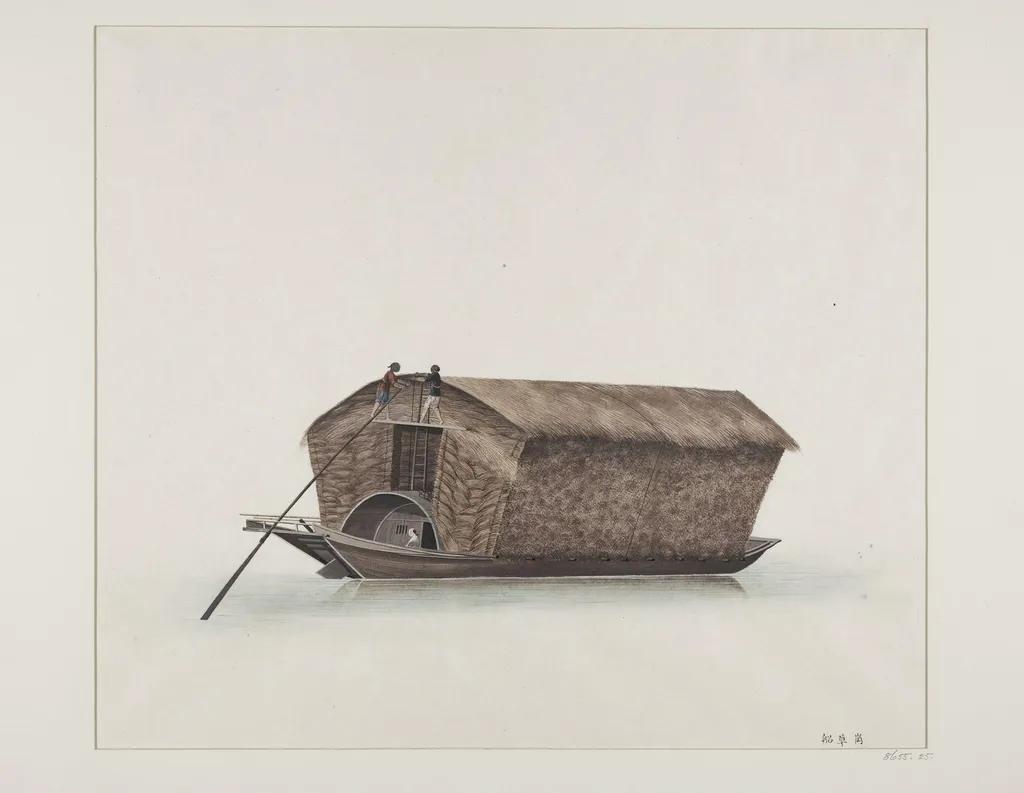
Created in 1810, *Gang cao chuan* is a watercolor painting from a series of fifty sheets documenting rivercraft along the Pearl River near Canton.
Created in 1810, *Gang cao chuan* is a watercolor painting from a series of fifty sheets documenting rivercraft along the Pearl River near Canton. Executed in subdued earth tones, it captures a houseboat with a raised, cabin-like structure and a thatched roof. The composition is spare, devoid of landscape or background detail, focusing solely on the vessel and its occupants. Its modest scale and restrained palette suggest it was produced for commercial distribution rather than elite patronage.
Subject & Meaning
The painting portrays a working houseboat, likely inhabited by a family or crew engaged in daily tasks. Two figures are on the upper deck, one near a circular entrance and another leaning over the side with a pole, possibly guiding or anchoring the vessel. The absence of land or vegetation emphasizes a life lived entirely on water. The scene conveys quiet routine rather than spectacle, reflecting the everyday reality of riverine communities in early 19th-century southern China.
Technique & Style
The artist employed soft, linear brushwork and a limited palette of browns, grays, and ochres to evoke a sense of stillness. Forms are simplified, with minimal shading and no perspective depth, prioritizing clarity over realism. The thatched roof is rendered with rhythmic strokes, suggesting texture without elaborate detail. This restrained aesthetic aligns with the conventions of commercial export art, where efficiency and legibility were valued over individual expression.
History & Provenance
The painting was part of a standardized series produced for foreign traders and travelers in Canton during the early 1800s. These folios served as visual souvenirs, cataloging the variety of vessels used in regional trade and transport. While the original artist remains unidentified, the consistent style across the series points to workshop production. The work likely entered Western collections through commercial channels, with examples now held in institutions such as the Victoria and Albert Museum.
Context
In the decades before the Opium Wars, Canton was a hub of international trade, and foreign visitors sought tangible records of local life. The series to which this painting belongs functioned as ethnographic documentation, albeit filtered through a commercial lens. Houseboats like the one depicted were common on the Pearl River, serving as homes, workshops, and transport. These images reflect both Chinese artisanal practice and the demands of an emerging global market for Chinese visual culture.
Legacy
Though not created as fine art, the *Gang cao chuan* series offers valuable insight into the material culture of southern Chinese river communities. Its preservation in major museums underscores its role as a historical record of vernacular architecture and daily life. The work’s simplicity and focus on functional design continue to inform scholarly understanding of 19th-century Chinese maritime livelihoods, beyond the more celebrated genres of court or literati painting.
Artist & collection

 Domestic Scene
 Giacomo and Cardinal Marco, investing Andrea, Abbot of San Zeno, with his Benefice
 The Nymph of Fontainebleau
 Portrait of a Woman
 Madonna and Child with Saints in the Enclosed Garden
 Venus and Minerva
 Family Group of Four on Sofa
 Wall painting from Room H of the Villa of P. Fannius Synistor at Boscoreale