Artwork
Mai Gu Chuan
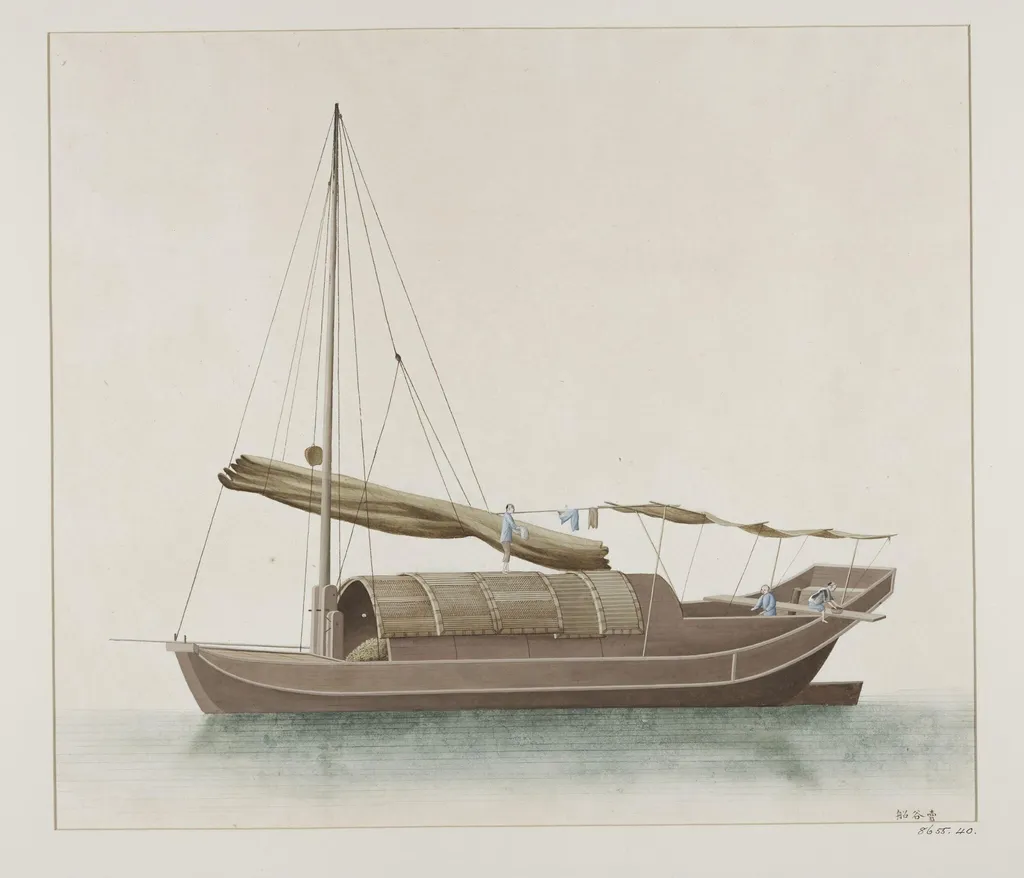
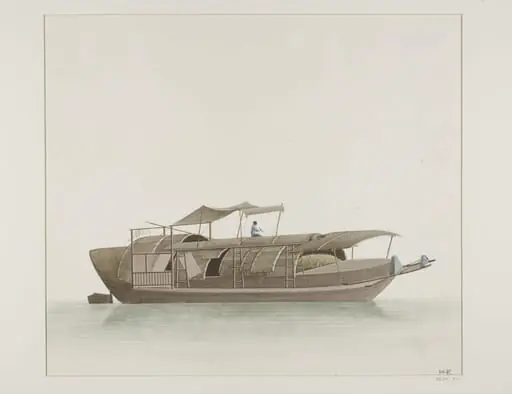
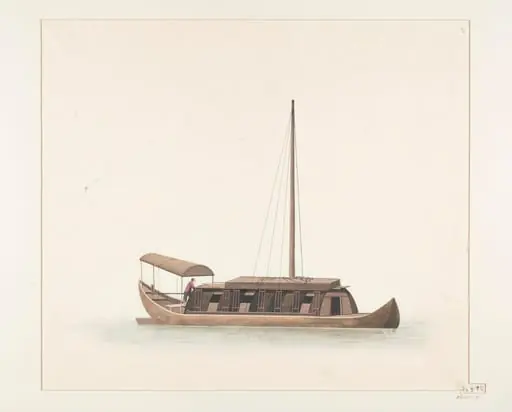
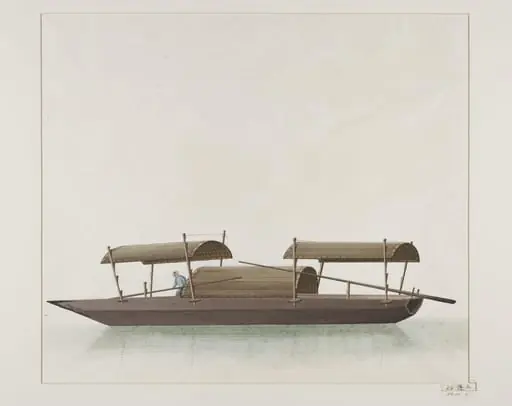
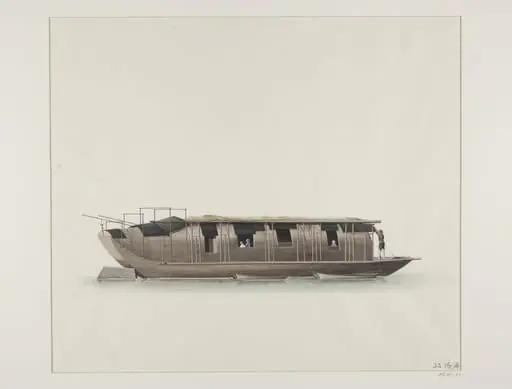
Mai Gu Chuan is a paint painting by the Romanticist artist Unknown. It dates from 1810 and is held in the collection of the Victoria and Albert Museum. This painting is one of fifty similar works created as part of a serial folio documenting river vessels on the Pearl River.
About this work
Overview
The composition emphasizes functionality over ornamentation, reflecting its origin as a commercial souvenir rather than a fine art commission.
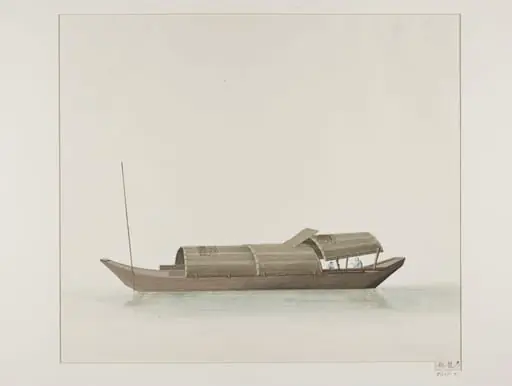
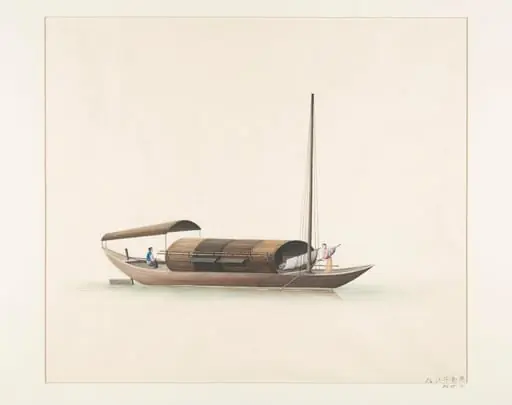
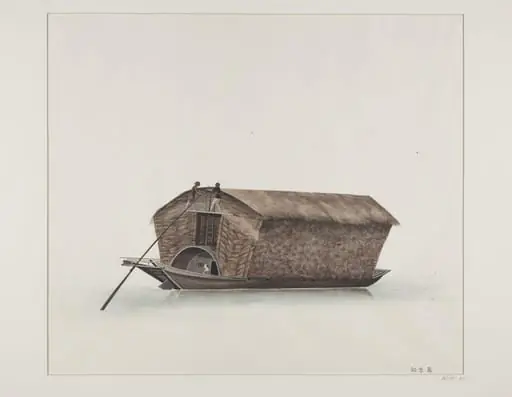
This painting is one of fifty similar works created as part of a serial folio documenting river vessels on the Pearl River. Executed in a straightforward, observational style, it captures a working boat in routine use. The composition emphasizes functionality over ornamentation, reflecting its origin as a commercial souvenir rather than a fine art commission. Its rectangular format and detailed rendering suggest it was intended for domestic display or export.
Subject & Meaning
The scene portrays a working vessel engaged in daily tasks: two individuals use bamboo poles, likely for steering or stabilizing the boat, while others rest inside the cabin. Laundry hangs from a taut line beneath a simple awning, indicating life aboard the boat. The absence of ceremonial or decorative elements underscores its role as a utilitarian craft, representing the quiet labor of river communities rather than symbolic or narrative content.
Technique & Style
Rendered in opaque pigments on paper, the painting employs clear outlines and flat areas of color with minimal shading. Details like rigging, cabin doors, and bamboo poles are rendered with precision but without embellishment. The style is documentary in intent, prioritizing clarity and recognizability over artistic flourish. The calm water is suggested by horizontal bands, reinforcing the boat’s grounded, everyday context.
History & Provenance
The painting originated in a set of fifty sheets produced in southern China during the 19th century, likely for foreign traders and tourists. These works were mass-produced in workshops near Guangzhou, catering to demand for visual records of local river life. As souvenirs, they were often bound into albums or sold individually, circulating widely in Europe and North America through commercial channels.
Context
These paintings emerged during a period of increased foreign trade along the Pearl River, when visual documentation of local life became a commodity. They reflect a hybrid artistic tradition—Chinese techniques adapted for Western tastes—offering outsiders a glimpse into the rhythms of riverine commerce and domestic activity. Similar works appear in museum collections, often grouped under the broader category of Canton export art.
Legacy
Though created as ephemeral souvenirs, these paintings now serve as historical records of 19th-century river transport and daily life in southern China. Their survival in institutional collections highlights their value as ethnographic artifacts. They remain among the most accessible visual sources for understanding the material culture of working vessels outside elite or ceremonial contexts.
Artist & collection

 Domestic Scene
 Giacomo and Cardinal Marco, investing Andrea, Abbot of San Zeno, with his Benefice
 The Nymph of Fontainebleau
 Portrait of a Woman
 Madonna and Child with Saints in the Enclosed Garden
 Venus and Minerva
 Family Group of Four on Sofa
 Wall painting from Room H of the Villa of P. Fannius Synistor at Boscoreale