Artwork
George III when Prince of Wales
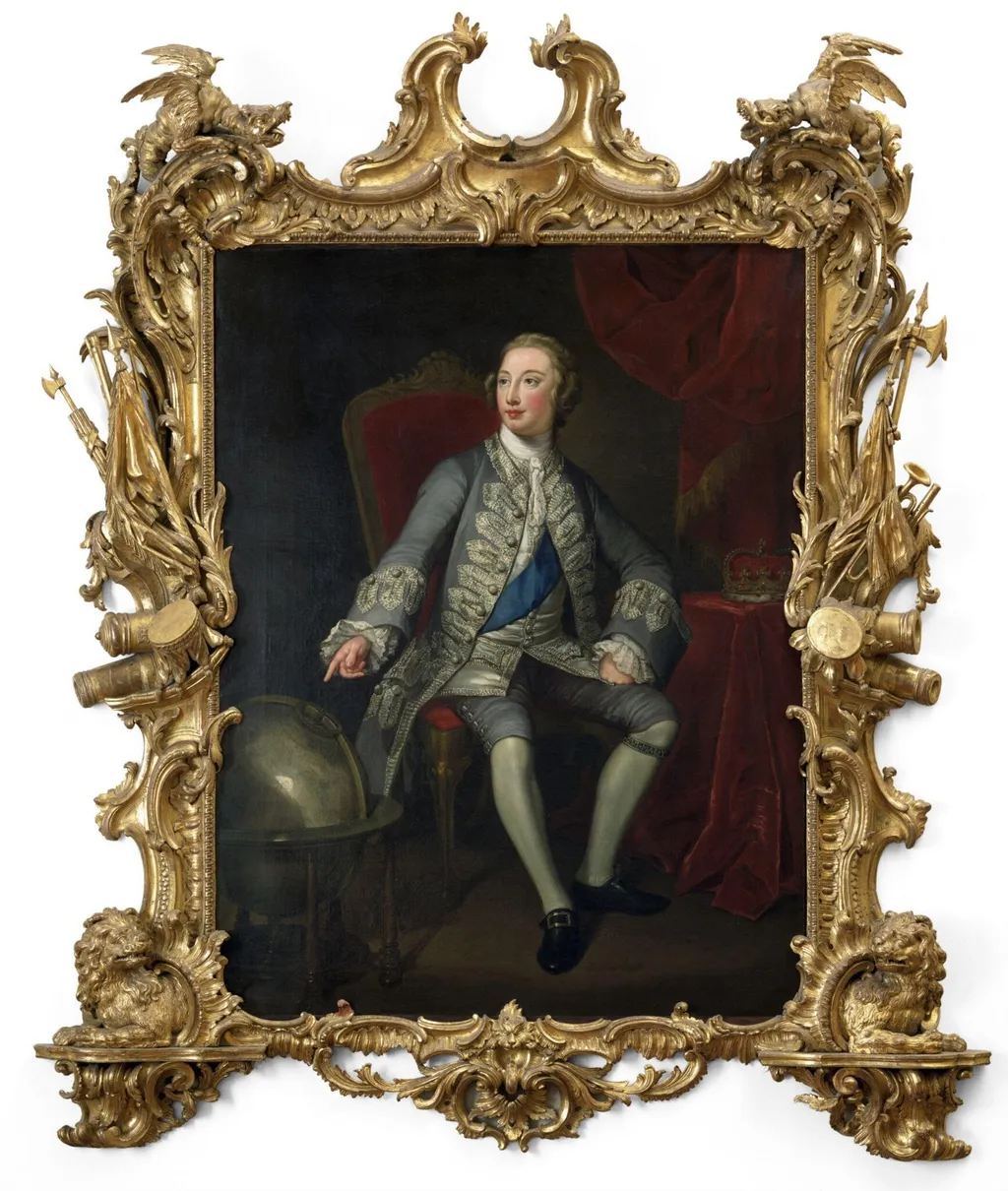
George III when Prince of Wales is a paint painting by the Rococo painting artist Unknown. It dates from 1751 and is held in the collection of the Victoria and Albert Museum. The work depicts the future George III in his role as Prince of Wales, rendered in oil on canvas.
About this work
You can see military trophies and lions carved into the frame, which was important in the mid-18th century.
This painting shows a young man, George III, when he was Prince of Wales.
He's dressed in fancy clothes and surrounded by symbols of power.
You can see military trophies and lions carved into the frame, which was important in the mid-18th century.
The frame's carvings reflect the young heir's status and education.
The portrait is a copy from a larger group of paintings.
To learn more about this style of portrait, look at the work of the museum: Victoria and Albert Museum.
Overview
The work depicts the future George III in his role as Prince of Wales, rendered in oil on canvas. The portrait is a contemporary replica of a larger group portrait that originally featured Frederick, Prince of Wales, and his family. The image is framed by an elaborate carved surround, typical of mid‑18th‑century portraiture, where the frame functions as an extension of the visual narrative.
Subject & Meaning
The young prince is shown in sumptuous attire, surrounded by iconography such as military trophies and lion motifs. These elements were intended to signal his aristocratic education, martial readiness, and the authority he was expected to inherit as heir to the throne.
Technique & Style
The frame, attributed to the London workshop of Paul Petit, features water‑gilded carving—gold leaf applied to damp gesso—creating a high polish on raised reliefs that contrast with the matte background. The decorative program likely involved collaboration between the carver and the portraitist, integrating sculptural and painted elements into a unified composition.
History & Provenance
The portrait is believed to have been presented by George III to Thomas Osborne, 4th Duke of Leeds (1713‑1789). It remained in the dining room of Hornby Castle, Yorkshire, until 1930, where it hung as one of a matched pair of framed works.
Context
During the period, picture frames gained prominence as status symbols, often designed by specialist carvers of Huguenot descent such as Petit, who also supplied comparable frames for portraits at Warwick Castle. The lion and trophy motifs reflect contemporary ideas of royal virtue and military prowess.
Artist & collection

 Domestic Scene
 Giacomo and Cardinal Marco, investing Andrea, Abbot of San Zeno, with his Benefice
 The Nymph of Fontainebleau
 Portrait of a Woman
 Madonna and Child with Saints in the Enclosed Garden
 Venus and Minerva
 Family Group of Four on Sofa
 Wall painting from Room H of the Villa of P. Fannius Synistor at Boscoreale
 General James Johnston (1721-1797)
 Portrait of Michał Krasiński (1712–1784), marshal general of Bar Confederation
 Kuningas Kaarle XI
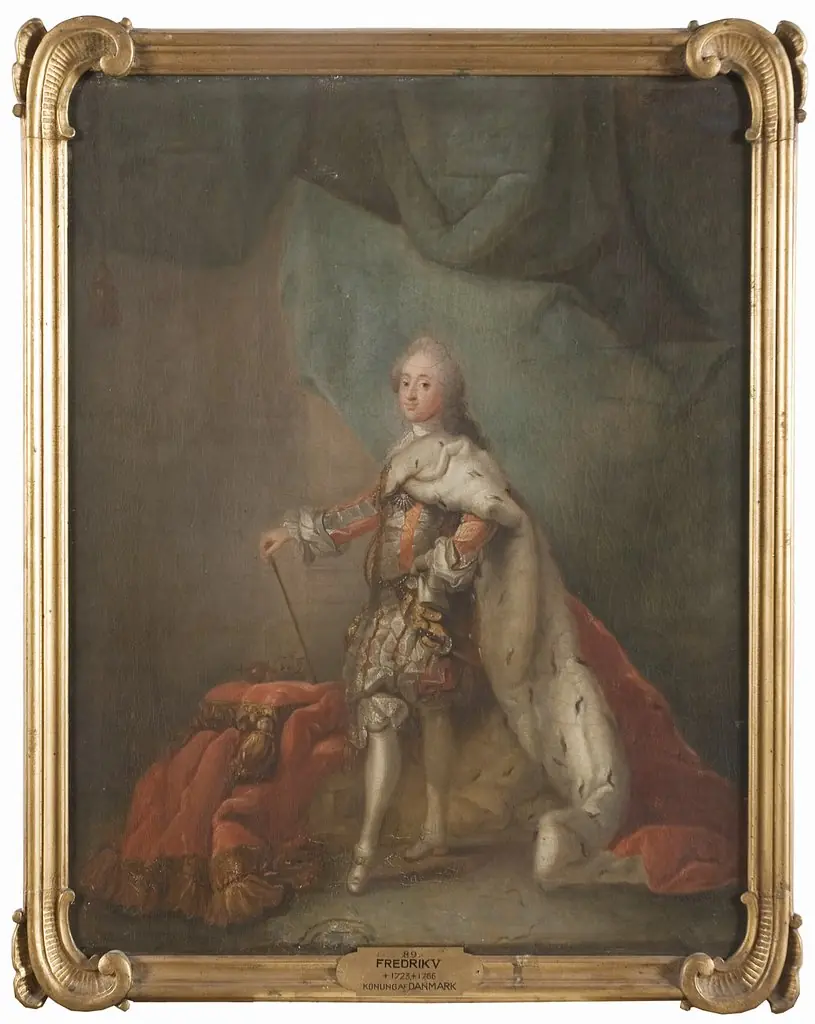 Fredrik V, 1723-66, konung av Danmark och Norge
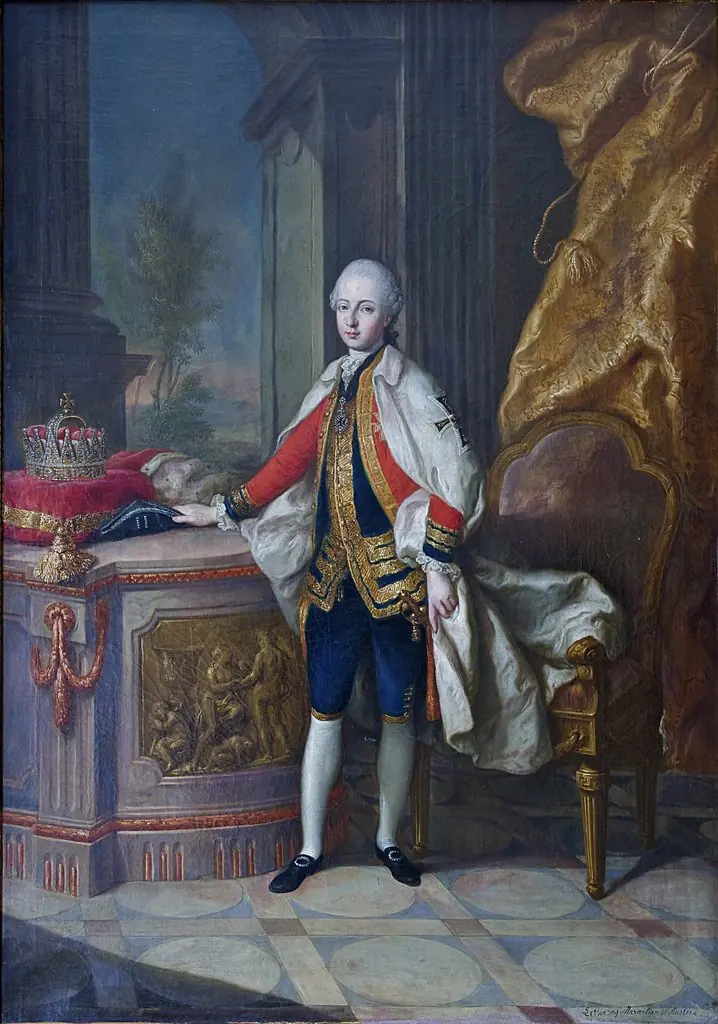 Maximilian, Archduke of Austria (1756-1801)
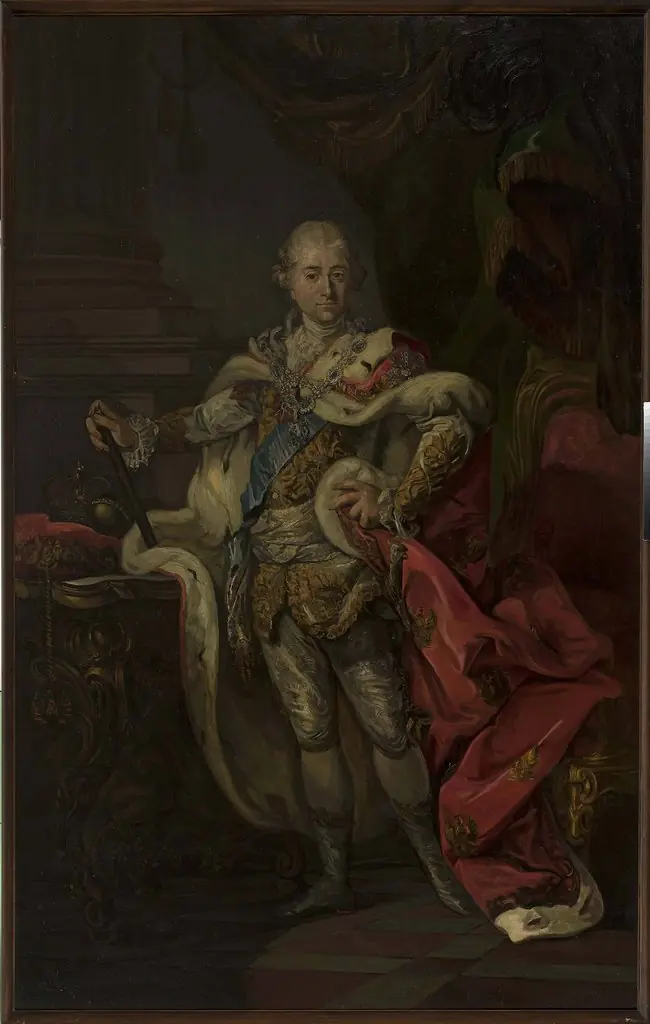 Portrait of Stanisław August in the coronation costume
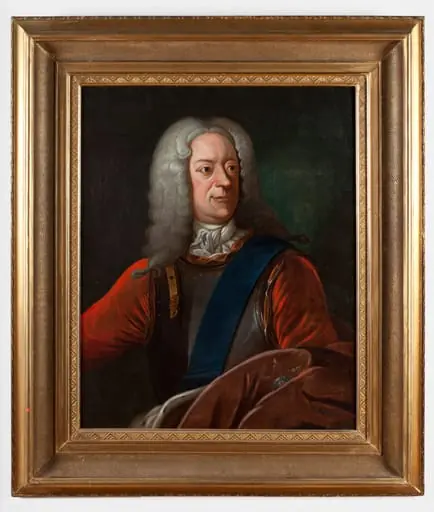 Georg II August Kurfürst von Hanover und König von Großbritannien (1683-1760)
 Pyhän saksalais-roomalaisen valtakunnan keisari Joosef I
 Kanslianeuvos Carl Fredrik Eckleff