Artwork
Gujari Ragini
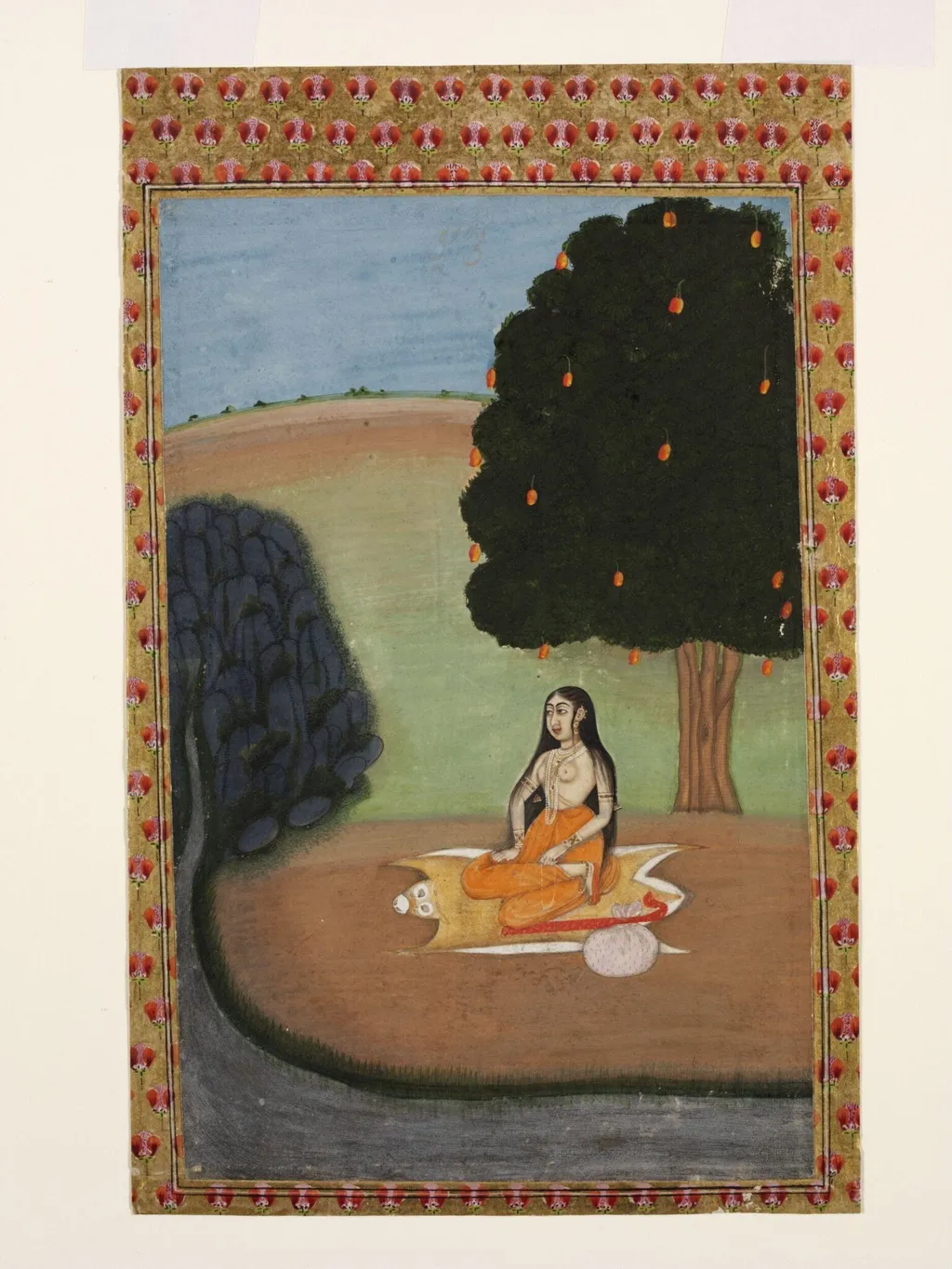
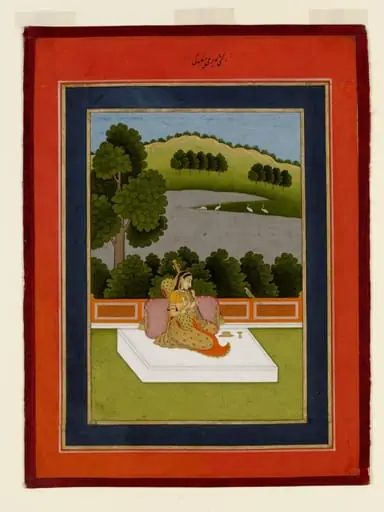
Gujari Ragini is a paint painting by the Mughal Painting artist Unknown. It dates from 1755 and is held in the collection of the Victoria and Albert Museum. Created around 1755, this painting belongs to a Ragamala series that visually interprets Indian musical modes.
About this work
This painting shows a woman in a red sari sitting on a terrace with a stringed instrument.
This painting shows a woman in a red sari sitting on a terrace with a stringed instrument.
It comes from a series of musical ragas painted in India around 1755.
The colors are soft, but the red sari stands out against the pale background.
The artist followed old traditions but added gentle shading for depth.
Look closely at the folds in her dress — they catch the light in a simple way.
This style mixes local Indian art with ideas from outside.
Find more like this at the Victoria and Albert Museum.
Overview
Created around 1755, this painting belongs to a Ragamala series that visually interprets Indian musical modes. Executed in opaque watercolor and gold on paper, it portrays a female ascetic in a red sari seated on a terrace beside a stringed instrument. The composition employs soft, muted tones with the sari as a focal point, contrasting subtly against a pale background. Delicate shading suggests form without overt realism, reflecting a regional style open to external influences.
Subject & Meaning
The figure represents Gujari Ragini, a musical mode personified as a yogini or ascetic. She is depicted in contemplative stillness, surrounded by symbols of her spiritual practice: the instrument suggests musical devotion, while the setting—elevated and serene—hints at withdrawal from worldly concerns. Though Ragamala iconography is inconsistent, this image aligns with traditions linking ragas to solitary, meditative figures, emphasizing inner resonance over narrative detail.
Technique & Style
The artist used fine brushwork to render the folds of the sari with gentle tonal shifts, creating subtle volume without heavy modeling. Gold accents highlight ornaments and details, while the palette remains restrained, favoring earth tones and the vivid red of the garment. The background is minimal, allowing focus on the figure. This approach blends conventional Indian miniature techniques with emerging naturalistic touches, suggesting a transitional phase in regional painting.
History & Provenance
The painting is part of a larger cycle commissioned during the mid-18th century, likely in a north Indian court where Ragamala themes were popular. Its style aligns with workshops in the Punjab Hills or Rajasthan, areas known for blending local aesthetics with Mughal influences. The work entered the Victoria and Albert Museum’s collection through documented acquisitions, preserving its place within a broader artistic tradition of musical iconography.
Context
Ragamala paintings emerged as visual companions to devotional music, mapping emotional and spiritual states onto imagery. Around 1755, such series flourished in regional courts as expressions of cultural refinement. While rooted in older textual traditions, artists adapted iconography freely, often incorporating local landscapes and attire. This painting reflects a moment when courtly patronage encouraged innovation within established frameworks, merging spiritual symbolism with aesthetic experimentation.
Legacy
Though individual Ragamala paintings were once part of intimate, ritualistic collections, many now reside in museum holdings as examples of pre-colonial Indian artistry. This work contributes to understanding how musical concepts were translated into visual language, revealing the interplay between sound, symbolism, and representation. Its preservation underscores the enduring value of regional artistic practices beyond dominant Mughal narratives.
Artist & collection

 Domestic Scene
 Giacomo and Cardinal Marco, investing Andrea, Abbot of San Zeno, with his Benefice
 The Nymph of Fontainebleau
 Portrait of a Woman
 Madonna and Child with Saints in the Enclosed Garden
 Venus and Minerva
 Family Group of Four on Sofa
 Wall painting from Room H of the Villa of P. Fannius Synistor at Boscoreale