Artwork
Gunakali Ragini
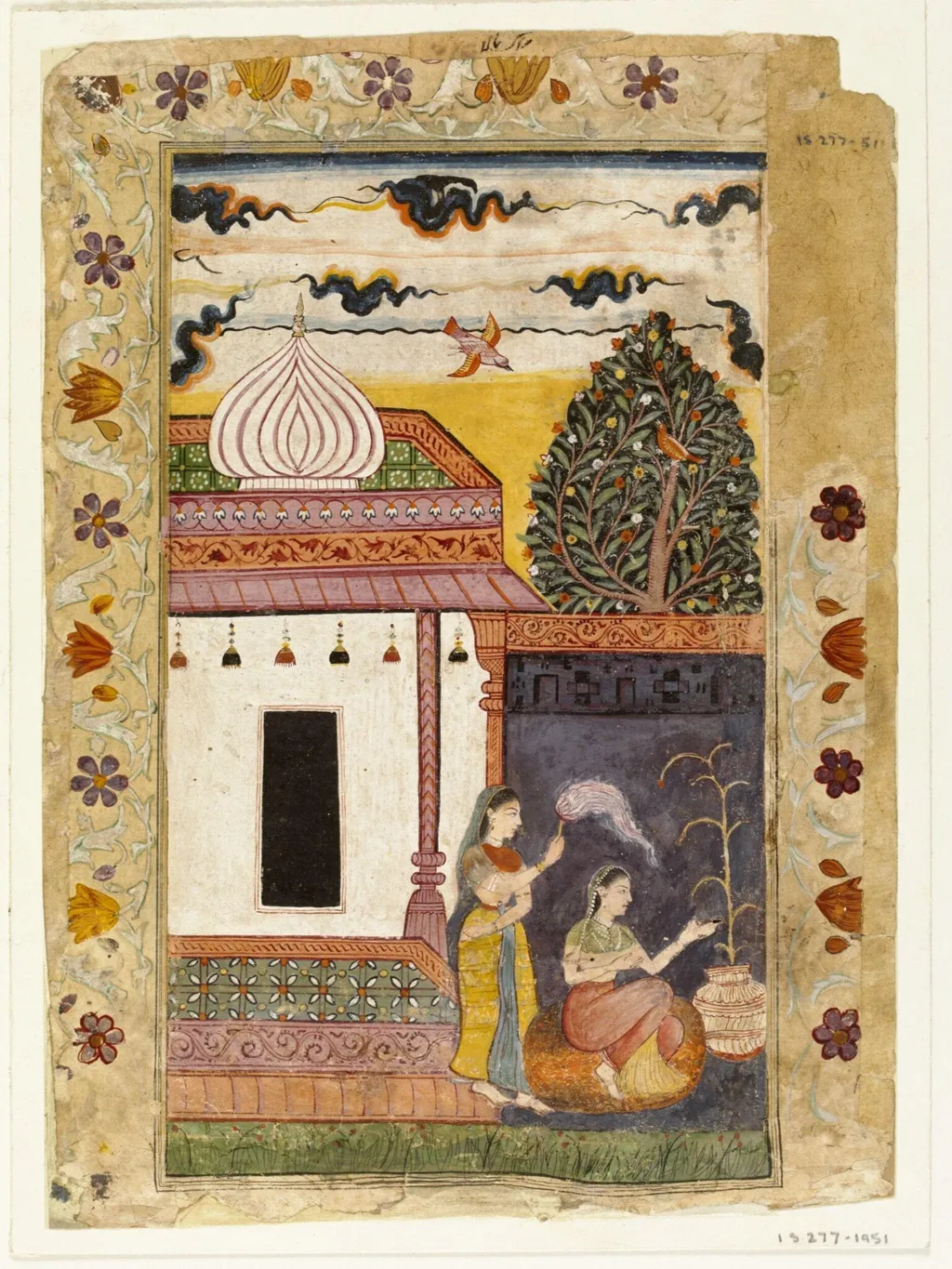
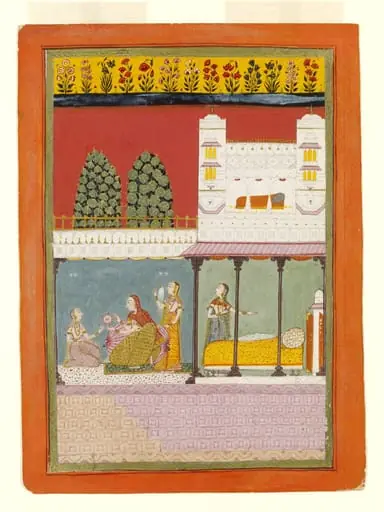
Gunakali Ragini is a paint painting by the Baroque artist Unknown. It dates from 1635 and is held in the collection of the Victoria and Albert Museum. Created in 1635, this opaque watercolor on paper belongs to the Ragamala series, a visual exploration of Indian musical modes.
About this work
Overview
Created in 1635, this opaque watercolor on paper belongs to the Ragamala series, a visual exploration of Indian musical modes. The composition presents a domestic courtyard scene populated by two women, one cradling an infant, the other seated beside a flower pot, set against an architectural backdrop with a white dome, a small window and an ornamented balcony.
Subject & Meaning
The central figure is identified as Gunakali Ragini, a personification linked to a specific raga. She is shown selecting blossoms from a pot, while an attendant behind her fans her with a handheld fan. The presence of the infant and the lush surroundings suggest themes of fertility, nurturing and the harmonious interplay of music and daily life.
Technique & Style
Executed in opaque watercolour, the artist employs vivid pigments and intricate patterning that extend to the painting’s borders. Figures are rendered with simplified, expressive faces, and the surrounding flora and architecture are stylised, blending realistic details with decorative motifs typical of the Ragamala tradition.
Context
Ragamala paintings served as visual analogues to Indian classical ragas, translating auditory moods into pictorial narratives. This work reflects the 17th‑century Mughal aesthetic, where courtly patronage encouraged elaborate, colour‑rich compositions that merged Persian influences with indigenous iconography.
Legacy
The piece exemplifies the integration of music, poetry and visual art that characterises the Ragamala genre. Its preservation offers insight into period costume, interior design and the symbolic language used to convey musical concepts in pre‑colonial Indian art.
Artist & collection

 Domestic Scene
 Giacomo and Cardinal Marco, investing Andrea, Abbot of San Zeno, with his Benefice
 The Nymph of Fontainebleau
 Portrait of a Woman
 Madonna and Child with Saints in the Enclosed Garden
 Venus and Minerva
 Family Group of Four on Sofa
 Wall painting from Room H of the Villa of P. Fannius Synistor at Boscoreale