Artwork
Malasri Ragini
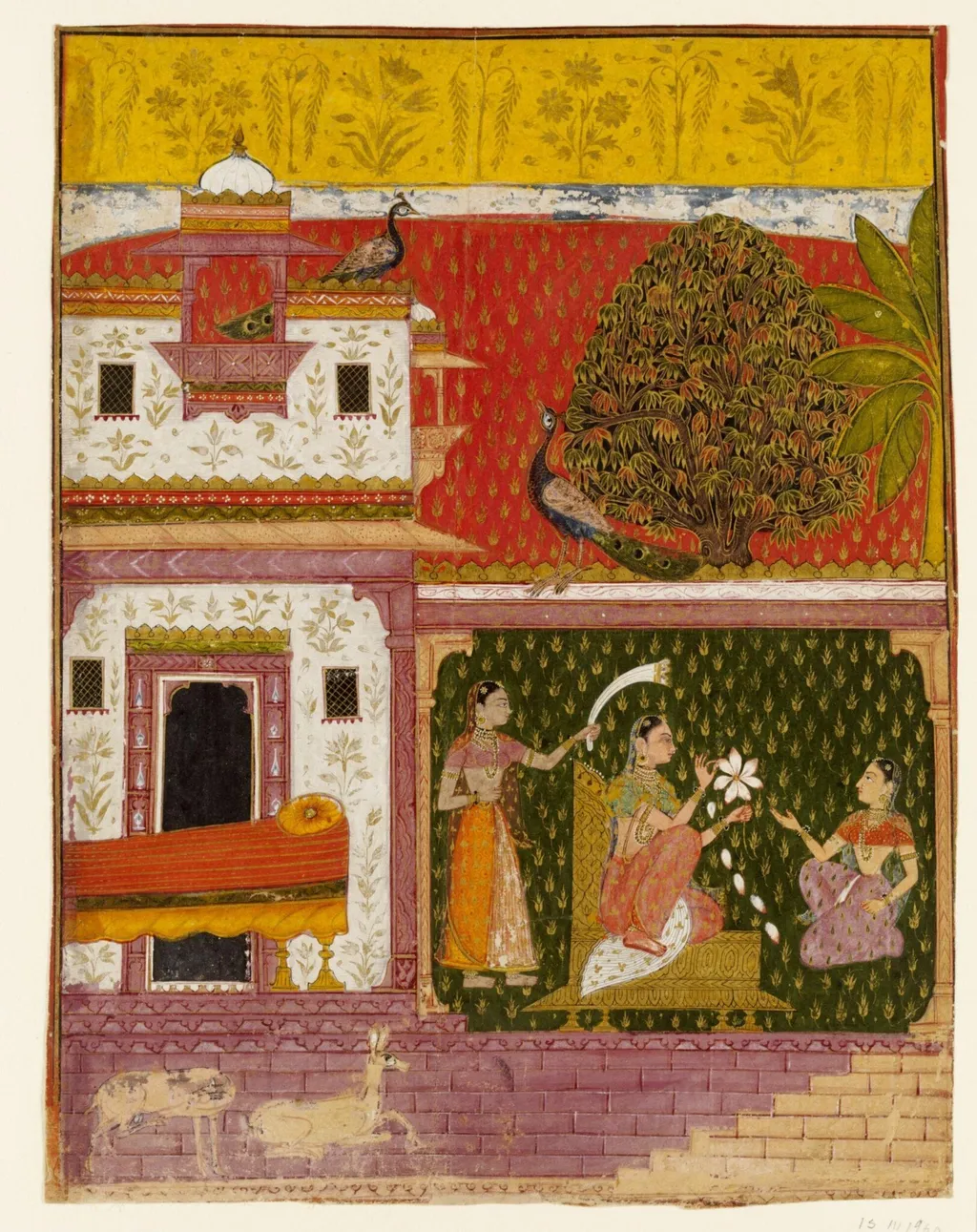
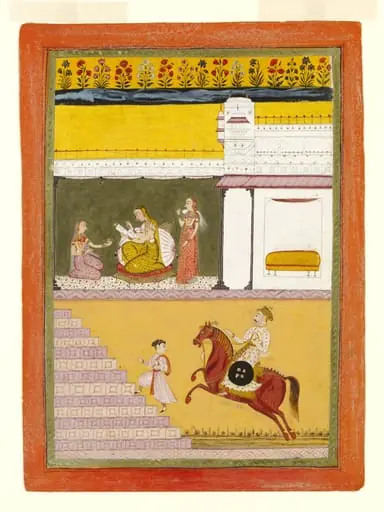
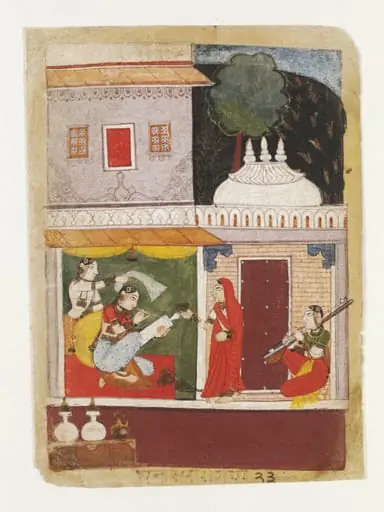
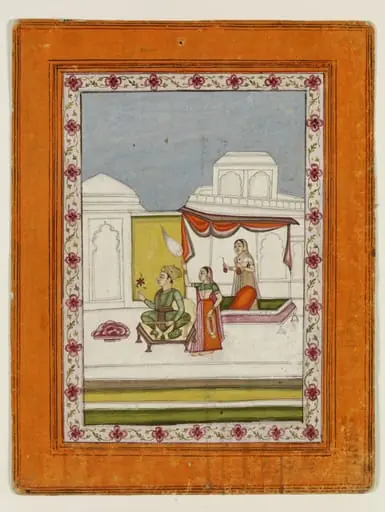
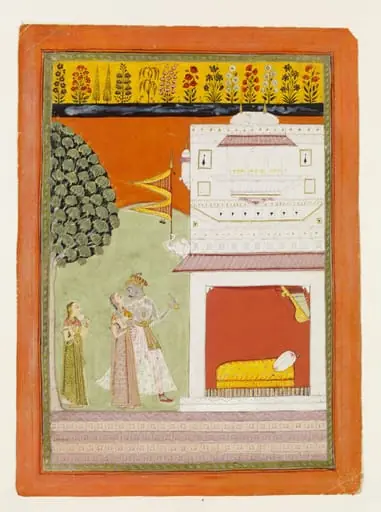
Malasri Ragini is a paint painting by the Baroque artist Unknown. It dates from 1640 and is held in the collection of the Victoria and Albert Museum. Created around 1640, this opaque watercolor on paper combines gold pigment with vivid hues to portray a leisurely garden scene.
About this work
Overview
Created around 1640, this opaque watercolor on paper combines gold pigment with vivid hues to portray a leisurely garden scene. The composition centers on three women dressed in richly patterned garments, surrounded by foliage, a peacock perched in a tree, and a small dog near a red‑white balcony structure.
Subject & Meaning
One figure is shown delicately plucking petals from a lotus, a gesture often linked to love and devotion, while a maid approaches bearing a written message from an absent lover. The inclusion of jewelry, a fan, and the peacock suggests a moment of refined recreation or a symbolic celebration of romantic anticipation.
Technique & Style
The work employs an opaque watercolor technique, allowing for saturated greens, reds, and golds that retain a flat yet luminous quality. Gold leaf is applied to accent details such as jewelry and architectural elements, reflecting the decorative aesthetics typical of the ragamala tradition.
History & Provenance
Belonging to the ragamala genre, which visualizes musical modes through allegorical scenes, the painting likely originated in a courtly setting where such symbolic imagery was prized. Its precise ownership trail is undocumented, but the style aligns with mid‑17th‑century Indian court paintings.
Context
During the early modern period, Indian court art often merged native iconography with influences from Persian and Mughal aesthetics. The garden setting, elaborate costumes, and use of gold echo contemporary tastes for opulent, narrative-driven compositions that celebrated both nature and courtly love.
Legacy
The piece exemplifies how ragamala paintings functioned as visual poetry, translating musical concepts into color and form. Its preservation offers insight into the period’s artistic techniques and the cultural importance of romantic and leisure motifs within elite Indian society.
Artist & collection

 Domestic Scene
 Giacomo and Cardinal Marco, investing Andrea, Abbot of San Zeno, with his Benefice
 The Nymph of Fontainebleau
 Portrait of a Woman
 Madonna and Child with Saints in the Enclosed Garden
 Venus and Minerva
 Family Group of Four on Sofa
 Wall painting from Room H of the Villa of P. Fannius Synistor at Boscoreale