Artwork
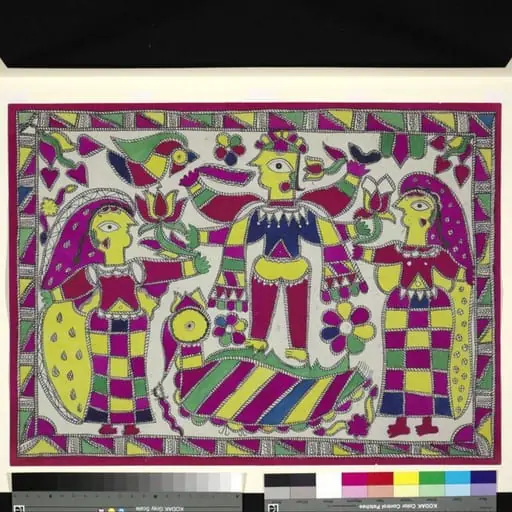
Hanuman, Sita and Lakshmana
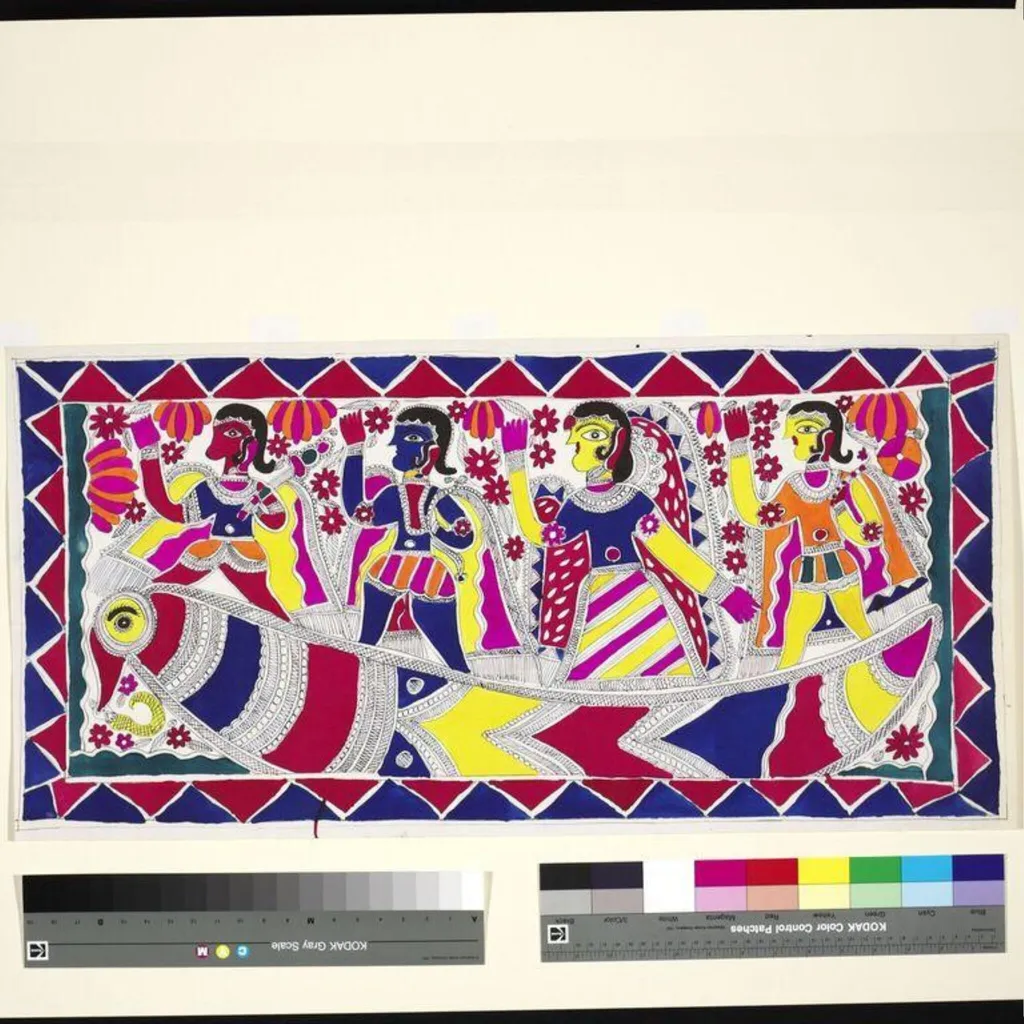
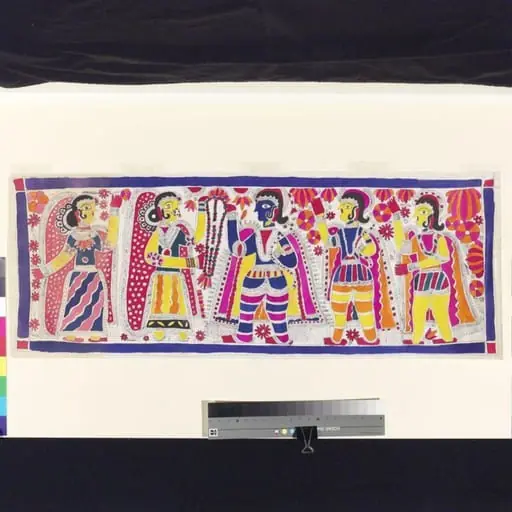
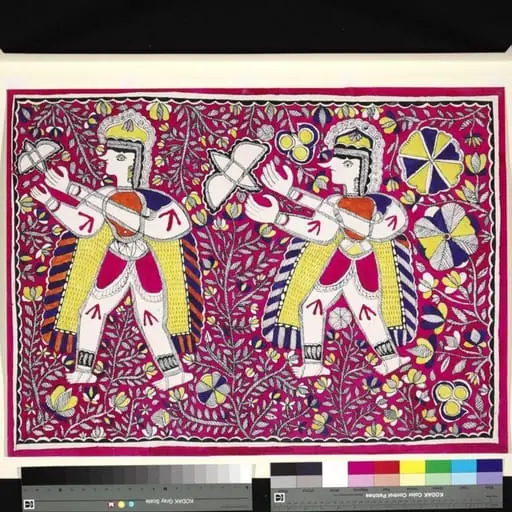
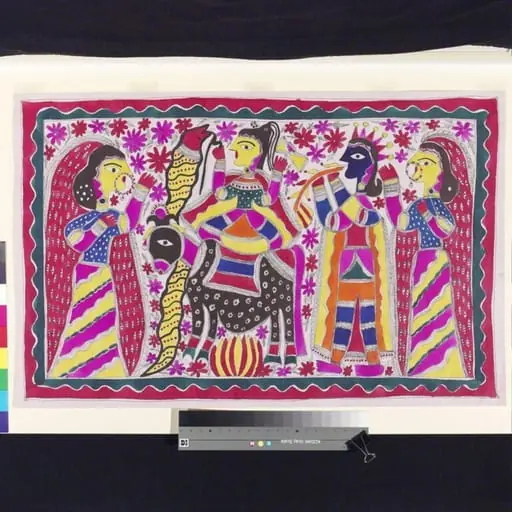
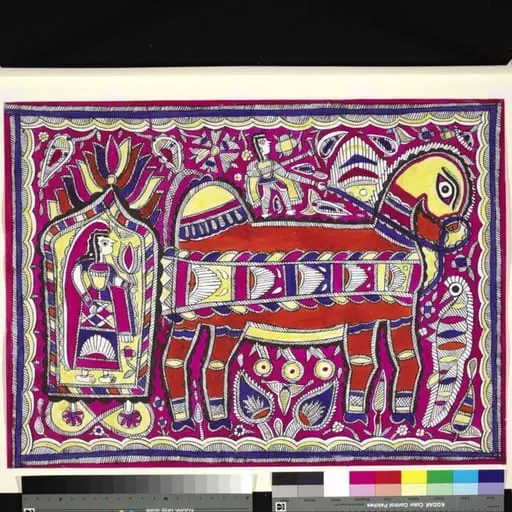
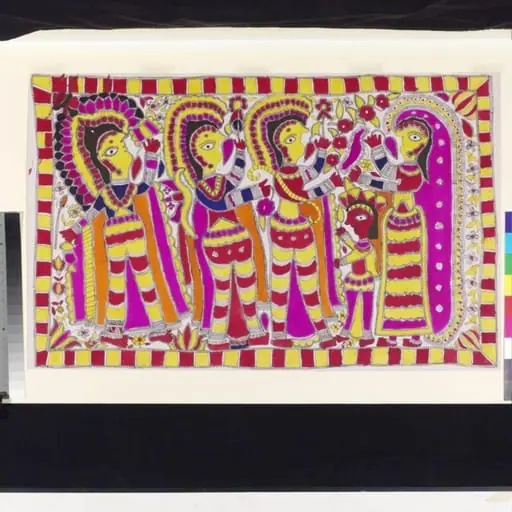
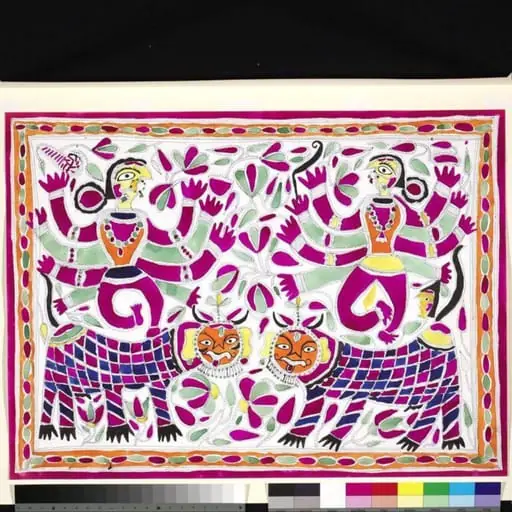
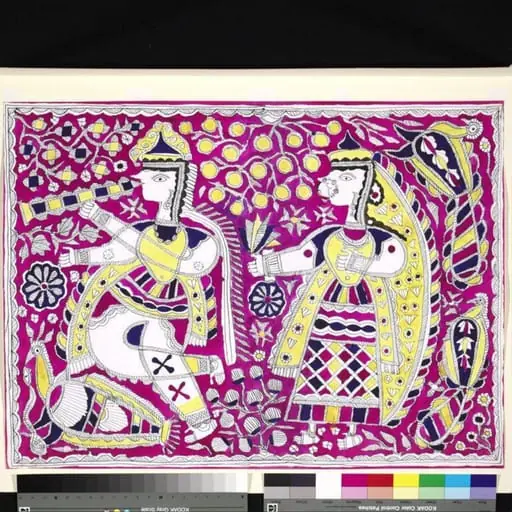
Hanuman, Sita and Lakshmana is a paint painting by Unknown. It dates from 1974 and is held in the collection of the Victoria and Albert Museum. This painting, created in the Madhubani style, depicts a scene from the Ramayana using ink and pigments on paper.
About this work
Overview
This painting, created in the Madhubani style, depicts a scene from the Ramayana using ink and pigments on paper. It features Hanuman, Sita, and Lakshmana in a compact, stylized composition, with a peacock-shaped vessel suggesting their journey. The work reflects a regional Indian folk tradition that transitioned from ritual wall paintings to portable art forms in the 20th century.
Subject & Meaning
The figures represent key characters from the Ramayana: Hanuman, the devoted monkey god; Sita, Rama’s abducted wife; and Lakshmana, Rama’s loyal brother. Their grouping implies a moment of reunion or travel, likely after Sita’s rescue. The peacock boat may symbolize divine guidance or the sacred nature of their return, aligning with themes of devotion and dharma central to the epic.
Technique & Style
The painting employs bold outlines, flat planes of color, and intricate linear patterns to define forms. Eyes are large and expressive, enhancing emotional presence. Backgrounds are densely filled with swirling motifs and geometric patterns in vivid hues—blue, pink, and yellow—creating rhythmic visual energy. The style avoids perspective, emphasizing symbolic presence over naturalism.
History & Provenance
Madhubani painting originated in northern Bihar as a ritual practice by women of Brahmin and Kayastha communities, applied to interior walls during ceremonies. After the 1934 earthquake prompted external documentation by W.G. Archer, artists began transferring the style to paper in the 1960s to sustain livelihoods, transforming a domestic art into a commercially viable craft.
Context
This work emerges from a tradition rooted in women’s domestic rituals, where art served spiritual and communal functions. Its shift to paper coincided with broader efforts to preserve and commercialize Indian folk arts during post-independence cultural revival. The imagery remains tied to Hindu mythology, yet its format reflects adaptation to new markets and audiences.
Legacy
Madhubani painting has become one of India’s most recognized folk art forms, with practitioners continuing to innovate while preserving core visual language. The style’s transition from walls to paper enabled wider dissemination, influencing contemporary Indian art and global perceptions of rural artistic traditions without erasing their cultural origins.
Artist & collection

 Domestic Scene
 Giacomo and Cardinal Marco, investing Andrea, Abbot of San Zeno, with his Benefice
 The Nymph of Fontainebleau
 Portrait of a Woman
 Madonna and Child with Saints in the Enclosed Garden
 Venus and Minerva
 Family Group of Four on Sofa
 Wall painting from Room H of the Villa of P. Fannius Synistor at Boscoreale