Artwork
Heilige Familie
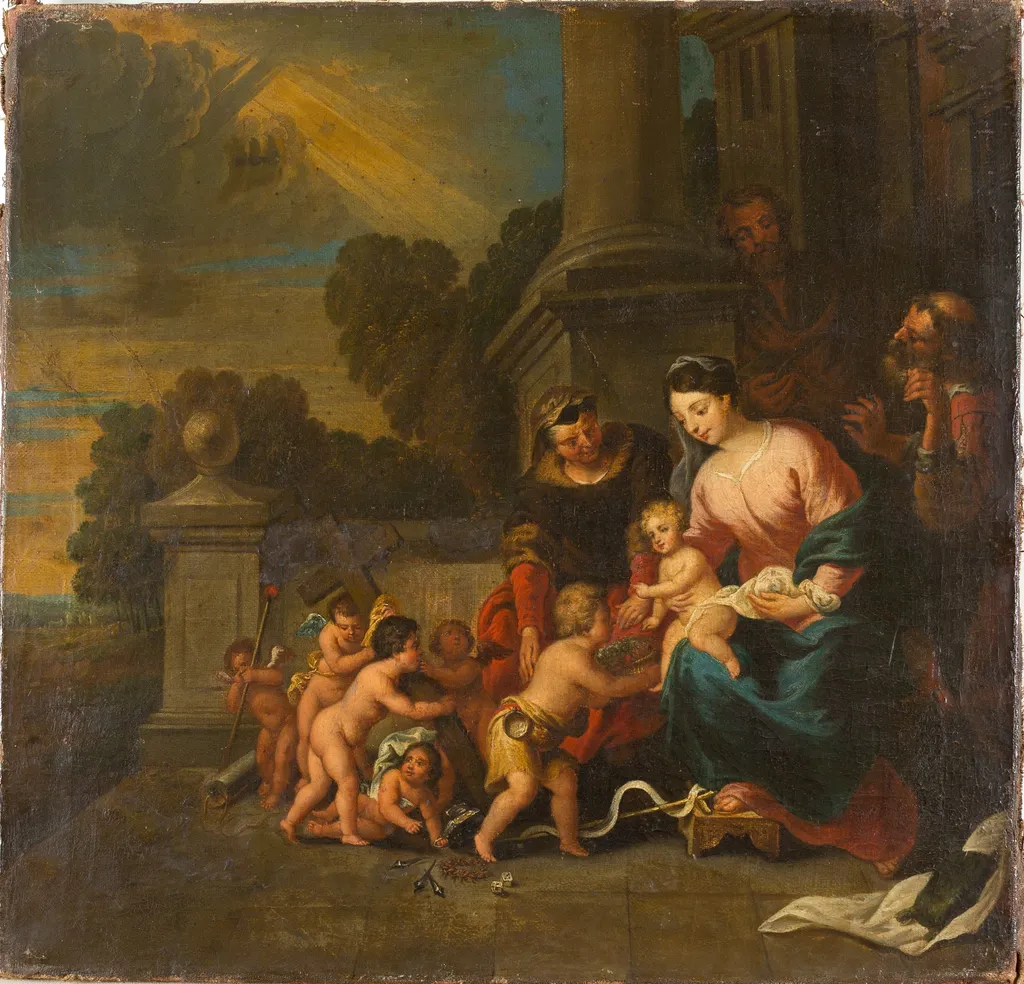
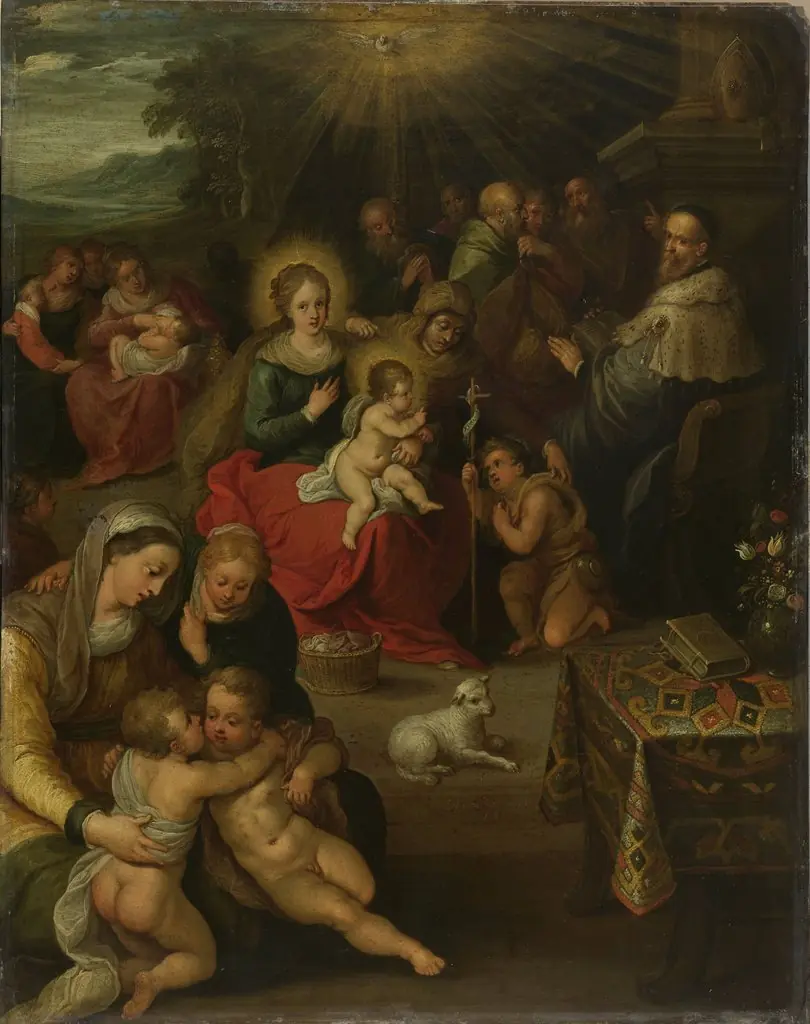
Heilige Familie is a drawing by Unknown. It dates from 1850 and is held in the collection of the Art Collection of the University Göttingen. This image depicts a sacred family group centered on a woman holding an infant, surrounded by several young children in a natural setting.
About this work
Overview
This image depicts a sacred family group centered on a woman holding an infant, surrounded by several young children in a natural setting. The figures are rendered with rounded forms and gentle expressions, contrasting with the brooding atmosphere of the sky above. A stone pillar and woven basket anchor the foreground, while distant figures near a bridge suggest a broader narrative space.
Subject & Meaning
The composition centers on maternal care amid childhood play, evoking themes of domestic tenderness within a spiritual context.
The composition centers on maternal care amid childhood play, evoking themes of domestic tenderness within a spiritual context. The presence of fruit and toys may symbolize earthly abundance or innocence, while the stormy sky introduces a subtle tension, possibly alluding to future trials or divine foreknowledge. The calm demeanor of the mother contrasts with the children’s exuberance, reinforcing a quiet solemnity.
Technique & Style
The figures are modeled with soft contours and plump, rounded anatomy, emphasizing youth and vitality. Brushwork is loose in the background, where clouds and landscape dissolve into atmospheric depth, while the foreground details—fabric folds, stone texture, and fruit—are rendered with greater precision. The palette is muted, with earth tones dominating and the sky rendered in cool, heavy grays.
History & Provenance
The work lacks documented origin or artist attribution, and no known exhibition history precedes its current identification. It is cataloged as a devotional image, likely produced in a regional workshop during the late medieval or early Renaissance period, when such domestic sacred scenes were common in private worship contexts.
Context
Similar compositions appear in devotional art from Southern Europe, where the Holy Family was often shown with attendant angels or children to emphasize Christ’s humanity and the sanctity of family life. The inclusion of everyday objects like baskets and fruit reflects a trend toward naturalism in religious imagery during the period, bridging the sacred and the domestic.
Legacy
Though not widely reproduced or studied, the image exemplifies a quiet tradition of intimate religious scenes that prioritized emotional resonance over grandeur. Its preservation in institutional collections suggests ongoing interest in vernacular expressions of faith, particularly those that portray sacred figures within relatable, human environments.
Artist & collection
Museum
Art Collection of the University Göttingen
Continue through works from the same source collection.
 Domestic Scene
 Giacomo and Cardinal Marco, investing Andrea, Abbot of San Zeno, with his Benefice
 The Nymph of Fontainebleau
 Portrait of a Woman
 Madonna and Child with Saints in the Enclosed Garden
 Venus and Minerva
 Family Group of Four on Sofa
 Wall painting from Room H of the Villa of P. Fannius Synistor at Boscoreale
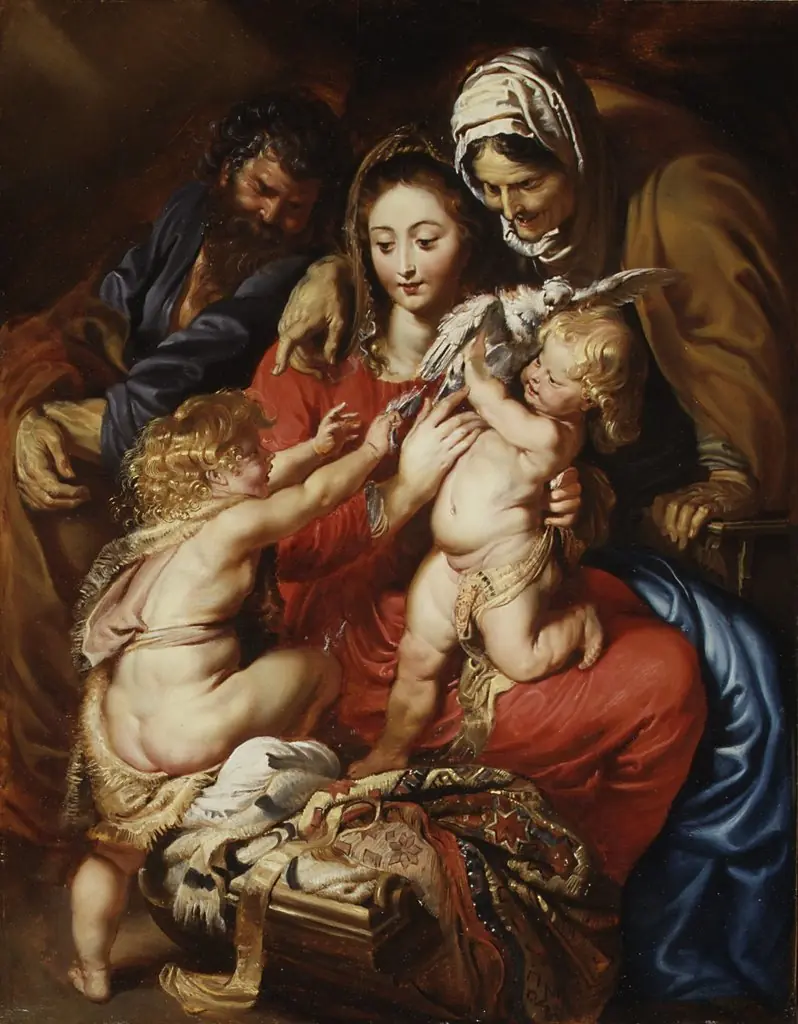 The Holy Family with Saint Elizabeth, Saint John, and a Dove
 Presentation Sketch for "The Holy Family with Saints Anne, Joachim, and John the Baptist" (for Santa Maria in Via Lata, Roma)
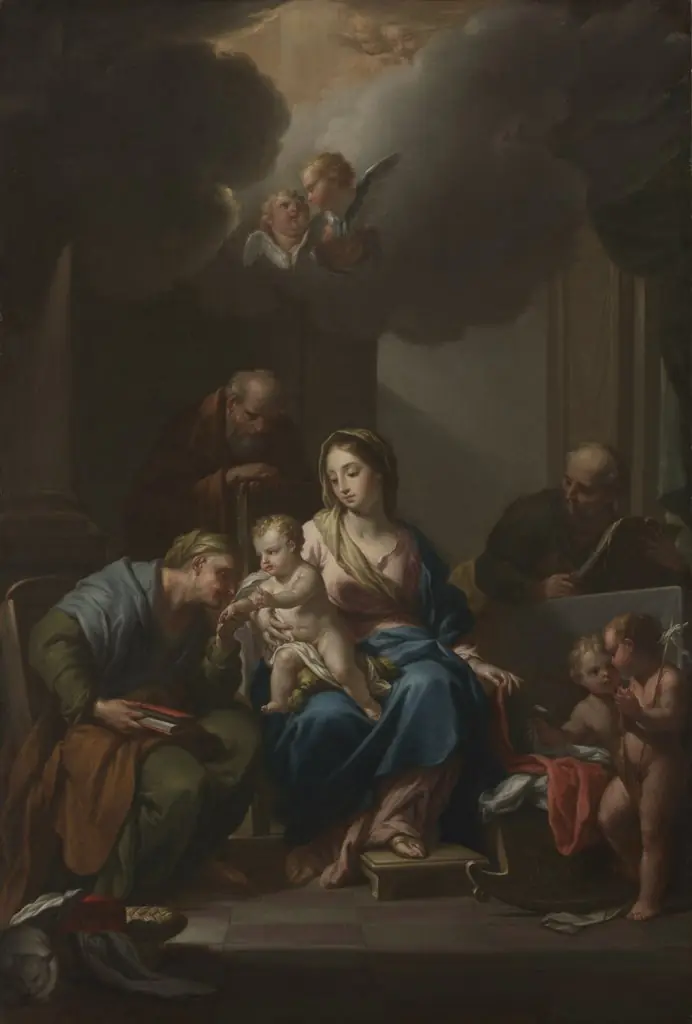 Presentation Sketch for "The Holy Family with Saints Anne, Joachim, and John the Baptist" (for Santa Maria in Via Lata, Roma)
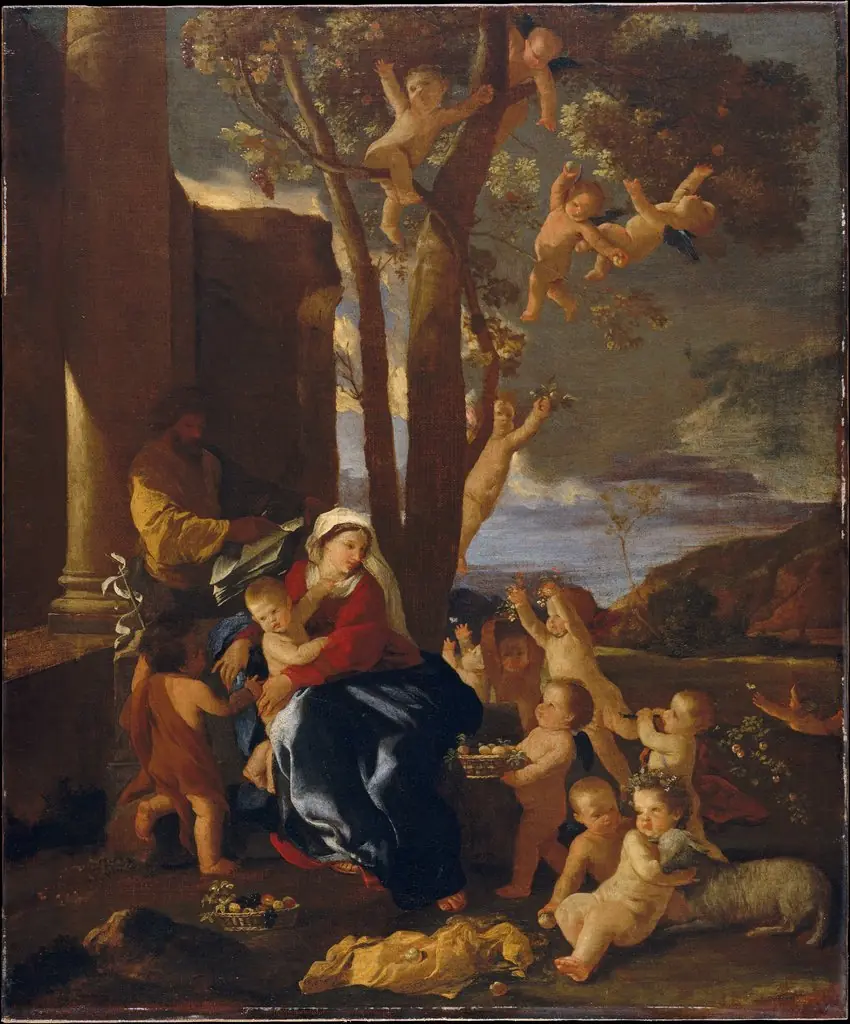 The Rest on the Flight into Egypt
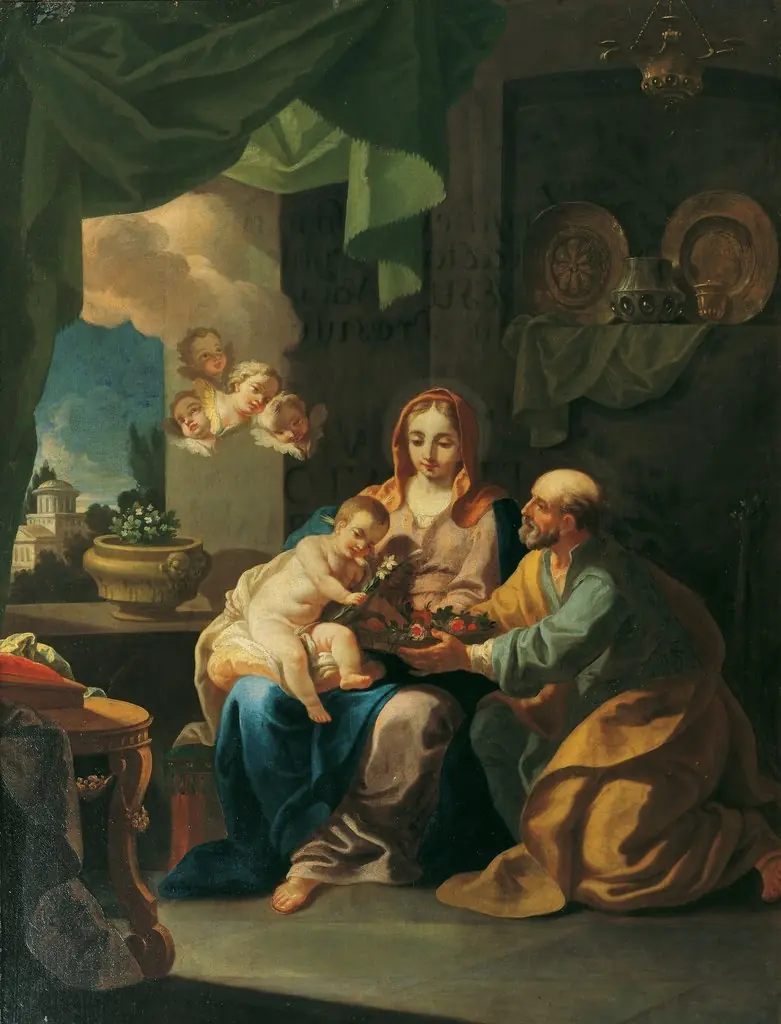 Die Heilige Familie
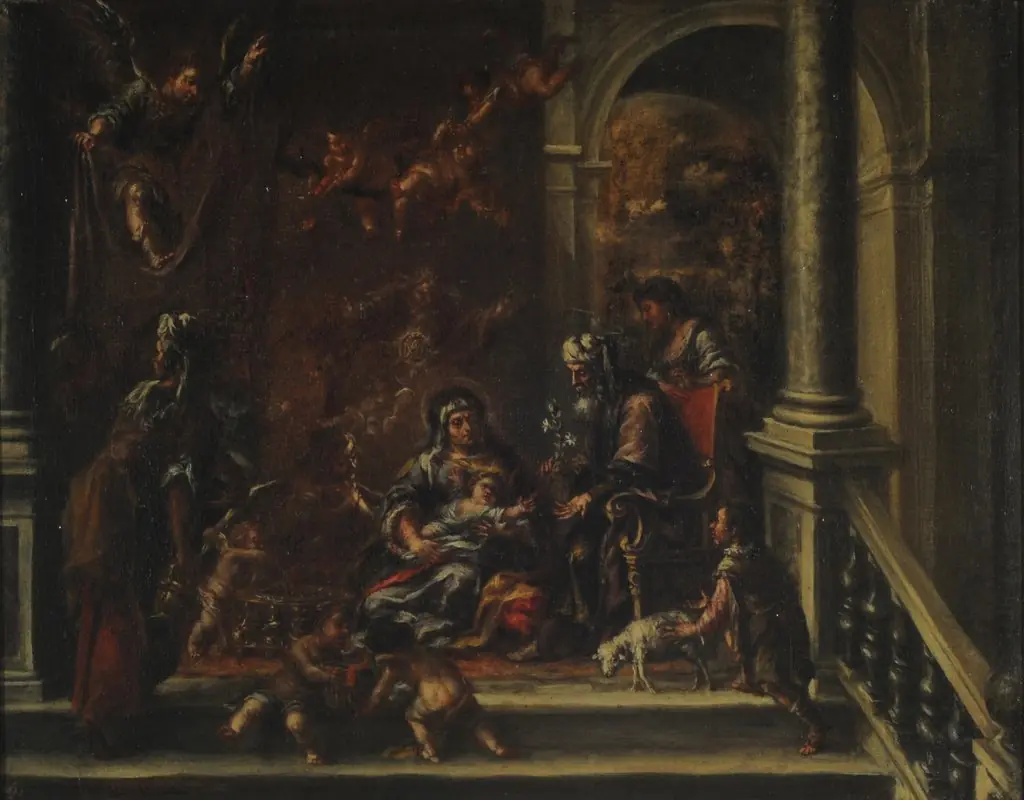 The birth of the Virgin
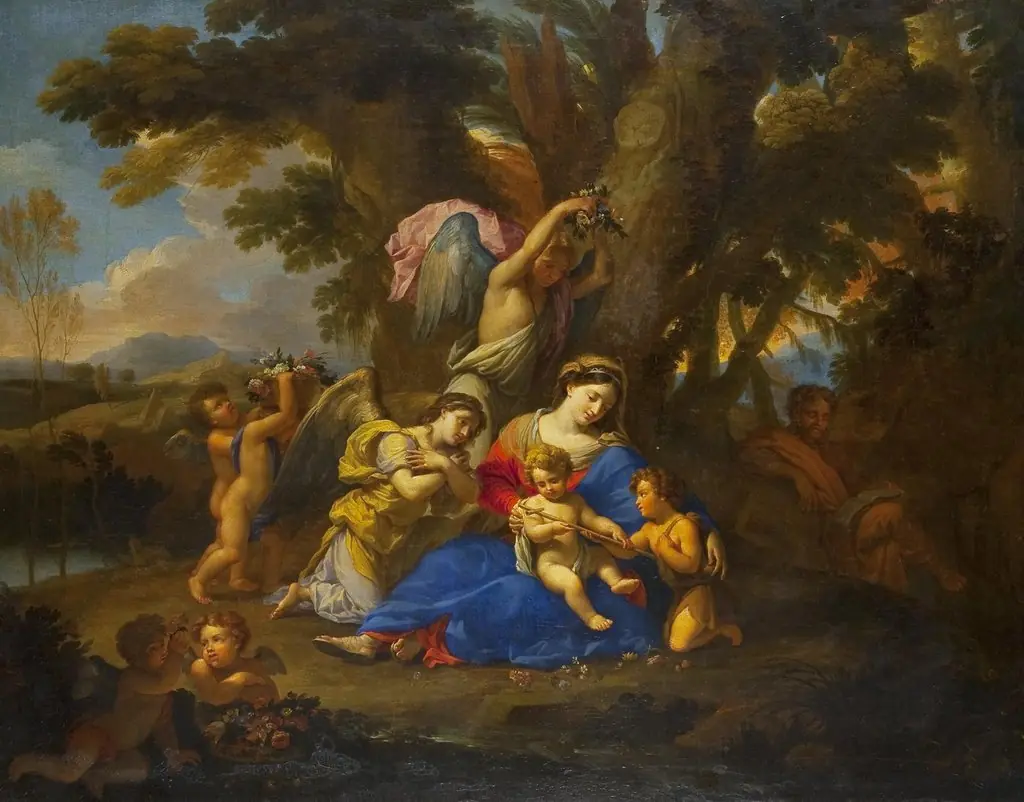 Madonna and Christ Child, with St John the Baptist and Angels
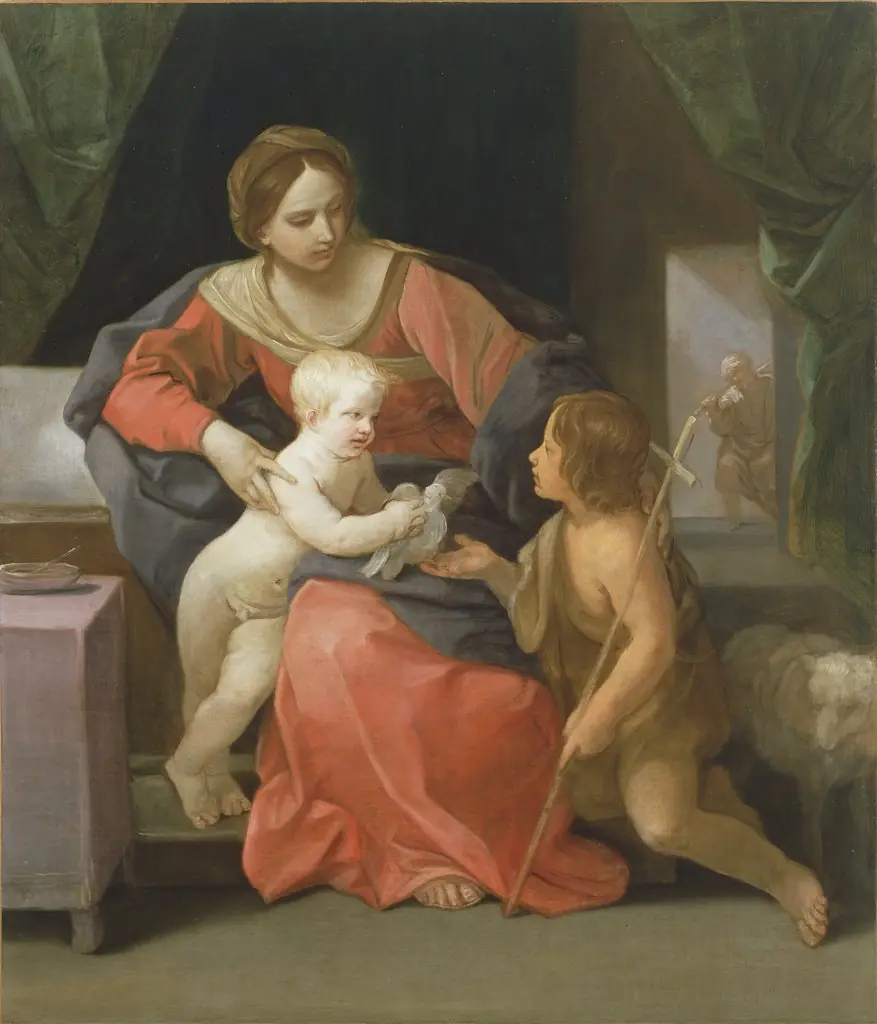 Virgin and Child with Saint John the Baptist
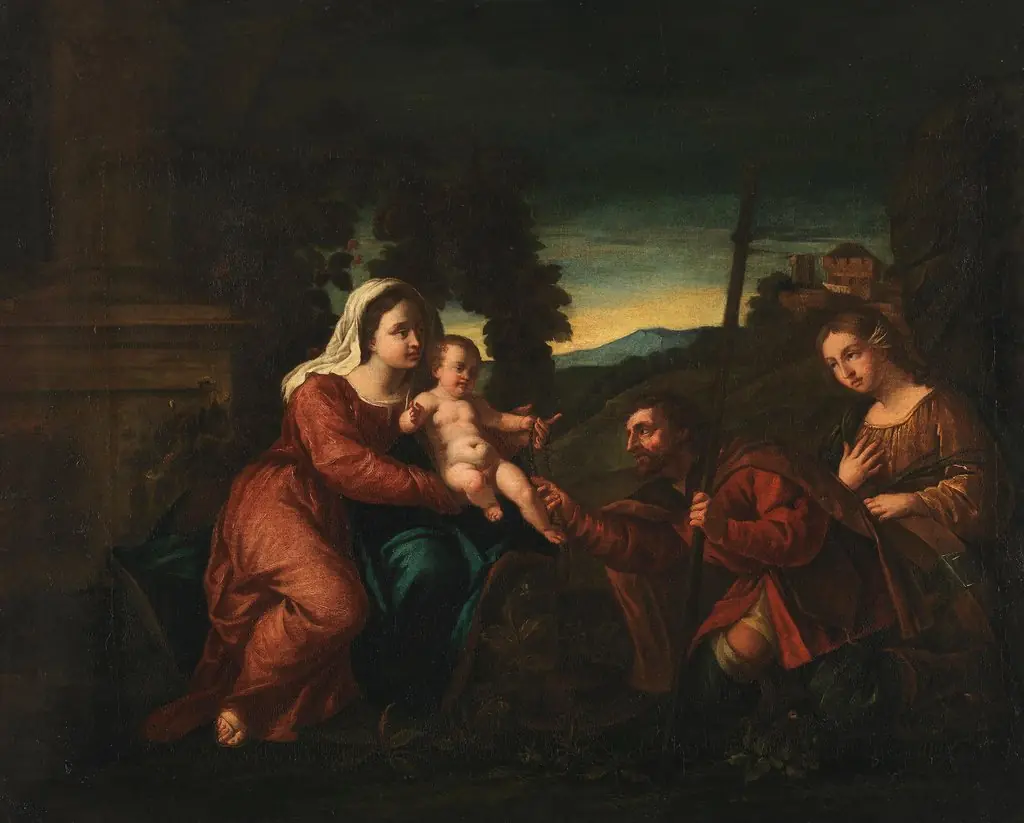 Madonna and Child with Saints Roche and Mary Magdalene
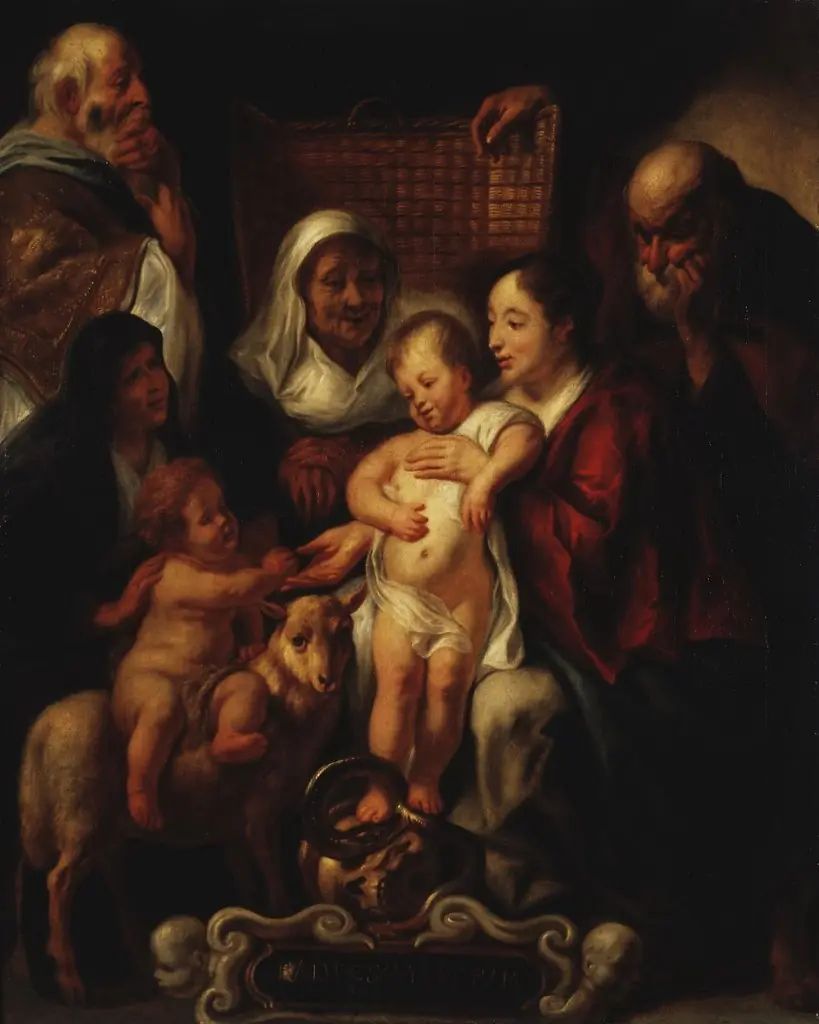 The Holy Family (Hermitage)
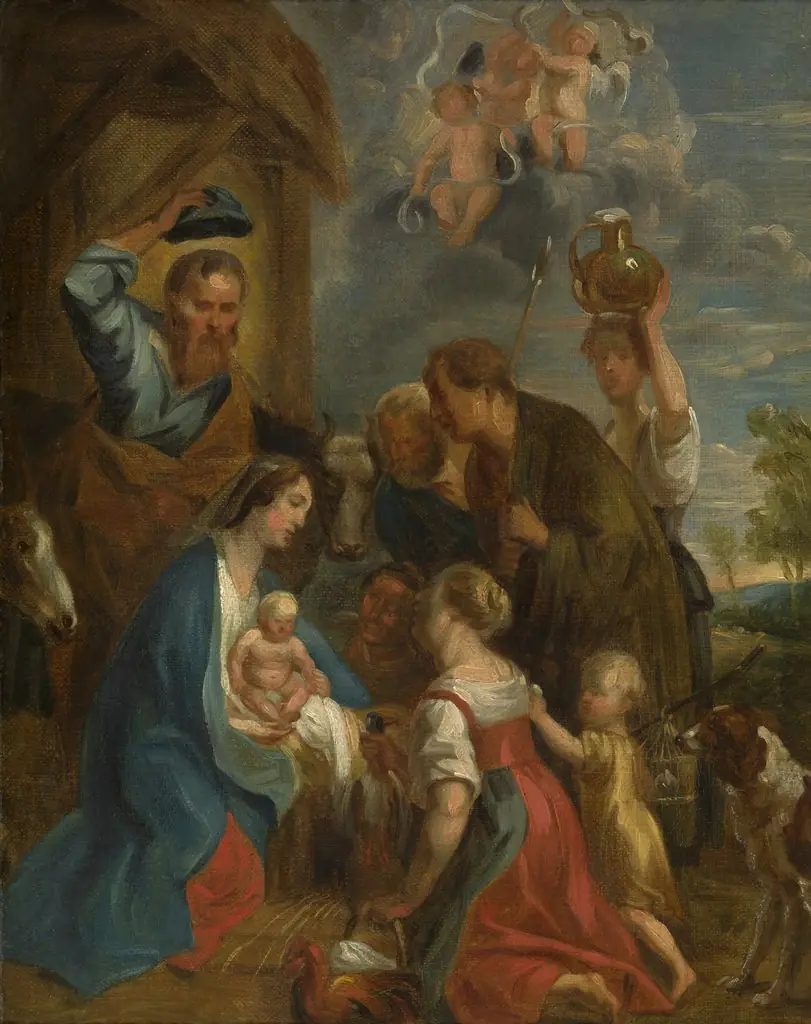 The Adoration of the Shepherds
 Allegory on the Christ child as the lamb of God