Artwork
Hindu women filling their Kedjeree pots with water
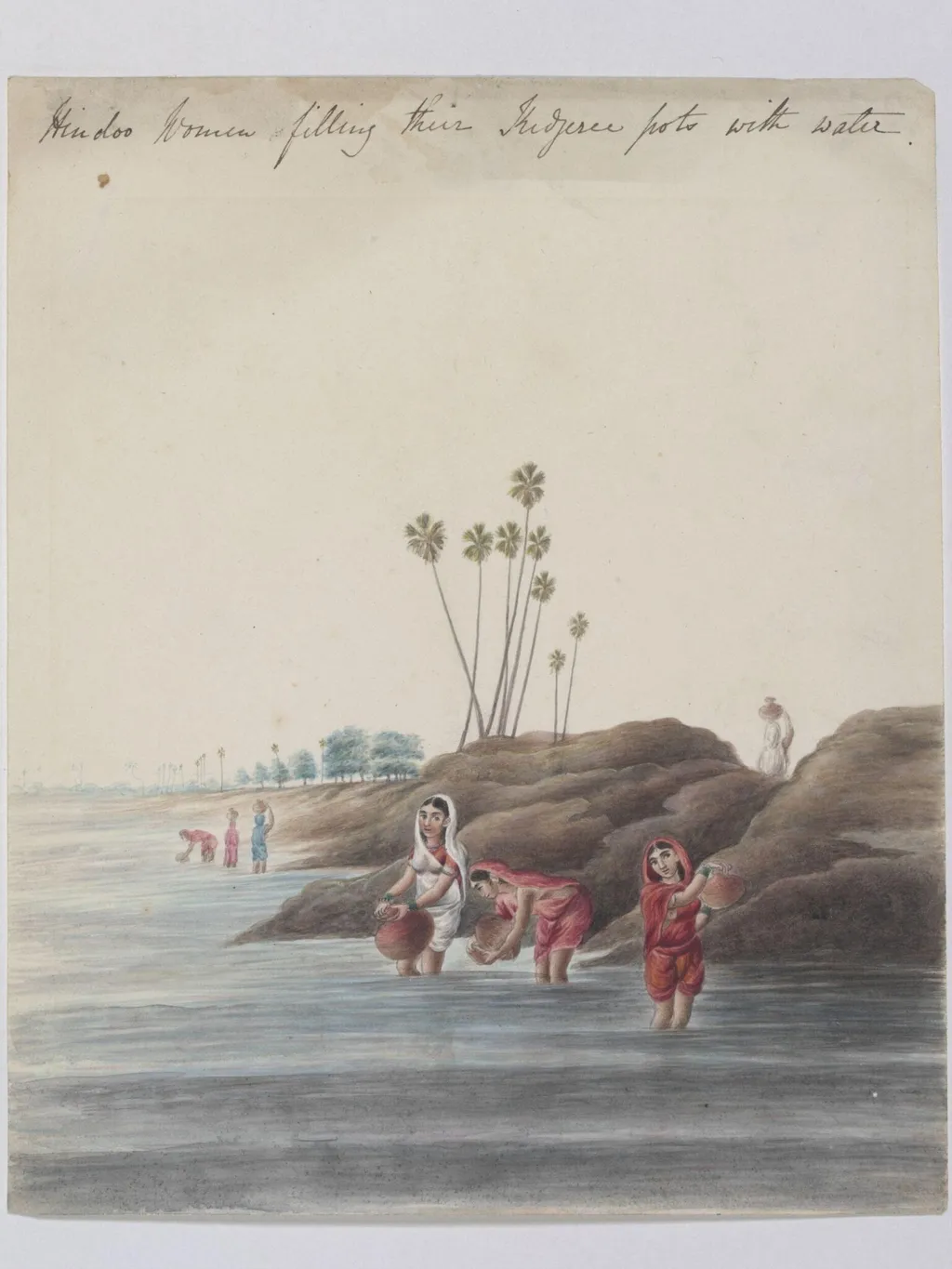
Hindu women filling their Kedjeree pots with water is a paint painting by the Patna School of Painting artist Unknown. It dates from 1826 and is held in the collection of the Victoria and Albert Museum. The work portrays four Hindu women at a riverbank, each engaged in filling clay kedjeree pots with water.
About this work
Overview
The work portrays four Hindu women at a riverbank, each engaged in filling clay kedjeree pots with water. Set against a rocky shoreline, the figures are dressed in white saris accented with red headcloths, while a child assists by carrying a pot. Distant palm trees and other shoreline figures complete the composition, conveying a tranquil yet active daily routine.
Subject & Meaning
The painting captures a routine domestic task—collecting water for traditional clay containers—highlighting the role of women in sustaining household needs. By focusing on a specific occupational activity, the image underscores the cultural importance of water management and the communal labor shared among women and children within a Hindu setting.
Technique & Style
Rendered with soft, muted hues and gentle brushwork, the scene exhibits the lyrical quality typical of Romantic-era genre paintings. The delicate handling of light on water and the subtle modeling of fabric convey a sense of calm, while the composition’s balanced arrangement of figures and landscape elements reflects a harmonious integration of human activity and nature.
Context
Created as part of a series of thirty‑five drawings documenting various trades and occupations, the piece aligns with 19th‑century interests in ethnographic observation and the romanticization of everyday life. Its focus on a regional Indian practice situates the work within the broader European fascination with exotic cultures during the Romantic period.
Legacy
The painting contributes to visual records of traditional water‑gathering practices that have largely disappeared with modern infrastructure. As a component of the larger occupational series, it offers scholars insight into historical representations of labor, gender roles, and cross‑cultural artistic exchange during the Romantic era.
Artist & collection

 Domestic Scene
 Giacomo and Cardinal Marco, investing Andrea, Abbot of San Zeno, with his Benefice
 The Nymph of Fontainebleau
 Portrait of a Woman
 Madonna and Child with Saints in the Enclosed Garden
 Venus and Minerva
 Family Group of Four on Sofa
 Wall painting from Room H of the Villa of P. Fannius Synistor at Boscoreale
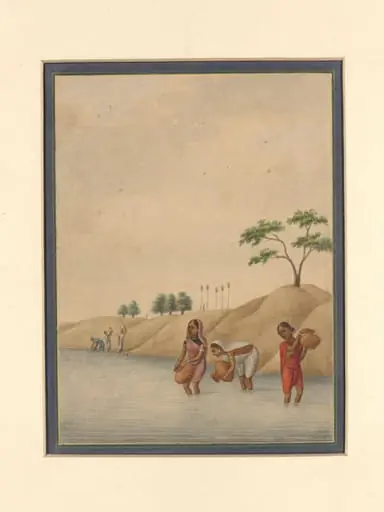 A woman drawing water from a well
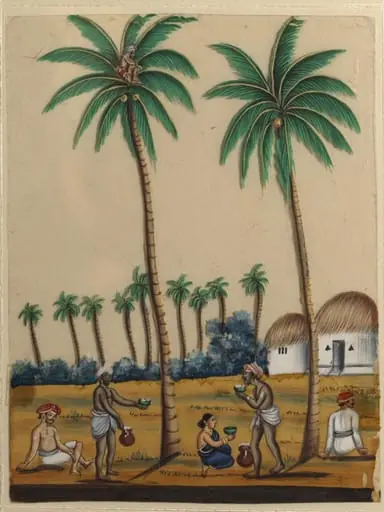 A toddy-tapper
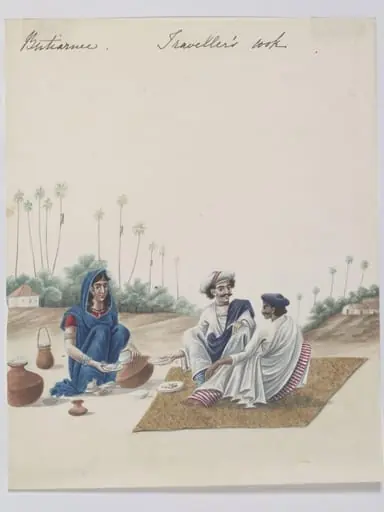 Traveller's cook
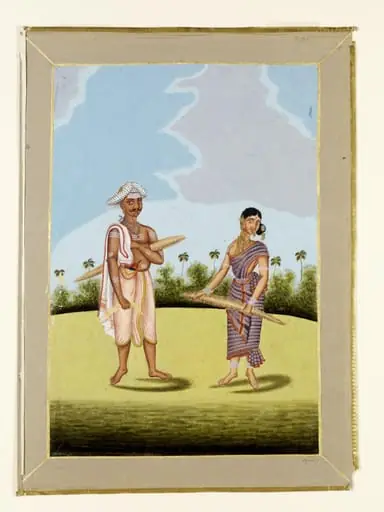 Basket-makers
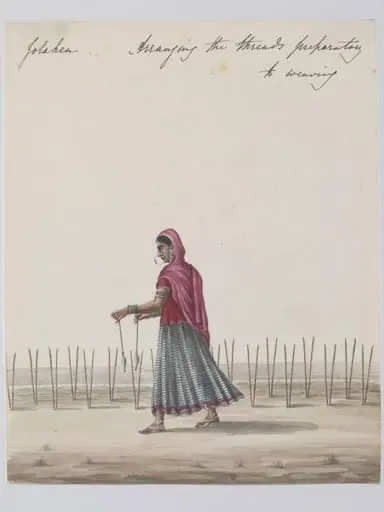 A woman weaver
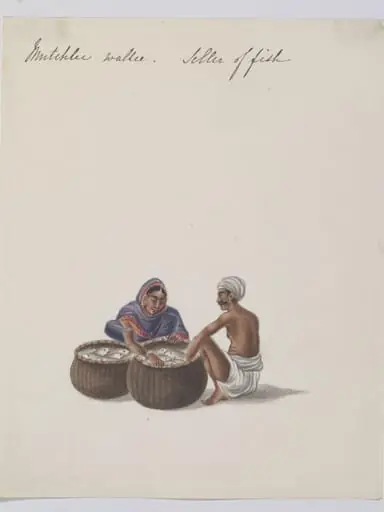 A woman fish-seller
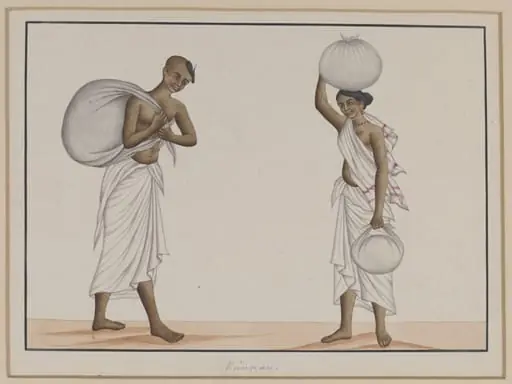 A Dhobi and his wife
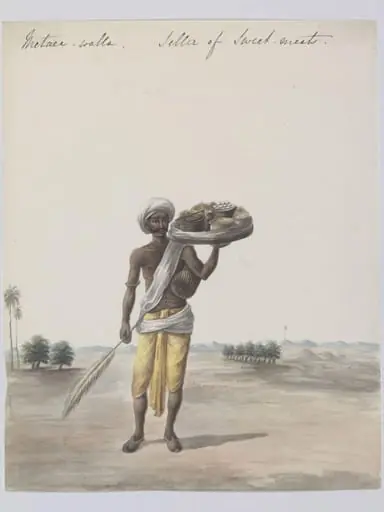 A sweetmeat-seller
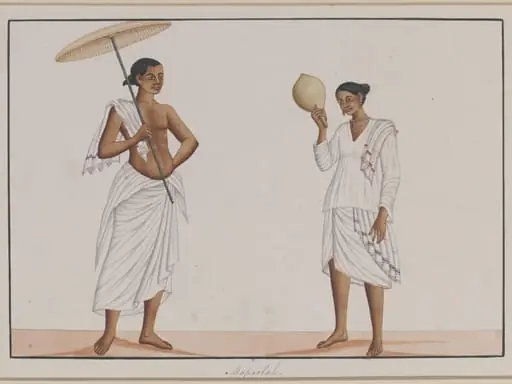 Malayali Muslims of the Mopla caste
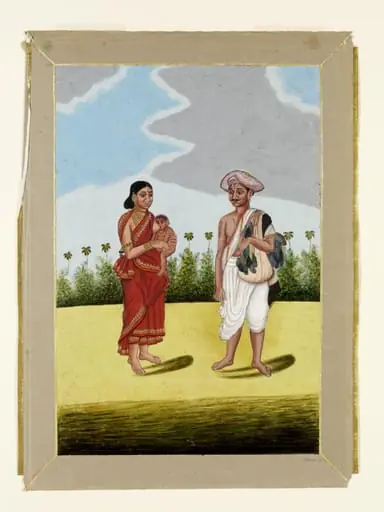 A bangle-seller and his wife
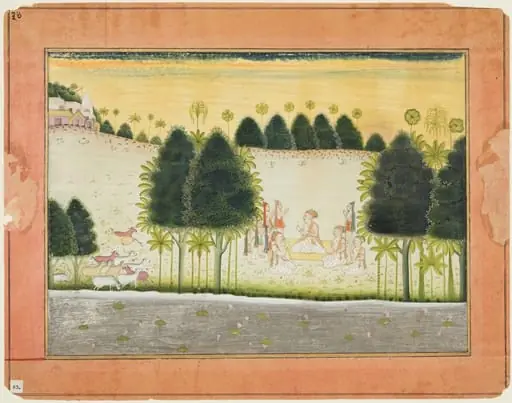 Nanda and the Elders in Council with the Cowherds, from a Bhagavata Purana
 Three entertainers