Artwork
A woman weaver
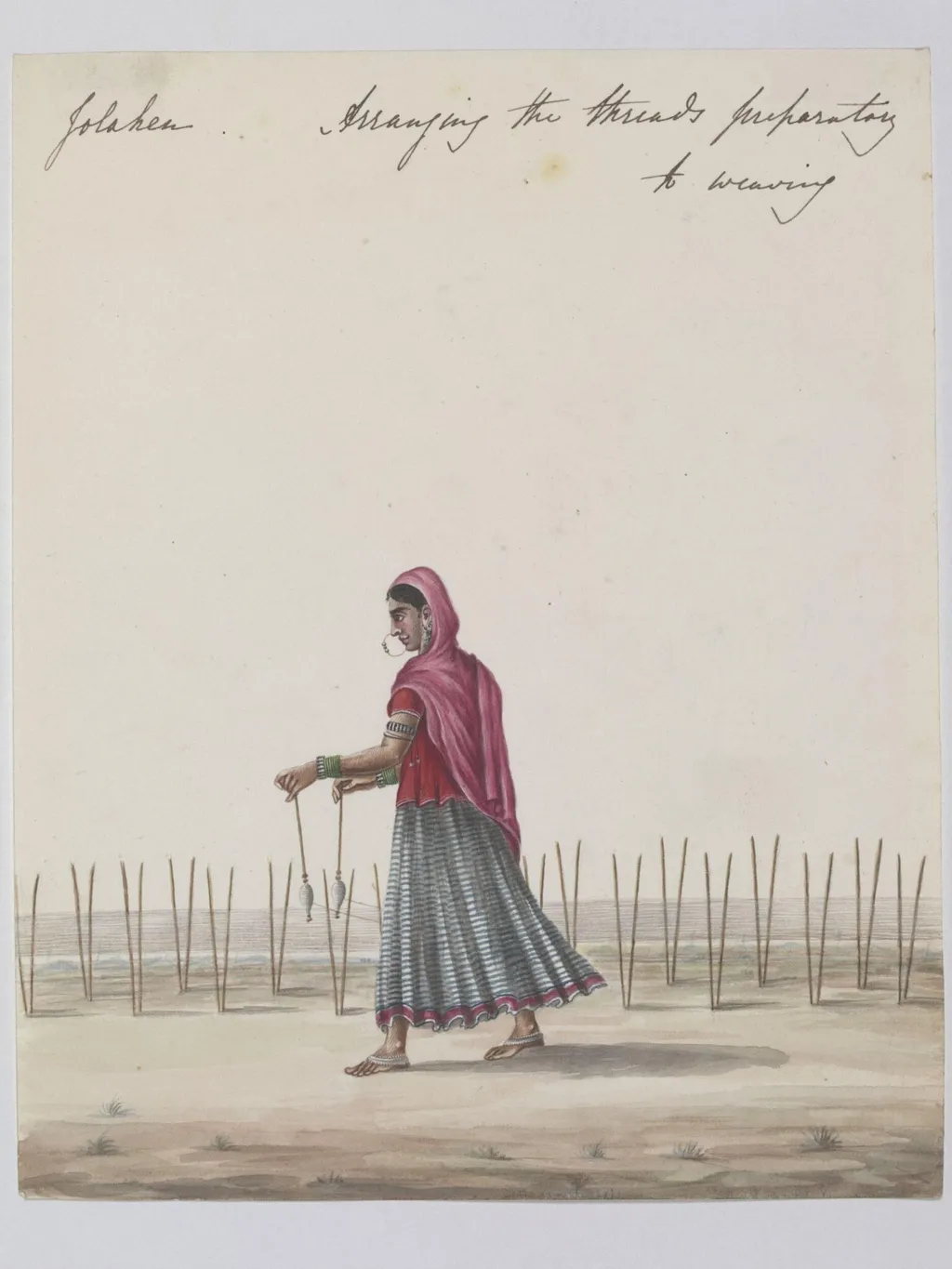
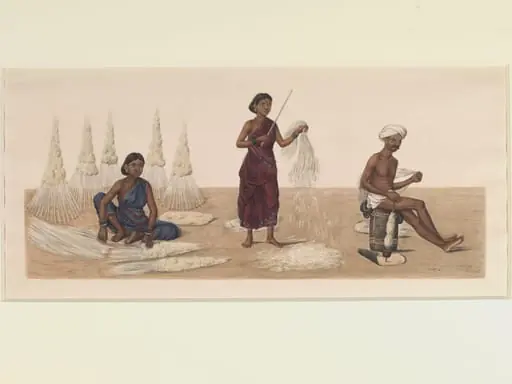
A woman weaver is a paint painting by the Realist artist Unknown. It dates from 1826 and is held in the collection of the Victoria and Albert Museum. This watercolor, dated 1826, portrays a woman engaged in the preparatory stage of weaving known as stick-warping.
About this work
Overview
This watercolor, dated 1826, portrays a woman engaged in the preparatory stage of weaving known as stick-warping.
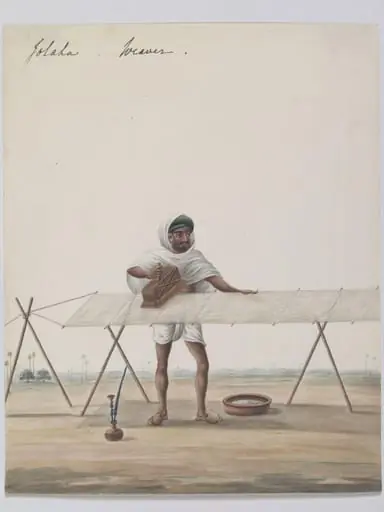
This watercolor, dated 1826, portrays a woman engaged in the preparatory stage of weaving known as stick-warping. Created by an unidentified artist, it belongs to a series of thirty-five works documenting rural trades. The scene is set outdoors, with minimal background detail, focusing attention on the figure and her task. The medium and scale suggest it was intended as a documentary record rather than a decorative piece.
Subject & Meaning
The woman is shown manipulating warp threads stretched between vertical sticks driven into the ground, a step essential to preparing a loom. Her attire—red headscarf, striped skirt, and bracelets—hints at regional dress, possibly indicating local identity or occupational tradition. The image conveys quiet labor, emphasizing skill and routine over drama, reflecting an interest in preserving the visual record of everyday work.
Technique & Style
Rendered in watercolor, the painting uses restrained tones—earthy grays, muted reds, and soft browns—to define form and space. The brushwork is precise but unadorned, prioritizing clarity over embellishment. The figure is rendered with simple contours and flat shading, while the sticks and threads are arranged in orderly lines, reinforcing the methodical nature of the task.
History & Provenance
The work was produced as part of a larger collection commissioned to document traditional crafts in early 19th-century Britain. Its origin is tied to institutional efforts to record industrial and domestic labor before mechanization transformed these practices. It entered the Victoria and Albert Museum’s collection as part of this archive, where it remains as a record of pre-industrial textile work.
Context
In the 1820s, as industrialization accelerated, there was growing interest in preserving images of manual trades. This painting reflects a broader movement to document rural labor, often driven by antiquarians, educators, or philanthropists. Unlike romanticized depictions of peasant life, this image presents work without sentimentality, aligning with emerging ethnographic practices of the period.
Legacy
As one of thirty-five similar works, it contributes to a rare visual archive of pre-industrial craftsmanship. While the artist remains anonymous, the series has become a resource for historians studying textile production and gendered labor. Its preservation underscores the value placed on recording ordinary work, offering insight into skills now largely obsolete.
Artist & collection

 Domestic Scene
 Giacomo and Cardinal Marco, investing Andrea, Abbot of San Zeno, with his Benefice
 The Nymph of Fontainebleau
 Portrait of a Woman
 Madonna and Child with Saints in the Enclosed Garden
 Venus and Minerva
 Family Group of Four on Sofa
 Wall painting from Room H of the Villa of P. Fannius Synistor at Boscoreale