Artwork
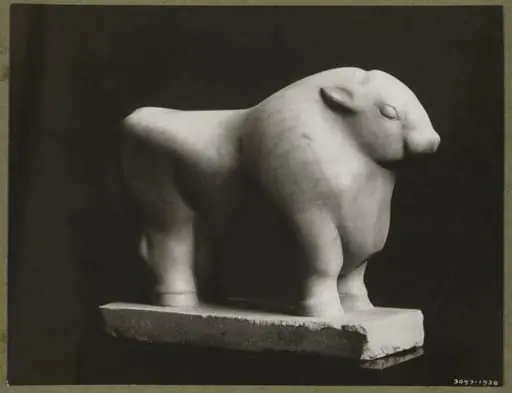
Hittite silver bull found in Anatolia ca. 1900 B.C.
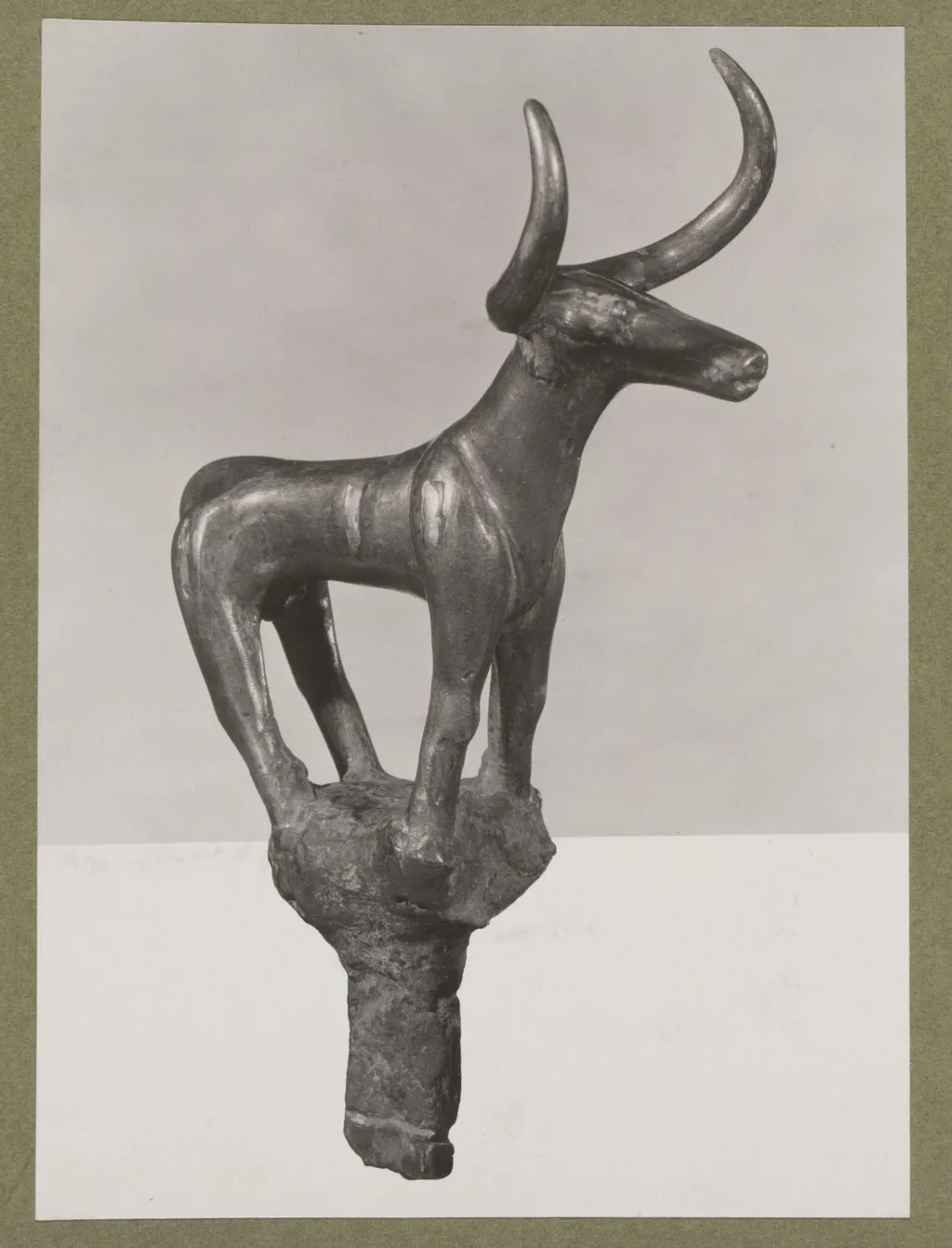
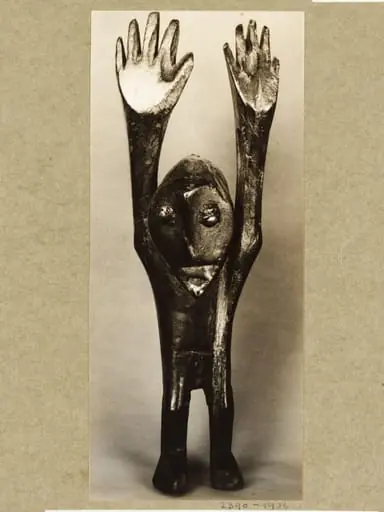
Hittite silver bull found in Anatolia ca. 1900 B.C. is a photographic photography by Unknown. It dates from 1935 and is held in the collection of the Victoria and Albert Museum. A black-and-white photograph preserves a small silver bull figurine from ancient Anatolia, dating to approximately 1900 B.
About this work
Overview
A black-and-white photograph preserves a small silver bull figurine from ancient Anatolia, dating to approximately 1900 B.
A black-and-white photograph preserves a small silver bull figurine from ancient Anatolia, dating to approximately 1900 B.C. The image captures the object in a static, upright stance, mounted for display. The bull’s form is minimal, rendered with subtle tonal contrasts that emphasize its aged surface and worn texture. The photograph serves as a documentary record of a ritual or symbolic object from the early Bronze Age.
Subject & Meaning
The bull, a recurring symbol in early Anatolian cultures, likely represented strength, fertility, or divine power. Its forward-leaning posture suggests motion, possibly evoking a ceremonial procession or sacred offering. The lack of ornamental detail points to a focus on essential form rather than naturalism, aligning with symbolic traditions of the period where abstraction conveyed spiritual significance.
Technique & Style
Crafted from silver, the figurine exhibits a simplified, block-like anatomy with smooth surfaces and minimal modeling. The legs are bent in a deliberate, compact stance, and the horns curve sharply backward, forming a strong silhouette. The base is thick and unrefined, anchoring the figure. Surface variations suggest age, handling, or intentional patination, reflecting a preference for functional elegance over decorative excess.
History & Provenance
The bull was discovered in Anatolia, a region rich in early metallurgical traditions. Its exact find site and original context remain undocumented in the photograph’s record. The object’s survival into the modern era implies it was preserved, perhaps in a ritual deposit or burial. The photograph itself, though undated, reflects early 20th-century archaeological documentation practices.
Context
This figurine emerged during a period when Anatolian communities developed advanced metalworking and established trade networks across the Near East. Comparable bull imagery appears in contemporary Mesopotamian and Levantine artifacts, suggesting shared symbolic vocabularies. The object’s simplicity contrasts with later, more elaborate Bronze Age sculptures, indicating an earlier, more restrained aesthetic tradition.
Legacy
The silver bull remains a representative example of early Anatolian metalwork, illustrating the region’s role in the development of symbolic sculpture. Though not widely exhibited, it contributes to scholarly understanding of pre-Hittite religious iconography. Its photographic record ensures its continued study, even as the original object’s current location is not specified in available documentation.
Artist & collection

 Domestic Scene
 Giacomo and Cardinal Marco, investing Andrea, Abbot of San Zeno, with his Benefice
 The Nymph of Fontainebleau
 Portrait of a Woman
 Madonna and Child with Saints in the Enclosed Garden
 Venus and Minerva
 Family Group of Four on Sofa
 Wall painting from Room H of the Villa of P. Fannius Synistor at Boscoreale