Artwork
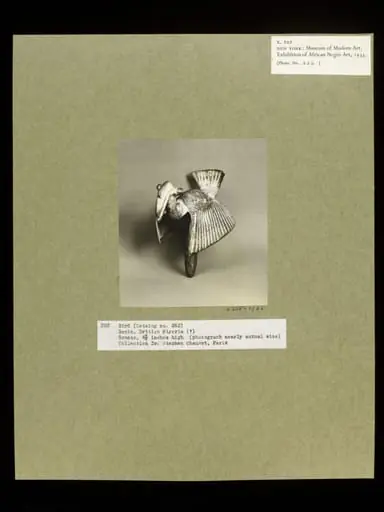
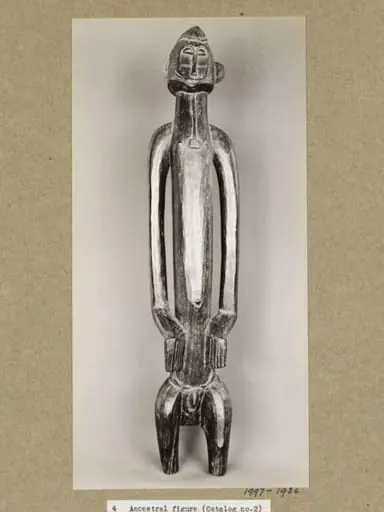
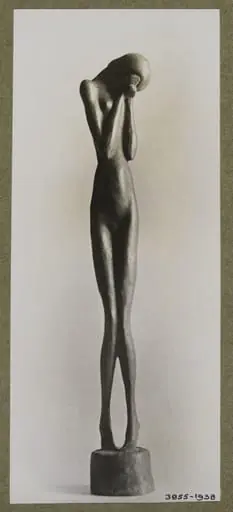
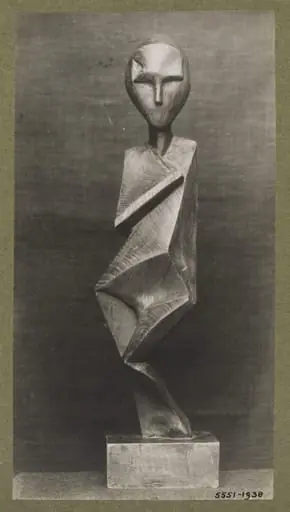
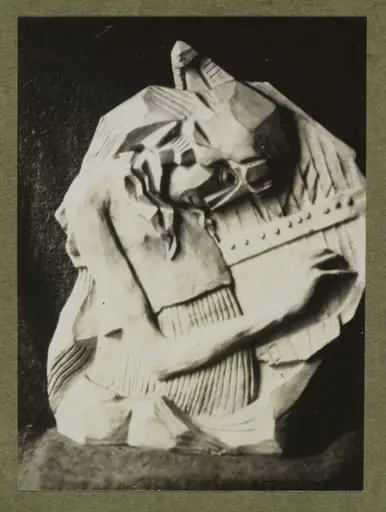
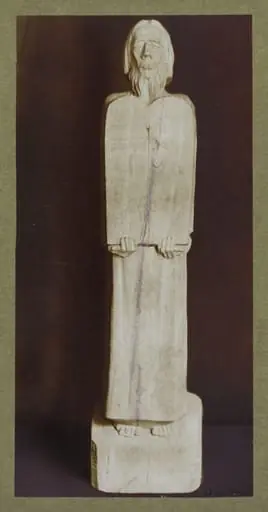
Figure with arms raised. WaRegga.
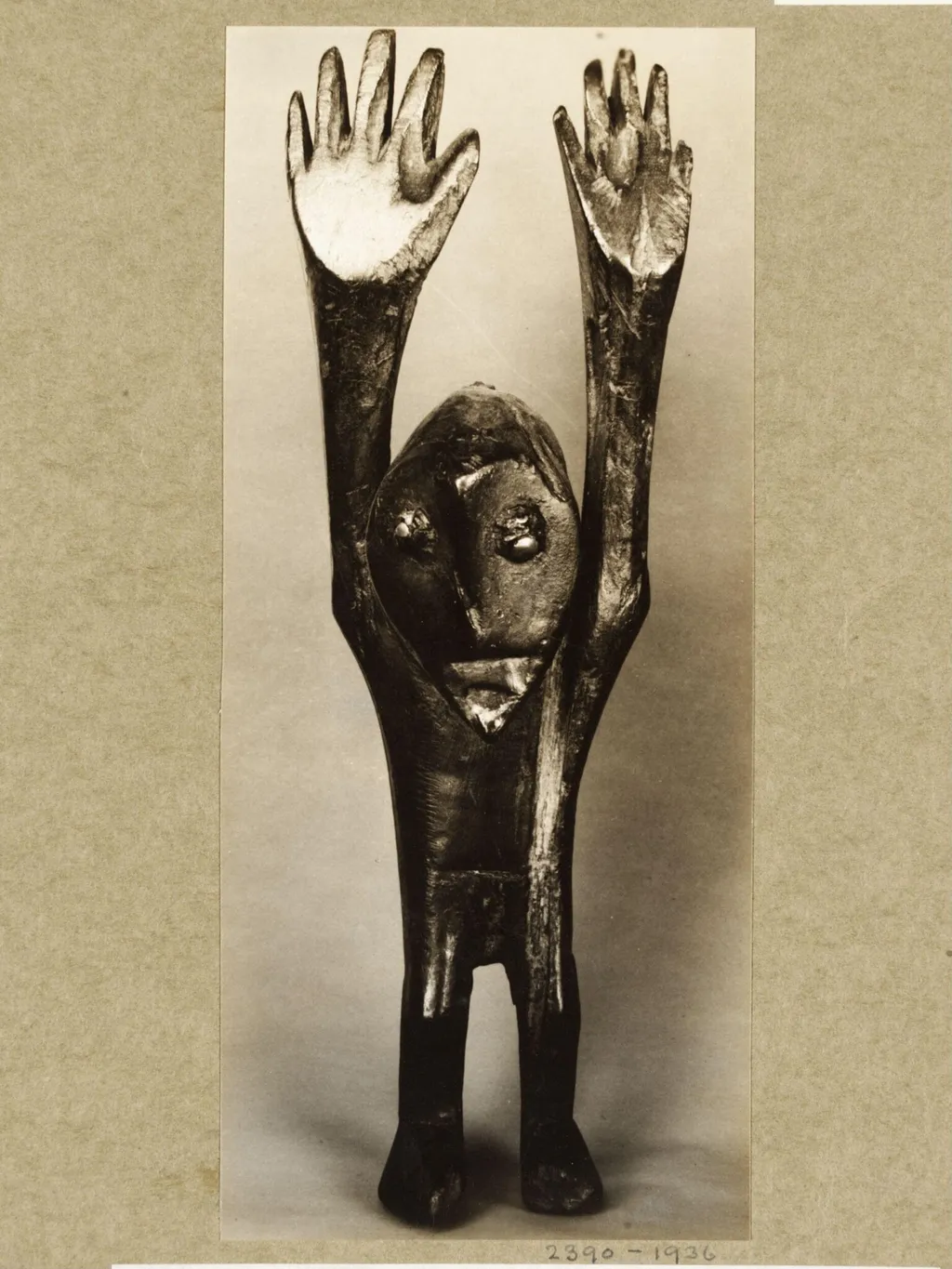
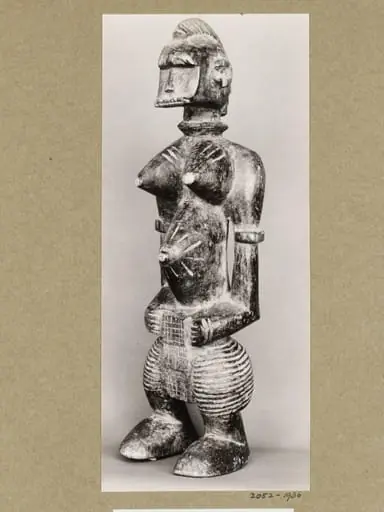
Figure with arms raised. WaRegga. is a photographic photography by Walker Evans. It dates from 1935 and is held in the collection of the Victoria and Albert Museum.
About this work
The figure’s style feels a bit like carved wood, almost like a toy or a simple statue.
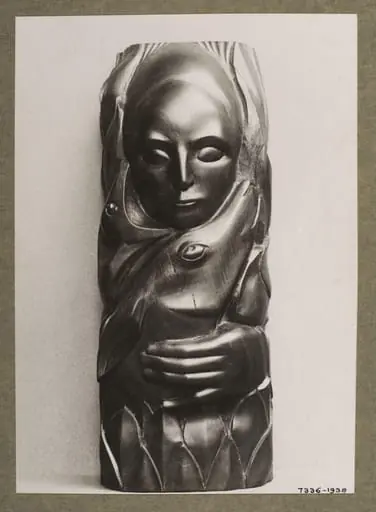
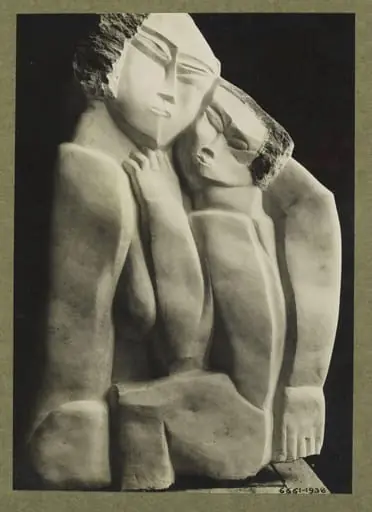
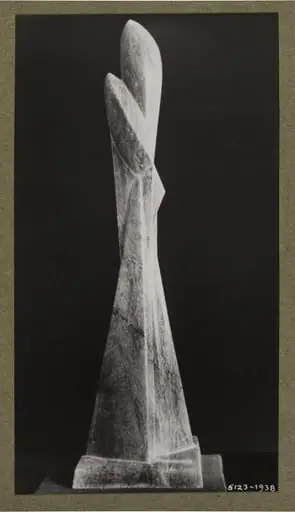
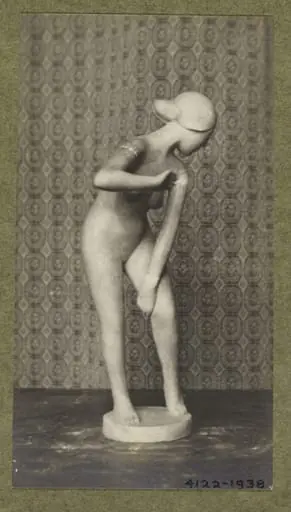
This is a black-and-white photo of a wooden figure with its arms raised high. The figure’s face is simple, with big eyes and a smooth head. Its hands are open, fingers spread wide, and the body looks rough and textured.
The figure’s style feels a bit like carved wood, almost like a toy or a simple statue. The artist took this photo in 1935, and it’s part of a museum collection.
Next, check out Walker Evans to see more of his work.
Overview
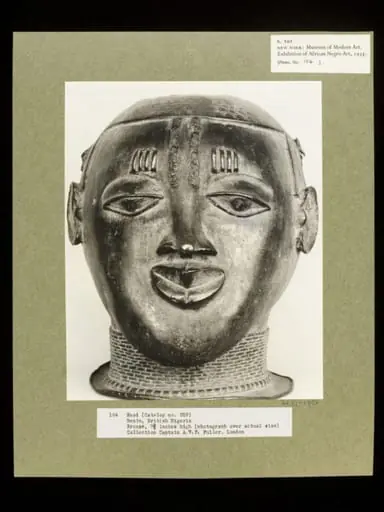
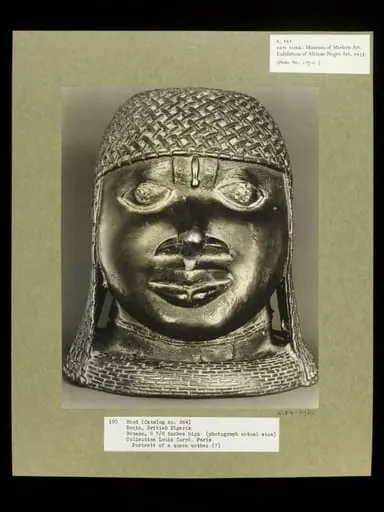
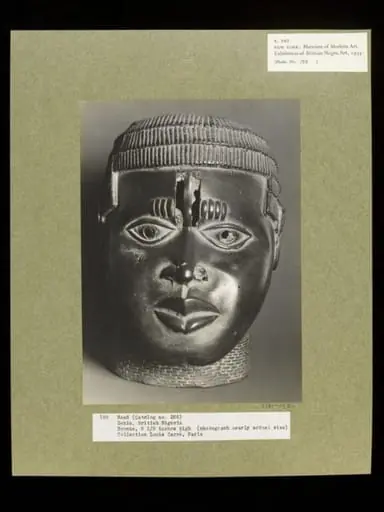
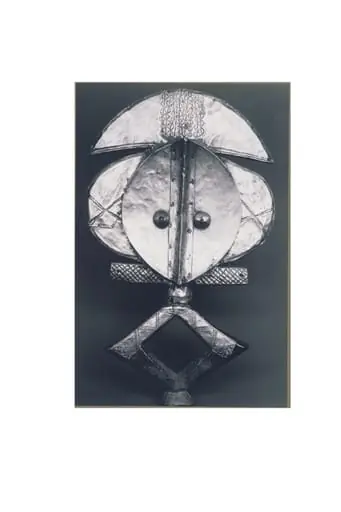
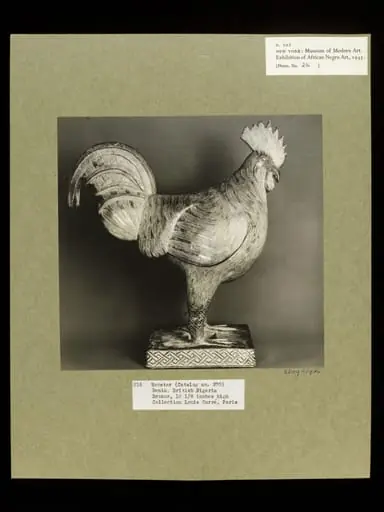
Walker Evans captured a wooden African sculpture in 1935 as part of a commissioned project for the Museum of Modern Art’s exhibition *African Negro Art*. He produced 477 photographs of objects from the museum’s collection, documenting their form and material with clinical precision. This image, one of many, focuses on a single figure with outstretched arms, rendered in stark black-and-white to emphasize texture and silhouette.
Subject & Meaning
The sculpture depicts a human figure with arms raised high, hands open and fingers spread. Its facial features are minimal—large eyes and a smooth, rounded head—suggesting abstraction over naturalism. The posture may reference ritual, invocation, or gesture, though its specific cultural meaning remains unrecorded. Evans’s photograph preserves the object without interpretation, leaving symbolic intent to the viewer’s cultural context.
Technique & Style
Evans used a straightforward photographic approach: neutral lighting, centered composition, and sharp focus to highlight the sculpture’s surface. The wood’s rough grain, carved details, and uneven contours are rendered with clarity, contrasting with the figure’s simplified form. The monochrome medium strips away color, reinforcing the object’s sculptural presence and material authenticity.
History & Provenance
The photograph was made for MoMA’s 1935 exhibition, which sought to present African art as formal innovation rather than ethnographic artifact. Evans’s images were printed in 17 complete sets; one was acquired by the Victoria and Albert Museum for $50. The original sculpture’s provenance is not documented, and its maker or cultural origin remains unidentified in available records.
Context
In the mid-1930s, Western institutions began reevaluating African objects as art rather than curiosities. Evans’s photographs supported this shift by emphasizing aesthetic qualities over anthropological classification. His work aligned with modernist interests in abstraction and form, even as it inadvertently detached the objects from their original cultural frameworks.
Legacy
Evans’s photographs of African sculptures remain key documents in the history of museum curation and modernist photography. They reflect a transitional moment when non-Western objects entered art discourse, often without attribution to their makers. The images continue to be studied for their formal rigor and their role in shaping how African art was perceived in 20th-century institutions.
Artist & collection
Artist
Walker Evans made stark black-and-white photos of carved wooden heads from Benin in 1935.