Artwork
Holy Family with Saint Catherine
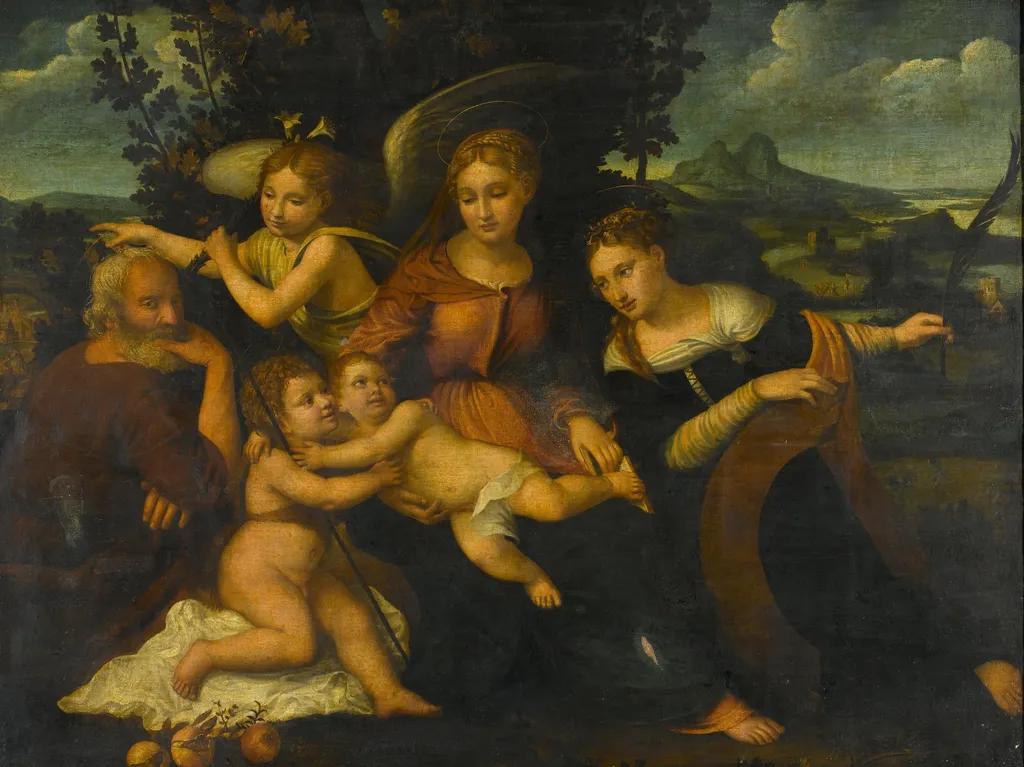
Holy Family with Saint Catherine is an unspecified painting by the High Renaissance artist Unknown. It dates from 1525 and is held in the collection of the Rijksmuseum. This painting depicts the Holy Family—Mary, Joseph, and the infant Jesus—seated in a tranquil natural setting.
About this work
Overview
This painting depicts the Holy Family—Mary, Joseph, and the infant Jesus—seated in a tranquil natural setting.
This painting depicts the Holy Family—Mary, Joseph, and the infant Jesus—seated in a tranquil natural setting. A young John the Baptist embraces Jesus, while an angel stands between the parents holding a lily. Two pomegranates rest at the children’s feet, adding symbolic depth to the intimate group. The composition is calm and contained, emphasizing quiet familial bonds rather than dramatic action.
Subject & Meaning
The figures represent core Christian figures in a domestic moment, blending sacred narrative with human tenderness. The lily, held by the angel, symbolizes purity, while the pomegranates allude to resurrection and eternal life. John the Baptist’s presence as a child foreshadows his future role as Christ’s forerunner. The scene invites contemplation, framing divinity within the warmth of family interaction.
Technique & Style
The artist employs sfumato, a technique of soft, gradual transitions between tones and colors, to blur outlines and create a hazy, atmospheric effect. Faces and hands are rendered with gentle gradations of light, avoiding sharp edges. This method enhances the sense of serenity and physical warmth, making the figures feel present yet ethereal, as if seen through a quiet, diffused light.
History & Provenance
The painting originates from the late 15th or early 16th century, likely produced in the Netherlands or northern Italy, regions where devotional imagery flourished. Its intimate scale and detailed landscape suggest it was made for private devotion rather than public worship. The work passed through private collections before entering a museum, where its attribution and context have been refined over time.
Context
During this period, religious art increasingly emphasized emotional accessibility. Artists moved away from rigid iconography toward scenes of tenderness, reflecting broader spiritual trends favoring personal piety. The inclusion of John the Baptist as a child, along with natural elements like the pomegranate, aligns with humanist-influenced devotional practices that sought to make sacred stories feel immediate and relatable.
Legacy
The painting exemplifies how Renaissance artists transformed traditional religious subjects into emotionally resonant domestic scenes. Its use of sfumato and naturalistic setting influenced later depictions of the Holy Family, particularly in northern European traditions. Though not widely known today, it remains a quiet testament to the period’s shift toward intimate, psychologically nuanced sacred imagery.
Artist & collection

 Domestic Scene
 Giacomo and Cardinal Marco, investing Andrea, Abbot of San Zeno, with his Benefice
 The Nymph of Fontainebleau
 Portrait of a Woman
 Madonna and Child with Saints in the Enclosed Garden
 Venus and Minerva
 Family Group of Four on Sofa
 Wall painting from Room H of the Villa of P. Fannius Synistor at Boscoreale
 The Holy Family with the Infant St John, St Elizabeth and St Anna
 The Holy Family with Donors
 Canigiani Holy Family
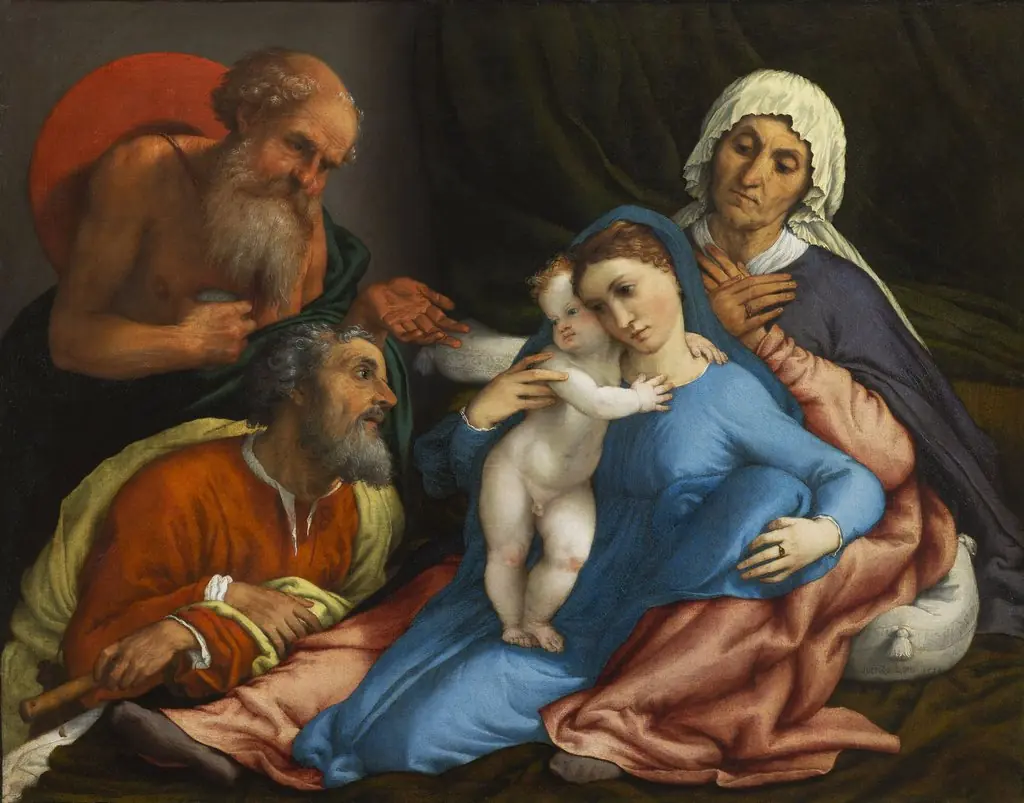 Madonna and Child with Saints
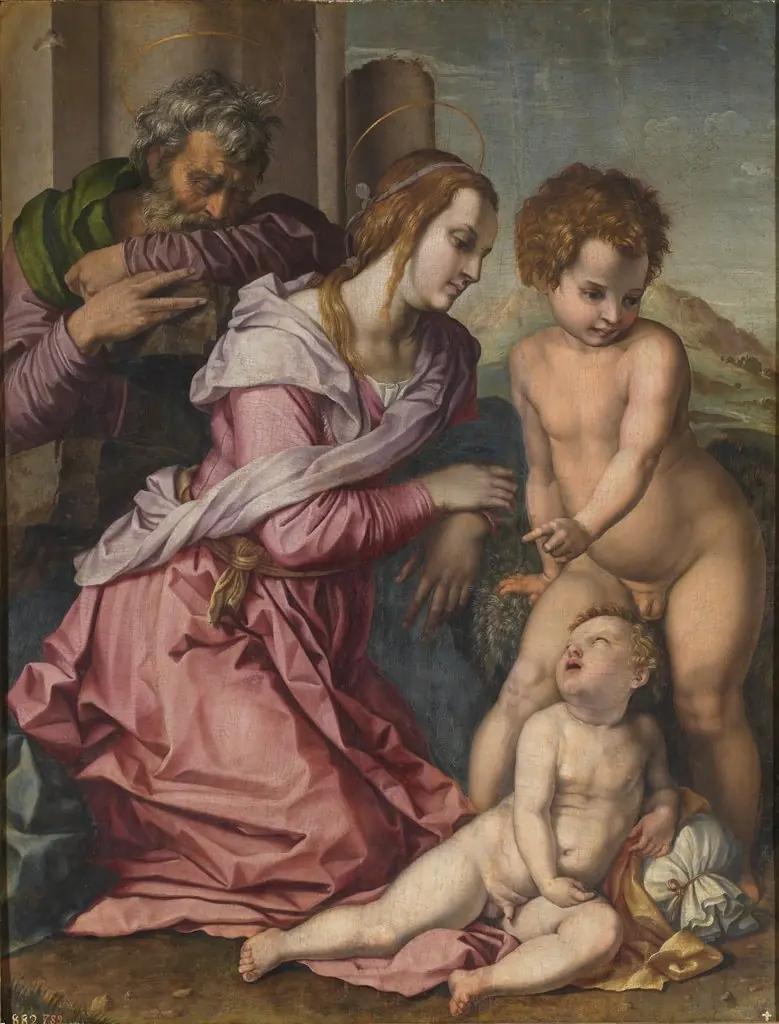 The Holy Family with the Infant Saint John the Baptist
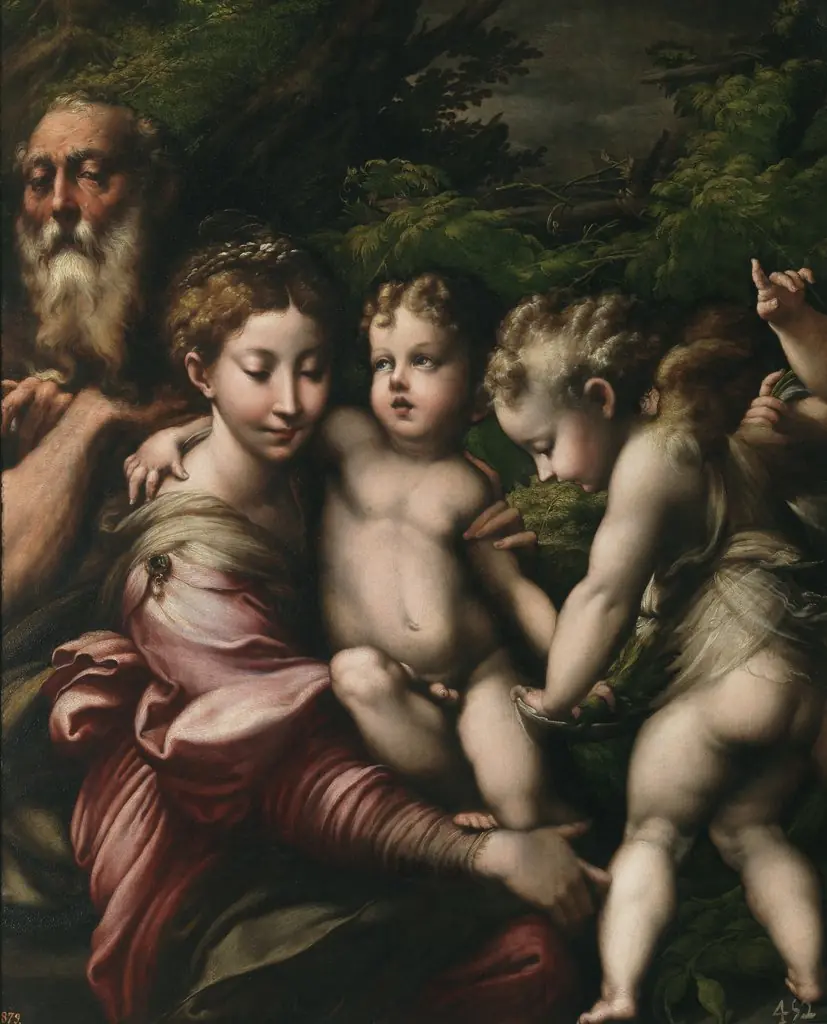 The Holy Family with Angels
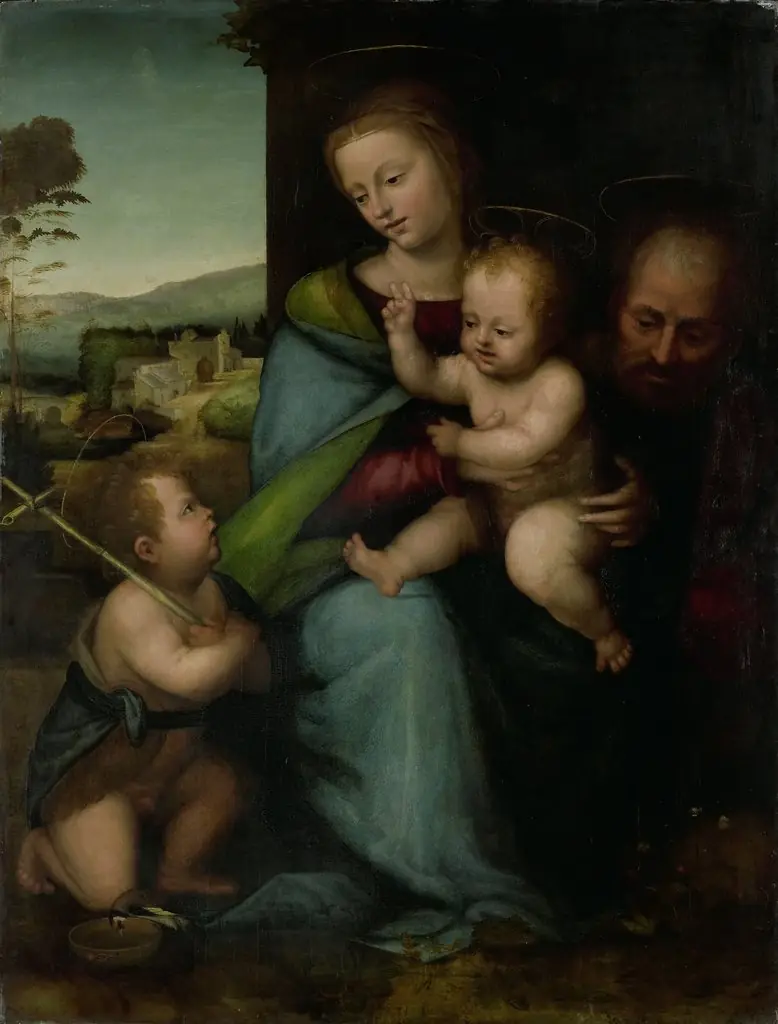 The Holy Family with the Infant John the Baptist
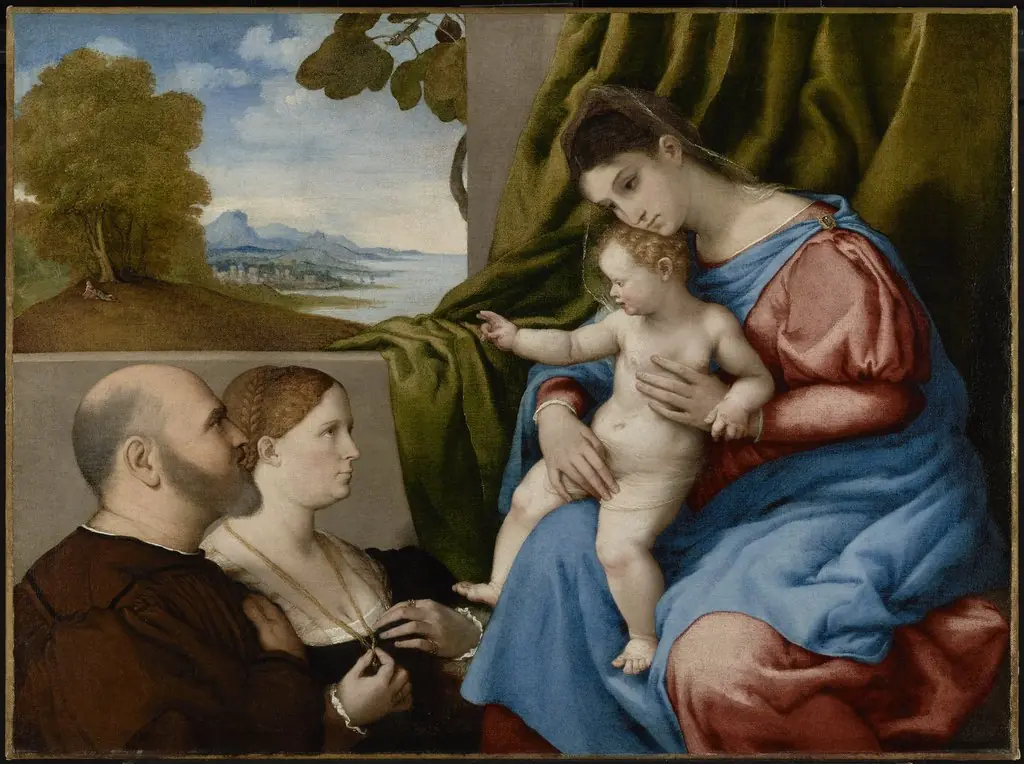 Madonna and Child with Two Donors
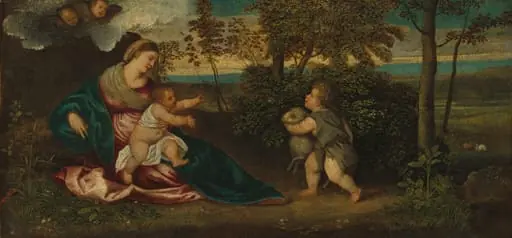 Madonna and Child and the Infant Saint John in a Landscape