Artwork
Hotei
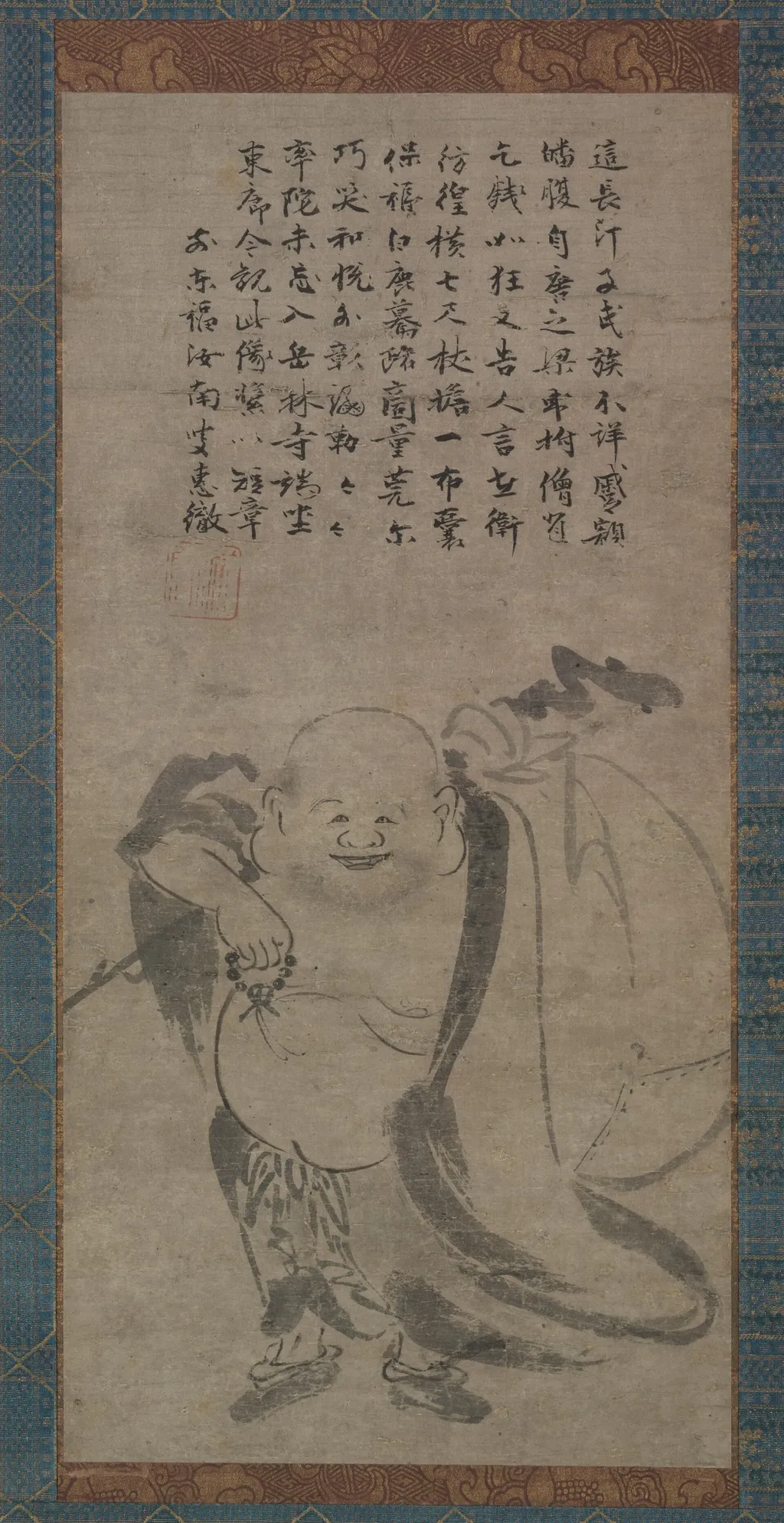
Hotei is an unspecified painting. It dates from 1490 and is held in the collection of the Cleveland Museum of Art.
About this work
Overview
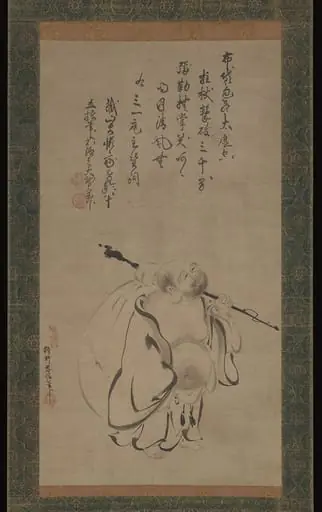
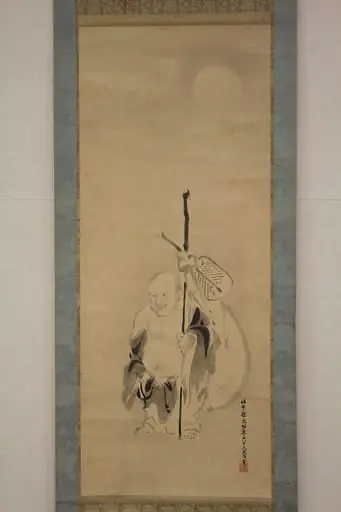
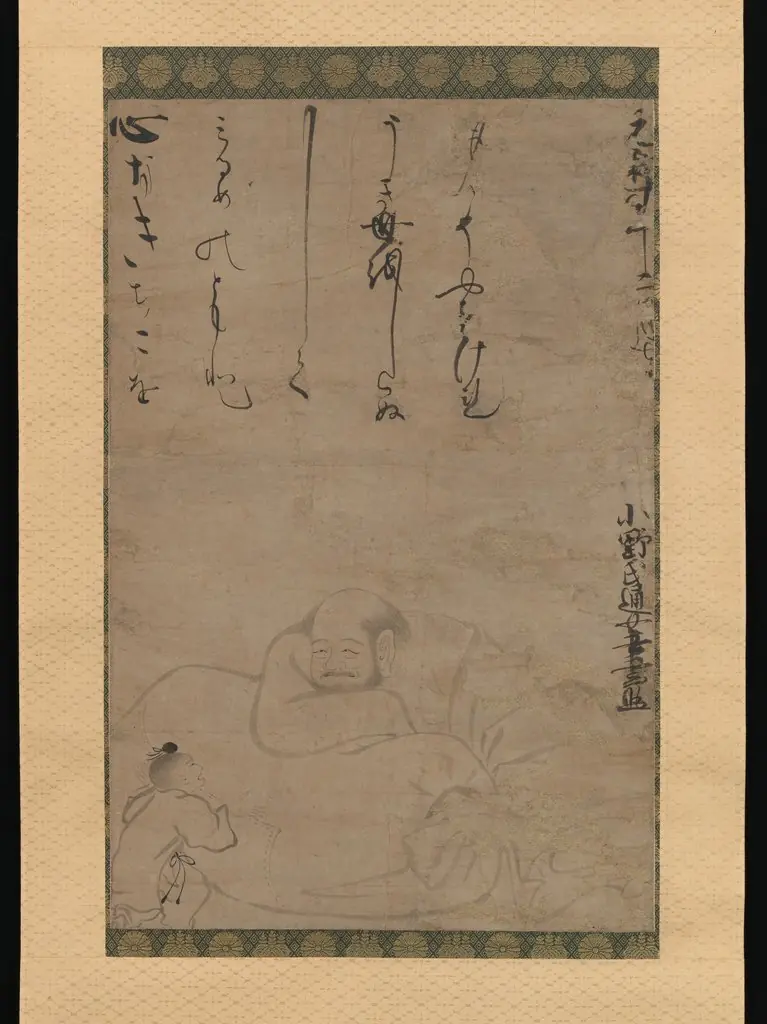
The work titled “Hotei” presents a jovial figure with a protruding belly, dressed in a long robe that falls over his left shoulder and is cinched at the waist with a sash. He holds a staff in his right hand, smiles broadly, and stands before a large leafy plant, his right leg bent and left leg extended in a relaxed stance.
Subject & Meaning
The central character is a representation of Hotei, a figure associated with abundance and happiness in East Asian folklore. His cheerful expression, ample physique, and casual posture convey themes of contentment and generosity, while the surrounding foliage adds a natural, grounding element to the composition.
Technique & Style
The painting employs bold brushstrokes and a vivid palette, emphasizing the earthy tones of the robe against a light brown background. The contrast between the saturated colors of the figure and the subdued backdrop creates visual depth, while the fluid handling of paint suggests a dynamic, expressive approach.
History & Provenance
The piece is attributed to an unknown artist, reflecting a tradition of anonymous production common in certain regional schools. No specific dates or collection history are provided, limiting precise chronological placement.
Context
Within the broader visual culture, depictions of Hotei often appear in religious and popular art, symbolizing wealth and good fortune. The inclusion of a staff and plant aligns with conventional iconography that identifies the figure and underscores his connection to nature and prosperity.
Artist & collection